

 Start Driving in Mysore, Karnataka
Mysore, a city steeped in the rich cultural tapestry of Karnataka, India, is a destination that seamlessly blends historical grandeur with a vibrant, contemporary spirit. Known as the ‘City of Palaces,’ Mysore is celebrated for its majestic architectural wonders, most notably the awe-inspiring Mysore Palace. This opulent edifice, a breathtaking fusion of Indo-Saracenic styles, stands as a testament to the city’s royal heritage, with its intricately carved interiors and dazzling displays of artistry. The serene Chamundi Hills, crowned by the revered Chamundeshwari Temple, offer panoramic vistas of the city’s sprawling landscape, providing a spiritual and scenic retreat. The meticulously manicured Brindavan Gardens, renowned for their mesmerizing musical fountains, offer a tranquil escape from the urban hustle. Mysore’s culinary scene is a delightful exploration of South Indian flavors, with an array of restaurants serving traditional delicacies alongside international cuisines. The city is also famed for its exquisite silk sarees and sandalwood handicrafts, showcasing the region’s rich artisanal traditions. The ten-day Mysore Dasara festival, a spectacle of cultural extravagance, draws visitors from across the globe, featuring elaborate processions, cultural performances, and dazzling illuminations. The city’s numerous art galleries and museums serve as repositories of the region’s artistic legacy, providing insights into its cultural evolution. Mysore’s relaxed ambiance and profound cultural heritage make it an ideal destination for those seeking an enriching and peaceful sojourn. Travelers should be prepared for heightened crowds during the Dasara festival and exercise caution in bustling areas. The city’s transportation network, comprising buses, taxis, and auto-rickshaws, ensures convenient travel within Mysore and to its surrounding environs. The currency is the Indian Rupee (INR), and Kannada and English are widely spoken. The optimal times for a visit are during the winter months, from October to March, when the weather is mild and conducive to exploration.
Mysore Travel Guide: The Royal City That Lives Up to Every Promise
Picture this: you’re standing in the courtyard of a palace that glows like a lantern at dusk — 97,000 light bulbs blazing against a Karnataka sky — while the smell of jasmine garlands drifts from a flower market you passed twenty minutes ago. Somewhere behind you, a street vendor is pressing a perfect filter coffee. This is Mysore on an ordinary Sunday.

Ordinary, because this is what the city just does. It doesn’t perform for tourists. The flower sellers at Devaraja Market have been stacking marigold towers since before your grandparents were born. The priests at Chamundeshwari Temple were chanting long before anyone called this place a heritage destination. Mysore’s self-assurance comes from centuries of being the cultural and royal capital of a powerful kingdom — and it wears that history without trying.

Karnataka’s second-largest city sits at an elevation of about 770 meters on the Deccan Plateau, which gives it a climate that South Indian cities twice its size would envy. The Wodeyar dynasty made it a seat of learning, music, and architecture for nearly six centuries. Hyder Ali and Tipu Sultan interrupted that reign, leaving behind their own layer of Indo-Islamic influence. Then the British restored the Wodeyars, and Mysore became one of the most progressive princely states in colonial India — an early adopter of electricity, modern schools, and sanitation infrastructure. All of that layering — Hoysala stone, Mughal arches, Gothic churches, silk looms, and yoga ashrams — is what you’re actually walking through when you visit.
Best Months to Visit Mysore
Mysore has three distinct windows worth knowing about:
October to February is the sweet spot. Temperatures sit between 15°C and 28°C, skies are reliably clear, and the post-monsoon greenery makes the city look freshly washed. The Dasara festival (late September to early October) falls at the cusp of this window, bringing the highest energy — and the highest hotel prices — of the year. Book accommodation four to six weeks ahead if you’re planning around it.
March to May is hotter (up to 35°C) but workable. Mornings and evenings are pleasant, and the crowds thin out considerably. Mysore Zoo and the palace grounds can get very warm by midday — plan outdoor visits before 10 AM or after 4 PM.
June to September is the monsoon season. Rain sweeps in from the southwest, cooling the city and turning the surrounding hills a saturated green. Many travelers avoid this period, which means better hotel rates and fewer crowds at attractions. The palace stays beautiful in the rain. Brindavan Gardens, however, can be inaccessible when the KRS reservoir fills, and the gardens partially flood — check before going.
Top Attractions
Mysore Palace (Amba Vilas Palace)
The palace that most people come to Mysore to see manages the difficult trick of actually meeting expectations. Built in 1912 after the original wooden structure burned down, it’s a fantasy of Indo-Saracenic architecture — Hindu domes, Rajput turrets, Islamic arches, and Gothic clock towers all coexisting on a single facade without any of it feeling like a mistake.
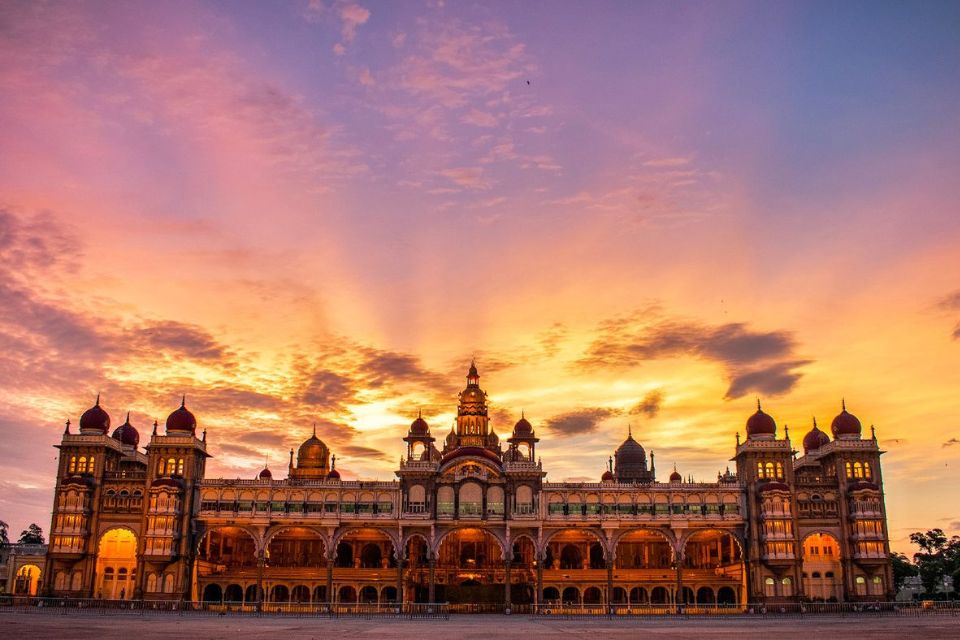
Inside, the Durbar Hall is the centerpiece: carved teak ceilings, stained glass imported from Glasgow, a golden howdah on display, and painted murals depicting the Dasara procession as it looked a century ago. The polished stone floor is cool underfoot, which you’ll notice because shoes must be removed at the entrance.
- Hours: 10:00 AM – 5:30 PM daily
- Entry fee: ₹120 for Indian adults; ₹70 for children (10–18 years); ₹1,000 for foreign tourists (includes audio guide)
- Sound & Light Show: Monday–Saturday, 7:00 PM – 7:45 PM. ₹40 adults, ₹25 children. No show on Sundays (palace illumination takes its place)
- Sunday illumination: Free, 7:00 PM – 8:00 PM — arrive by 6:45 PM to get a good vantage point across the road
Pro-tip: The queue to enter the palace can stretch 45 minutes on weekends and holidays. Arrive before 10:00 AM opening or in the final hour before closing. Lockers for footwear cost ₹5. Carry only what you need inside — the courtyard bag check line adds time.
Chamundi Hill & Chamundeshwari Temple
Twelve kilometers from the city center, Chamundi Hill rises 1,065 meters and anchors Mysore’s spiritual geography. The Chamundeshwari Temple at the summit is dedicated to the goddess from whom the city draws its identity — Mysore was named after the demon Mahishasura she defeated. The temple structure dates back to the 12th century, though the current tower (gopuram) was substantially rebuilt in the 17th century.
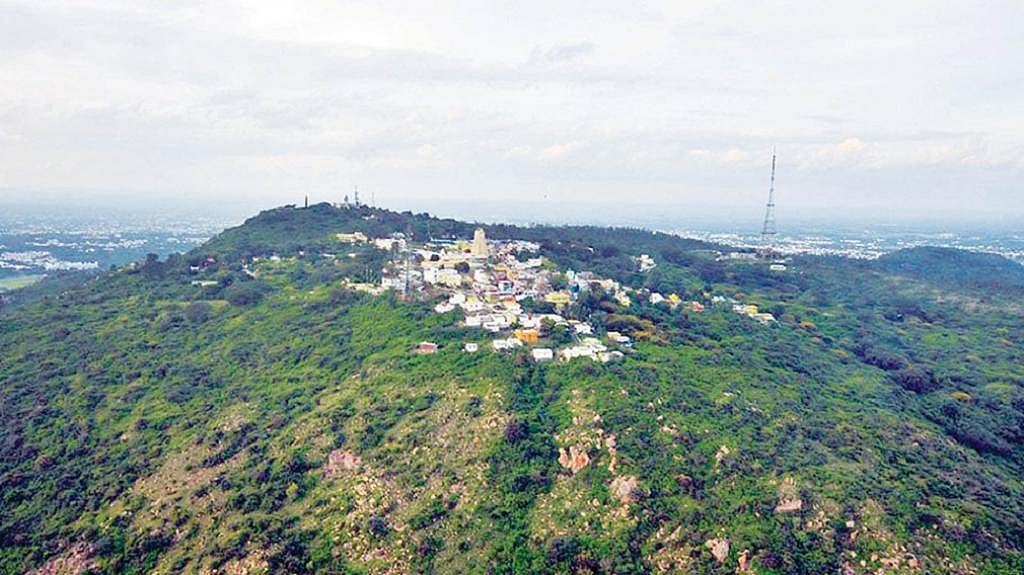
About two-thirds of the way up the hill via the 1,000 stone steps is a monolithic Nandi statue carved in 1659 — five meters tall, draped in bells, and surrounded by a permanent fragrance of incense and camphor. Even travelers who don’t stop at the temple make the descent on foot to see it.
- Hours: 7:30 AM – 6:00 PM
- Entry fee: Free (nominal charges for special darshan queues)
Pro-tip: The road up is open to vehicles, but the 1,000-step climb from the base is the authentic route. Do it early in the morning when the stone is cool, and the light over Mysore is extraordinary. Factor 45–60 minutes for the descent, stopping at the Nandi.
Jaganmohan Palace & Art Gallery
Standing just west of Mysore Palace but visited by a fraction of the crowds, Jaganmohan Palace houses one of South India’s more underestimated art collections. Built in 1861, the building itself is a quieter example of the same Indo-Saracenic architecture next door. Inside, you’ll find Ravi Varma oil paintings, Mysore-style gold-leaf paintings, ivory and sandalwood carvings, European clocks gifted to the Wodeyars, and antique musical instruments, including a pipe organ brought from Europe.

- Hours: 8:30 AM – 5:00 PM, all days
- Entry fee: ₹50 adults, ₹20 children
Pro-tip: The Ravi Varma gallery on the upper floor is the highlight. Budget at least 90 minutes, and arrive at opening when the light through the windows is at its best.
Mysore Zoo (Sri Chamarajendra Zoological Gardens)
One of the oldest and best-maintained zoos in India, established in 1892. The grounds are shaded and well-landscaped, home to white tigers, gorillas, Nile crocodiles, Asiatic lions, and a famous collection of giant tortoises. It’s not a zoo that makes you feel uncomfortable — the enclosures are large, and the animal welfare standards are visible.
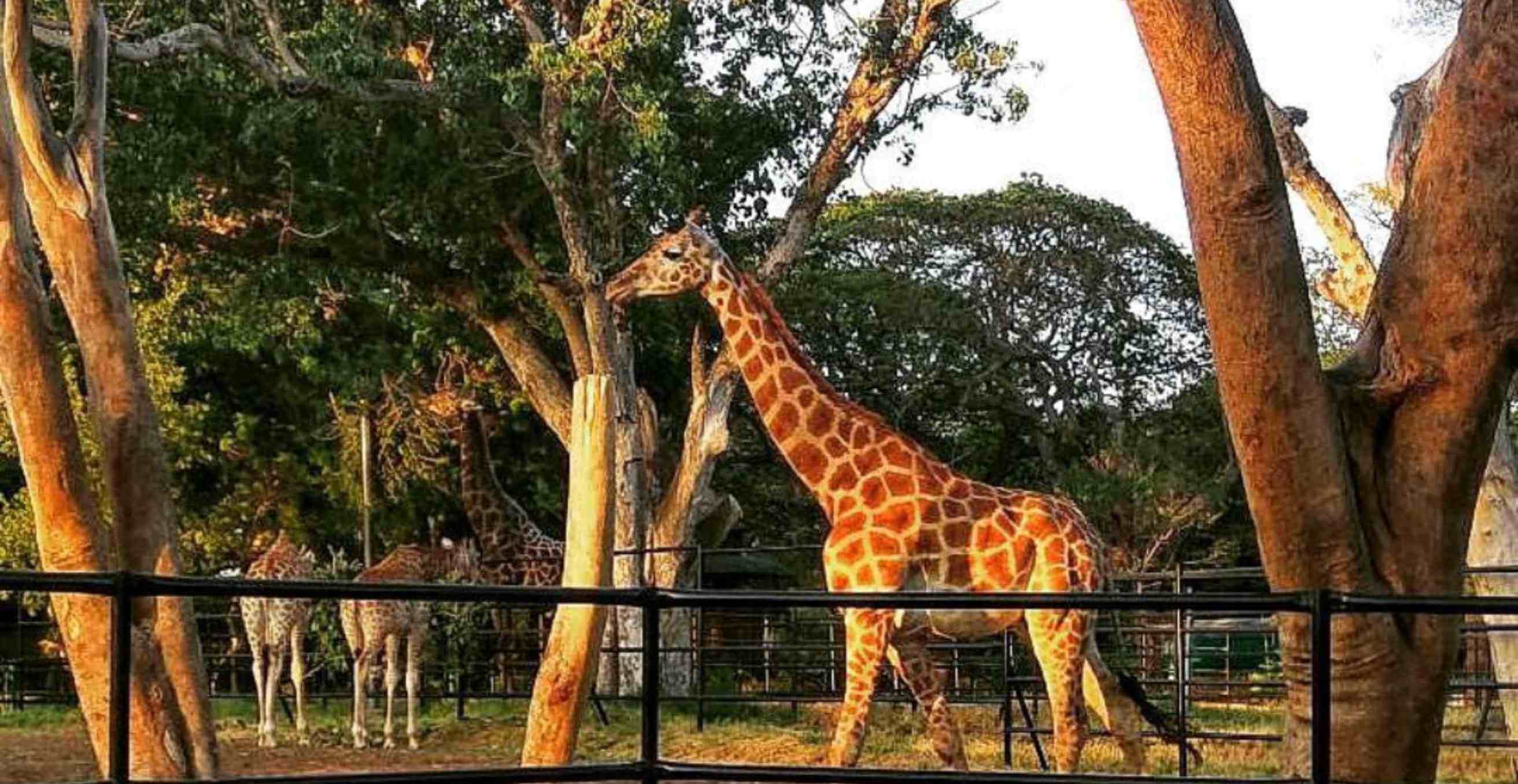
- Hours: 8:30 AM – 5:30 PM. Closed Tuesdays
- Entry fee: ₹100 adults, ₹50 children (approximate — verify current rates at gate or online)
- Combo tickets available with nearby Karanji Lake
Pro-tip: Book tickets online through the official Mysore Zoo website to access a separate, faster entry queue. Early morning (before 10 AM) is when animals are most active, and temperatures are manageable.
Brindavan Gardens & KRS Dam
Twenty-one kilometers from Mysore, the Brindavan Gardens are terraced across 60 acres adjacent to the Krishna Raja Sagara (KRS) Dam. The symmetrical fountains, trimmed hedges, and rose gardens are deliberate and formal — think Mughal garden grammar reinterpreted in South India. The evening Musical Fountain show, where colored jets of water synchronize to film music, is enthusiastically attended by families and utterly charming in its unselfconscious fun.
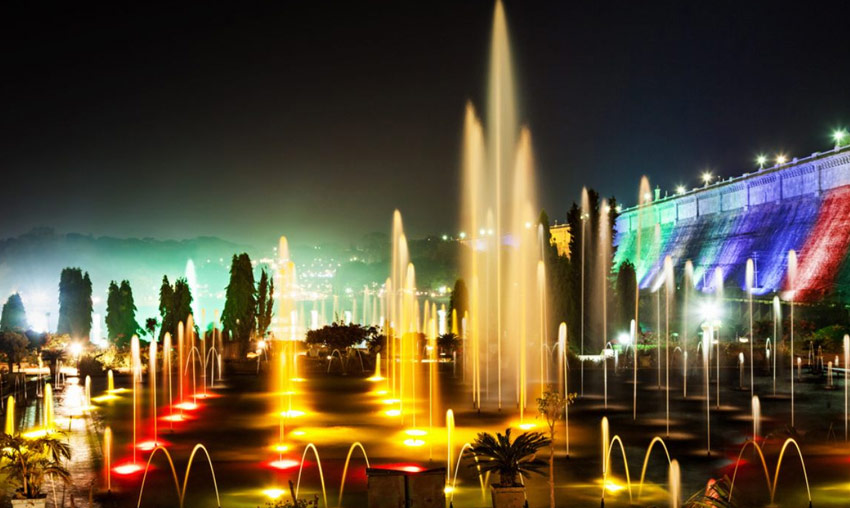
- Hours: 6:00 AM – 8:30 PM (weekends); 6:00 AM – 7:30 PM (weekdays)
- Entry fee: ₹50 adults, ₹10 children. Boating: ₹40/person before 6 PM; ₹80/person after 6 PM
- Musical Fountain: 6:30 PM – 7:30 PM weekdays; until 8:30 PM weekends
Pro-tip: Go on a weekday evening to avoid weekend crowds. If you’re combining this with Srirangapatna, make it a half-day loop — the historical site is 15 km away on the same road.
St. Philomena’s Church
Built between 1933 and 1941 in the Neo-Gothic style with German assistance, St. Philomena’s is one of the tallest churches in India, at 54 meters. The twin spires are visible from much of central Mysore, and the interior — with its blue-and-red stained glass, high vaulted nave, and candlelit catacombs — is genuinely striking, not merely impressive. Mass is held daily, so be respectful of services in progress.
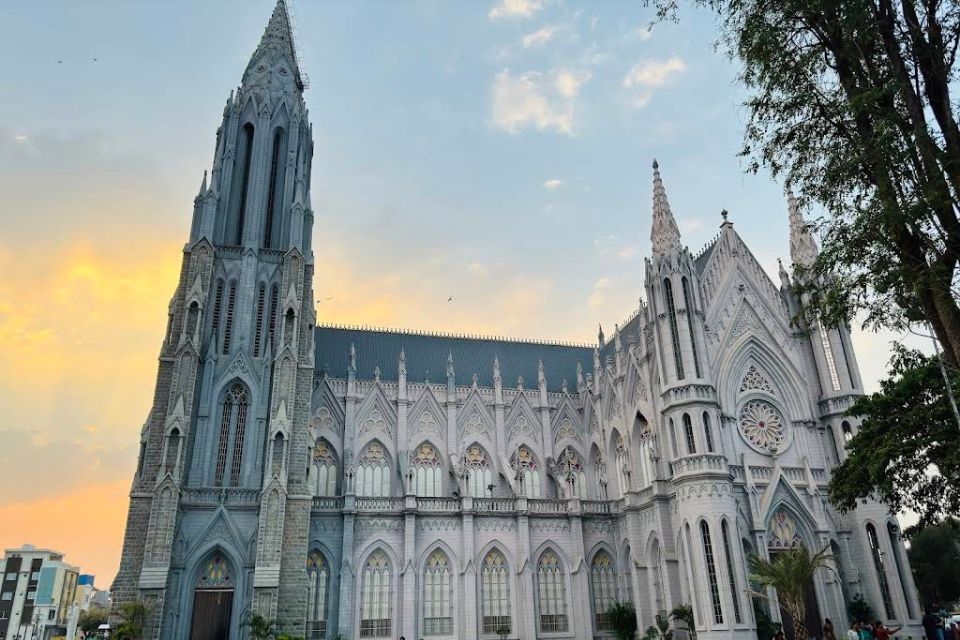
- Hours: 5:00 AM – 6:00 PM
- Entry fee: Free
Hidden Gems
Kukkarahalli Lake

A 54-acre lake, barely one kilometer from the center of town, is surrounded by the University of Mysore campus. At sunrise, the birdlife is extraordinary, with painted storks, purple herons, kingfishers, cormorants, and occasional flamingos that use the lake seasonally. The circular walking path is used by Mysoreans doing their morning rounds, and the absence of tourist signage, food stalls, and entry gates gives it an atmosphere no major attraction can replicate. Bring binoculars if you have them.
Best time: 6:00 AM – 8:00 AM. Free entry.

Fifteen kilometers from Mysore, this small island in the Kaveri River was the fortified capital of Hyder Ali and Tipu Sultan. The ruins of Tipu’s fort, his summer palace Daria Daulat Bagh (its interior walls covered in extraordinary murals), his tomb complex Gumbaz, and the Ranganathaswamy Temple are all compact enough to cover in three hours on foot or by bicycle. It’s a genuinely multilayered historical site, a Hindu temple, a Mughal-style palace, a colonial-era fort, all within one square kilometer that gets a fraction of the attention it deserves.
Daria Daulat Bagh hours: 9:00 AM – 5:00 PM. Closed Fridays. Entry: ₹5 Indians, ₹100 foreign tourists.
Laxman Mess
Not a place on any official heritage map, but an institution since 1989. This canteen-style restaurant near the city center serves traditional Mysore Naati meals on steel plates to a lunch crowd of locals that makes no room for tourist awkwardness. The bisibelebath (spiced rice and lentils simmered with ghee and tamarind) and ragi mudde (millet balls eaten with curries) here are as authentic as they come. Arrive by noon to avoid the food running out.
Karanji Lake Nature Park
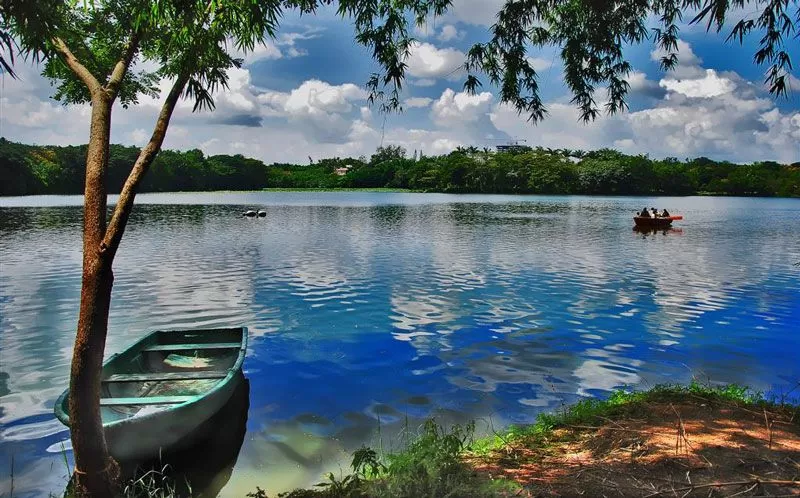
Adjacent to the zoo but consistently overlooked by visitors who’ve just exhausted themselves there. The park contains one of India’s largest walk-through aviaries — a netted dome housing over 70 bird species — as well as a butterfly park, orchidarium, and a viewing tower over the lake. Early mornings bring egrets and cormorants in numbers. The whole park covers 90 acres and feels genuinely off the beaten path.
Hours: 8:30 AM – 5:30 PM. Closed Tuesdays. Entry: ₹10 adults, ₹5 children.
Cuisine & Dining
Mysore’s food identity is rooted in Udupi-style vegetarian cooking — careful spicing, fresh coconut, and a philosophy that flavor and restraint are not mutually exclusive. But that’s the baseline. The city also has a strong tradition of Naati (country-style) non-vegetarian food, Muslim-influenced biryani, and — thanks to a decades-long community of yoga practitioners and international students — a growing café scene in the Gokulam neighborhood.
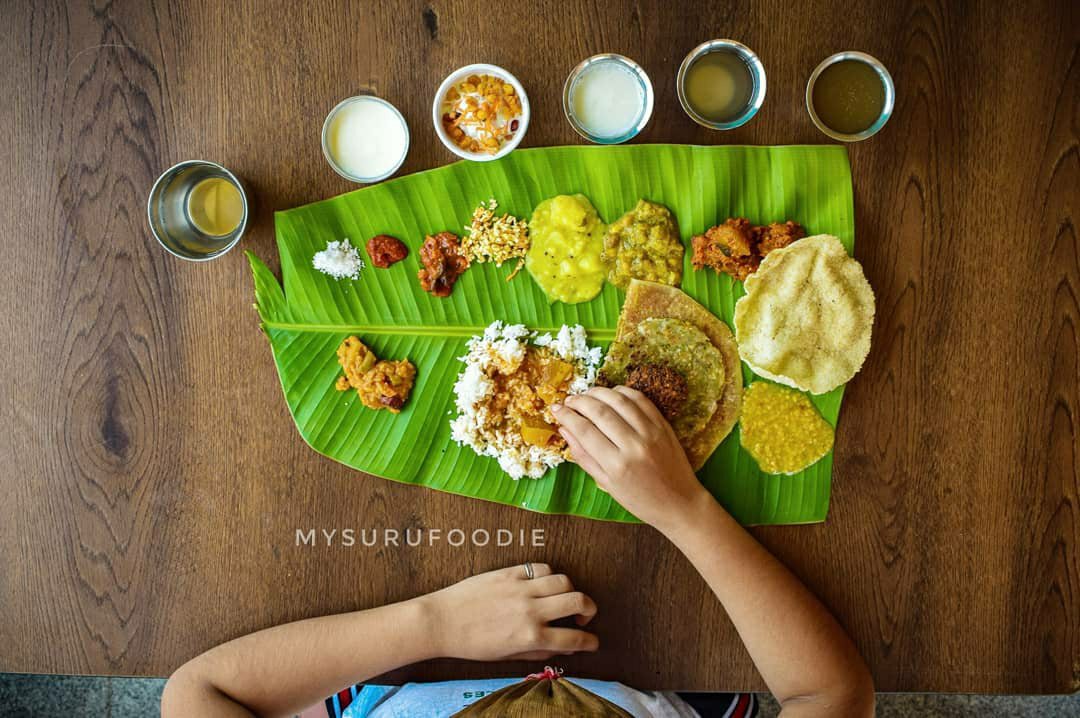
Must-Try Dishes
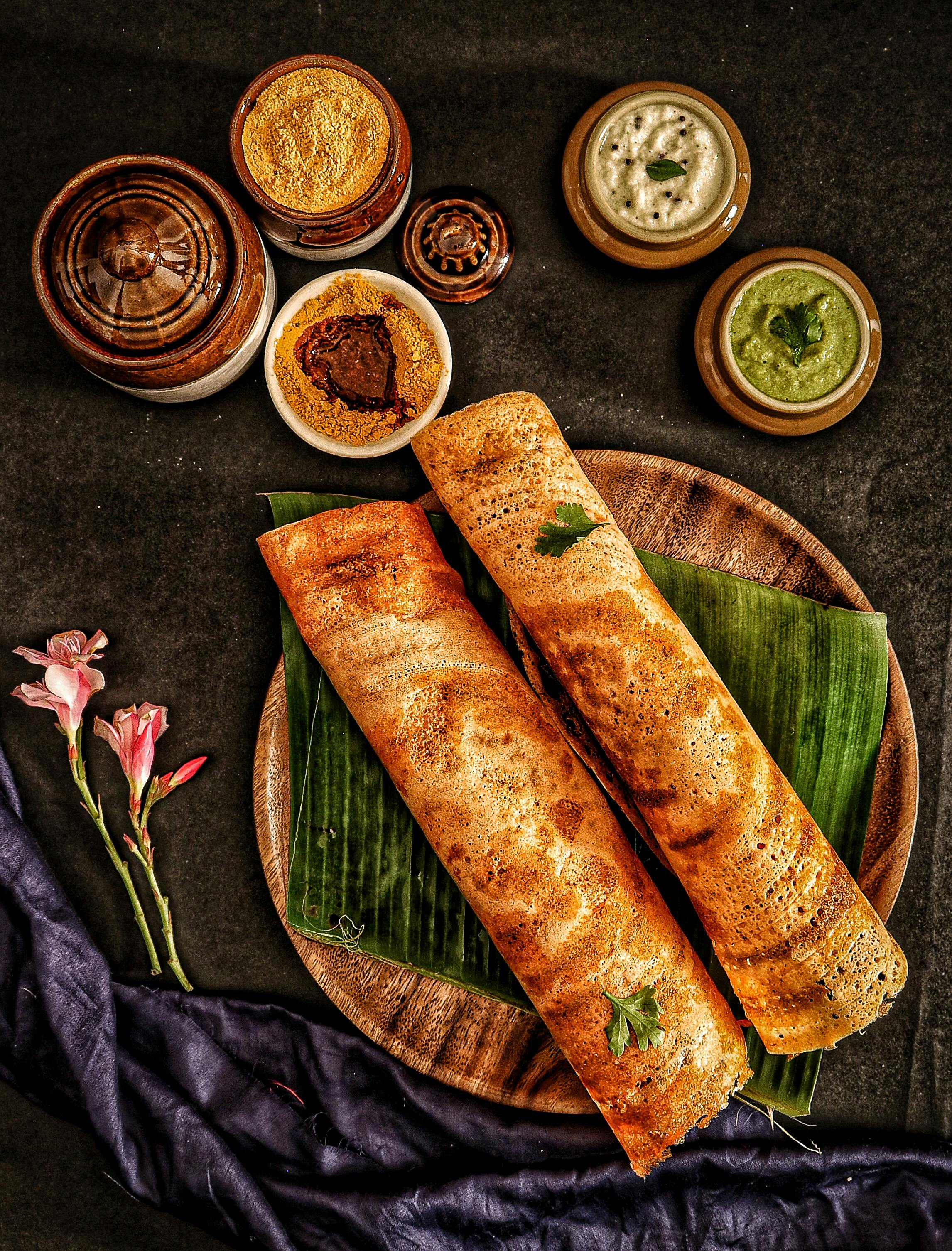
- Mysore Masala Dosa: Not the same as what you’ve had elsewhere. The original Mysore-style version uses a fiery red chutney spread inside the dosa before the potato masala goes in. Crisp on the outside, layered with heat.
- Mysore Pak: The sweet that bears the city’s name. Made from chickpea flour, sugar, and alarming quantities of ghee, it was invented in the Mysore Palace kitchens in the early 20th century. The legitimate version crumbles at the touch; imposter versions are chewy.
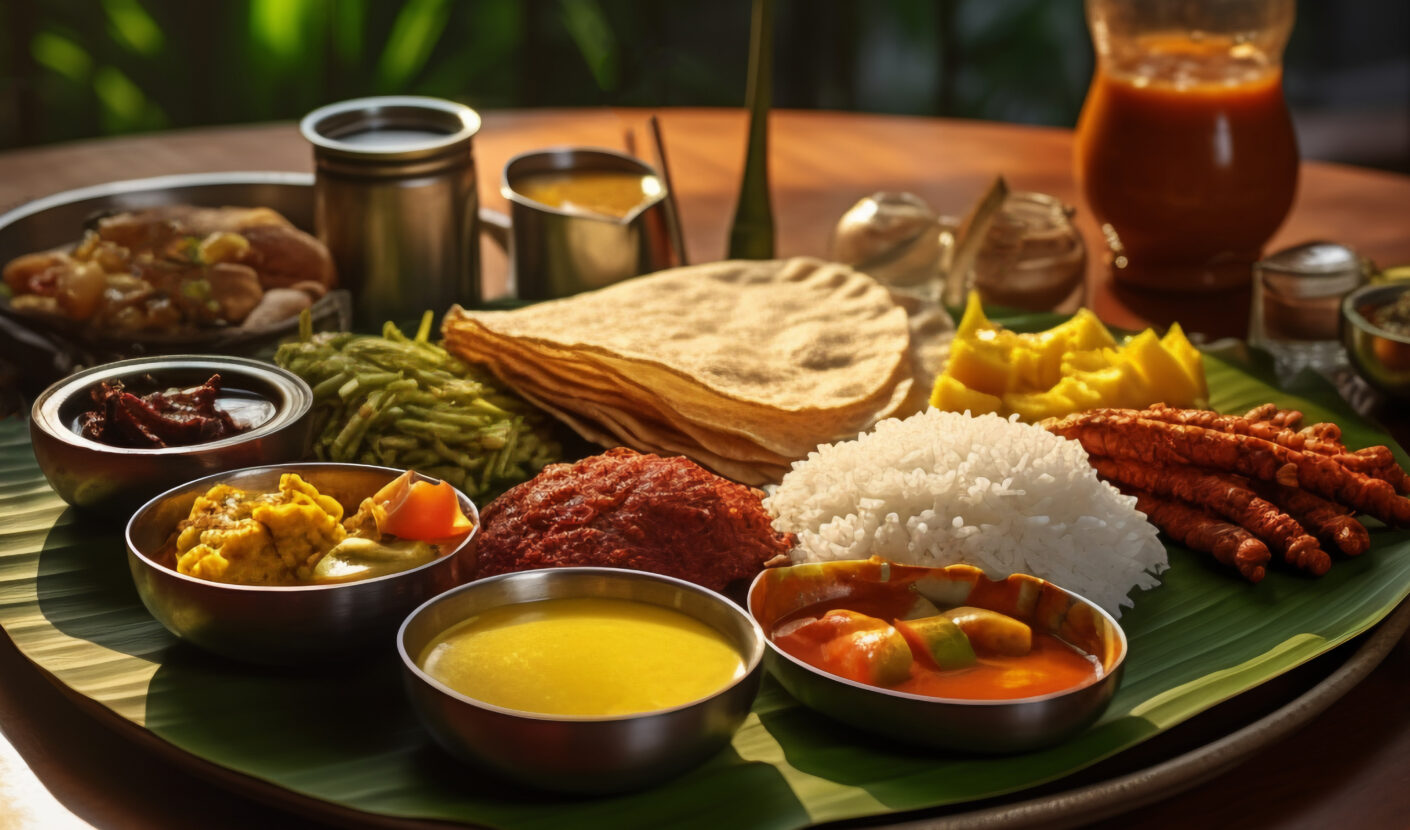
- Bisibelebath: Rice, lentils, and vegetables cooked together with a homemade spice powder and finished with ghee. Comfort food with structural complexity.
- Ragi Mudde: Dense balls of finger millet flour, eaten by pinching off a piece, dipping it in sambar or mutton curry, and swallowing without chewing. An acquired technique that locals do with one hand while reading the paper.
- Mysore Sandesh / Filter Coffee: The decoction-and-milk coffee poured between tumbler and davara in a practiced arc. Order it anywhere with a tin tumbler on the counter.
Budget: Eat Like a Local (Under ₹200 per meal)
Vinayaka Mylari Hotel (Vani Vilas Mohalla) — The original since 1924. Soft, spongy dosas served on a banana leaf with coconut chutney and strong filter coffee. Lines form before 8 AM, and food sells out by 1. Cash only, no menu, no frills, no equal.
Hotel RRR (Main Road) — Andhra-style meals on a banana leaf, spicy and abundant. The chicken biryani is aggressively seasoned and genuinely excellent. Lunch is the main event.
Tegu Mess — A narrow canteen known for its traditional Kannada vegetarian thali. The bisibelebath here is benchmark quality. Arrive early.
Halli Hatti (Gokulam area) — Named “village hut,” this family-run spot serves recipes from the owners’ native village. Wildly popular with locals; dishes run out. Sunday mornings are legendary.
Mid-Range: Sit Down, Take Your Time (₹400–₹1,200 for two)
Cafe Aramane — Cheerfully decorated with Dasara murals, this restaurant serves authentic South Indian thalis and rotating daily-special dosas. The old-Mysore atmosphere is deliberate and successful.
Poojari Fish Land (Kalasthavadi, outskirts) — Coastal Mangalorean cuisine done seriously. Neer dosa with chicken curry, Chicken Ghee Roast, and Anjal Tawa Fry are the standouts. Worth the drive, especially when combined with a visit to Srirangapatna on the return.
Anu’s Bamboo Hut (Gokulam) — A bamboo-thatched terrace in a quiet lane, open for lunch from 1 PM. Healthy, thoughtful cooking served to a regular clientele of yoga students and university people. The banana chocolate apple pie is unexpectedly excellent.
Parklane Hotel (Near Mysore Palace) — Multi-cuisine restaurant in a heritage hotel, with garden seating that overlooks a quiet stretch of road near the palace. Good for a long lunch when feet are tired.
Fine Dining: Splurge Nights
La Uppu (Grand Mercure Hotel) — A sophisticated restaurant inside the Grand Mercure that balances local Karnataka flavors with Continental and Asian options. Buffets are well-curated; à la carte is better. Reliable for a special dinner.

Mezzaluna — Mysore’s best option for European cuisine: steaks, pastas, and Mediterranean dishes in a calm, stylish setting. Appropriate for a long, quiet dinner with wine.
Lalitha Mahal Palace Hotel restaurant — Dining inside a converted palace with a dress code and tablecloths. The food is secondary to the setting — teak floors, high ceilings, colonial crockery — but it’s a legitimate experience once in a while.
Markets & Street Food
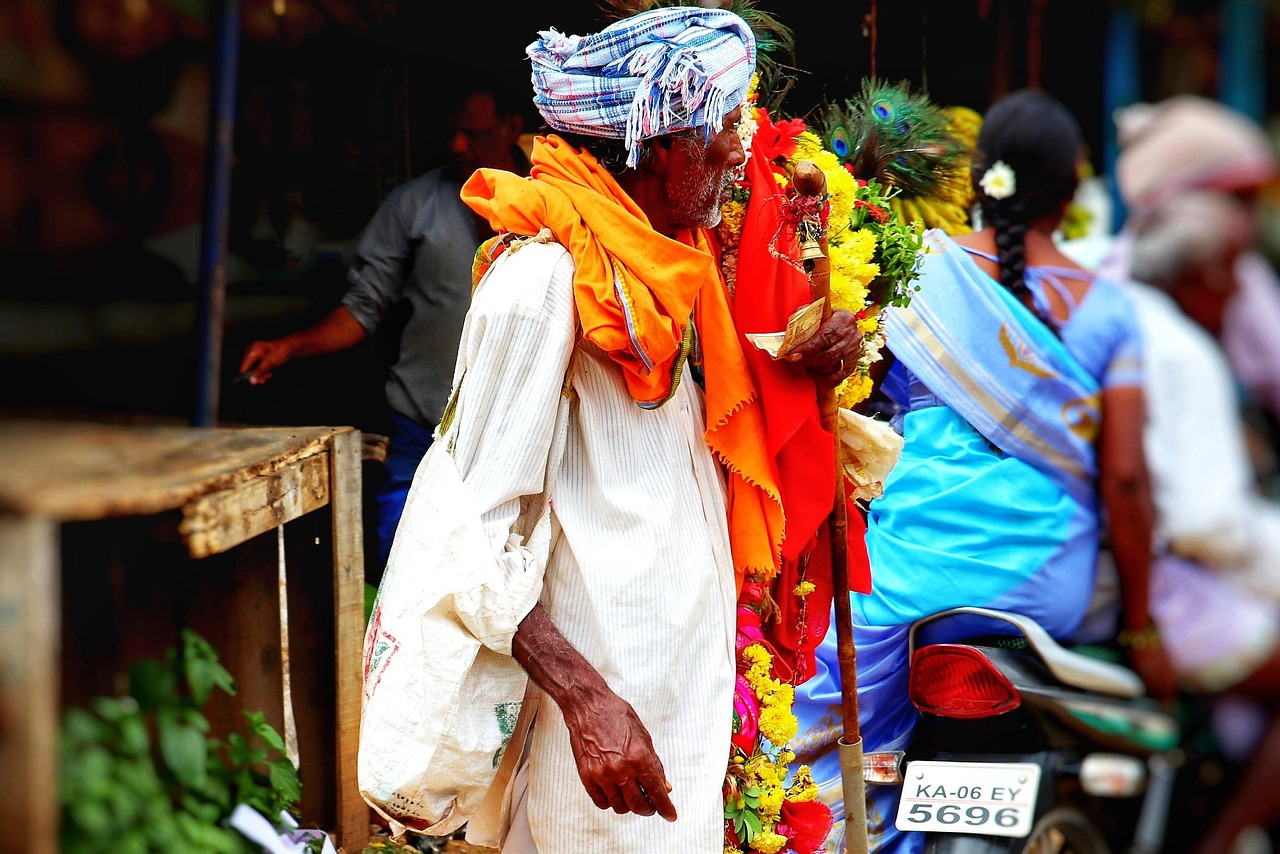
Devaraja Market (Sayyaji Rao Road) — The oldest and most atmospheric market in Mysore, a covered bazaar that has sold spices, jasmine, bananas, incense, and silver since the 18th century. Buy Mysore Pak from the sweet stalls on the outer perimeter and sandalwood soap from the shops inside. Don’t miss the flower section where vendors weave jasmine strings at remarkable speed.
Gandhi Square — Pani puri, chaat, and corn in the evenings. A local gathering point rather than a tourist market.
Accommodation
Stay Strategy by Area
Near Mysore Palace (Chamrajpura / Agrahara): Best for first-timers. Walking distance to the palace, Devaraja Market, and Jaganmohan Palace. More foot traffic and noise, but maximum convenience.
Gokulam: Quieter, greener neighborhood popular with yoga practitioners and long-term visitors. Good cafes and a calmer pace. Fifteen minutes by auto-rickshaw from the palace.
Yadavgiri: Residential area near the railway station and several mid-range hotels. Practical and central without being chaotic.
Budget (₹600–₹1,800/night)
Hotel Roopa — Consistently well-reviewed budget option one kilometer from the palace. Clean rooms, reliable hot water, and a 24-hour front desk. Basic but honest.
Treebo Trend Krishnaa Comfort — Part of a reliable budget chain. Good value, acceptable amenities, and a decent breakfast option.
Guesthouses in Gokulam — Several yoga-adjacent guesthouses offer weekly and monthly rates that collapse into exceptional value for longer stays. Basic but often charming.

Mid-Range (₹2,500–₹6,000/night)
Royal Orchid Metropole — A genuine heritage hotel in a 1920 colonial building that served as the Maharaja’s guest house. The outdoor pool, garden, and original architecture justify the premium over a standard business hotel. Excellent location in Yadavgiri.
Sandesh The Prince Hotel — A Mysore institution with large gardens, a pool, and rooms that have been updated in stages (ask for a renovated room). Food at the in-house restaurant is better than average for a hotel.
Regenta Central Herald — Reliable 4-star in a central location. Pool, gym, and attentive service. The standard choice for business travelers.
Luxury (₹7,000–₹20,000+/night)
Lalitha Mahal Palace Hotel — A 1921 palace converted to a luxury hotel by Karnataka Tourism. Sitting on Chamundi Hill’s flank with a view of the city, it has the kind of staircases and ballrooms that make you feel like you’ve arrived somewhere. Pool, colonial-era rooms, and a setting that no purpose-built luxury hotel can replicate. Book the Viceroy Suite if you’re celebrating something.
Radisson Blu Plaza Hotel Mysore — Modern 5-star with a large pool, multiple dining options, and reliable international-standard service. Better for those who want consistent amenities over historical atmosphere.
The Windflower Resort & Spa — A garden resort on the outskirts, ideal for a slower pace. The spa, pool, and landscaped grounds make it genuinely restful. Good for a couple of days before or after more intense city sightseeing.
Transportation
Getting to Mysore
By Train: The most pleasant option from Bengaluru. The Shatabdi Express (6256/6257) runs twice daily and covers the 145 km in around two hours with reliable punctuality. Book tickets on the IRCTC website or app well in advance, especially on weekends.
By Road from Bengaluru: The Bengaluru–Mysuru Expressway (National Highway 275) cuts drive time to around 2.5–3 hours, depending on traffic. KSRTC runs frequent Volvo and premium AC buses from Kempegowda Bus Terminal (Majestic) in Bengaluru, with fares ranging from ₹150 to ₹350. Private app-based cabs (Ola, Uber) are readily available for ₹1,200–₹1,800 one way.
By Air: Mysore has a domestic airport (MYQ) with limited connectivity. Most visitors fly into Kempegowda International Airport in Bengaluru and then travel to Mysore. The airport-to-Mysore taxi ride takes approximately 3.5–4 hours.

Getting Around Mysore
Auto-rickshaws: The primary mode of local transport. Most drivers in tourist zones quote inflated fares — insist on the meter or negotiate a price before getting in. Short city hops should cost ₹50–₹150.
App-based autos: Namma Yatri and Rapido function in Mysore and offer metered rates without negotiation. Recommended for stress-free transport.
Trin Trin Cycle Rental (MyByk): Mysore has a decent public bicycle-sharing system available at docking stations across the city. Day rentals are affordable, and the terrain is flat enough for comfortable cycling between central attractions.
City buses: KSRTC city buses cover the main routes and cost ₹10–₹30. Routes to Chamundi Hill and Brindavan Gardens are well served.
Hired cars/taxis: For day trips to Srirangapatna, Brindavan Gardens, Somnathapura, or Nagarhole, hiring a car and driver for the day (₹1,500–₹2,500 for an AC car) is efficient and practical.
Events & Festivals
Mysuru Dasara (Late September – Early October)

Karnataka’s state festival — Nada Habba — is the reason Mysore appears on a different category of traveler’s itinerary. For ten days, the city transforms: the palace is illuminated nightly with 97,000 bulbs from 7:00 PM, cultural performances fill the palace grounds, and the Yuva Dasara concerts draw large crowds. The climax is Vijayadashami, when the Jamboo Savari procession departs the palace at 4:42 PM — twelve decorated elephants, horses, camel contingents, folk dancers, and military bands march to Bannimantap, where the Torchlight Parade follows at 7:00 PM. In 2025, Dasara ran from September 22 to October 2.
Booking note: Hotel prices double or triple during Dasara. Book four to six weeks in advance. The Mysore Dasara Gold Card, available through the official portal mysoredasara.gov.in, provides reserved seating for the Jamboo Savari procession.
Vairamudi Festival (March – April, Melkote)
Forty-five kilometers from Mysore, the small temple town of Melkote celebrates Vairamudi over three days each spring, when a diamond-studded crown (vairamudi) is brought from Chennai and placed on the deity of the Cheluvanarayan Temple. Tens of thousands of pilgrims attend, but foreign tourists are rare — which makes the experience remarkably unmediated. The town itself, perched on a rocky hill with its 12th-century temple, is worth a half-day visit any time of year.
Mysore Flower Show (Dasara Season, Various Dates)
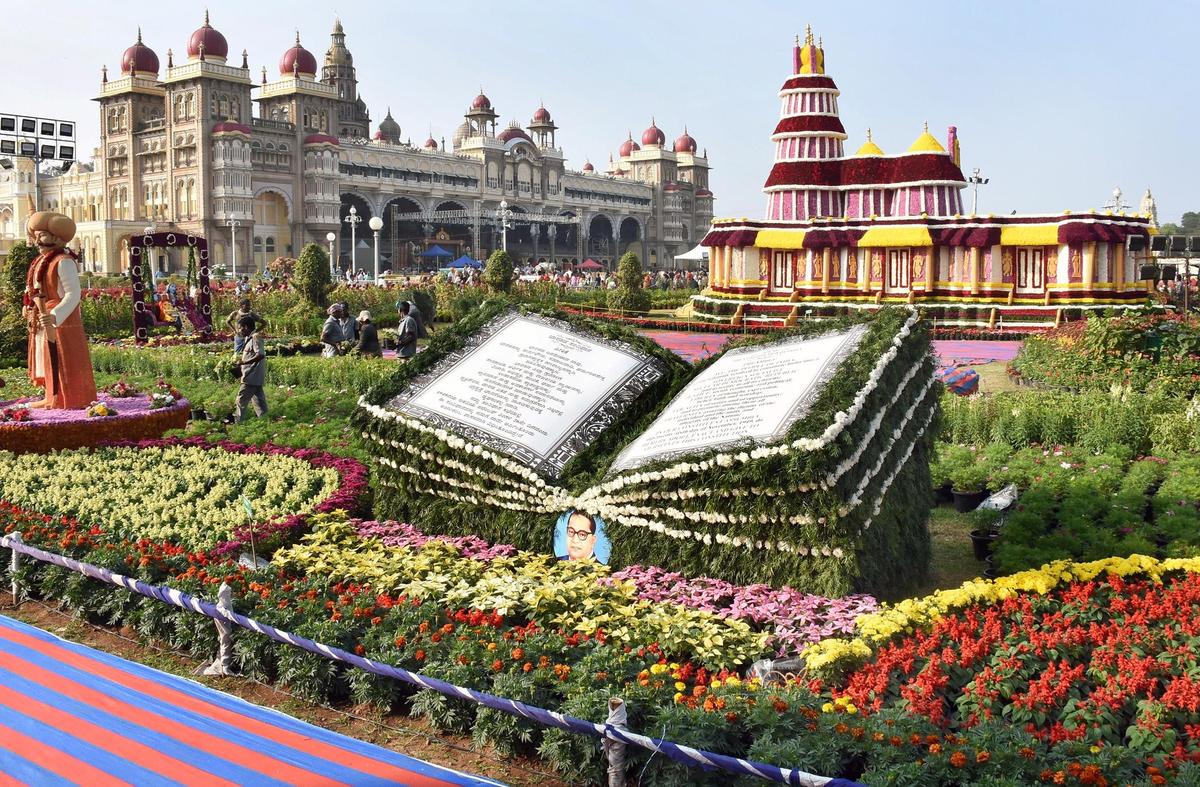
Run by the Department of Horticulture during and around the Dasara period, the flower show at Karanji Lake grounds assembles extraordinary topiary, floral arrangements, and rare plant displays. It’s family-friendly, beautifully arranged, and draws enormous local crowds. A smaller version runs in January around Republic Day.
Shopping
What to Buy
Mysore Silk Sarees: Karnataka Silk Industries Corporation (KSIC) silk sarees are a prestigious purchase. Pure Mysore crepe silk with real zari (gold thread) border. The government emporium on Mananthody Road has fixed prices and authenticated stock. Expect to pay ₹3,000–₹25,000,+ depending on weight and zari content. Cheaper “Mysore silk” sold by street vendors is usually polyester — verify the receipt mentions KSIC.
Sandalwood Products: Mysore sandalwood soap (manufactured by Karnataka Soaps and Detergents Limited) is genuine and cheap — available everywhere. Sandalwood oil, incense sticks, and carved figurines are sold at Cauvery Arts & Crafts Emporium on Sayyaji Rao Road. Beware of artificial-scent substitutes.
Mysore Pak: Buy from established sweet shops rather than airport outlets. Guru Sweet Mart near the Devaraja Market is widely considered one of the originals. Get it packed in a box for travel — it keeps three to four days at room temperature.

Agarbatti (Incense sticks): Mysore is one of the primary centers for incense production in India. The raw material quality is high, and prices are a fraction of what you’d pay in Bengaluru or Mumbai. Buy in bulk.
Rosewood and Ebony Inlay Crafts: Decorative boxes, photo frames, and chess sets with intricate geometric inlay work — a traditional Mysore handicraft. Quality varies significantly; the Cauvery Emporium is the reliable benchmark.
Best Streets for Shopping
Sayyaji Rao Road: The main commercial artery running from the palace toward Devaraja Market. Silk shops, handicraft emporiums, and sweet stalls in concentrated succession.
Dhanvantri Road: Electronics, everyday goods, and local fashion. Less tourist-oriented, which means better prices.
Devaraja Market interior lanes: Spices, dried flowers, puja supplies, and the kind of household items that make genuinely interesting gifts.
Practical Information
Visa: Foreign nationals require a valid Indian visa. Most nationalities can apply for an e-Visa online through indianvisaonline.gov.in — the process typically takes 2–5 business days.
Currency: Indian Rupee (INR). ATMs are widely distributed across the city. Many tourist attractions, the palace, and major markets are cash only — carry sufficient small notes. Cards are accepted at most hotels and upscale restaurants.
Language: Kannada is the official language. English is widely understood in hotels, tourist sites, and restaurants. A reasonable number of residents speak Hindi. Learning five Kannada words (namaskara for hello, dhanyavadagalu for thank you) earns disproportionate goodwill.
Safety: Mysore is consistently rated among the safer cities in Karnataka. Standard urban precautions apply — watch bags in crowded markets and use metered or app-based transport rather than accepting rides from strangers. The city is generally safe for solo travelers of all genders, though solo women should trust their instincts in quieter areas after dark.
Connectivity: Airtel and Jio offer strong 4G/5G coverage throughout the city and most tourist sites. SIM cards require a passport, a visa, and a local contact number — buy from an authorized Airtel or Jio store with your documents.
Electricity: India uses 230V, 50Hz with Type C and Type D plugs. Most hotels have adapters on request; carry a universal adapter to be safe.
Etiquette
Temple visits: Remove shoes before entering any temple. Dress modestly — shoulders and knees covered as a minimum. Non-Hindus are admitted to most temples in Mysore, but a few inner sanctums may restrict entry. Avoid pointing your feet toward the deity or any sacred image.
Palace visit: Shoes off at the entrance. Photography restrictions inside are strict — camera phones are permitted in most areas, but professional equipment is subject to regulation. Follow the indicated walking route inside the Durbar Hall.
Eating etiquette: At traditional restaurants serving banana-leaf meals, eating with your right hand is the custom. Your left hand is considered unclean for eating. Don’t eat the banana leaf — it’s the plate.
Tipping: Not mandatory but appreciated. Restaurant service staff: ₹50–₹100 for a meal at a mid-range restaurant. Auto-rickshaw drivers: round up the fare. Hotel housekeeping: ₹100–₹200 per day for multi-day stays. Do not tip in cash at government-run tourist sites.
Photography: Always ask before photographing individuals, particularly at religious sites and markets. Many temple priests will decline; respect that. Drone photography requires prior permission from the district administration.
Packing List
October–February (Peak Season)
- Light layers for evenings (temperatures can drop to 13–15°C)
- Comfortable walking shoes (the palace requires removal — slip-ons or easy-off shoes save time)
- Breathable cotton or linen for daytime
- Sunscreen and sunglasses (even in winter, midday sun is strong)
- Reusable water bottle (hydration is easy to neglect when sightseeing)
- Compact umbrella (residual rain possible through October)
- Modest clothing for temples (light shawl or scarf works)
March–May (Summer)
- Lightweight, loose cotton clothing
- Strong SPF sunscreen
- Wide-brim hat
- Electrolyte sachets or sports drinks
- Start outdoor activities before 10 AM
June–September (Monsoon)
- Waterproof sandals (wet stone is slippery)
- Packable rain jacket or quality umbrella
- Waterproof bag cover for camera equipment
- Quick-dry clothing
Itineraries
2-Day Itinerary: The Royal Circuit
Day 1: Palace, Market, Hill
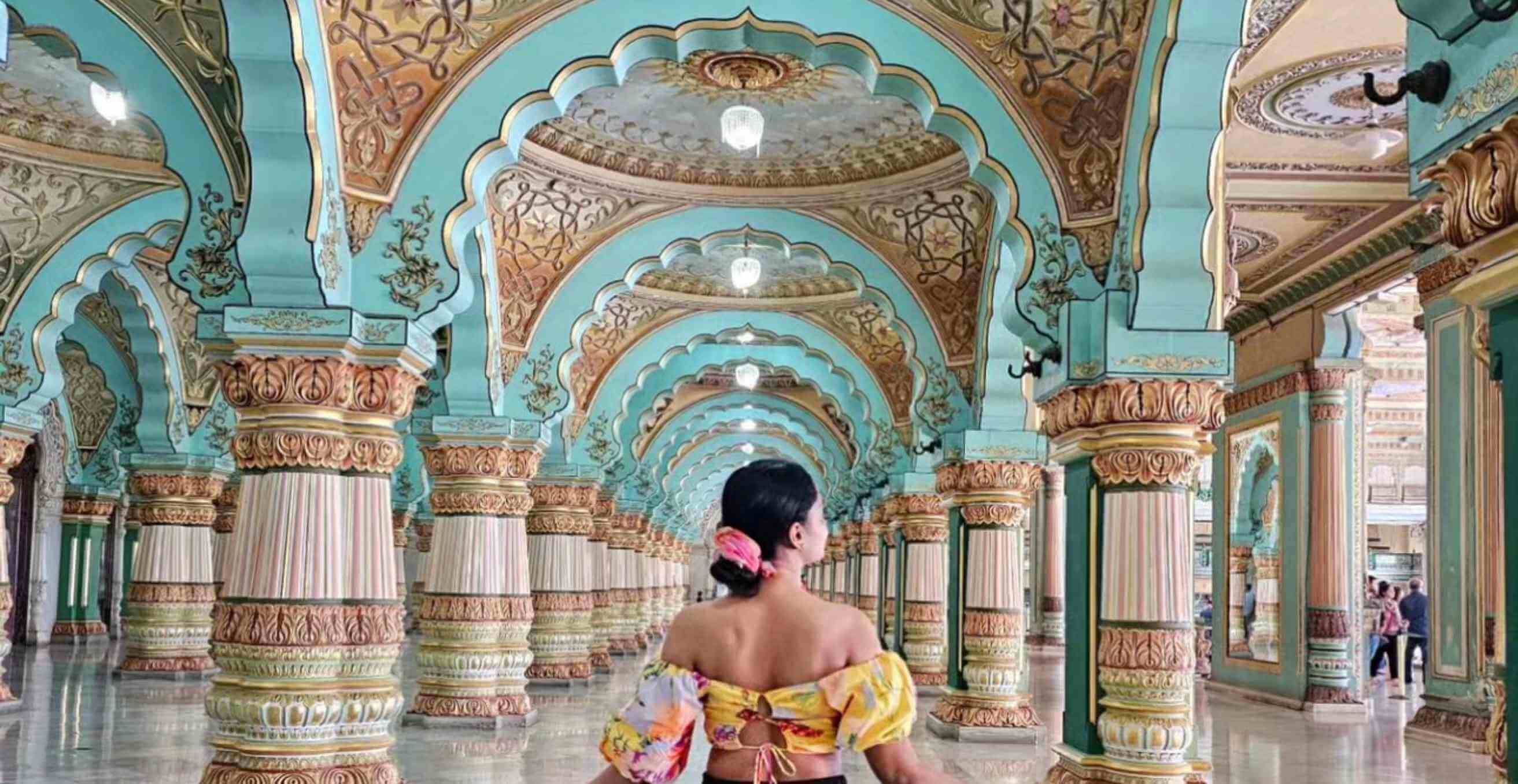
7:00 AM — Begin at Kukkarahalli Lake for a walk along the university campus path. Birdsong, mist, and no tourists.
8:30 AM — Breakfast at Vinayaka Mylari Hotel. Arrive early — the queue forms fast, and the soft dosas with coconut chutney and filter coffee are the correct way to start any Mysore day.
10:00 AM — Enter Mysore Palace at opening time to beat the crowds. Spend 90 minutes inside — prioritize the Durbar Hall, the painted ceilings in the lower halls, and the golden howdah on display.
12:00 PM — Walk south along Sayyaji Rao Road to Devaraja Market. Buy sandalwood soap, Mysore Pak from Guru Sweet Mart, and jasmine strings to take home. Budget 45 minutes.
1:30 PM — Lunch at Hotel RRR — banana-leaf Andhra meal with rice, sambar, and chicken biryani if you want it.
3:00 PM — Drive or auto-rickshaw to Chamundi Hill. Walk up the 1,000 steps (allow 40 minutes ascending) or drive and walk down. Pause at the Nandi statue midway. Arrive at the summit for the views before the afternoon haze sets in.
6:30 PM — Return to city. If it’s Sunday, position yourself across from the palace by 6:45 PM to watch the illumination at 7:00 PM.
8:00 PM — Dinner at Cafe Aramane or La Uppu depending on energy and budget.
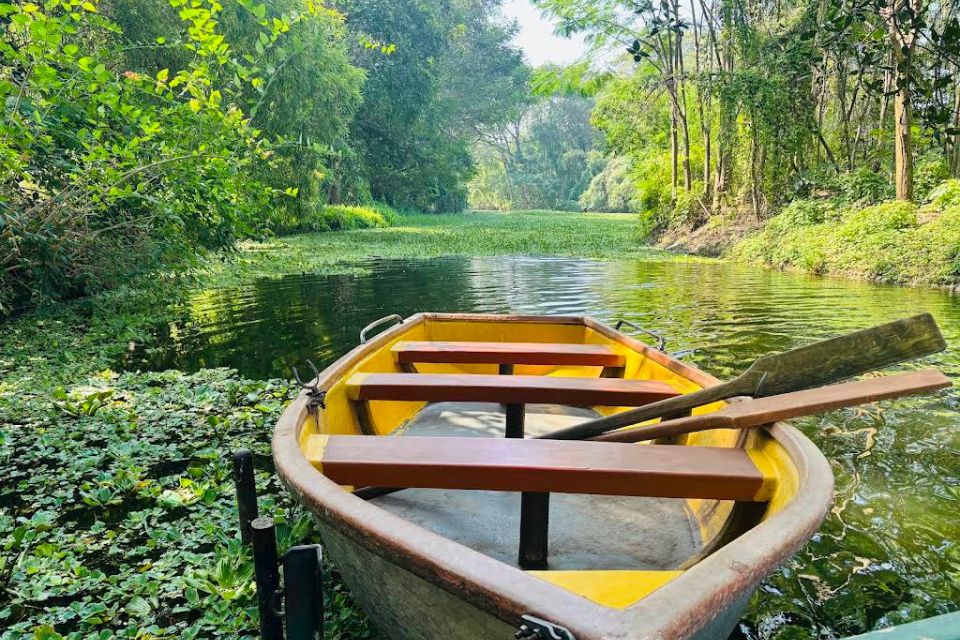
8:00 AM — Drive to Srirangapatna (30 minutes). Visit Daria Daulat Bagh (open 9 AM) — spend 45 minutes studying Tipu Sultan’s remarkable murals and the museum of his personal effects. Continue to Gumbaz (the tombs of Hyder Ali, Tipu, and Tipu’s mother) ten minutes away.
11:00 AM — Return toward Mysore. Stop at Jaganmohan Palace & Art Gallery for the Ravi Varma paintings. 90 minutes is comfortable.
1:00 PM — Lunch at Parklane Hotel garden restaurant near the palace.
2:30 PM — Mysore Zoo or Karanji Lake (choose one). If you choose the zoo, allow two hours. If Karanji, the walk-through aviary and butterfly park take 90 minutes.
5:00 PM — Drive to Brindavan Gardens (30–40 minutes). Arrive by 5:30 PM to explore the terraced gardens before the Musical Fountain show at 6:30 PM (7:30 PM weekends).
8:00 PM — Return to Mysore for dinner at Mezzaluna or a quiet dinner at your hotel.
4-Day Itinerary: Depth & Day Trips
Follow the 2-day itinerary above, then add:
Day 3: Somnathapura & Silk District
8:00 AM — Drive 38 kilometres east to Somnathapura and the Keshava Temple. This 13th-century Hoysala temple is among the finest examples of medieval South Indian stone carving anywhere. The star-shaped plan, three-chambered structure, and exterior walls dense with figurative sculpture reward slow, attentive looking. Budget 90 minutes.
11:30 AM — Back in Mysore, visit KSIC Silk Factory on Mananthody Road. The showroom displays the full range of Mysore silk sarees with fixed, authentic prices. Even if you’re not buying, the weaving demonstration on the upper floor is worth seeing.
1:30 PM — Lunch at Laxman Mess — traditional Naati meals at communal tables.
3:00 PM — Browse the Cauvery Arts & Crafts Emporium on Sayyaji Rao Road for rosewood inlay boxes, sandalwood carvings, and agarbatti. Fixed government prices mean no haggling required.

5:00 PM — Return to St. Philomena’s Church for the late afternoon light through the stained glass. The catacombs (accessible from the side entrance) are a calm, atmospheric contrast to the city outside.
7:00 PM — Sound & Light Show at Mysore Palace (Monday to Saturday only).
Day 4: Nagarhole or Kabini Day Trip
For nature: hire a car early morning and head to Nagarhole National Park (about 90 kilometres from Mysore). Kabini — the reservoir backwater within the park — offers boat safaris at dawn that are extraordinary for birdwatching and reliable for elephant, gaur, and wild pig sightings. Tiger and leopard sightings happen, but don’t go expecting them. Book safari permits online through the Karnataka Forest Department website before arrival. The two-hour boat safari leaves at 6:30 AM — factor in the 2-hour drive and leave Mysore by 4:30 AM.

Alternatively, spend Day 4 at leisure: a yoga class in Gokulam (the Mysore-style Ashtanga tradition originated here with Sri K. Pattabhi Jois), a cooking class, or a slow morning at Kukkarahalli Lake with a book.
7-Day Itinerary: Complete Mysore & Beyond
Days 1–4: Follow the 4-day itinerary above.
Day 5: Melkote & Ranganathittu
7:00 AM — Drive to Ranganathittu Bird Sanctuary (16 km from Mysore). Boat safaris on the Kaveri river islands let you get within metres of open-billed storks, painted storks, spoonbills, and river terns. October to March is the best window for migratory species. Hours: 9:30 AM – 5:30 PM. Boating included in entry (₹200 adults, ₹100 children).

11:30 AM — Continue to Melkote (45 km from Mysore) for lunch at a local darshini (standing cafe). Walk up to the Cheluvanarayan Temple for the views and the peaceful hilltop setting.
4:00 PM — Return to Mysore via Srirangapatna (if not visited on Day 2).
Day 6: Coorg Day Trip or Extended Relaxation
Coorg (Kodagu district) is 120 kilometres from Mysore and reachable in about 2.5 hours by car. The drive through coffee and cardamom estates is part of the experience. Day-trip highlights include Abbey Falls, the Namdroling Monastery at Bylakuppe (one of the largest Tibetan Buddhist settlements in India outside Tibet), and coffee estate visits with tasting. This is a long day; consider staying overnight in Coorg if the pace suits you.
Alternatively, use Day 6 for slower Mysore experiences: a session at one of Gokulam’s yoga studios, a long breakfast at Halli Hatti, an afternoon at the Rail Museum (near Mysore Junction; a second-in-India collection of vintage locomotives including an 1899 Maharani’s Saloon Carriage), and dinner at Mezzaluna or the Lalitha Mahal Palace Hotel.
Day 7: Last Morning & Departure
7:00 AM — Final walk around Kukkarahalli Lake.
8:30 AM — Breakfast at Halli Hatti or Anu’s Bamboo Hut.
10:00 AM — Last shopping at Devaraja Market and KSIC. Pick up agarbatti, Mysore Pak, and silk handkerchiefs.
12:00 PM — Lunch at Vinayaka Mylari (a final masala dosa to close the circuit).
2:00 PM onwards — Depart for Bengaluru by train or car.
All entry fees and opening hours are accurate as of early 2026 but subject to change — verify current details at official sites or at the attraction before visiting. Hotel and transport prices are approximate ranges and vary seasonally.
Also explore Moscow and Mumbai