

 Start Driving in Nairobi
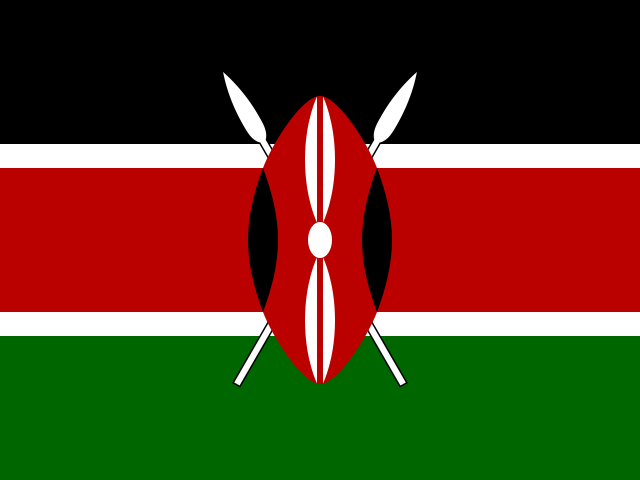
Nairobi, the dynamic capital of Kenya, is a city that harmoniously blends urban vitality with the untamed beauty of the African wilderness. Situated along the Nairobi River, this bustling metropolis offers a unique fusion of cultural landmarks, exhilarating wildlife encounters, and diverse, vibrant neighborhoods. Nairobi National Park, remarkably located within the city’s boundaries, provides an unparalleled opportunity for wildlife viewing, showcasing iconic African fauna such as lions, giraffes, and zebras. The David Sheldrick Wildlife Trust, an elephant orphanage, offers a heartwarming experience, allowing visitors to witness the rehabilitation of orphaned elephants. The Karen Blixen Museum, the former residence of the author of ‘Out of Africa,’ provides a fascinating glimpse into colonial Kenya. Nairobi’s culinary landscape is a delightful fusion of flavors, with an array of restaurants serving traditional Kenyan dishes alongside international cuisines. The city’s bustling markets, such as the Maasai Market, offer a treasure trove of handicrafts and souvenirs, reflecting the region’s rich cultural heritage. The trendy neighborhoods of Westlands and Kilimani are known for their chic cafes, boutiques, and art galleries, providing a contemporary urban experience. Nairobi’s nightlife is a vibrant affair, with bars, clubs, and live music venues catering to diverse tastes. The city’s transportation network, comprising matatus (minibuses), buses, and taxis, facilitates travel within Nairobi and its environs. Travelers should be prepared for potential traffic congestion, particularly during peak hours, and exercise caution in crowded areas. The currency is the Kenyan Shilling (KES), and Swahili and English are widely spoken. The most favorable times to visit are during the dry seasons, from January to February and July to October, when the weather is pleasant and conducive to wildlife viewing.
Nairobi: The City That Does Not Sit Still
Where lions roam seven kilometers from skyscrapers, and a single afternoon can take you from a Michelin-caliber kitchen in Karen to a watering hole where giraffe and zebra share the skyline with office blocks — Nairobi refuses to be categorized.
Nairobi was born from a swamp. In 1899, British colonial engineers needed a depot on the Uganda Railway, and they dumped it in the middle of the Maasai plains at the foot of the Kikuyu highlands. Nobody planned for it to become a city of over five million people, the diplomatic capital of East Africa, and one of the continent’s most dynamic tech and startup hubs. Nobody planned for the wildlife park either — and yet, impossibly, both exist.
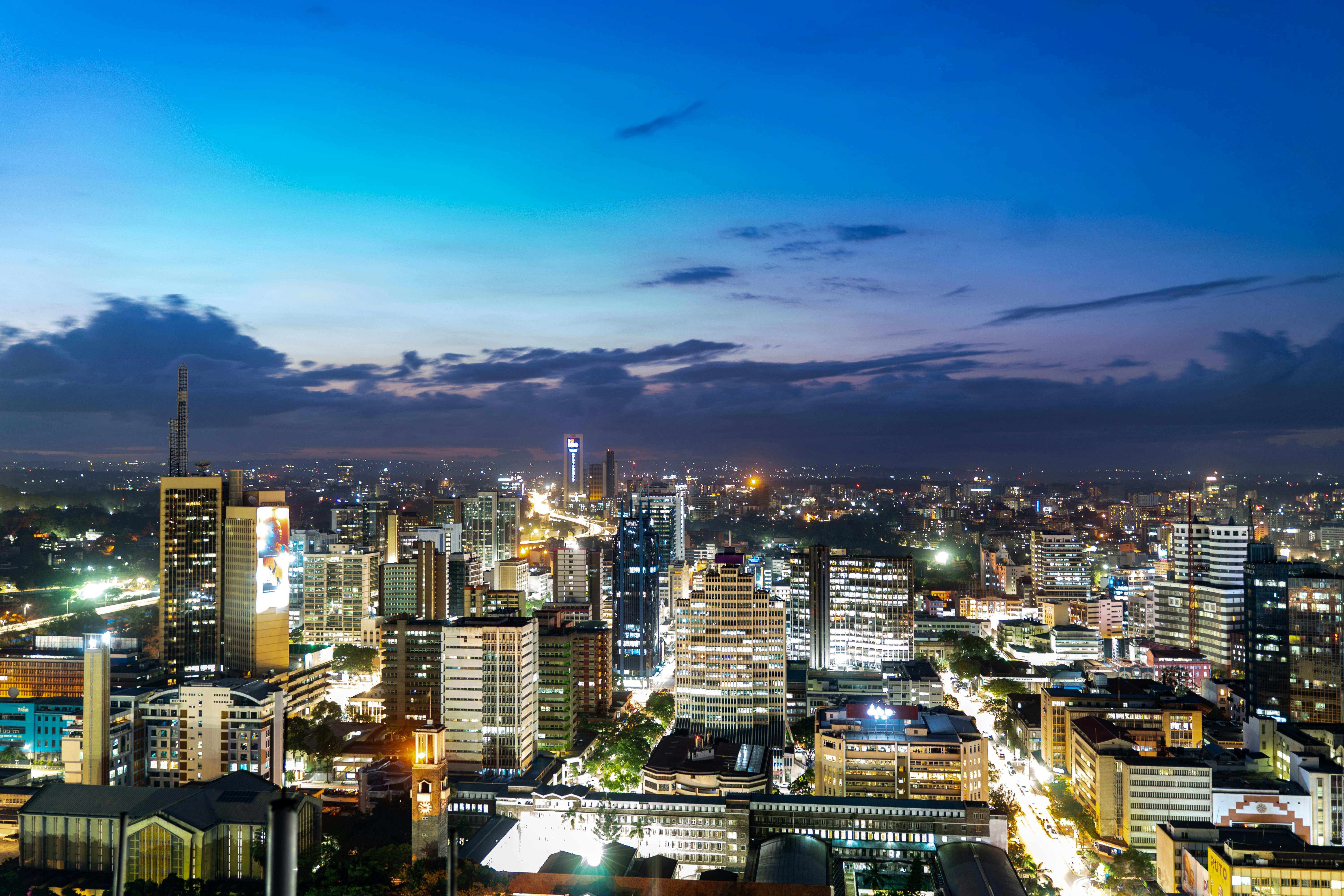
That contradiction is Nairobi’s DNA. The city is simultaneously a safari departure lounge, a fine-dining destination, a protest hotbed, a Silicon Savannah, and the creative capital of East Africa. It has one of the youngest populations of any major city in the world, a street art scene that puts some European capitals to shame, and a coffee culture that would impress any specialty-roast devotee.
It also has traffic that can turn a two-kilometer journey into a 90-minute odyssey, neighborhoods where wealth and poverty exist in uncomfortable proximity, and a reputation — only partially deserved — that keeps some travelers at arm’s length. The travelers who push past that reputation consistently report the same thing: Nairobi surprised them.
It will surprise you, too.
Best Months to Visit
Nairobi sits at 1,795 meters (5,889 feet) above sea level, which gives it a climate that feels more like a perpetual British spring than equatorial Africa. Temperatures stay between roughly 14°C and 26°C year-round. The difference between seasons is almost entirely about rainfall.
Peak Dry Season: July – October
This is the sweet spot. Cool, crisp air, cloudless mornings, and wildlife concentrated around scarce water sources in Nairobi National Park. July and August overlap with the wildebeest migration in the Maasai Mara (a four-hour drive), making this the busiest and most expensive window.
Secondary Dry Season: January – March
A reliable alternative with slightly warmer temperatures and fewer tourists. January and February offer exceptional wildlife viewing in the park as the short dry spell intensifies.

Long Rains: March – May
Heavy afternoon downpours, lush landscapes, and dramatically reduced hotel prices — often 30–40% cheaper. The park roads get muddy, and some dirt tracks become impassable. Birding, however, is spectacular.
Short Rains: October – December
Lighter and less predictable than the long rains. October can still feel like peak season. November is genuinely unpredictable.
Bottom line: July to September for the classic experience. January to February for value with excellent conditions.
Top Attractions
Nairobi National Park
Opening Hours: 6:00 AM – 6:00 PM daily
Entry Fee (Non-Residents): USD $80 per adult, USD $40 per child (3–17)
Entry Fee (EAC Citizens): KES 2,000 per adult, KES 500 per child
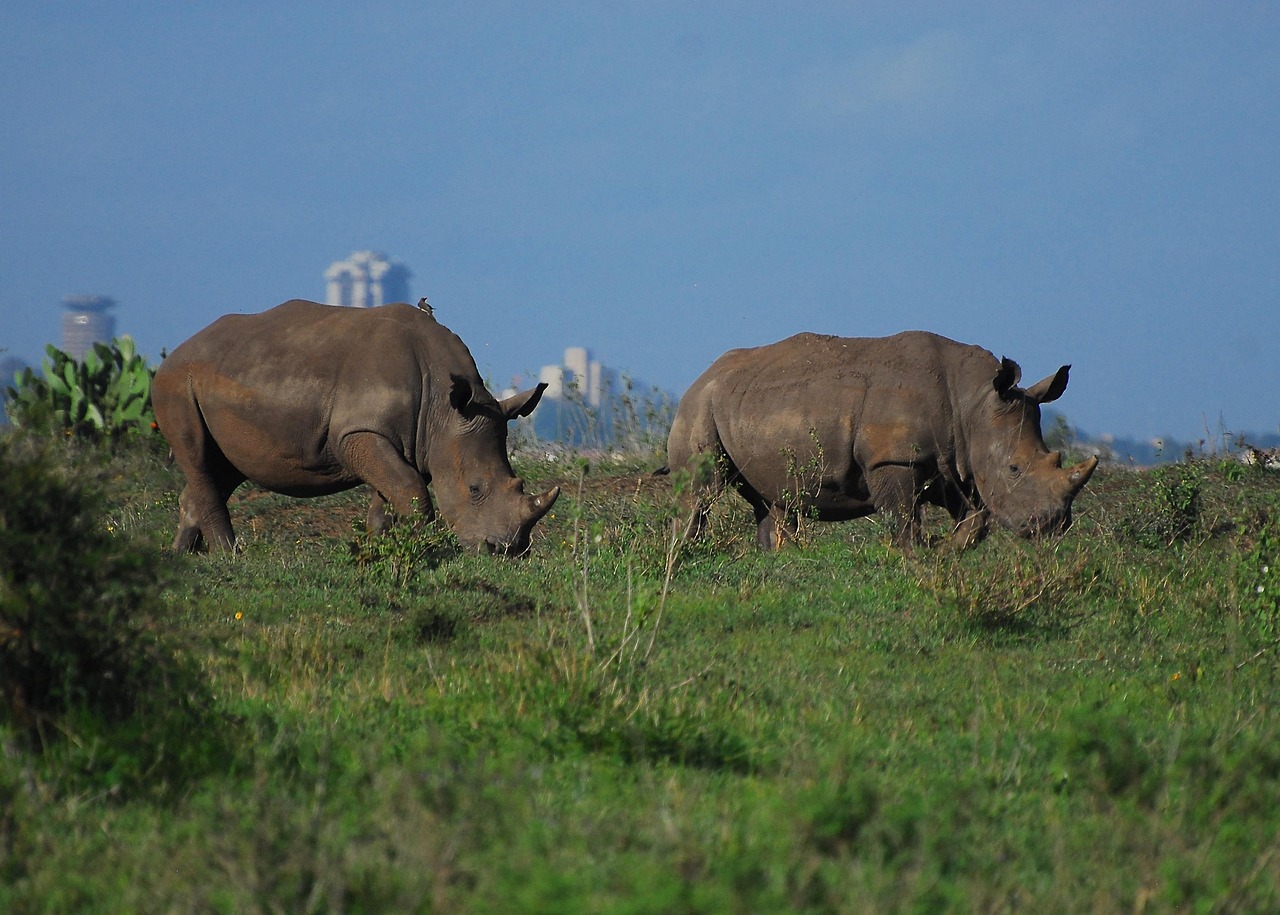
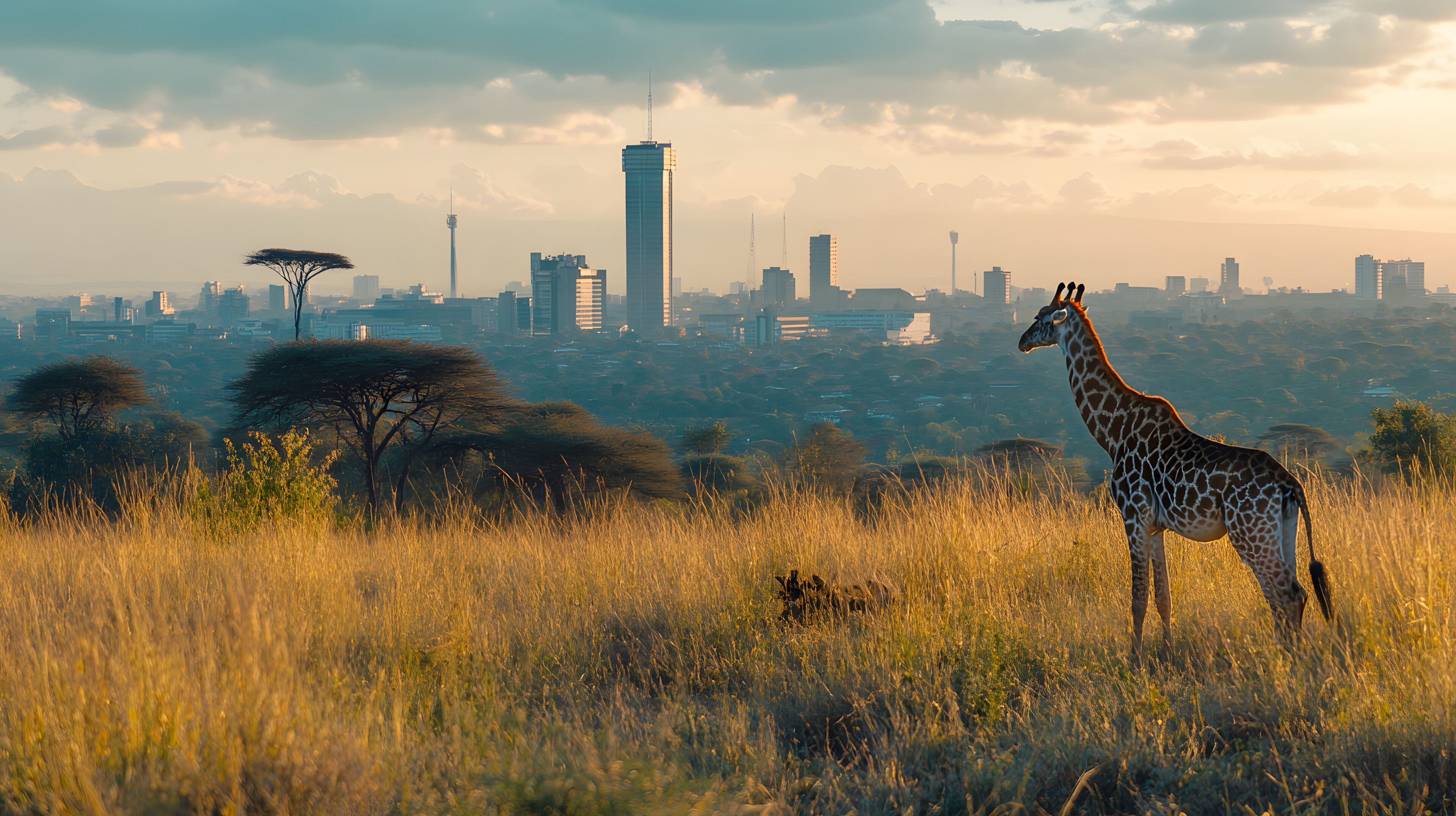
The only national park on earth that shares a fence with a capital city. You can photograph a black rhino with a skyline of glass towers looming in the background — a shot that exists nowhere else. The park holds lions, cheetahs, leopards, buffalo, hippos, over 100 mammal species, and a critical population of critically endangered black rhinos.
Pro Tip: Pre-book tickets via the KWS eCitizen portal (kws.ecitizen.go.ke) to avoid gate queues. Arrive at the Main Gate on Lang’ata Road by 6:15 AM — predators are active in the first two hours. Self-drive is the cheapest option if you have your own 4WD; otherwise, guided half-day tours start from around USD $120 per person in groups.
The David Sheldrick Wildlife Trust (DSWT Elephant Orphanage)
Opening Hours: Public viewing 11:00 AM – 12:00 PM daily
Entry Fee: KES 500 (suggested donation)

One of the most emotionally affecting wildlife experiences in Africa. Each morning, keepers in green coats bring out rescued baby elephants for mud baths and bottle feeds — some as young as a few weeks old. The orphanage has raised and released over 270 elephants into the wild since 1977.
Pro Tip: Arrive by 10:45 AM. The viewing window is only 1 hour, and it fills up fast. Foster an elephant online before your trip to get early access to the pass (available from 10:00 AM). Located off Magadi Road, adjacent to the national park.
Giraffe Center (African Fund for Endangered Wildlife)
Opening Hours: 9:00 AM – 5:00 PM daily
Entry Fee: KES 3,000 for adults (approx. USD $23), KES 1,500 for children

A raised feeding platform puts you eye-to-eye with Rothschild giraffes — one of the world’s rarest subspecies, with fewer than 1,600 left in the wild. They eat specially made pellets from your hand (and occasionally from your lips, if you’re adventurous). It’s a legitimate conservation program, not a theme park.
Pro Tip: Come between 9:00 and 11:00 AM when the giraffes are hungriest and most interactive. Combine with the nearby Karen Blixen Museum to make a logical morning in Karen.
Nairobi National Museum
Opening Hours: 9:30 AM – 5:30 PM daily
Entry Fee: KES 1,200 for adults (non-residents), which includes admission to the adjacent Snake Park.

The museum holds some of the most significant fossil collections in Africa, including Turkana Boy — the most complete early human skeleton ever found. The cultural galleries document Kenya’s 42+ ethnic groups with extraordinary depth. The botanical gardens outside are free and quiet.
Pro Tip: Tuesday mornings are the least crowded. Budget two to three hours. Don’t skip Snake Park, included with your ticket — it has East Africa’s most comprehensive collection of indigenous reptiles.
Karen Blixen Museum
Opening Hours: 9:30 AM – 6:00 PM daily
Entry Fee: KES 1,500 (non-residents)
The farmhouse that Isak Dinesen (Karen Blixen) immortalized in Out of Africa is now a museum frozen in the 1920s, complete with her original furniture, hunting trophies, and the sweeping view of the Ngong Hills she wrote about. The suburb of Karen, one of Nairobi’s leafiest and most upmarket neighborhoods, bears her name.
Pro Tip: Tour guides are included and genuinely excellent; they place the colonial history in an unflinching context that the film glosses over. Worth every penny.
Hidden Gems
Karura Forest
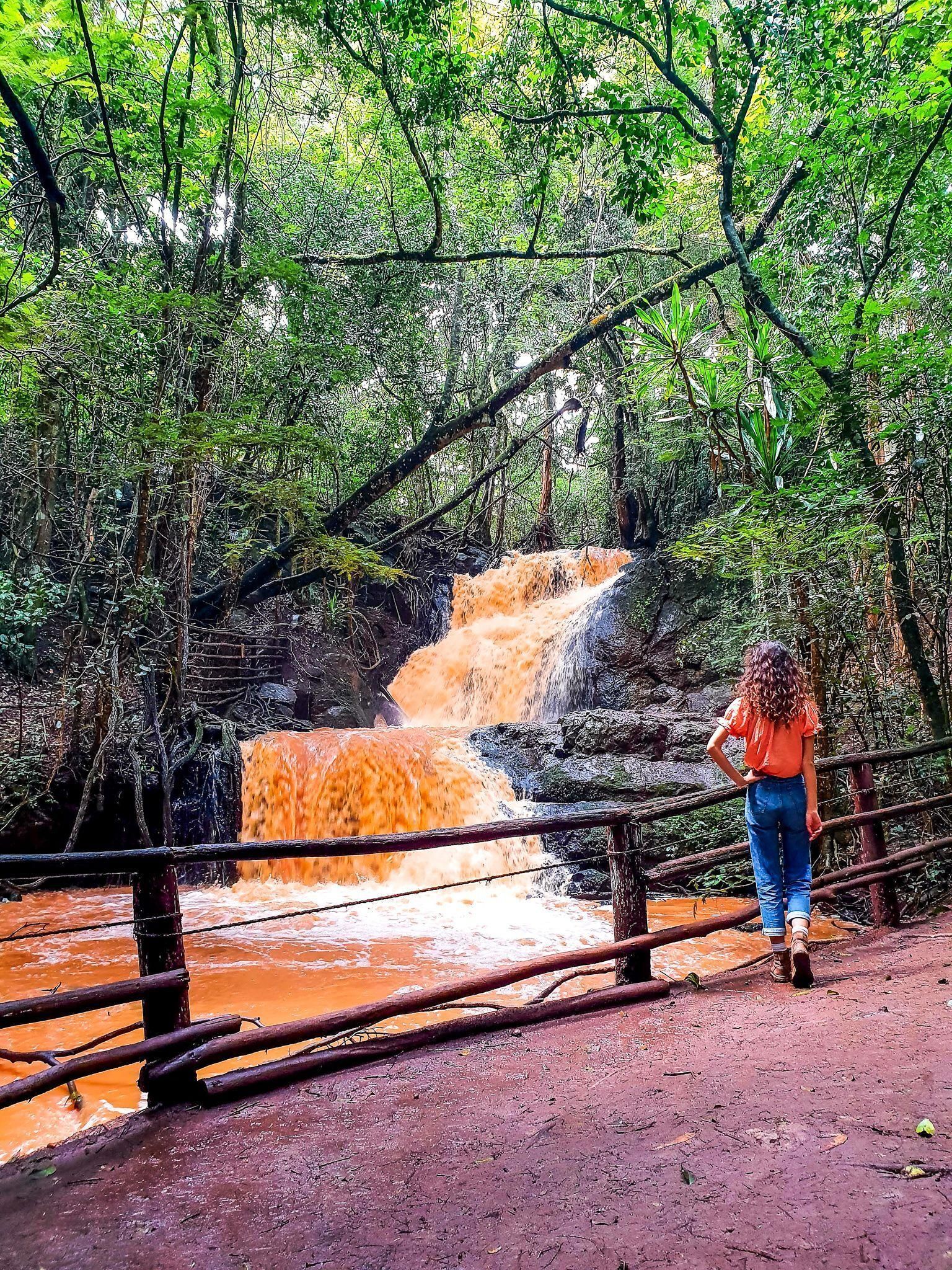
What most visitors don’t realize: Nairobi has an urban forest the size of Manhattan. Karura Forest (off Limuru Road, Gigiri) covers over 1,000 hectares with waterfalls, Mau Mau caves, a river, 50+ bird species, cycling trails, and picnic clearings — all free or nearly free to enter (KES 100 for pedestrians, KES 200 for cyclists). On a Saturday morning, it’s packed with joggers from Nairobi, families, and birders. On a Tuesday afternoon, it’s practically empty.
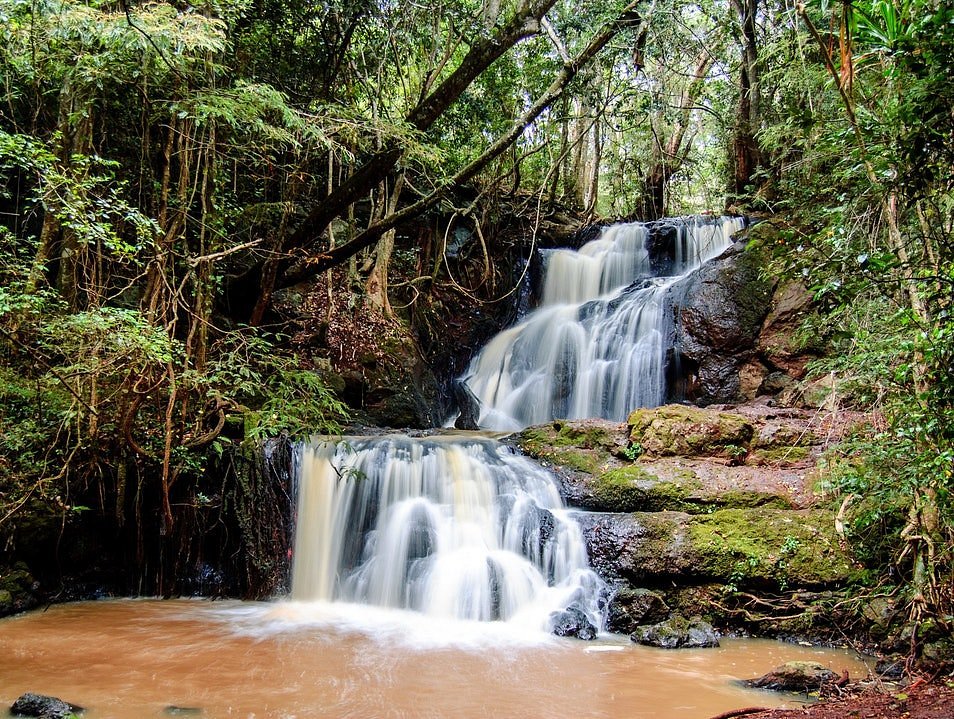
Insider tip: Rent a bike at the gate for KES 700/hour and take the trail to the waterfall — it takes about 45 minutes each way and ends at a proper cascade hidden behind fig trees.
Nairobi Street Kitchen (Ngong Road)
This outdoor food court and creative space in the Woodvale Grove area of Westlands is where Nairobi’s young, creative class actually eats on weekends. It hosts rotating food stalls, live DJ sets, salsa nights, and pop-up markets. The energy is completely different from the tourist-facing venues in Karen — it’s local, loud, and a little chaotic.
Insider tip: Saturday evenings from 5:00 PM. Grab a Tusker from one stall, a nyama choma (grilled meat) platter from another, and stay for the dancing.
Alchemist Bar (Westlands)
Nairobi has a genuinely world-class cocktail scene that most guidebooks ignore. Alchemist, tucked into a compound on Parklands Road, has multiple bars, a food truck area, live music on weekends, and an atmosphere that feels like Berlin’s creative bar districts transplanted to East Africa. It’s where Nairobi’s artists, entrepreneurs, and diplomats all end up in the same courtyard.

Insider tip: Thursday nights have the best live music — usually jazz, afrobeats, or indie. Arrive after 9:00 PM.
Ngong Hills
A 30-minute drive from the CBD, the Ngong Hills ridge rises to 2,460 meters and gives panoramic views of both the Great Rift Valley to the west and Nairobi’s skyline to the east. There’s hiking and ziplining, and on clear mornings (try October), you can see the snow-capped summit of Kilimanjaro 250 kilometers away.

Insider tip: Go on a weekday and hire a local guide from the town of Ngong for around KES 1,000 — it’s worth it for safety and because they know where the colobus monkeys congregate.
Cuisine & Dining
Nairobi’s food scene has undergone a quiet revolution over the past decade. The city now has serious farm-to-table restaurants sourcing produce from the highlands, coastal Swahili kitchens, outstanding Indian food (a legacy of the railway-era South Asian community), and some of East Africa’s best coffee — Kenya’s AA grade beans are among the finest in the world.
Must-Try Dishes
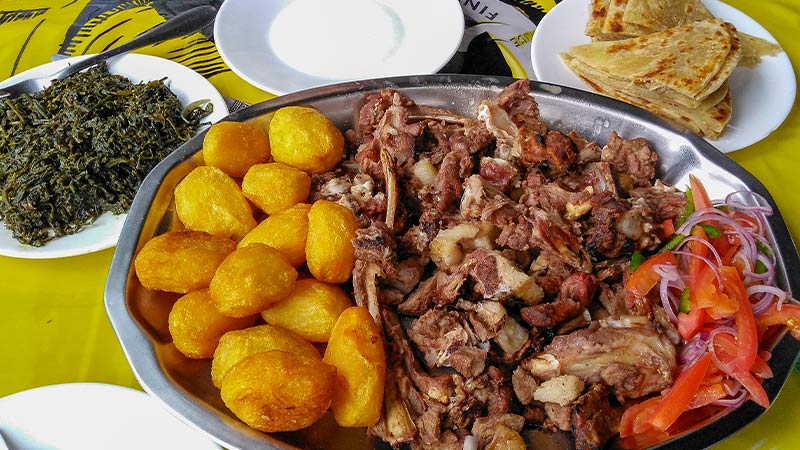
- Nyama Choma — slow-roasted goat or beef, charred over charcoal and eaten with bare hands. Non-negotiable.
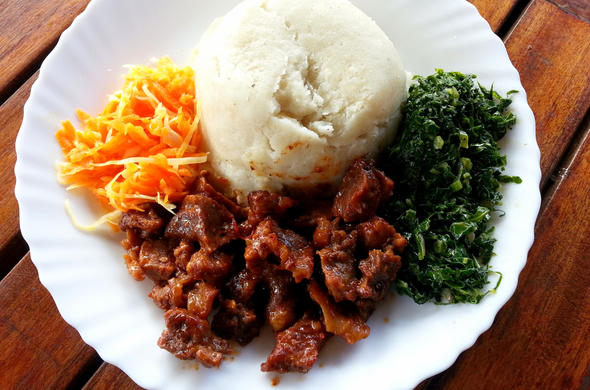
- Ugali — the starchy maize staple, eaten with stews, sukuma wiki (collard greens), or fish. Heavier than it looks.
- Mukimo — mashed potatoes mixed with peas, maize, and greens from the Kikuyu highlands. Deeply comforting.
- Mandazi — slightly sweet fried dough, eaten for breakfast with chai (spiced tea made with milk).
- Githeri — a simple, nourishing mix of boiled maize and beans, seasoned and cheap. The working person’s lunch.
- Pilau — Swahili-spiced rice with meat, fragrant with cardamom, cumin, and black pepper.
- Kenyan Coffee — single-origin, light-roasted, and extraordinary. Artcaffe and Nairobi Java House are the reliable chains, but the specialty shops in Westlands go further.
Budget Dining
Carnivore Restaurant (Lang’ata Road) — a Nairobi institution since 1980, where servers bring skewers of exotic game meats (ostrich, crocodile, hartebeest) to your table on Maasai swords until you raise the white flag. Kitschy, carnivore-specific, and unforgettable. Around KES 4,500 per person.
Nairobi Java House (multiple locations) — reliable, clean, and beloved by locals. Strong coffee, good breakfast sandwiches, fast WiFi. Perfect for a working morning. Under KES 1,000.
Open House Restaurant (Westlands) — consistently excellent North Indian food — rich curries, freshly baked naan, outstanding biryanis — at prices that feel absurd for the quality. Budget under KES 2,000 per person.
Mid-Range Dining
Talisman Restaurant (Karen) — the best all-round restaurant in Nairobi by most accounts: an eclectic menu ranging from sushi rolls to slow-cooked Kenyan lamb, sourced locally, served in a lantern-lit garden courtyard. Around KES 3,000–5,000 per person.
Haandi (The Mall, Westlands) — Nairobi’s most celebrated Indian restaurant. The butter chicken alone justifies the taxi ride. Consistent over decades. Around KES 2,500–4,000 per person.
Under the Swahili Tree (Karen) — boho garden atmosphere, coastal Swahili-influenced dishes like coconut fish curry and grilled prawns with tamarind, and some of the most evocative outdoor seating in the city. Around KES 2,500–4,000 per person.
Cultiva Farm Kenya (Karen) — a stylish farm-to-table spot with seasonal organic menus, an open kitchen, and excellent Bloody Marys. Perfect for a long weekend brunch. Around KES 3,000–4,500 per person.
Fine Dining
The Talisman (Karen) — already listed above, but worth repeating in this category for special-occasion meals.
Sky Lounge at Emara Ole-Sereni (Langata Road) — cocktails with a panoramic view of Nairobi National Park below. Watch giraffes move through the grass while you sip on a gin and tonic against a sunset. One of the most theatrically stunning dining experiences in East Africa. Around KES 6,000–10,000 per person with drinks.
Sankara Nairobi (Westlands) — the hotel’s Bao Bar & Restaurant delivers clean, refined Pan-Asian cooking in a sleek rooftop setting. Around KES 6,000–9,000 per person.
Market Recommendations
City Market (Muindi Mbingu Street, CBD) — a covered 1930s market with fresh produce, Maasai beadwork, wooden carvings, and the most aggressive souvenir vendors in the city. Worth a visit; hold firm on prices and start bargaining at 30% of the first offer.
Maasai Market (rotates locations — Tuesdays at Upper Hill, Fridays at Village Market, Sundays at ABC Place) —colorful open-air market with hand-crafted jewelry, kikoi fabric, soapstone carvings, and beaded sandals. Far more pleasant than City Market.
Accommodation
Budget: Hostels & Guesthouses
Mvuli Studio Suites (Westlands) — an exceptionally well-run apartment guesthouse in a central location. Private studios with kitchenettes from around USD $30/night. One of the best-value stays in Nairobi.
Upper Hill Campsite & Hostel (Upper Hill) — popular with overland travelers, with dorm beds and private rooms, camping spots, and a social atmosphere. From KES 2,500 per night for dorms.
Stay in Westlands for nightlife proximity; Upper Hill for central access to the CBD and National Museum.

Mid-Range: Boutique Hotels
Best Western Plus Westlands (Westlands) — a reliable, well-furnished option with an excellent breakfast buffet, gym, and attentive service. Comfortable without being overpriced. From around USD $80/night.
House of Waine (Karen) — a colonial-style villa in Karen’s quiet suburbs, family-run, with antique-furnished rooms, a large pool, and garden paths that disappear into landscaped grounds. From around USD $150/night.
Stay in Karen for a quieter base near the Giraffe Center, DSWT, and the national park’s south gates. Stay in Westlands for restaurants, nightlife, and expat energy.
Luxury
Hemingway’s Nairobi (Karen) — sumptuous boutique hotel with grand four-posters, freestanding baths, a cocktail bar built around the spirit of the man himself, and a spa. Safari departures leave from the front drive. From around USD $400/night.
Ole Sereni Hotel (Langata Road) — the only hotel in Nairobi with floor-to-ceiling windows overlooking Nairobi National Park. Zebra and buffalo graze within view of the pool. Excellent Sky Lounge and 15 minutes from the CBD. From around USD $200/night.
Fairmont The Norfolk (Harry Thuku Road, CBD) — a genuine Nairobi landmark operating since 1904. Colonial-era architecture, a famous Lord Delamere Terrace bar, modern luxury rooms, a pool, and an intimate atmosphere despite its scale. From around USD $250/night.
Tribe Hotel (Gigiri, near UN complex) — a hip, design-forward boutique hotel near the diplomatic quarter with a swim-up bar, excellent spa, and rooms that feel more New York gallery than Nairobi. From around USD $230/night.

Transportation
Getting to Nairobi
By Air: Jomo Kenyatta International Airport (NBO) is the main gateway, 15 km southeast of the CBD. It handles direct flights from London, Amsterdam, Dubai, Doha, Mumbai, Istanbul, and major African hubs. Kenya Airways is the national carrier and a member of SkyTeam. Wilson Airport, closer to Karen and the CBD, handles smaller domestic and regional flights.
By Road: If entering from Tanzania, Uganda, or Rwanda, cross-border coach services like Easy Coach connect Nairobi to Kampala, Dar es Salaam, and Kigali — longer journeys but excellent for overland travelers.
Getting Around Nairobi
Uber and Bolt — by far the safest, most comfortable option for visitors. Prices are low by international standards: a cross-city ride typically costs KES 300–800. Download both apps before you arrive; Bolt occasionally has better surge pricing.
Little Cab — Kenya’s own ride-hailing app often has lower prices than Uber and supports Mpesa payments natively.
Matatus — the ubiquitous shared minibusses that form Nairobi’s public transport backbone. They’re cheap (KES 30–100 per journey), culturally fascinating, decorated with murals and blasting music — and genuinely not recommended for visitors unfamiliar with the routes and the chaos. The safety record is variable.
Taxis — negotiate the price before getting in. Airport taxis are a flat KES 3,000–5,000 to the CBD; the driver’s initial offer will be significantly higher.
Boda Bodas — motorcycle taxis. Fast, cheap, and the quickest way through gridlocked traffic. They come with real safety risks and are not recommended for longer journeys or at night.
Nairobi Railway — the SGR (Standard Gauge Railway) connects Nairobi to Mombasa in about five hours, a genuinely comfortable and scenic intercity option if you’re adding the coast.
Traffic note: Nairobi’s traffic is genuinely serious — a 10 km journey during peak hours (7:00–9:00 AM and 5:00–7:30 PM) can take 90 minutes. Build this into every itinerary. Plan morning activities to start early, before gridlock.
Events & Festivals
Nairobi Restaurant Week (August)
An annual two-week event (usually mid to late August) where Nairobi’s best restaurants offer fixed-price menus at reduced prices — typically KES 1,500–3,000 for a two-course lunch or three-course dinner. It’s the best and most affordable time to eat at the city’s higher-end establishments.

Koroga Festival (Multiple dates, usually April–August)
An outdoor music festival held across multiple weekends at various venues, celebrating Afrobeats, jazz, soul, and Kenyan contemporary music. Food stalls, craft markets, and a genuinely electric crowd of Nairobi creatives. Check their social media for current dates.
Nairobi International Film Festival (October)
A 10-day celebration of African and international cinema held at various venues across the city. Screenings, masterclasses, and panel discussions that pull filmmakers from across the continent. Kenya’s film industry is growing fast — this festival reflects that ambition.
Shopping
Best Streets and Areas
Westlands — the epicenter of contemporary Nairobi shopping. The Sarit Center and The Mall Westlands host fashion, electronics, bookshops, and supermarkets (Carrefour). For independent boutiques, walk the side streets around Woodvale Grove.
Karen — boutique shopping with a relaxed pace. Karen Crossroads and the nearby smaller shopping centers have galleries, homeware shops, and good delis. Very easy to spend an afternoon here.
Village Market (Gigiri) — the most expat-friendly mall, with international brands, a food court, cinema, and the best regular Maasai Market on Fridays.
Kenyatta Avenue / Kimathi Street (CBD) — old-school downtown Nairobi, where bookshops, fabric merchants, and City Market occupy colonial-era buildings. Loud, chaotic, and authentic.
Best Local Souvenirs
- Soapstone carvings from Kisii — animals, bowls, and abstract sculptures in the distinctive mottled stone. Available at the Maasai Market.
- Kikoi — a brightly coloured woven fabric wrap traditionally worn on the Kenyan coast. Lightweight and genuinely useful as a beach wrap, scarf, or tablecloth.
- Maasai beaded jewelry — earrings, bracelets, and elaborate collars in bright geometric patterns. Prices at the Maasai Market are negotiable; expect to pay KES 500–3,000 depending on complexity.
- Kenyan single-origin coffee — buy directly from specialty roasters like Dormans or Java House to take home beans you genuinely cannot find abroad.
- Sisal baskets (kiondo) — the tightly woven Kikuyu baskets in natural and dyed fibers. Practical, beautiful, and unique to Kenya.
Practical Information
Visa / Entry
All visitors (except African Union citizens as of July 2025) require an Electronic Travel Authorization (eTA) before arrival — not a visa-on-arrival. Apply at least 3–5 days before travel at the official Kenya eTA portal. Cost: USD $30. African citizens can currently enter without an eTA for up to 60 days.
Your passport must be valid for at least six months beyond your departure date and have at least two blank pages.
If arriving from a yellow fever-endemic country, you’ll need to show your yellow fever vaccination certificate at the airport.
Currency
The Kenyan Shilling (KES) is the official currency. As of mid-2026, the rate is approximately KES 130 per USD (check current rates before travel).
M-Pesa — Kenya’s mobile money platform — is used for almost everything from park entry to restaurant bills. Get a Safaricom SIM card (available at the airport for KES 100) and register it with your passport, then load Mpesa credit. It makes everyday payments easier.
Credit cards (Visa and Mastercard) are widely accepted in hotels, malls, and upscale restaurants. Carry some cash for markets, matatus, and smaller vendors.
ATMs are widely available in malls and on major streets; draw cash during the day.
Language
English and Swahili are both official languages. English is spoken fluently in business, tourism, and urban environments. A few Swahili phrases will earn you genuine warmth:
- Jambo / Habari — Hello / How are you?
- Asante (sana) — Thank you (very much)
- Pole pole — Slowly / Take it easy
- Karibu — Welcome
- Ngapi? — How much?
Health
Nairobi itself sits above the malaria zone (altitude provides natural protection). Consult a travel doctor about vaccinations: Yellow Fever (required if coming from an endemic country), Hepatitis A and B, Typhoid, and up-to-date routine vaccines. Drink bottled or filtered water.
Medical facilities in Nairobi are good by regional standards. Aga Khan University Hospital and Nairobi Hospital are both capable of handling most medical situations. Carry comprehensive travel insurance with medical evacuation cover.
Safety
The city’s reputation has meaningfully improved over the past decade, but standard urban caution applies.
- Avoid walking alone after dark; use Uber or Bolt instead.
- Don’t display expensive cameras, phones, or jewelry in crowded areas.
- Multiple governments flag Eastleigh and Kibera as areas to avoid without a local guide.
- Downtown Nairobi is generally safe during daytime hours; exercise normal big-city awareness.
- Karen, Westlands, Gigiri, Kilimani, and Lavington are the traveler-friendly neighborhoods.
- Carry a photocopy of your passport; keep the original in the hotel safe.
Etiquette
Greetings matter. Kenyans invest in greetings — rushing past “jambo” or skipping pleasantries to get to the point can read as rude. Take a moment to acknowledge the person you’re dealing with properly. It changes the whole interaction.
Bargaining is expected at markets but not in restaurants, shops, or with Uber. Start at around 30–40% of the first price offered at City Market or the Maasai Market, then negotiate toward a comfortable middle.
Photography. Always ask before photographing people, especially Maasai warriors who may request payment for portraits — that’s entirely reasonable. Never photograph police officers, military installations, government buildings, or the airport.
Dress code. Nairobi is relatively relaxed. Shorts, T-shirts, and dresses are fine almost everywhere. More conservative dress is expected in mosques and some community areas. In Karen or upscale Westlands restaurants, smart-casual is appropriate for dinner.
Tipping. Not obligatory but genuinely appreciated. In restaurants, 10% is standard for good service (check if service charge is already included). Tip safari guides KES 1,000–2,000 per day; drivers KES 500–1,000 per trip for excellent service. Don’t tip in coins — it reads as an insult.
The pace. A concept called pole pole (“slowly, slowly” in Swahili) shapes everyday life in Nairobi outside rush hour. Services take time. Plans shift. Meetings start late. Go with it — the frustration of resistance costs more than the delay.
Packing List
Year-Round Essentials
- Lightweight layers (cool evenings even in “summer”)
- One warm fleece or light down jacket (July/August nights can hit 10°C)
- Comfortable walking shoes with grip (pavements are uneven and often unpaved)
- Sunscreen and a wide-brimmed hat
- Insect repellent (mosquitoes exist, particularly in gardens and parks)
- Reusable water bottle and water purification tablets
- Portable battery pack (power cuts do occur)
- A photocopy of the passport and travel insurance documents
- Small padlock for hostel lockers
Additional for Long Rains (March–May, Oct–Nov)
- Waterproof jacket or packable rain poncho
- Quick-dry clothing
- Waterproof bag cover
Safari-Specific Additions
- Neutral-coloured clothing (khaki, olive, brown — not white, which attracts dust; not bright colors, which disturb animals)
- Binoculars (10×42 recommended for game drives)
- A camera with a zoom lens if you’re serious about wildlife photography
- Polarising lens filter for shooting through vehicle windows
Itineraries
2-Day Nairobi Itinerary
Day 1: Wildlife, Conservation, and Karen
6:00 AM — Arrive at Nairobi National Park (Main Gate, Lang’ata Road) for the golden-hour game drive. Lions are often still moving at this hour. Self-drive or join a half-day guided safari — plan three hours inside the park.
10:00 AM — Head to the David Sheldrick Elephant Orphanage (Magadi Road, adjacent to the park). The public viewing window is 11:00 AM – 12:00 PM. Arrive early.
12:30 PM — Lunch at Cultiva Farm, Kenya (Karen) — 15 minutes by car. Farm-to-table brunch in a leafy garden.
2:30 PM — Giraffe Center for the afternoon feed. The giraffes are active, and the light is good in the afternoon.
4:30 PM — Karen Blixen Museum for a one-hour guided tour.
7:00 PM — Dinner at Talisman Restaurant (Karen) — book ahead. Walk the garden terrace with a Tusker beer before your table is ready.
Day 2: Culture, City, and Westlands Nightlife
9:00 AM — Nairobi National Museum — allow two to three hours for the fossil galleries and cultural exhibits.
12:00 PM — Walk up Museum Hill to the Nairobi War Memorial Garden for quiet reflection, then grab lunch at one of the cafés on the hill.
2:00 PM — Head to the CBD for a self-guided walking tour: Dedan Kimathi Monument on Kimathi Street, the Kenyatta International Conference Center (KICC) rooftop for city views, and the City Market for a look at (though perhaps not serious shopping in) the craft stalls.
5:00 PM — Back to Westlands to freshen up.
7:00 PM — Pre-dinner cocktails at the Sky Lounge, Emara Ole-Sereni, if you want wildlife views at sunset, or at Alchemist if you want something edgier.
9:00 PM — Dinner at Haandi (The Mall, Westlands) — some of the finest Indian food in East Africa.
10:30 PM onwards — Westlands nightlife: Electric Avenue, Alchemist courtyard, or a live music venue, depending on the night.
4-Day Nairobi Itinerary
Follow the 2-day itinerary for Days 1 and 2, then add:
Day 3: Karura Forest and the Creative Scene
7:30 AM — Karura Forest (off Limuru Road) — rent bikes at the gate and cycle to the waterfall. Allow three hours.
11:00 AM — Coffee at a specialty café in Gigiri or Westlands. Barista & Co or Java House on Westlands Road.
1:00 PM — Maasai Market at Village Market (Friday) or ABC Place (Sunday) — browse, bargain, and buy.
3:00 PM — Head to Kilimani for a walk-through of the neighborhood’s independent boutiques and galleries.
6:00 PM — Sundowner drinks at a Kilimani rooftop bar.
8:00 PM — Dinner at Under the Swahili Tree (Karen) — coastal Swahili cooking in a fairy-light-strung garden.
Day 4: Day Trip to Ngong Hills
7:00 AM — Drive or Uber to Ngong Hills (40 minutes from Westlands on a clear morning). Hire a local guide in Ngong town.

8:00 AM – 12:00 PM — Hike the ridge. On clear mornings, the view encompasses both the Rift Valley and Kilimanjaro.
1:00 PM — Descend and stop for nyama choma at one of the local joints in Ngong town — this is where Nairobi residents eat when they want the real thing.
3:00 PM — Return to Nairobi. Check into your accommodation, rest.
6:00 PM — Final evening: dinner at Nairobi Street Kitchen (Westlands) for the outdoor market experience, or treat yourself to a blowout at Sankara Nairobi’s rooftop if it’s a special occasion.
7-Day Nairobi Itinerary
Follow the 4-day itinerary for Days 1–4, then add:
Day 5: Day Trip to Hell’s Gate National Park (Naivasha)
A two-hour drive northwest of Nairobi takes you to Hell’s Gate National Park — one of Kenya’s only parks where you walk or cycle among wildlife (zebra, giraffe, baboons) without a vehicle. The dramatic gorge, geothermal steam vents, and Fischer’s Tower rock column make it one of the most photogenic landscapes in Kenya.
6:30 AM — Depart Nairobi for Naivasha (self-drive or hired car recommended; approximately KES 5,000–7,000 for a day hire with driver).
9:00 AM — Arrive at Hell’s Gate; rent a bike at the gate (around KES 800/hour) and cycle the main gorge road.
12:00 PM — Hike into the gorge itself, a two-hour guided walk through the narrow lava-carved canyon.
3:00 PM — Drive to Lake Naivasha’s shore for a boat ride among hippos and African fish eagles.
6:00 PM — Return to Nairobi. Dinner kept simple, room service or delivery.
Day 6: Bomas of Kenya and the Sheng’ Language Circuit
10:00 AM — Bomas of Kenya (Lang’ata Road, near the national park entrance) — a cultural village showcasing the traditional homesteads and performance traditions of Kenya’s major ethnic groups. The afternoon Harambee dancers’ performance is one of the most extraordinary traditional dance shows in East Africa. Entry: KES 800.

1:00 PM — Lunch at Carnivore (Lang’ata Road, walking distance from Bomas). The all-you-can-eat game meat concept is not for everyone, but as a cultural artifact of 1980s Nairobi tourism, it’s worth experiencing at least once.
3:30 PM — Explore the Nairobi Gallery (at the corner of Kenyatta Avenue and Uhuru Highway, CBD) — Kenya’s main national art gallery in a colonial-era building—free entry for the public galleries.
5:30 PM — Wander the Ngara underpass murals near the city center — some of the most striking urban street art in East Africa, free and accessible.
7:30 PM — Dinner at Open House Restaurant (Westlands) for a final, celebratory Indian feast.
Day 7: Slow Morning, Departure
8:00 AM — Slow breakfast at your hotel or a favorite café. Pick up Kenyan coffee from a specialty roaster.
10:00 AM — Final souvenir run at the Maasai Market (check day for your location).
12:00 PM — Lunch at Nairobi Java House — a genuinely excellent egg and avocado breakfast wrap and a double espresso to close.
2:00 PM — Head to JFK airport (allow 90 minutes minimum in traffic; two hours to be safe for an evening flight).
Final Word
Nairobi doesn’t reveal itself immediately. It takes a day or two before the city’s rhythm starts to make sense — before the matatus stop being terrifying and start being mesmerizing, before the traffic starts feeling like a feature rather than a bug, before you’re lingering over chai in a Karen garden and realizing you’ve made plans to come back before you’ve even left.
That’s the thing about Nairobi. It earns its place slowly, then completely.
Last updated: April 2026. Entry fees, opening hours, and visa requirements are subject to change — always verify current information through official sources before travel.
Also explore Mysore and Mumbai