

 Start Driving in Oslo
Oslo, the capital of Norway, is a city that harmoniously blends urban sophistication with the breathtaking beauty of its natural surroundings. Situated at the head of the picturesque Oslofjord, the city offers a unique and captivating blend of cultural landmarks, serene scenic parks, and a thriving arts scene. The iconic Oslo Opera House, with its striking architectural design that seems to rise from the fjord itself, is a must-visit destination, offering stunning panoramic views of the water and surrounding landscape. The Viking Ship Museum showcases remarkably well-preserved Viking ships, providing a fascinating glimpse into Norway’s rich maritime history and seafaring traditions. The Vigeland Sculpture Park, featuring hundreds of captivating sculptures by Gustav Vigeland, is a unique and thought-provoking attraction, showcasing the human form in all its diversity. Oslo’s culinary scene is a diverse and tantalizing mix of Norwegian and international cuisine, with restaurants serving fresh seafood delicacies, traditional Norwegian dishes, and innovative modern fare. The city’s expansive parks, such as Frogner Park and Ekeberg Park, offer verdant green spaces for recreation and relaxation, featuring scenic hiking trails, beautifully landscaped gardens, and breathtaking vistas. The nearby islands of Oslofjord offer ample opportunities for boating, swimming, and island hopping, providing a refreshing escape from the urban environment. Oslo’s efficient and reliable transportation network, comprising the metro, trams, buses, and ferries, ensures seamless connectivity within the city and to its surrounding areas. Travelers should be prepared for potential cold weather, especially during the winter months, and pack accordingly. The currency is the Norwegian Krone (NOK), and Norwegian is the primary language. The most favorable times to visit are during the summer months, when the weather is mild and pleasant, allowing for comfortable exploration of the city’s outdoor attractions.
Oslo: The Viking Capital That Refuses to Be Predictable
There’s a moment every Oslo visitor eventually has, and it usually happens on the roof of the Opera House. You climb the sloping white marble, the Oslofjord opens up in front of you, the city sprawls across forested hills behind you, and you realize this place operates on entirely different rules. Oslo is a city where a country with a population smaller than Singapore runs some of the world’s most significant museums, where you can ski in the morning and eat at a Michelin-starred restaurant by evening, and where the fjord is not a backdrop but a living part of daily life. It is expensive, it is proud, and it will absolutely get under your skin.
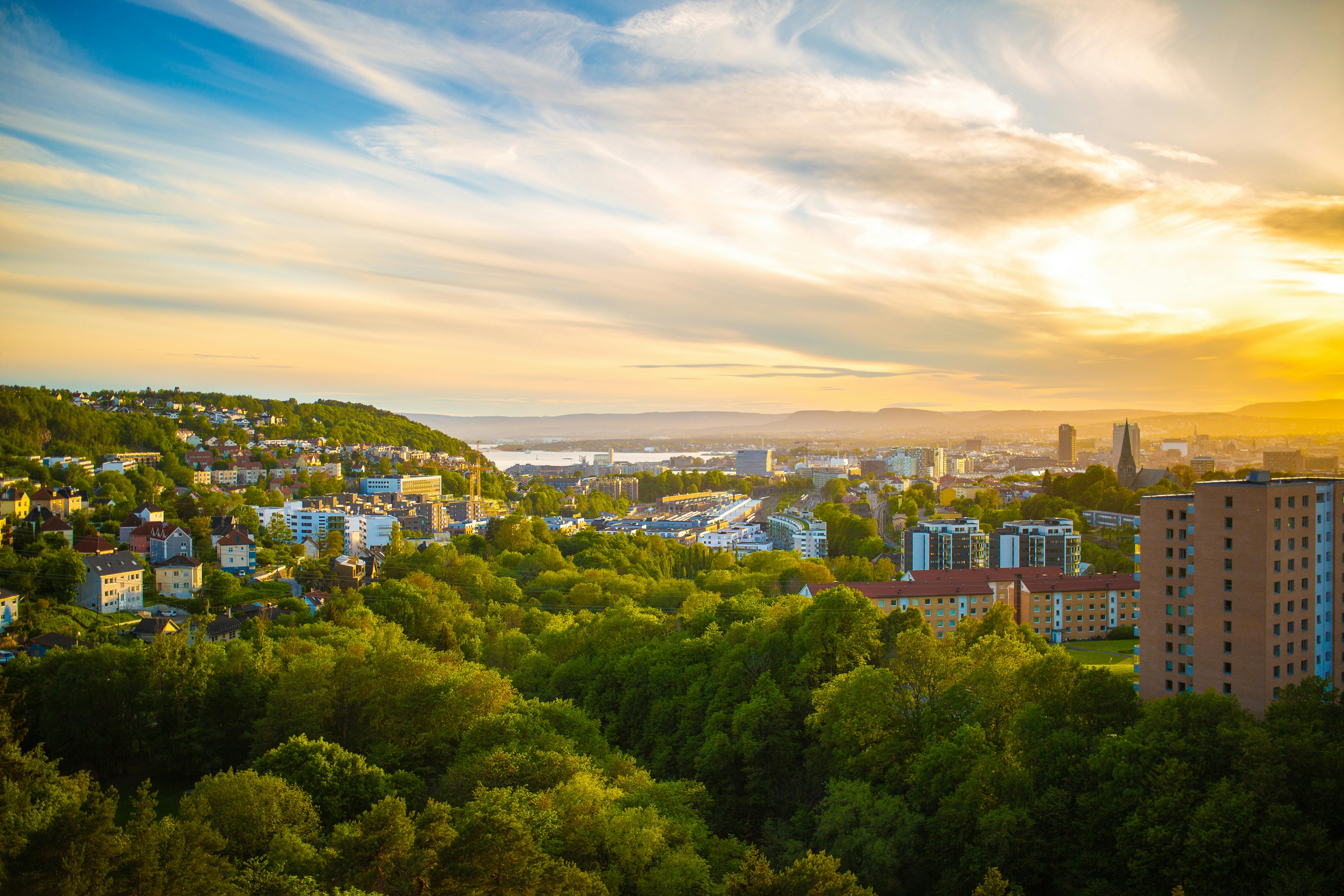
Oslo began as a modest trading settlement, founded around 1000 CE and formally established as the capital in 1814, when Norway adopted its constitution. The city rebuilt itself multiple times, most dramatically after a fire in 1624, when King Christian IV relocated and renamed it Christiania (it reclaimed the name Oslo only in 1925). That resilience is baked into the city’s character. Today, Oslo is a place where old Viking mythology coexists with cutting-edge architecture, where the welfare state has produced genuinely civic-minded public spaces, and where the outdoors is not a weekend hobby but a religion.
Best Months to Visit Oslo
Oslo rewards visitors at almost any time of year, but the experience shifts dramatically by season.
May and June are the sweet spots for most travelers. The city shakes off winter, outdoor cafes fill up, and the days are so long that 10 PM still looks like late afternoon. May 17, Norway’s Constitution Day, turns the entire city into one enormous outdoor party. June pushes toward the midnight sun, and Oslomarka (the surrounding forests) turns brilliantly green.
July is peak summer. The city is warm (18 to 24 degrees Celsius), the fjord islands are accessible by ferry, and every outdoor space hums with activity. Expect the year’s highest hotel prices and book well in advance.

August balances warmth with slightly thinner crowds. The Oslo Jazz Festival arrives in mid-August, and locals return from their July holidays, giving the restaurant and bar scene fresh energy.
September and October offer dramatic autumn color in the forests, sharply lower hotel prices, and a more local-feeling city. Rain is possible but rarely constant, and many find this the best window for photography.
December through February delivers a proper Nordic winter. Christmas markets open in late November at Spikersuppa, the city gets dusted with snow, and Holmenkollen operates its ski slopes. Temperatures hover between -5 and 2 degrees Celsius.
Skip March and April unless you are chasing the Holmenkollen Ski Festival (March). These months are grey and transitional, with little to compensate.
Top Attractions
Oslo Opera House
Address: Kirsten Flagstads plass 1, Bjørvika Guided tours from NOK 130 (approx. EUR 11)
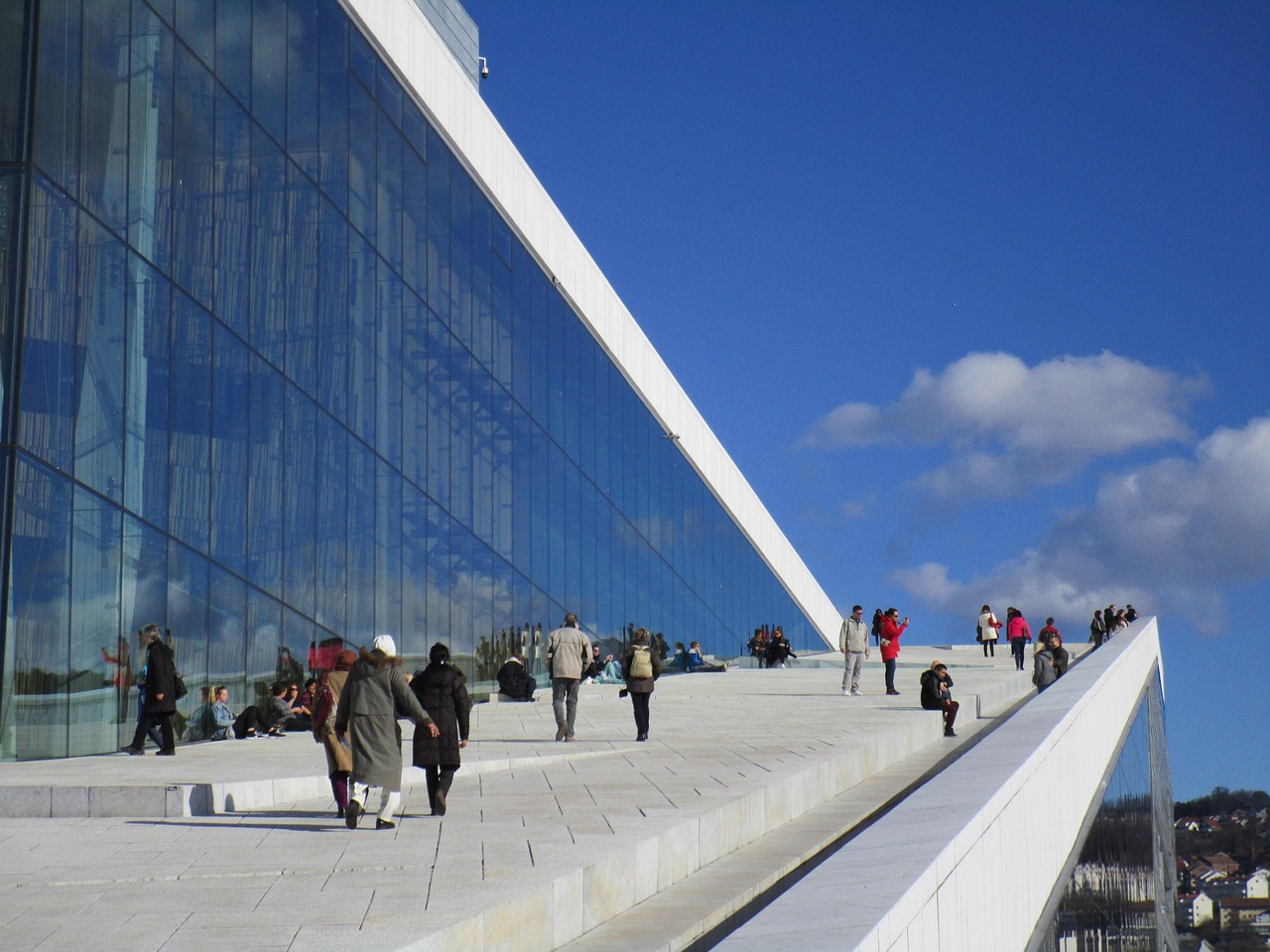
Snohetta’s architectural masterpiece opened in 2008 and immediately rewired how Oslo’s citizens think about public space. The white Carrara marble roof slopes directly into the fjord, and you are invited to walk right up it. At the top, you get a panoramic view of the Barcode district, the fjord, and the forested hills ringing the city. Go at dusk in summer for light that turns the marble gold.
Pro tip: If you want to see a performance, book at least four to six weeks ahead. For the roof, simply walk up anytime during daylight.
Vigeland Sculpture Park (Vigelandsparken)
Address: Nobels gate 32, Frogner Hours: Open 24 hours, year-round Entry: Free

Gustav Vigeland spent decades creating over 200 bronze and granite sculptures for this park, all depicting the human life cycle in raw, unflinching detail. The famous Monolith stands 14 meters tall and is carved from a single block of granite, with 121 intertwined human figures. It is strange, hypnotic, and genuinely moving. The park sits within the larger Frogner Park, a neighborhood gathering place for locals jogging, picnicking, and playing.
Pro tip: Visit early morning on weekdays to have the sculptures nearly to yourself. The park is equally atmospheric in winter snow.
The National Museum (Nasjonalmuseet)
Address: Brynjulf Bulls plass 3, Aker Brygge Hours: Tuesday to Friday 10:00 to 20:00 (Thursday until 21:00), weekends 10:00 to 18:00, closed Monday Entry: NOK 200 (approx. EUR 17). Free every Thursday

Norway’s largest art museum houses the original version of Edvard Munch’s The Scream, along with collections spanning 5,000 years of Norwegian art, international works by Monet, Gauguin, and Picasso, and decorative arts that trace the country’s design history. The building itself, opened in 2022, is a stunning waterfront structure with a rooftop terrace overlooking the Oslofjord.
Pro tip: Book timed entry tickets online before your visit. The Scream room gets crowded by 11 AM. Thursday evenings after 18:00 are surprisingly calm.
Munch Museum (MUNCH)
Address: Edvard Munchs plass 1, Bjørvika Hours: Daily 10:00 to 21:00 (varies seasonally, check website) Entry: NOK 180 (approx. EUR 15). Oslo Pass holders enter free

The 13-floor Lambda tower on the waterfront holds the world’s largest collection of Munch’s work, including multiple versions of The Scream, Madonna, and The Dance of Life. The building is polarizing in its design, but the views from the upper floors across the fjord are spectacular.
Pro tip: The museum often hosts evening events and temporary exhibitions. Upper floors tend to be quieter than the permanent collection floors.
Akershus Fortress (Akershus Festning)
Address: Festningsplassen Hours: Grounds open daily 06:00 to 21:00. Castle and museum hours vary. Entry seasonally: Grounds free. Castle interior from NOK 100 (approx. EUR 9)
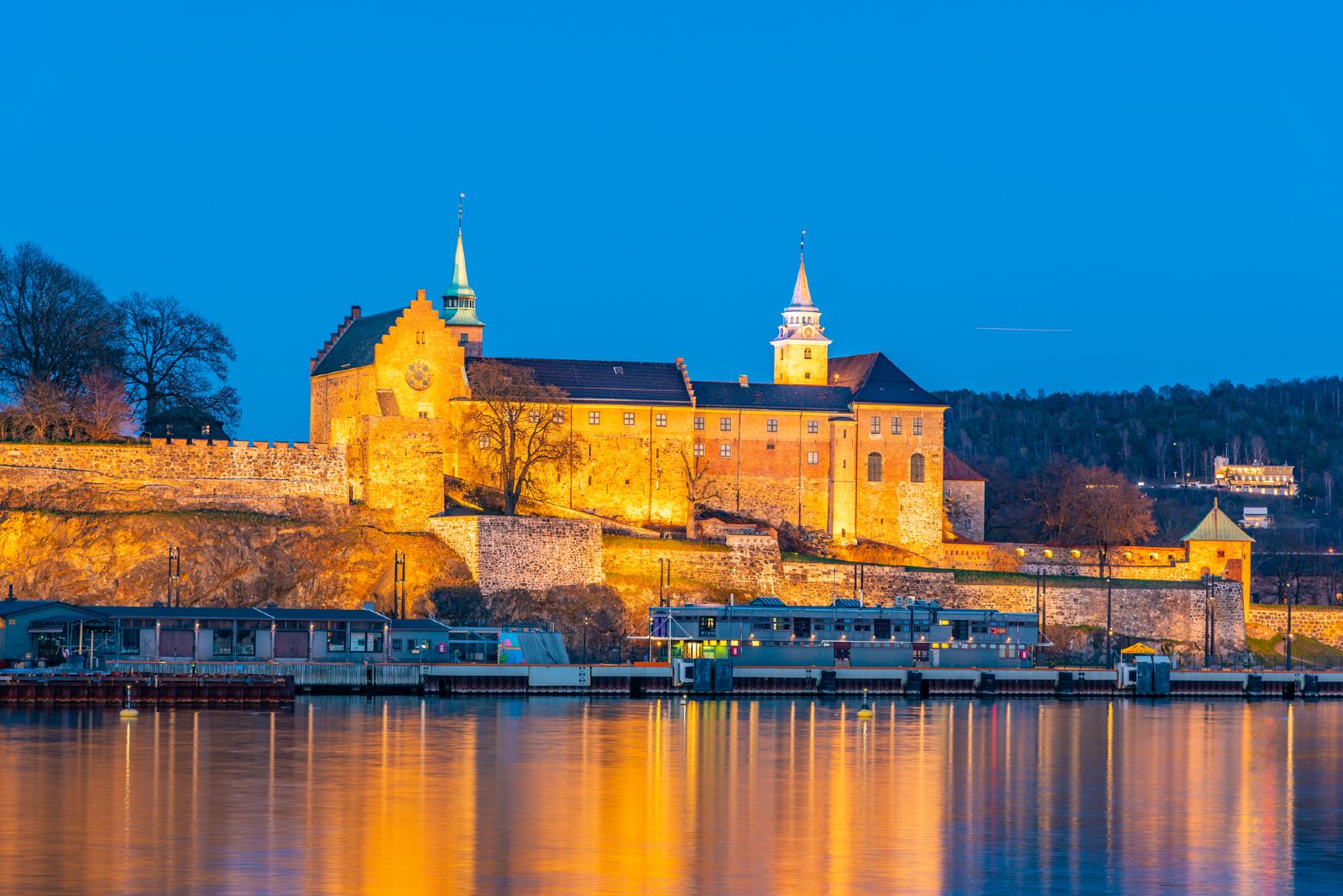
Built in 1299 and continuously expanded through the Renaissance, Akershus sits on a promontory above the Oslofjord and has witnessed 700 years of Norwegian history, from medieval sieges to its use as a Nazi prison during the occupation. The grounds are free to wander and offer some of the finest views of the harbor and the Aker Brygge waterfront.
Pro tip: The fortress hosts the Changing of the Guard ceremony and outdoor summer concerts. Check the program on visitoslo.com.
Holmenkollen Ski Jump and Museum
Address: Kongeveien 5, Holmenkollen Hours: Daily, varies by season (typically 10:00 to 17:00 in summer) Entry: Ski jump and museum from NOK 175 (approx. EUR 15)
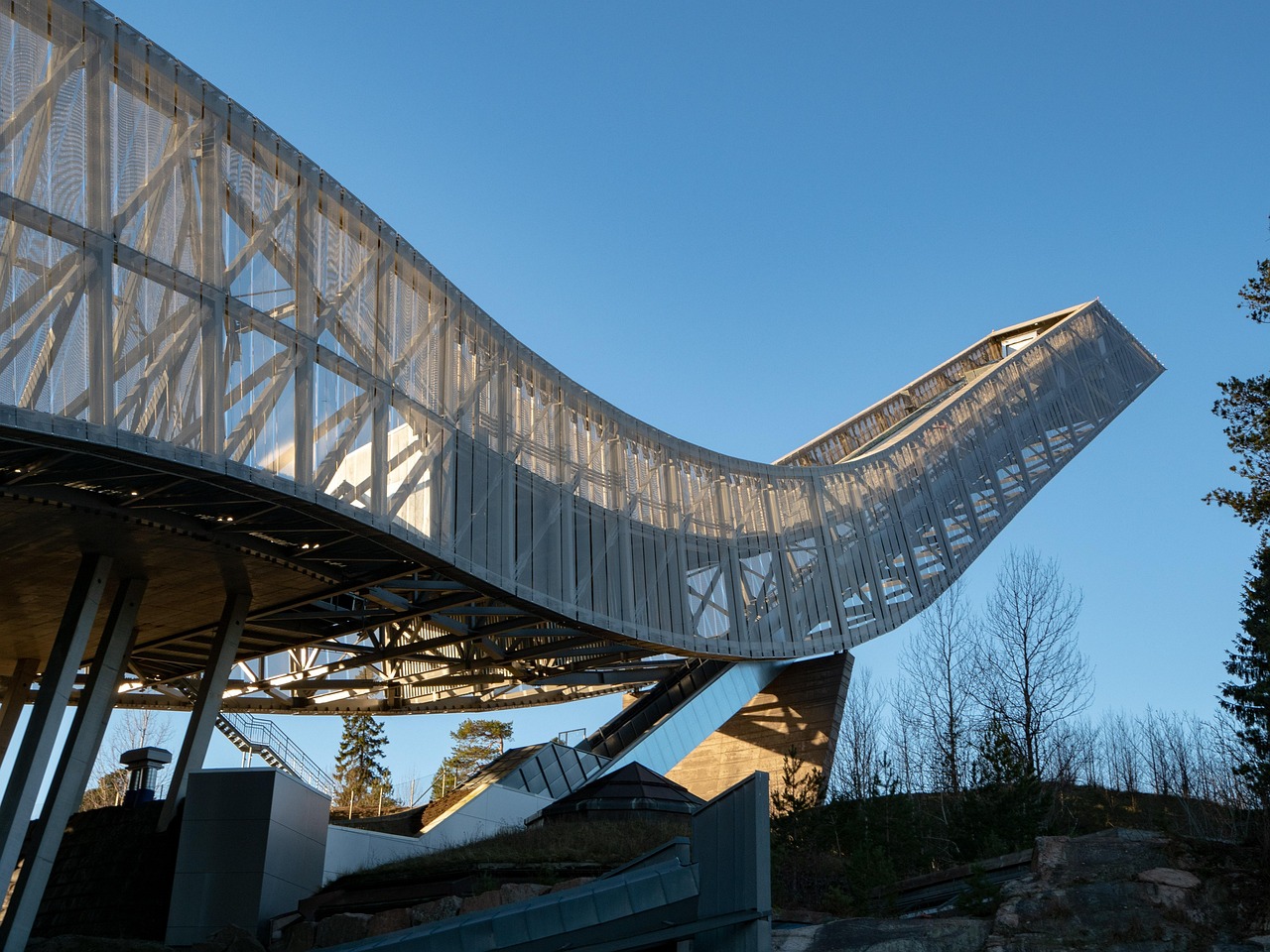
Perched on the forested hills above the city, the Holmenkollen jump is one of Oslo’s most recognizable silhouettes. The observation deck at the top of the jump offers a vertiginous view over the city and the fjord. The adjoining ski museum chronicles Norwegian polar exploration, including Roald Amundsen’s South Pole expedition.
Getting there: T-bane (metro) Line 1 to Holmenkollen station. The metro ride through the forest is part of the experience.
Pro tip: The zip line from the jump to the ground is available in summer and takes precisely 11 seconds of pure terror.
Bygdoy Peninsula Museums
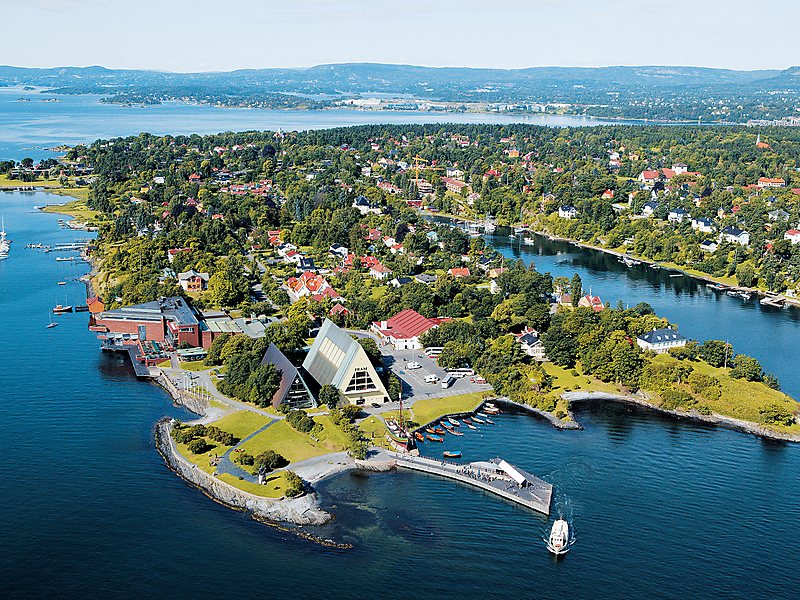
The Bygdoy peninsula, accessible by a short ferry from City Hall pier (summer only) or by bus 30 year-round, holds three museums worth serious time.

Viking Ship Museum / Museum of the Viking Age The museum has been undergoing an extensive renovation and is expected to reopen as the Museum of the Viking Age. Check the status before visiting. When open, it displays some of the world’s best-preserved Viking longships and burial artifacts from the 9th century.
Fram Museum Entry: NOK 140 (approx. EUR 12) The polar ship Fram, the vessel that carried Amundsen and Nansen on their Arctic and Antarctic expeditions, sits inside a purpose-built hangar you can board and explore. Few museums achieve this level of atmosphere.
Norwegian Folk Museum (Norsk Folkemuseum) Entry: NOK 180 (approx. EUR 15) Over 150 historic buildings from across Norway, including a stunning 12th-century stave church, have been relocated and reassembled here. Staff in traditional dress demonstrate crafts and daily life. Plan two to three hours.
Hidden Gems
Gamlebyen (Old Town)

Most visitors funnel into the Aker Brygge waterfront and Karl Johans gate without realizing that Oslo’s actual medieval heart lies southeast of the central station in Gamlebyen. Here you’ll find the ruins of the original medieval Oslo, including the foundations of the 12th-century Akershus Cathedral and the remains of St. Hallvard’s Cathedral. Gamlebyen is a residential neighborhood with almost no tourist infrastructure, which is exactly the point. The ruins are free to walk among, and the quiet streets feel like a city within a city.
Ekebergparken Sculpture Park
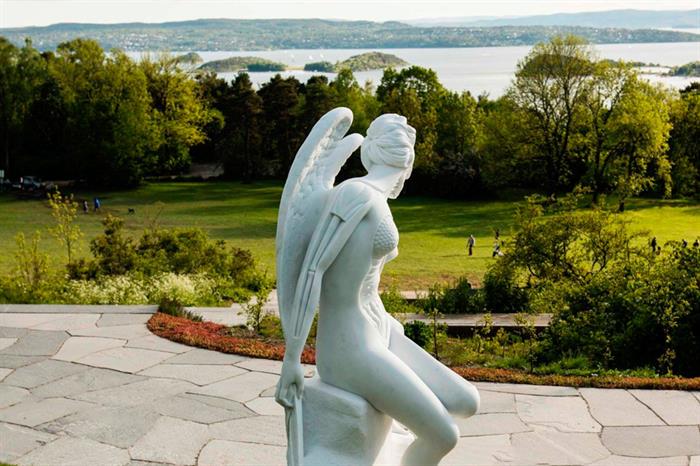
Perched on the wooded Ekeberg ridge southeast of the city center, this free outdoor sculpture park offers one of the finest panoramic views over Oslo and the fjord, and it has the additional weight of being the landscape Edvard Munch painted in The Scream. Works by Damien Hirst, Louise Bourgeois, and Marina Abramovic are installed across the hillside. Take Tram 18 or 19 to the Ekebergparken stop and follow the sculpture trail uphill.
Mathallen Oslo Food Hall
Address: Vulkan 5, Grünerløkka Hours: Tuesday to Friday 10:00 to 20:00, weekends 10:00 to 18:00, closed Monday

Locals have been eating at Mathallen for years while tourists queue at the waterfront seafood shacks. This converted industrial building in the Vulkan area holds stalls selling Norwegian charcuterie, artisan cheeses, freshly baked bread, ramen, craft beer, and much more. It’s an ideal lunch stop that also doubles as a crash course in Norwegian food culture.
Grefsenkollen Hike

A 45-minute hike from the end of the Tram 17 or Bus 54 routes rewards you with a ridge-top view over the entire city, the fjord, and the Holmenkollen jump. The path is well-marked and not strenuous. At the summit, there’s a cafe. This is exactly what Oslonians do on Sunday mornings, and joining them feels genuinely local.
Cuisine and Dining
Norwegian food has undergone a seismic shift in the past two decades. The New Nordic movement, which started in Copenhagen but took deep root in Oslo, has elevated local ingredients like løyrom (vendace roe), skrei (winter cod), reindeer, and langoustines into creative, technically precise dishes. Traditional smørbrød (open-faced sandwiches) remain a lunchtime institution, and the Norwegian waffle (softer and more eggy than Belgian waffles, traditionally served with sour cream and strawberry jam) is a cultural fixture.

Must-try dishes:
- Smørbrød with smoked salmon, dill, and pickled cucumber
- Kjøttkaker (Norwegian meatballs in brown sauce, nothing like Swedish ones)
- Brunost (brown cheese, sweet and caramel-like, on rye bread)
- Fårikål (lamb and cabbage stew, Norway’s national dish, best in autumn)
- Skrei (Arctic cod, available January through April)
- Norwegian waffles with sour cream (rømme) and jam
Budget (under NOK 200 per person)
Dovrehallen (Grünerløkka): Open since 1935, this no-frills local pub serves hearty traditional Norwegian fare, including the city’s best kjøttkaker. The booths and dark wood feel unchanged for decades in the best possible way.
Render Burger (Grünerløkka): The Oslo-style take on an Oklahoma smash burger with caramelized onions, cheddar, and a crispy-edged patty on a sesame bun is one of the city’s most-loved burgers.
Grønland neighborhood (near central station): Oslo’s most diverse food district, with Syrian, Vietnamese, Eritrean, and Indian restaurants offering enormous portions at prices that seem impossible given the Norwegian cost of living.

Mid-Range (NOK 300 to 700 per person)
Skaal Matbar (Grünerløkka): A food bar with a natural wine list and snacks that are better than most restaurants’ full menus. Their layered potato dish with whipped crème fraîche and dill oil is quietly legendary. Ideal for grazing over several hours.
Vaaghals (Barcode district): Family-style Norwegian cooking on wooden boards, starting with house-made charcuterie and progressing through dishes like celeriac pasta with butter sauce and løyrom. The concept is communal and relaxed despite the sophisticated cooking.
Olympen (Lompa) (Grünerløkka): A grand 1892 brasserie with high ceilings and dark wood paneling that serves honest Norwegian food in a genuinely historic space. Locals drink here on weekday evenings; tourists rarely find it.
Happolati (city center): Asian-Nordic fusion in an elegant room with pine screens and origami lighting. Potato pancakes with eel and shrimp, caramelized bao buns, and a sake list that takes the selection seriously.
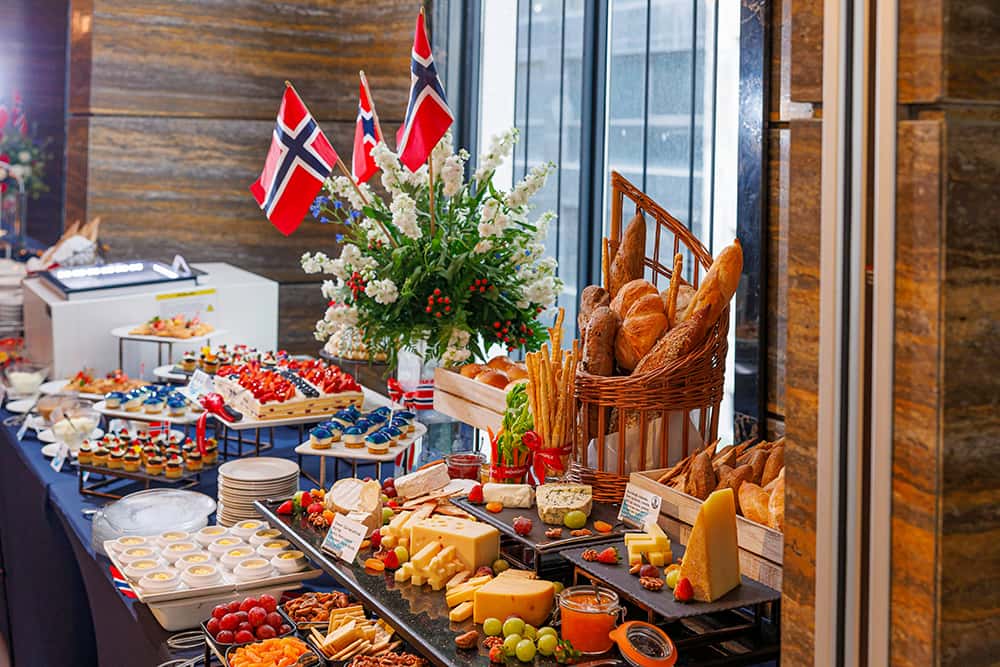
Fine Dining (NOK 1,200 and above, tasting menus)
Kontrast (Vulkan, Grünerløkka): Two Michelin stars earned through chef Mikael Svensson’s rigorously local, deeply seasonal tasting menu. The cured quail egg served in a potato nest, and sunflower seed sorbet with birch sap are signature moments. Reserve two to three months ahead.
Arakataka (near Rockefeller Music Hall): Oslo’s best-kept fine dining secret, offering high-quality tasting menus at prices noticeably below the competition. The quality-to-cost ratio here is remarkable by any standard.

Hot Shop (fringe location, worth seeking): A five-course dinner in what was once a sex toy shop, run by a husband-and-wife team with a vegetable-forward Nordic menu. Part of Oslo’s semi-fine-dining movement, where the cooking is serious, but the atmosphere is not.
Market Recommendation
Mathallen Oslo (Vulkan): For a mid-morning snack or casual lunch among Oslo’s food-obsessed. More interesting than any tourist-facing option near the waterfront.

Accommodation
Budget: Hostels and Guesthouses
Stay in Grünerløkka or Grønland for budget options that put you close to good restaurants and genuine neighborhood life rather than the slightly sterile tourist corridor near central station.
- Anker Hostel (Grünerløkka area): Well-run, centrally located hostel with a mix of dorms and private rooms. Popular with long-term travelers and digital nomads.
- Oslo Vandrerhjem Haraldsheim: A larger hostel slightly outside the center but with excellent T-bane connections and unobstructed city views.

Mid-Range: Boutique Hotels (NOK 1,200 to 2,500 per night)
Stay in Frogner for a quieter, residential feel close to Vigeland Park, or in Grünerløkka for access to the best dining and nightlife.
- Grims Grenka (city center): A design hotel with rooms that feel like private apartments, decorated with work by Norwegian artists. The rooftop terrace is a strong selling point.

- PS: Hotel (Frogner): A social enterprise hotel where the staff are people returning to the workforce. Thoughtfully designed, genuinely warm service, excellent location.
Luxury (NOK 3,000 and above per night)
Stay in Aker Brygge or Tjuvholmen for waterfront luxury with direct access to the city’s best gallery neighborhood.

- The Thief (Tjuvholmen island): The definitive luxury address in Oslo. Every room has original artwork, the spa is exceptional, and the location on Tjuvholmen puts you next to the Astrup Fearnley Museum of Modern Art. The rooftop bar is worth a visit even if you’re not staying.
- Grand Hotel Oslo (Karl Johans gate): The historic grande dame of Oslo hotels, where Edvard Munch and Henrik Ibsen were regulars. The Nobel Peace Prize laureates stay here. Karl Johans gate access is unbeatable.
Transportation
Getting to Oslo
By Air: Oslo Airport Gardermoen (OSL) is Norway’s main hub, about 50 km north of the city. The Flytoget express train connects the airport to Oslo Central Station in 19 to 20 minutes (NOK 229 one way). The slower regional train (Vy) takes around 23 minutes and costs approximately NOK 113, making it the better value option. A taxi costs around NOK 700-900, depending on traffic.

By Train: Oslo is connected to Stockholm (about 5 hours), Copenhagen (via ferry or Gothenburg, 8 to 9 hours), and all major Norwegian cities. The central station (Oslo S) is a transit hub for the entire country.
By Bus: Long-distance coaches arrive at Oslo Bussterminal, adjacent to Oslo S.
Getting Around Oslo
T-bane (Metro): Five lines fan out from the city center. A single-zone ticket costs NOK 44-64 and covers all public transport within the zone for 1 hour. The Ruter app is the best way to buy tickets and plan routes. Note that Majorstuen station has been undergoing disruptions, so check the app for real-time updates.
Tram: Extensive tram network covers neighborhoods the metro misses, including Grünerløkka, Frogner, and the eastern waterfront.
Ferry: In summer, public ferries from City Hall pier connect to Bygdoy (for the peninsula museums) and the fjord islands. Covered by a standard Ruter ticket.
City Bikes (Oslo Bysykkel): 270 stations across the city. Day passes are available through the Oslo Bysykkel app. The city is reasonably flat near the center, making cycling practical.
Walking: Central Oslo is compact. The Opera House, City Hall, Aker Brygge, and the Tjuvholmen art district are all within 15 minutes on foot of each other.
Oslo Pass: The 24-hour (NOK 520), 48-hour (NOK 760), and 72-hour (NOK 895) passes include unlimited public transport and free entry to over 30 museums. Worth it if you plan to visit four or more paid attractions. Purchase at the Oslo Visitor Center near Central Station or through the digital app.
Events and Festivals
May 17: Syttende Mai (Constitution Day)

Norway’s national day is the most exuberant public celebration in Scandinavia. Oslo erupts in a sea of bunad (traditional regional costumes), children’s parades stream down Karl Johans gate toward the Royal Palace, and the King and Queen wave from the balcony for hours. Every bakery sells skoleboller (cardamom buns with custard) and restaurants book out weeks in advance. If you’re in Oslo on May 17, plan your day around the parade route and expect extraordinary warmth from locals who genuinely love this day.
August: Oslo Jazz Festival (Oslojazzfestival)
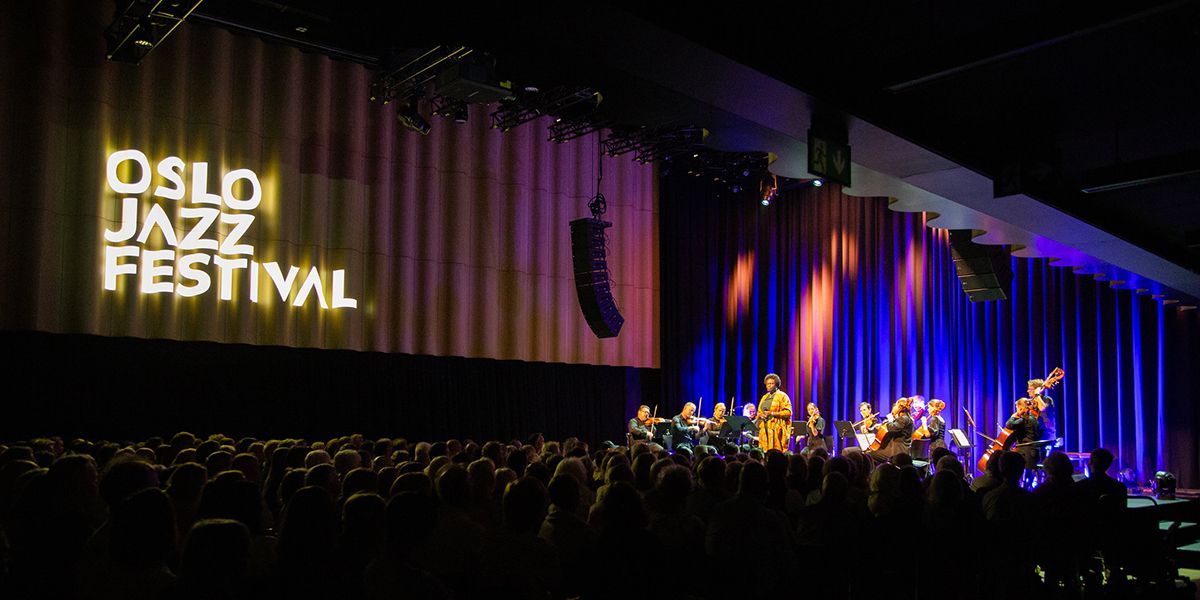
Running annually in week 33 (mid-August) since 1986, this week-long festival brings more than 70 concerts to 10 to 15 venues across the city center. The programming covers all jazz styles, from traditional swing to Nordic experimental, with both international headliners and Norwegian talent. Several outdoor concerts at venues like Spikersuppa are free. It’s one of Norway’s biggest jazz festivals and defines the city’s late-summer atmosphere.
August: Oyafestivalen
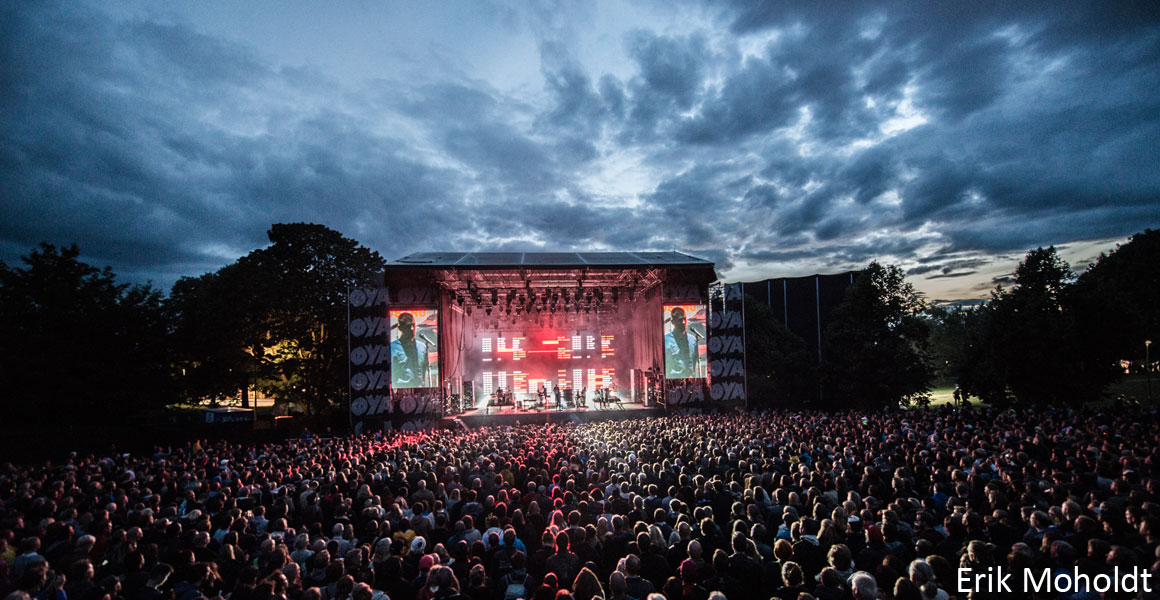
Oslo’s premier outdoor rock and pop festival, held in the medieval Middelalderparken (Medieval Park) near Gamlebyen. The lineup consistently draws major international acts alongside Norwegian artists. The setting, with medieval ruins as a backdrop, is unlike any other major festival site in Europe. Tickets sell out months in advance.
Shopping
Best Streets and Districts
Karl Johans gate: The main boulevard runs from Central Station to the Royal Palace and is lined with international chains. Not where you shop for souvenirs, but the street-level energy is worth walking for the architecture alone.
:max_bytes(150000):strip_icc()/GettyImages-164334432-59550d2a3df78cdc29993b4f.jpg)
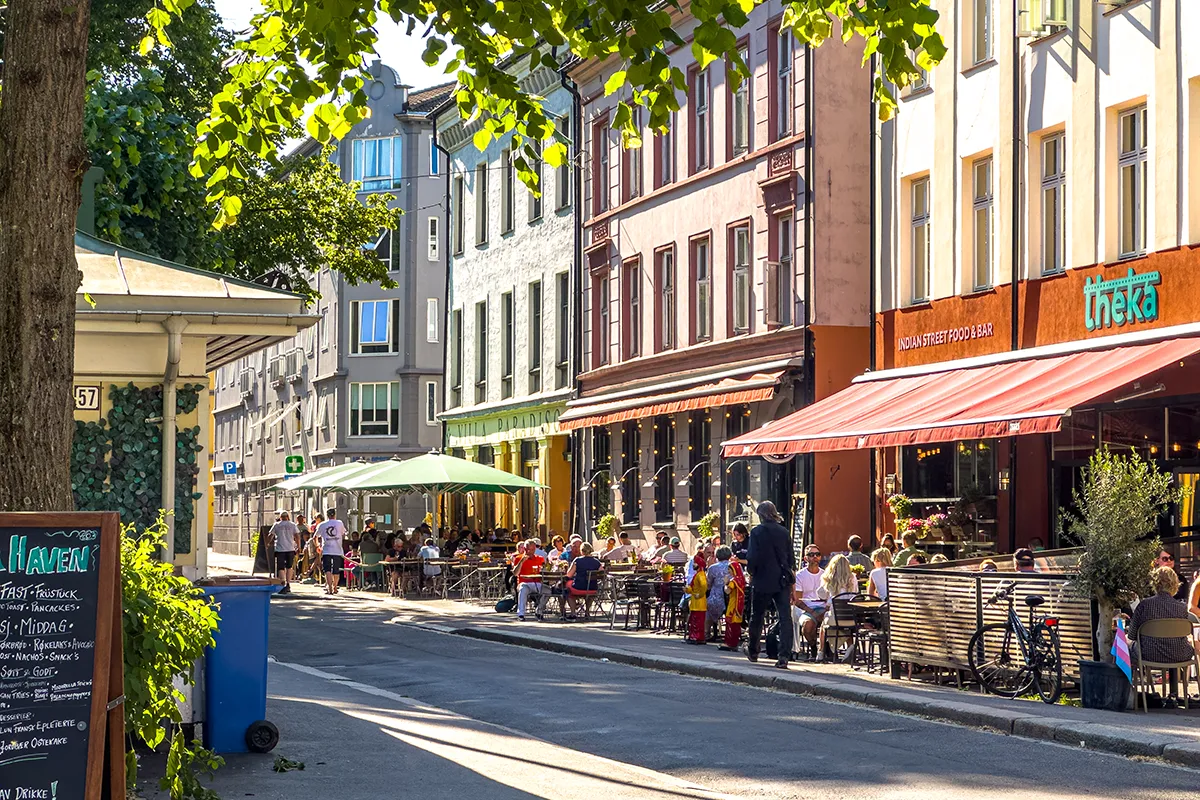
Grünerløkka: The best neighborhood for independent shopping in Oslo. Markveien and Thorvald Meyers gate are lined with vintage shops, independent bookstores, ceramics studios, and small concept stores. This is where Oslonians actually shop.
Aker Brygge and Tjuvholmen: Design stores, gallery shops, and high-end Norwegian brands along the waterfront. The Astrup Fearnley Museum shop stocks excellent design objects and art books.
Bogstadveien (Frogner): Oslo’s premium shopping street, with Scandinavian fashion labels, independent boutiques, and excellent bakeries. Less tourist-heavy than the city center.
What to Buy
- Brunost (brown cheese): The most Norwegian of all edible souvenirs. Buy a block from a grocery store (Rema 1000 or Meny) rather than a tourist shop.
- Dale of Norway knitwear: Norwegian wool sweaters with traditional patterns, made in Norway. Available at flagship stores and department stores. These are the real thing.
- Norwegian design objects: Glass, ceramics, and furniture from brands like Hadeland Glassverk and Figgjo are available at design stores across the city.
- Aquavit: Norway’s national spirit, made from caraway and dill-infused neutral grain spirit. Linie Aquavit, which is aged in sherry casks that cross the equator twice by ship, makes an excellent gift.
- Troll figures: Yes, they’re touristy. But the hand-carved wooden versions from craft shops are a legitimate piece of Norwegian folk tradition.
- Sami crafts (duodji): Handmade items from Norway’s indigenous Sami people, including leather goods, jewelry, and textiles. Buy from certified sellers to ensure authenticity.
Practical Information
Visa
Norway is part of the Schengen Area. Citizens of EU and EEA countries need only a valid ID. Citizens of many other countries, including the US, UK, Canada, Australia, and India, may enter visa-free for short stays, though the duration varies by nationality. Check with the Norwegian embassy for your specific country.
Currency
Norwegian Krone (NOK). As of 2025, approximately NOK 11 to 12 per EUR and NOK 10 to 11 per USD. Norway is cashless in practice. Cards and contactless payment are accepted almost everywhere, including markets and small cafes. ATMs are available but rarely needed.
Language
Norwegian (Bokmal and Nynorsk). English is spoken fluently by virtually the entire population. You will rarely encounter a language barrier.
Safety
Oslo is extremely safe by any measure. Violent crime targeting tourists is rare. Standard precautions apply in busy areas like Karl Johans gate and around the central station, where pickpocketing occasionally occurs—emergency numbers: 112 (police), 113 (ambulance), 110 (fire).
Health
Norway has an excellent public health system. EU citizens with an EHIC card receive subsidized care. Travel insurance is strongly recommended for non-EU visitors. Tap water in Oslo is exceptionally clean and tastes better than most bottled water.
Costs
Oslo is genuinely expensive. Budget travelers should expect to spend at least NOK 600-800 per day on food alone if eating out for every meal. A pint of beer at a pub typically costs NOK 90-120. A cappuccino is approximately NOK 50 to 60. Self-catering even partially, using supermarkets like Rema 1000 or Kiwi, will significantly reduce costs.
Etiquette
Tipping: Norway has no mandatory tipping culture. Restaurant workers are paid fair wages. A tip of 5 to 10% is appreciated at sit-down restaurants if you are happy with the service, but rounding up or leaving nothing is entirely acceptable. You do not tip in cafes, taxis, or at food halls.
Silence in public: Norwegians are reserved in public spaces. A loud conversation on public transport is considered inconsiderate. This is not unfriendliness; it is a deeply held cultural norm around personal space.
Queue discipline: Queuing is taken seriously. Do not cut lines, even casually.
Outdoor code (Allemannsretten): Norway’s “everyman’s right” allows anyone to walk freely through uncultivated land, including forests and mountains, regardless of ownership. Respect the principle by leaving no trace.
Punctuality: Being on time is a sign of respect. Arriving late to a dinner or meeting without warning is noticed.
Shoes indoors: Norwegians typically remove their shoes when entering a home. If invited to someone’s house, take your shoes off at the door.
Packing List
Summer (June to August)
- Lightweight layers for cool evenings (temperatures can drop to 12 to 15 degrees Celsius after sunset)
- A packable waterproof jacket (rain is always possible)
- Comfortable walking shoes for cobblestones and the Opera House roof
- Sunglasses (the long days and low-angle sun can be intense)
- Reusable water bottle (tap water is excellent everywhere)
- Insect repellent for forest hikes
Autumn (September to October)
- Waterproof jacket (non-negotiable)
- Warm mid-layer (fleece or merino wool)
- Waterproof boots or sturdy walking shoes
- Layers that can adapt to temperatures ranging from 5 to 15 degrees Celsius
Winter (November to February)
- Thermal base layers
- Insulated waterproof jacket
- Warm hat, gloves, and scarf
- Waterproof, grippy boots (pavements can ice over)
- Hand warmers for outdoor sightseeing
Itineraries
2-Day Oslo Itinerary
Day 1: Waterfront and the City Center
Morning Start at the Oslo Opera House as it opens. Walk the roof and take in the fjord view before the day’s crowds arrive. From the Opera House, walk west along the waterfront to Aker Brygge, the revamped harbor area. Stop at a bakery for a coffee and a kanelbolle (cinnamon bun). Continue to the Nobel Peace Center (Rådhusplassen) to understand the history of the prize, then walk into Oslo City Hall (Rådhuset), which is free to enter and contains extraordinary murals.

Afternoon Walk 10 minutes northwest to the National Museum (Nasjonalmuseet). Book your timed entry in advance and plan two hours for the collection. See Munch’s The Scream and the Norwegian art chronology. From the museum, walk along Karl Johans gate past the National Theatre and the Parliament building (Stortinget).
Lunch at Mathallen Oslo, reachable by tram or a 20-minute walk north through the Vulkan district.
Evening, head to Grünerløkka for dinner. Try Skaal Matbar for a relaxed meal of small plates and natural wine, or Olympen (Lompa) for a grand Norwegian brasserie experience. Finish with a walk along Thorvald Meyers gate, Oslo’s most enjoyable street for evening strolling.
Day 2: Bygdoy and Vigeland
Morning: Take Bus 30 from Jernbanetorget (or in summer, the ferry from City Hall pier) to the Bygdoy peninsula. Begin with the Fram Museum, boarding the polar exploration ship Fram itself. Then walk five minutes to the Norwegian Folk Museum and spend an hour and a half among the relocated historic buildings and the stave church.
Afternoon Return toward central Oslo and take the T-bane or a taxi to Vigeland Sculpture Park in Frogner. Walk the central axis from the bridge through the fountain court and up to the Monolith. Allow 90 minutes.
Lunch and late afternoon, eat at one of the cafes along Bogstadveien in Frogner before strolling into the nearby shops. In the late afternoon, walk or take the tram back toward the waterfront, then visit the Munch Museum for an early evening when crowds thin. The building’s upper floor views of the fjord at dusk are worth the ticket alone.
Evening Dinner in the Tjuvholmen area near Aker Brygge. Vaaghals in the adjacent Barcode district is ideal for a Norwegian meal.
4-Day Oslo Itinerary
Follow the 2-day itinerary above, then add:
Day 3: Holmenkollen and Grünerløkka in Depth
Morning Take T-bane Line 1 to Holmenkollen. The forest ride alone is a revelation. Visit the Holmenkollen Ski Jump and museum. Consider the zip line. Walk or take the metro back one stop and explore the forested trails of the Oslomarka for an hour.
Afternoon Return to Grünerløkka by tram. Spend the afternoon exploring the neighborhood properly: vintage shopping on Markveien, coffee at Tim Wendelboe (possibly the most internationally respected coffee bar in Norway), and browsing the independent stores on Thorvald Meyers gate.
Evening Dinner at Kontrast if you have a reservation (book months ahead), or at Madonna for creative, seasonal Norwegian cooking at a fraction of the Michelin price point.
Day 4: Hidden Oslo and Day Departure
Morning Take Tram 18 or 19 to Ekebergparken for a walk through the free sculpture park with fjord views. Visit the hillside where Munch painted The Scream.
Afternoon Walk or tram to Gamlebyen for the medieval ruins. Spend an hour exploring the quiet streets and the ruins of St. Hallvard’s Cathedral. Grab lunch at one of the international restaurants on Grønland street nearby, then head to Akershus Fortress to walk the grounds and take in the harbor view one last time.
7-Day Oslo Itinerary
Follow the 4-day itinerary above, then add:
Day 5: Fjord Islands

Take the public ferry (Ruter ticket valid) from the Aker Brygge pier to Hovedoya island. The island has a ruined 12th-century Cistercian monastery, walking paths through the forest, a summer beach, and a cafe. Bring a picnic from Mathallen or a grocery store. Spend the afternoon on Langøya, Oslo’s most popular swimming island (in summer). The combination of forested paths, ruins, and clear fjord swimming is Oslo at its most liberating. Return to the city by early evening.
Evening: Dinner at Arakataka for an elevated but not stuffy Norwegian tasting experience.
Day 6: Day Trip to Fredrikstad or Drammen
Oslo’s position at the top of the Oslofjord makes day trips straightforward.
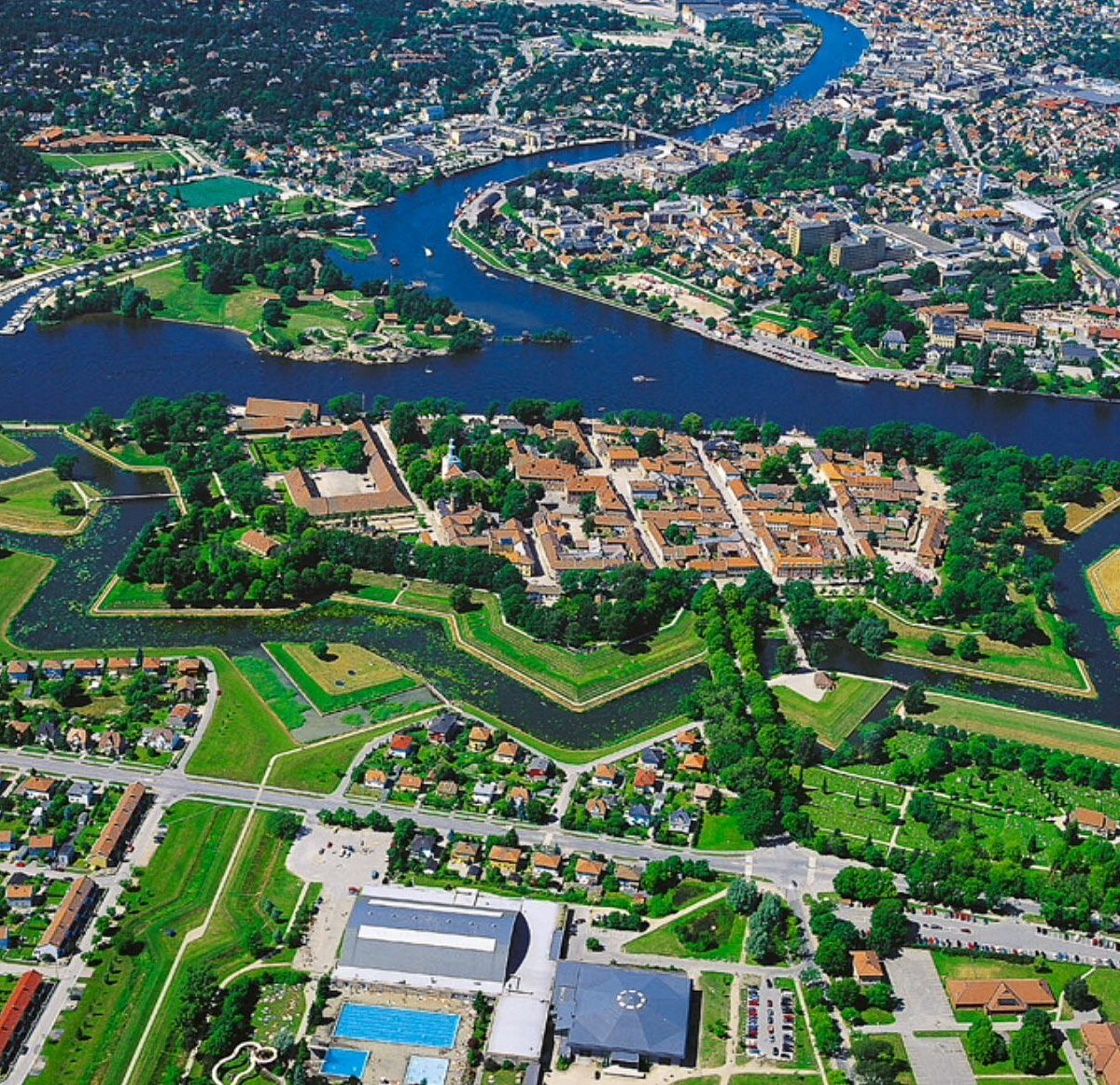
Fredrikstad (1 hour by train): Scandinavia’s best-preserved fortified old town, with cobblestone streets, galleries, and cafes inside the original 17th-century fortress walls. The Gamlebyen (Old Town) here is far more picturesque than Oslo’s. Take an early train, spend four hours exploring, and return for a late Oslo dinner.
Alternatively, Drammen (35 minutes by train) offers a smaller, unpretentious Norwegian city with a scenic riverfront, a hilltop spiral tunnel, and far fewer tourists than anywhere in Oslo itself.
Day 7: Slow Oslo
Save the final day for the experiences you’ve been meaning to return to. Revisit the Opera House roof at a different time of day. Browse the Deichmanske Library, Oslo’s stunning new public library (free and architecturally extraordinary) on the Bjørvika waterfront.

Wander through Frogner and stop at one of the neighborhood’s excellent bakeries for a long breakfast. In the afternoon, visit the Astrup Fearnley Museum of Modern Art on Tjuvholmen (waterfront location, Renzo Piano-designed building, strong contemporary collection). End the trip with dinner at one of the Grünerløkka restaurants you didn’t have time for, or splurge at The Thief hotel bar for farewell cocktails on the water.
Practical reminder: Always carry a Ruter card or download the Ruter app before arriving. Oslo’s public transport is efficient, but paper tickets at the gate are significantly more expensive than app tickets. The city’s biggest trap is not the cost but being unprepared for it. Plan your daily food strategy (one grocery run, two restaurant meals), a nd Oslo becomes a deeply rewarding destination rather than an anxiety-inducing budget exercise.