

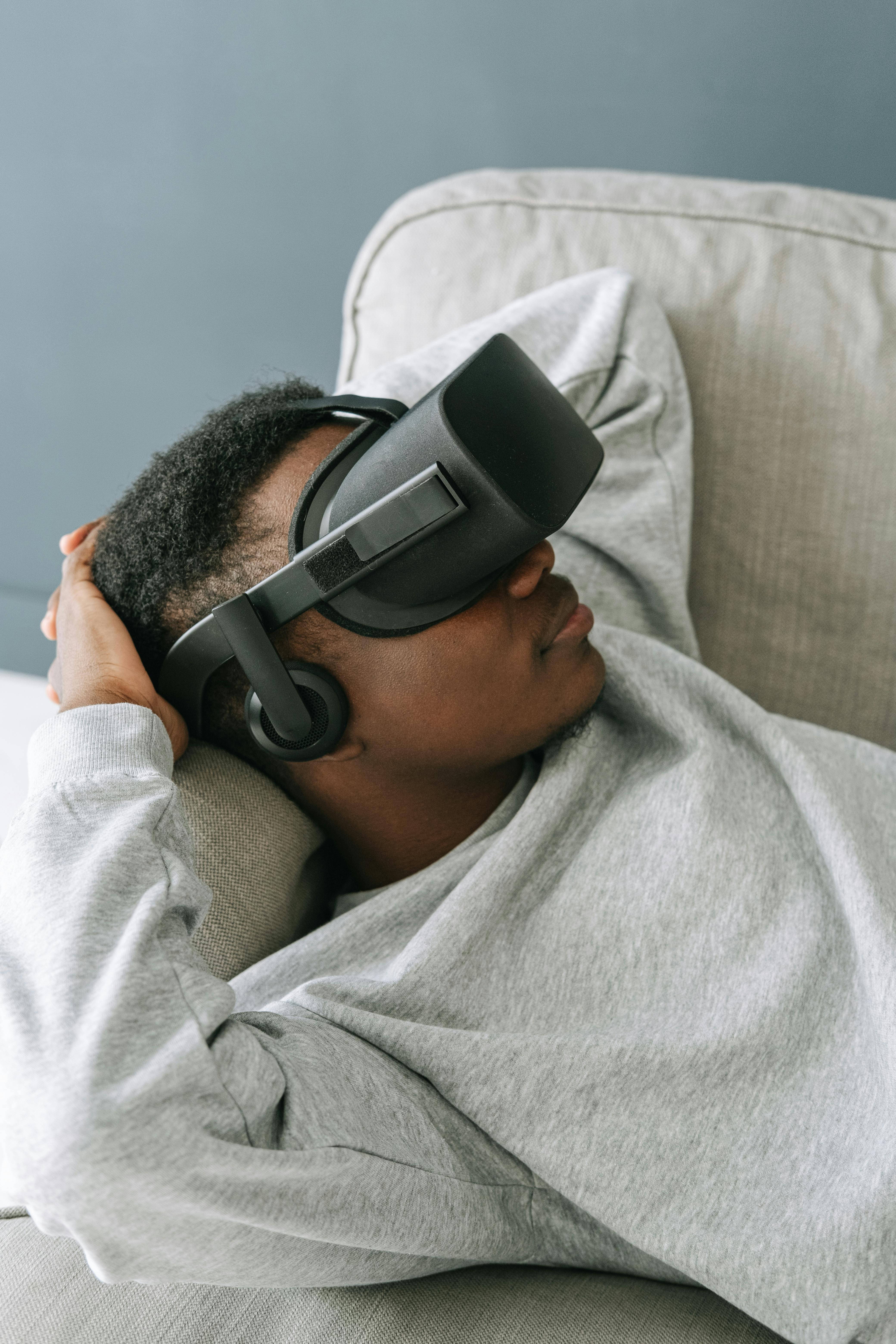
There are moments when ideas feel stuck. You stare at the screen, waiting for inspiration, but your mind feels flat and familiar. Creativity often fades when our surroundings stop changing. The brain gets comfortable, routines take over, and new connections slow down. This is where virtual travel quietly steps in as a surprising creative ally.
Virtual travel does more than entertain. It introduces your mind to new visual environments, sounds, rhythms, and patterns. Even though you stay physically in one place, your brain experiences novelty. Cognitive science shows that novelty is one of the strongest triggers for creative thinking. When you explore new environments, even digitally, your brain wakes up.
Why Creativity Needs New Environments
Creativity thrives on contrast. When you encounter something unfamiliar, your brain starts making comparisons. It notices differences in color, structure, movement, and sound. These comparisons encourage divergent thinking, which is the ability to generate multiple ideas rather than one predictable answer.
Research in cognitive psychology shows that exposure to new environments increases cognitive flexibility. Cognitive flexibility allows the brain to switch between concepts and combine ideas in novel ways. This is why people often get their best ideas while traveling, walking in a new neighborhood, or even rearranging their workspace.
Virtual travel recreates this effect. The brain does not strictly separate physical novelty from visual novelty. When you watch a slow drive through Lisbon or a busy street in Tokyo, your brain processes the information as new input. This stimulates mental movement even if your body stays still.
Visual Novelty and the Brain
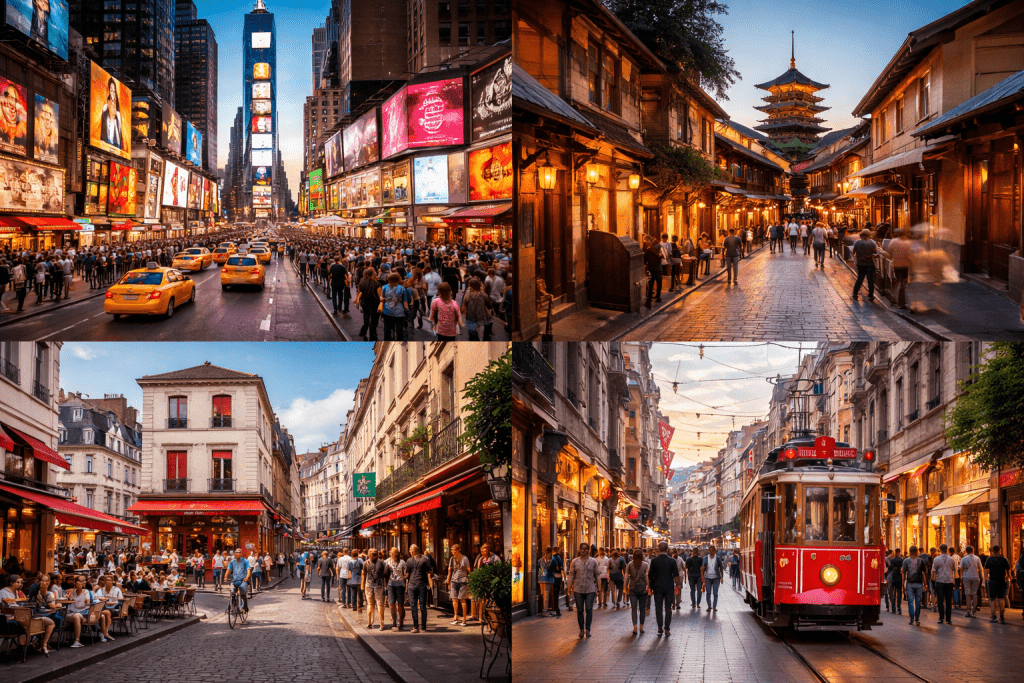
The brain is a pattern recognition machine. When it encounters the same environment repeatedly, it starts filtering information. This saves energy but reduces inspiration. New visual environments interrupt this pattern filtering.
Different cities offer different visual languages:
• Narrow streets versus wide boulevards
• Warm colors versus cool tones
• Dense crowds versus open spaces
• Organic layouts versus structured grids
Each variation pushes the brain to update its mental map. This updating process activates the prefrontal cortex, which plays a major role in creativity, planning, and idea generation.
Virtual travel introduces these visual differences quickly and safely. You can jump from a Nordic harbor to a Southeast Asian market in minutes. This constant visual contrast keeps the brain alert and receptive.
How Movement on Screen Encourages Mental Movement
Static images can inspire, but moving visuals are especially powerful. Walking tours and driving videos simulate forward motion. This sense of movement matters more than it seems.
Studies in embodied cognition suggest that physical movement and perceived movement are linked to thought processes. When you see forward motion, your brain associates it with progress. This can help break mental blocks and encourage the flow of ideas.
Virtual driving travel is particularly effective. Watching roads unfold, turns appear, and landscapes change mirrors the mental experience of exploring. This can help unlock ideas that feel stuck or repetitive.
Many creatives use walking to think. Virtual travel can have a similar effect when physical walks are not possible.
Soundscapes and Creative Focus
Creativity is not only visual. Sound shapes attention and mood. Urban ambience, distant chatter, traffic hum, or water sounds all influence how the brain focuses.
Moderate background noise has been shown to improve creative performance by encouraging abstract thinking. It provides stimulation without demanding focus. This is why cafes are popular creative spaces.
Virtual travel recreates this effect through soundscapes. A city street in Barcelona or a harbor drive in Sydney provides a gentle auditory texture. It fills the silence without overwhelming the mind.
Using headphones enhances this effect by reducing distractions and creating a consistent sensory environment.
Perspective Shifts Lead to Idea Shifts
Creativity often emerges when you see a problem from a new angle. Travel naturally encourages perspective shifts. You see how different cultures solve similar issues in other ways.
Virtual travel offers a visual and cultural perspective shift. You notice how cities organize space, how people interact, and how environments shape behavior. These observations can translate into creative insight.
For example:
• A designer might notice color harmony in Mediterranean streets
• A writer might pick up story ideas from daily life in unfamiliar cities
• A marketer might observe how storefronts communicate visually
• A product thinker might notice how people move through public spaces
These observations do not arrive as direct answers. They show up later as fresh connections.
Why Creativity Often Appears When You Are Not Trying
One of the most consistent findings in creativity research is the importance of incubation. Incubation occurs when you stop actively trying to solve a problem and let your mind wander.
Virtual travel is ideal for incubation. You are engaged but not pressured. Your attention floats between visuals, sounds, and movement. This relaxed focus allows the brain’s default mode network to activate. This network is associated with imagination, memory, and creative insight.
Many people report that ideas arrive during virtual drives or walking tours, not because they were searching for solutions, but because their minds had space to wander.
Drivenlisten.com as a Creativity Tool
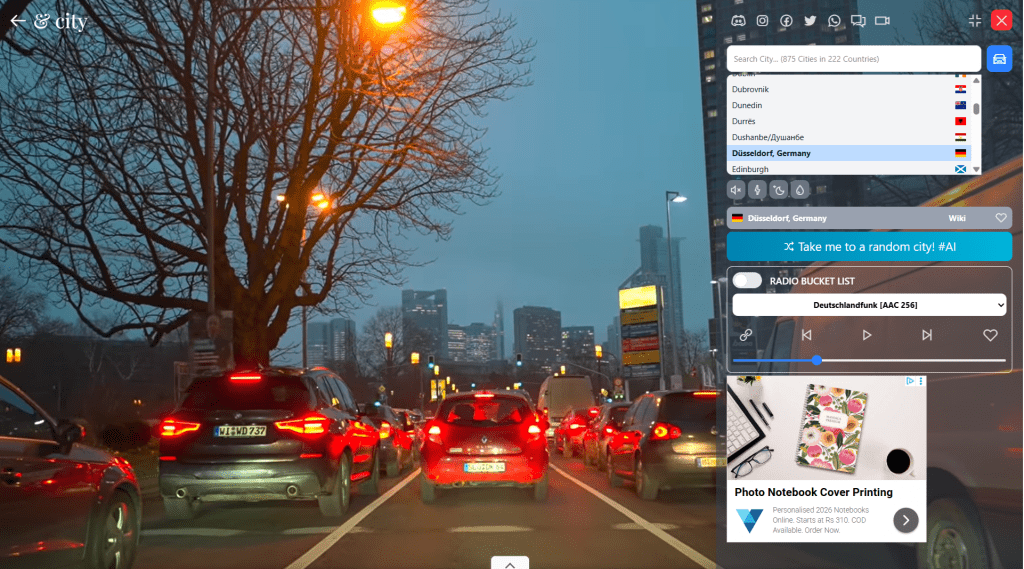
Drivenlisten.com is especially useful for creative stimulation. It places you in the passenger seat of a car driving through cities around the world. You can pair visuals with local radio or street sounds.
This combination of motion and sound creates an ideal creative environment. The visual movement encourages mental flow. The radio adds cultural texture and unpredictability. Together, they simulate the experience of being somewhere new without cognitive overload.
Many creatives use Drivenlisten.com during breaks, brainstorming sessions, or while doing low-effort tasks. It helps reset the mind and naturally invites new ideas.
You can choose cities based on the kind of creativity you want. Busy cities for energy. Calm coastal drives for reflection. Night drives for introspection.
How to Use Virtual Travel Intentionally for Creativity
Virtual travel works best when you treat it as a creative tool rather than background noise.
Here are simple ways to use it intentionally:
• Watch a ten-minute virtual walk before starting creative work
• Take a virtual drive during breaks instead of scrolling
• Match the city to your creative goal
• Use headphones for complete immersion
• Avoid multitasking while watching
These small habits help your brain associate virtual travel with idea generation.
Creativity Is About Exposure, Not Effort
Creativity does not always come from pushing harder. Often, it comes from seeing more. Virtual travel increases what you see, hear, and feel. It expands your mental library of images and experiences.
Cognitive science suggests that the brain builds ideas by remixing what it already knows. The richer your input, the more interesting your output. Virtual travel feeds your brain new material in a gentle, enjoyable way.
You do not need to cross borders to think globally. Sometimes, all it takes is letting a new street, a new sound, or a new rhythm pass through your mind.
Virtual travel reminds us that creativity begins with curiosity, and curiosity can travel anywhere.