


Have you ever watched a virtual travel video that felt so real you almost forgot you were sitting at home? Maybe you heard the gentle rumble of traffic under a bridge or the distant chime of a tram rolling through a city square. Perhaps you caught a snippet of a conversation between friends waiting to cross the street. These sounds do more than fill the background. They shape the entire atmosphere of the virtual journey.
City soundscapes are powerful. They can pull you into a place, stir emotions and make you feel present even when you are thousands of miles away. There is a reason your favorite virtual walking tour feels incomplete when it is silent. Sound is the invisible thread that ties the whole experience together. And as it turns out, there is real science behind why these everyday noises make virtual travel so immersive.
Why Your Brain Responds So Strongly to Ambient City Sounds
Our brains are wired to interpret sound as a key part of how we understand the world. Long before we relied heavily on sight, humans used hearing to sense danger, find food, and navigate unfamiliar environments. Even today, sound shapes how safe, alert, or relaxed we feel.
When you hear city ambience during a virtual travel experience, your brain treats those sounds as real cues. Honking cars signal movement. Footsteps signal presence. Distant chatter signals community. Your brain begins to place you inside that environment, and your imagination fills in the gaps.
This is why virtual travel with ambient audio feels more believable. You are not only seeing the city. You are hearing it live around you. The combination activates multiple senses, which deepens the feeling of presence.
How Sound Creates Emotional Connection in Virtual Travel

The sounds of a city are full of personality. Traffic tells you how fast life moves in a place. Street chatter hints at cultural rhythms and local expressions. Even something as simple as a bus departing can create a sense of movement and purpose.
These sounds evoke emotions. A quiet early morning recording from Tokyo can evoke a sense of peace. A lively marketplace in Marrakech can energise you. A rainy street in London might make you reflective. Emotions help you remember and connect with what you are watching. This emotional link is one reason virtual travel can feel strangely comforting or nostalgic, even if you have never visited the city.
The Science of Presence and Why Audio Matters
Researchers often talk about presence, which is the sense of “being there” even when you are not. Presence is influenced by two major factors: realism and immersion. While videos and visuals create realism, sound completes the immersive experience.
In psychology, this is known as multisensory integration. When your brain receives matching signals from sight and sound, it draws a stronger conclusion about the reality of the environment. In simple terms, if your eyes see a car passing and your ears hear it too, your brain believes you are standing on that street.
Without audio, your brain senses something missing. The scene feels flatter. Adding sound changes everything. The environment becomes alive and believable.
Why Background Chatter Helps You Feel Connected
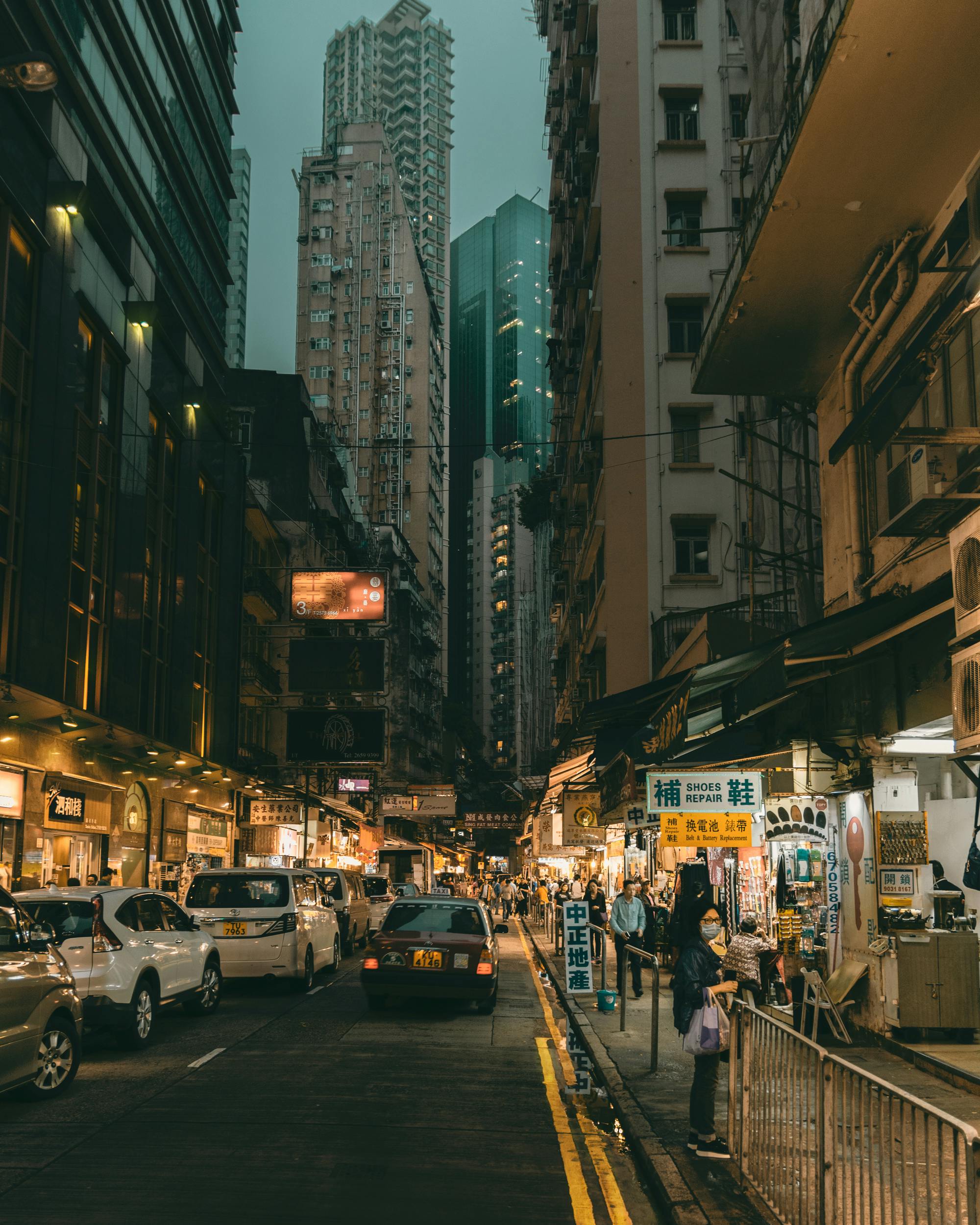
Human voices play a special role in virtual travel. Street chatter is a form of social sound, and our brains react strongly to it. Even when you cannot understand the language, the tone and rhythm tell you a lot about the social atmosphere.
Soft conversations in a café suggest comfort. Fast-paced discussions outside a station suggest movement and urgency. Laughter on a sidewalk hints at culture and community. These small details help you feel the social heartbeat of a place.
Hearing people interact can also reduce the feeling of loneliness. It creates a sense of companionship because your mind treats those voices as part of your environment. You may not know the people speaking, but you feel like you are sharing the space with them.
The Role of Traffic Noise in Setting the Mood
Traffic sounds are often described as noise, but they play a crucial role in shaping a city’s identity. The soft hum of scooters in Taipei, the musical beeping of pedestrian signals in Tokyo, or the layered sounds of cars and buses in New York each tell a story about how a city moves.
Traffic noise provides context for the pace of life. A busy, loud avenue communicates energy and motion. A quiet cobblestone alley suggests slower rhythms. This context shapes how you interpret the environment and what you feel while watching it.
When you listen closely during virtual travel, traffic can even become soothing. The consistent background hum creates a sensory blanket that many people find calming because the sounds repeat in familiar patterns.
Local Radio and Music Add an Extra Layer of Immersion

One of the most delightful surprises in virtual travel is hearing a local song playing from a shop or a taxi radio. Music is deeply tied to culture and identity. Even a few seconds of local radio tells you something about the personality of a city.
People use these sounds to connect emotionally with places. A lively pop track in Seoul, a nostalgic ballad in Rio, or a soft jazz tune in Paris hints at the city’s character and adds history and mood to the experience.
Local radio also adds authenticity. It makes you feel like you are part of a city’s everyday activities. You are not only watching the environment. You are participating in its soundscape.
Drive&Listen.com and the Power of Moving Through Sound
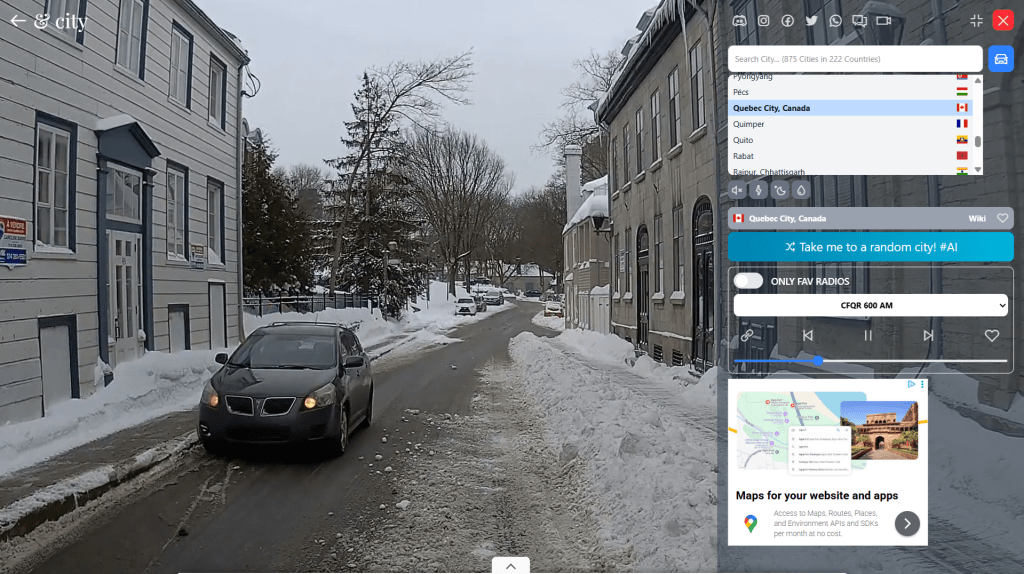
Drive&Listen.com is a perfect example of how city sounds enhance virtual travel. The site lets you sit in the passenger seat while driving through cities around the world. You watch the streets unfold through the windshield while listening to local radio or live street audio.
This combination of movement and sound creates an incredibly immersive experience. You hear the car accelerate, you listen to people crossing in front of you, and you absorb the rhythm of each neighborhood. Drive&Listen.com taps into the part of your brain that interprets sound as motion and presence, which makes the experience feel natural and engaging.
It is soothing, educational, and strangely comforting. Many people use it to relax, travel virtually after work, or explore cities they dream of visiting.
Why Sound Makes Virtual Exploration Feel More Human
City sounds remind us that the world is full of life. They make virtual travel feel less like watching a screen and more like being part of a living environment. The mix of voices, traffic, wind, and music creates a story that unfolds in real time.
Sound helps you imagine the people behind the scenes. It lets you picture the barista preparing coffee, the family waiting for a bus, or the cyclist ringing a bell. These connections make virtual travel emotionally rich and human.
Bringing It All Together: The World Through Sound
At its core, virtual travel works because it creates a sense of presence. And sound is one of the strongest tools for building that presence. It completes the picture, shapes emotion, and invites you to participate in the scene rather than observe from afar.
Whether you are walking through a market, riding through a city on Drive&Listen.com, or watching a quiet neighborhood at sunrise, sound helps you feel grounded in the moment. City ambience is not just background noise. It is the heartbeat of the experience.
With just a pair of headphones and a little curiosity, the world can feel incredibly close.