

 Start Driving in Kandy
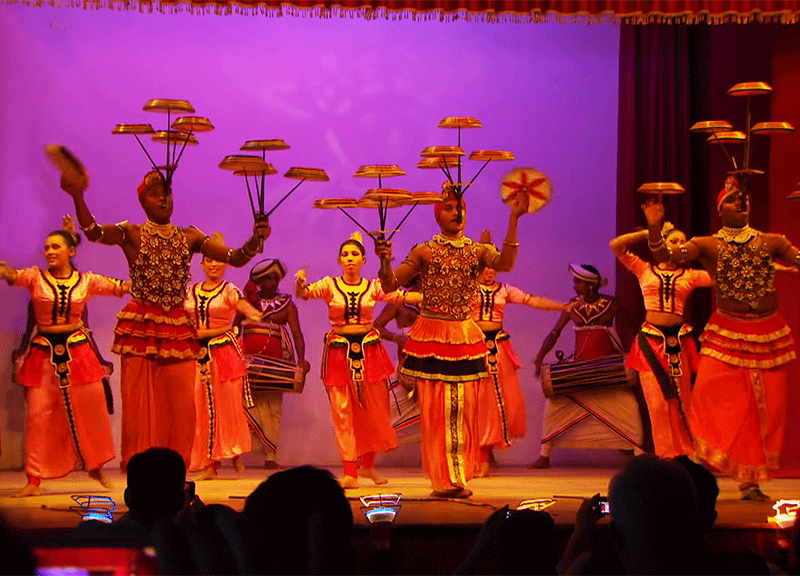
Kandy, a city in central Sri Lanka, blends its rich historical significance with stunning natural landscapes, offering a unique mix of historical landmarks, diverse neighborhoods, and a serene atmosphere. Situated amidst hills and valleys, Kandy provides a captivating mix of scenic views and cultural diversity. The Temple of the Sacred Tooth Relic (Sri Dalada Maligawa), a prominent landmark, features stunning religious architecture and cultural significance. The Royal Botanical Gardens, Peradeniya, features stunning botanical landscapes and recreational spaces. The Kandy Lake features stunning natural landscapes and recreational spaces. Kandy’s culinary scene features a delightful mix of Sri Lankan and regional cuisine, with restaurants serving rice and curry, hoppers, and diverse regional specialties. The city’s markets, such as the Kandy Market, offer a variety of local produce, artisanal goods, and souvenirs. The hills and surrounding areas provide opportunities for scenic walks, cultural exploration, and outdoor recreation. Kandy’s efficient transportation network, including buses and trains, facilitates travel within the city and to surrounding areas. The city experiences a tropical rainforest climate, with warm temperatures year-round. Kandy’s cultural attractions, such as the various temples and the annual Esala Perahera festival, highlight the city’s historical significance and cultural contributions. The city’s tranquil cultural scene includes festivals, traditional music, and dance, reflecting the region’s diverse traditions. Kandy’s blend of historical charm and natural beauty creates a unique and appealing destination. The local markets and community events foster a serene atmosphere, making Kandy a peaceful and culturally rich destination for visitors and residents. Kandy is a vital center for tourism, culture, and religion in Sri Lanka, contributing significantly to the country’s national development and cultural preservation.
Kandy, Sri Lanka: The Ultimate Travel Guide to the Island’s Sacred Highland Capital
The drumbeats start before you see anything. Deep, resonant, rhythmic, they roll down the hillsides like thunder from a cloudless sky. Then the smoke of incense reaches you, sweet and heavy, drifting from a temple that has stood for over four centuries. You round a corner along the lakeside promenade, and the Sri Dalada Maligawa rises before you, its white walls blazing against a backdrop of mist-wrapped forest, the golden roof catching the last light of the afternoon. You are not yet inside. You have not yet heard the puja bells or felt the cool stone under your bare feet. And you are already undone. This is Kandy!
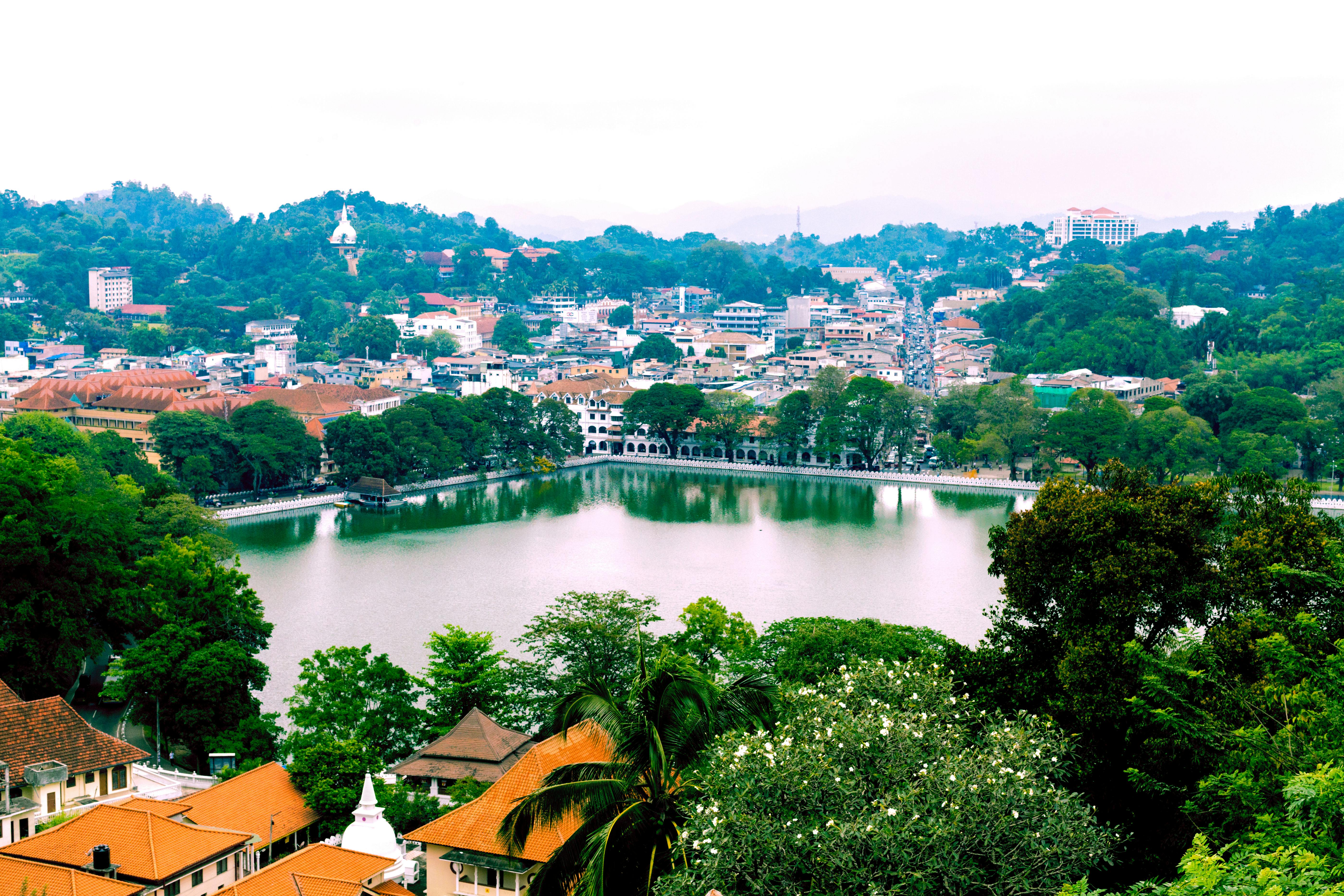
Sri Lanka’s second-largest city sits 465 meters above sea level in the folds of the central highlands, and it operates on a frequency entirely its own. While Colombo hustles and the southern coast sprawls in the sun, Kandy occupies a different register. It is the custodian of everything the island holds most sacred, most intricate, most irreplaceable. The last kingdom to resist three waves of European colonisation, the city kept its artistic and spiritual traditions sealed away in the hills for three centuries longer than anywhere else on the island. That isolation did not diminish Kandy. It concentrated it, like a reduction in a pan, intensifying every flavour.
The result is a city of extraordinary cultural density packed into a surprisingly compact, walkable space. Come to the temple. Stay for the Kandyan dance performances, the canopy of the Royal Botanical Gardens, the spice-laden chaos of the Central Market, the arrack-and-sunset routine at a hilltop guesthouse, and the train that takes you into the tea-soaked highlands when you finally decide to move on.
A Brief History: Three Kingdoms and One Tooth
Kandy’s story is inseparable from the Sacred Tooth Relic of the Buddha, a left canine tooth believed to have been rescued from his funeral pyre in 543 BCE. The relic arrived in Sri Lanka from India in the 4th century CE, carried by a princess and a prince who disguised it inside a flower arrangement. Whoever held the relic, according to Sinhalese tradition, held the relic had the right to govern the island. Kandy became its final home, and the city grew up around its protection.
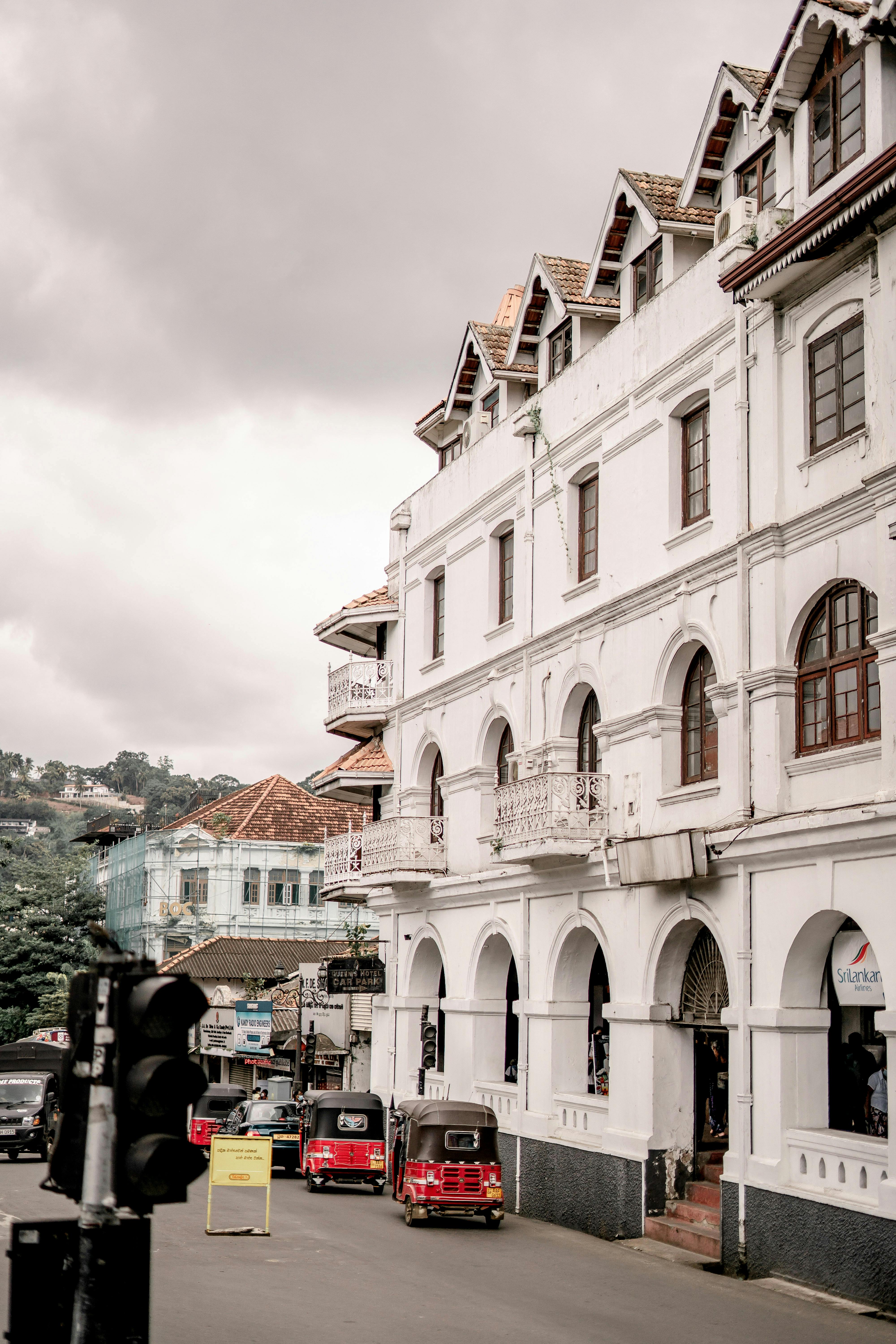
The Kandyan Kingdom was established in 1469 CE, and over the next 350 years, it proved uniquely resistant to conquest. The Portuguese tried and failed. The Dutch tried and failed. The British finally succeeded in 1815, not through military victory but through political maneuvering, bringing the last king, Sri Wikrama Rajasinha, to Colombo under the terms of the Kandyan Convention. The kingdom was over. But the temple endured, and Kandy’s cultural identity survived colonization more intact than almost anywhere else on the island.
UNESCO recognized Kandy as a World Heritage Site in 1988. The designation confirmed what every pilgrim already knew.
Best Months to Visit Kandy
Kandy sits in a geographic sweet spot, making it accessible year-round, though the experience varies considerably by season.
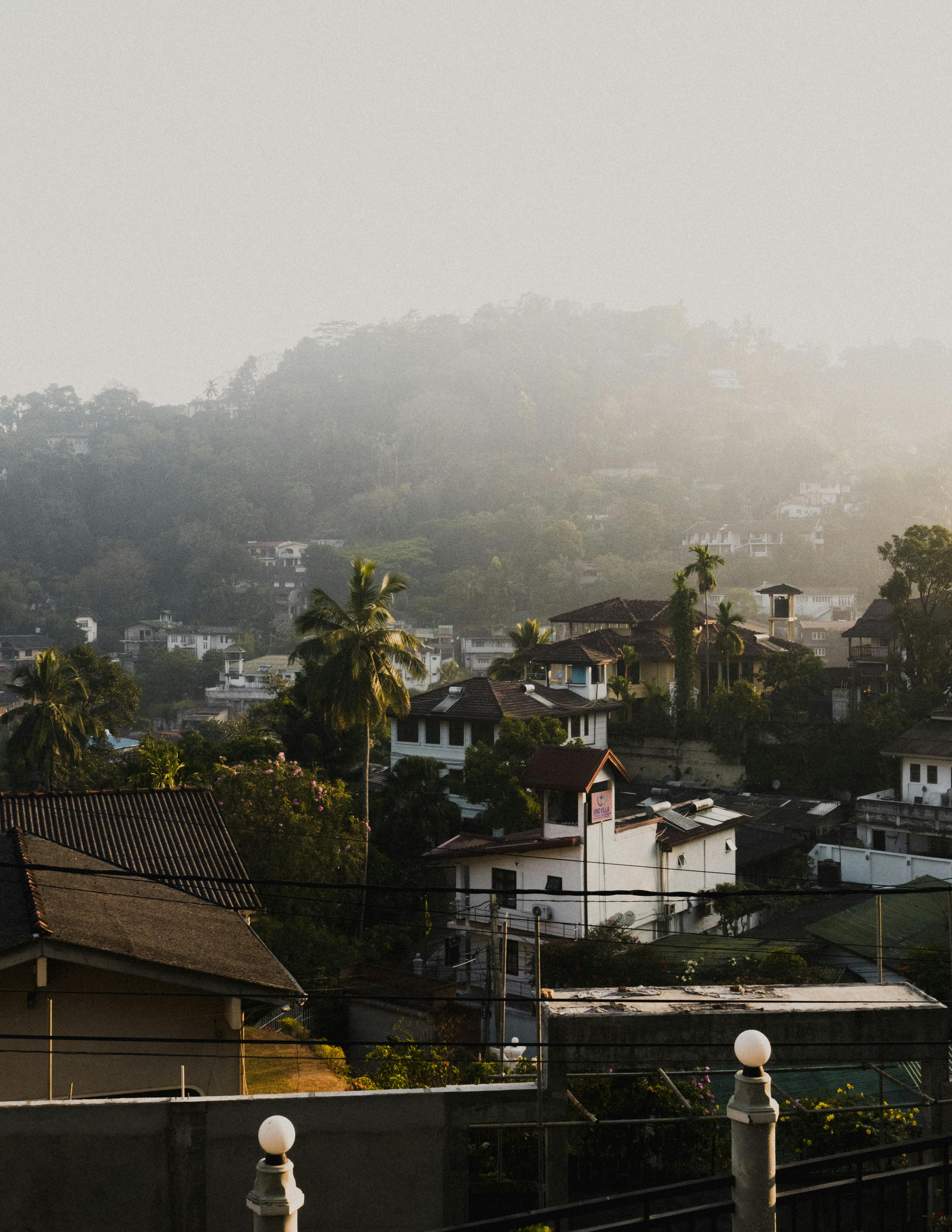
December to March is the dry season and the most popular window for international visitors. Days are warm (24 to 28 degrees Celsius), evenings are pleasantly cool at altitude, and the skies are clear enough that the surrounding Knuckles Mountain Range comes into sharp relief. Crowds peak around the Christmas and New Year period, and accommodation prices rise accordingly.
April brings the Sinhalese and Tamil New Year in mid-month, one of the most significant holidays in Sri Lanka. Kandy is worth visiting in early April, but traveling during the New Year week itself can be chaotic, as half the island is on the move. Expect limited bus and train seats, inflated prices, and shuttered shops.
May to June is an underrated window. The southwest monsoon brings rain to the southern and western coasts of Sri Lanka, but Kandy sits in the central hills and often escapes the worst of it. Mornings are typically clear, afternoons may produce short showers, and the city and its surrounding forest are at their most vivid green. Prices drop and crowds thin.
July to August is the window for the Esala Perahera festival, one of the most spectacular events in Asia. If you can only visit Kandy once, this is the time. The flip side is that hotels book out months in advance, and prices spike sharply.
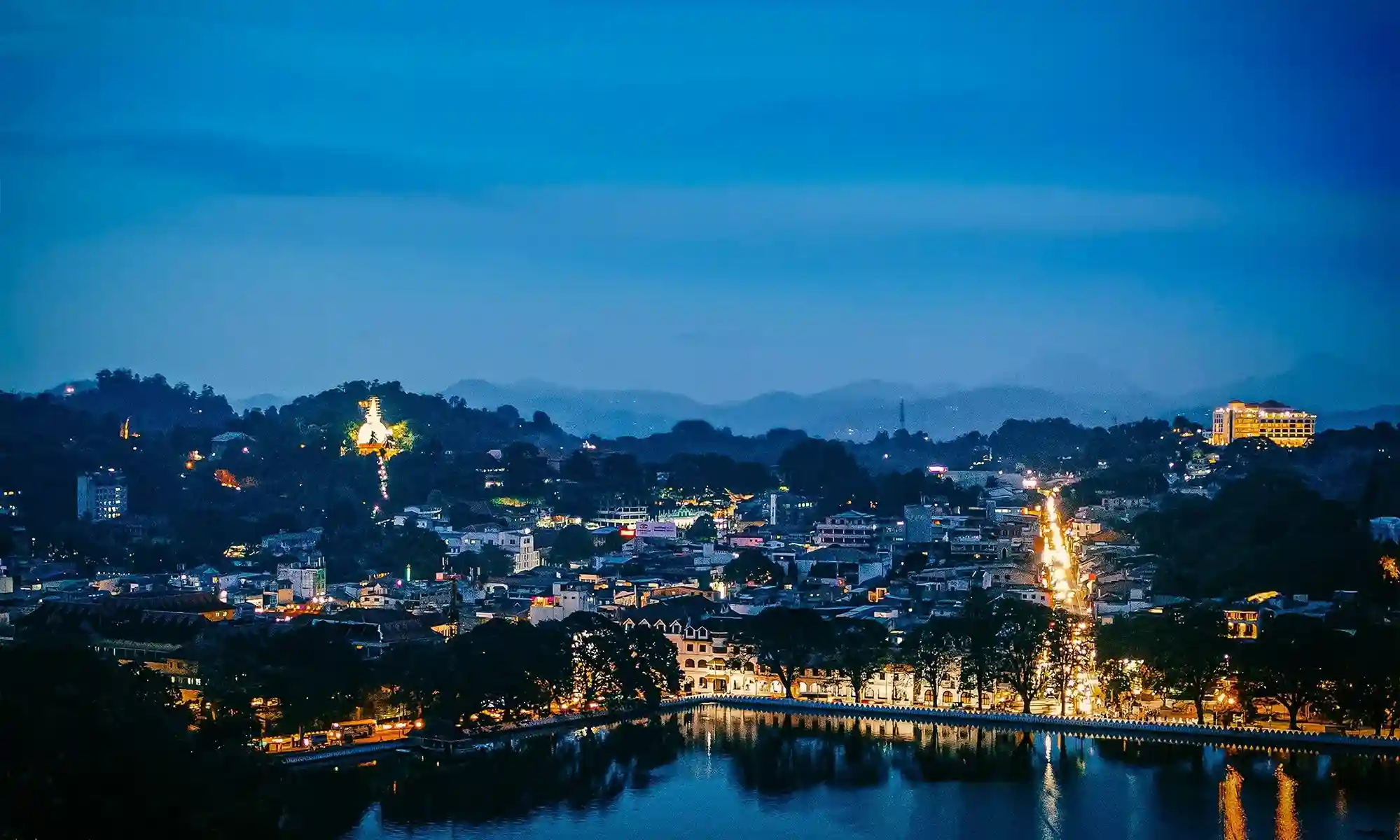
September to November sees the inter-monsoonal period bring more unpredictable rainfall. The crowds are manageable, prices are lower, and the occasional afternoon downpour on the lake is, honestly, rather beautiful.
Top Attractions
Sri Dalada Maligawa (Temple of the Sacred Tooth Relic)
There is no understanding of Kandy without spending time inside this temple. The Sri Dalada Maligawa is not merely a tourist attraction. It is the spiritual centre of the Theravada Buddhist world, a living place of worship that draws pilgrims from across Sri Lanka and beyond every single day of the year.

The tooth relic itself is enshrined in a gold casket, nested within six progressively smaller caskets, in the inner sanctum known as the Vadahitina Maligawa. The relic is not visible to visitors; what you see is the outermost casket displayed during puja ceremonies. But the act of standing in that chamber, surrounded by white-clad devotees laying lotus flowers and with the hammering of the puja drums filling your chest cavity, is an experience that operates beyond language.
- Opening hours: Daily, 5:30 AM to 8:00 PM
- Entry fee: LKR 2,000 (approx. USD 6.50) for non-SAARC visitors; LKR 1,500 for SAARC nationals; free for children under five
- Dress code: Shoulders and knees must be covered. Wraps are available at the entrance for a small fee.
- Pro-tip: The early-morning puja at 5:30 AM sees very few tourists and is mostly attended by local pilgrims. It is a genuinely moving experience and far more intimate than the evening ceremony.
Peradeniya Royal Botanical Gardens
Six kilometers from Kandy’s city center, spread across 147 acres of land that curves around a bend in the Mahaweli River, Peradeniya is one of the finest botanical gardens in Asia. Established in 1371 as a royal pleasure garden and converted to a scientific institution by the British in the 19th century, it now holds more than 4,000 species of plants, including a collection of over 300 varieties of orchid, a spice garden, a bamboo grove where the culms tower above your head, and an avenue of royal palms that stretches for nearly half a kilometre.
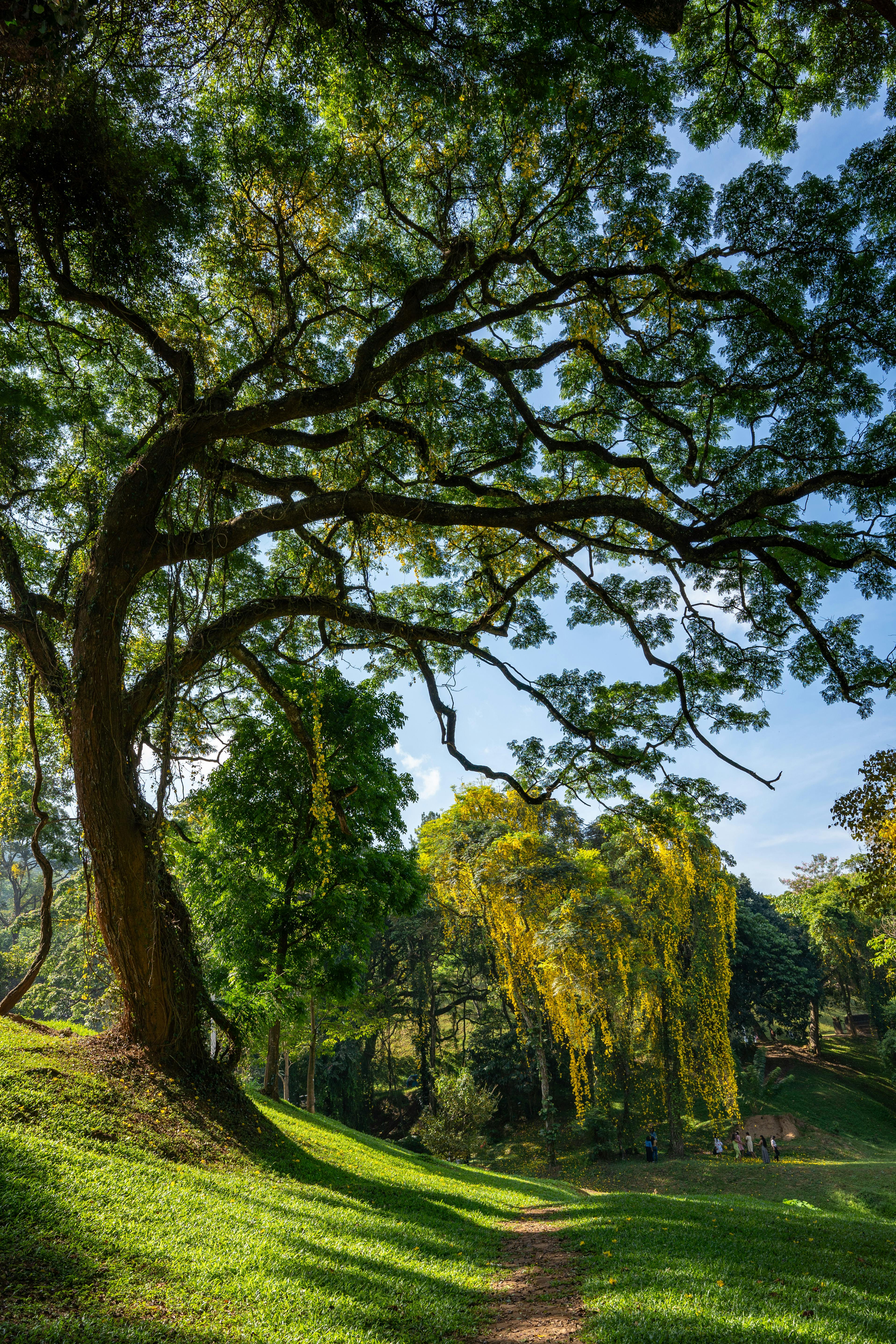
The star attraction is the giant Javan fig tree near the main entrance, a single tree with a canopy spread that covers nearly half an acre. During the Second World War, Lord Mountbatten used the tree as the headquarters for the South East Asia Command.
- Opening hours: Daily, 7:30 AM to 5:00 PM
- Entry fee: LKR 1,500 (approx. USD 5) for foreign adults
- Pro-tip: Come early on weekdays to avoid school groups and tour buses. The gardens are enormous, so budget at least two hours. Tuk-tuks wait outside and will take you from the city for around LKR 300 to 400.
Bahiravokanda Vihara (Giant Buddha Statue)
Rising 26.83 meters above a hilltop on the south side of Kandy, the white-painted Buddha statue at Bahiravokanda is visible from almost everywhere in the city and functions as a kind of compass when you are navigating on foot. The climb up the hill takes about 20 minutes along a forested path, and the view from the top offers one of the best panoramas of the city, the lake, and the surrounding ridges.
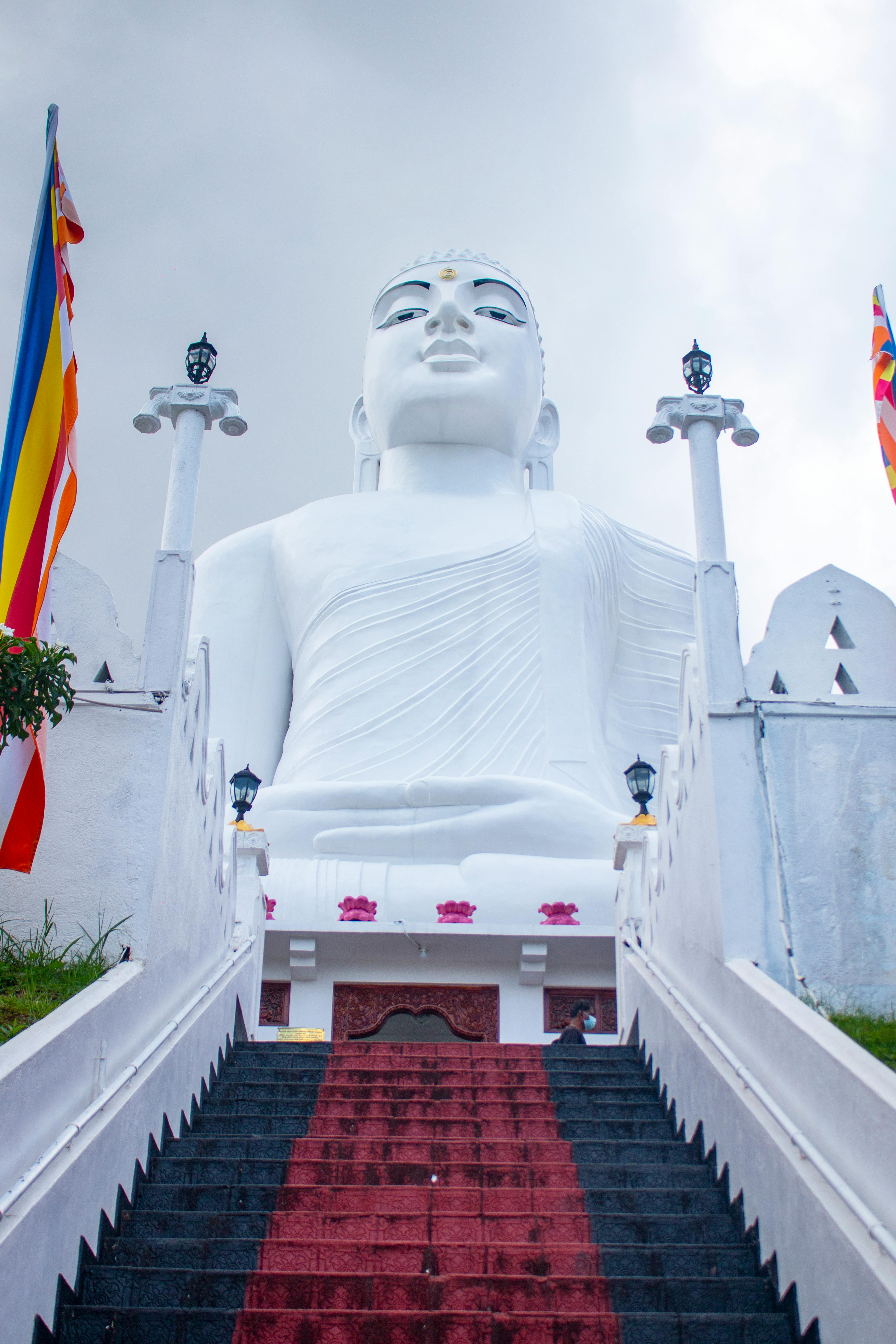
- Opening hours: Daily, 6:00 AM to 7:00 PM
- Entry fee: Free (donation box at the entrance)
- Pro-tip: The sunset view from here is exceptional. Come up about an hour before dusk, bring some water, and watch the city turn amber below you.
Ceylon Tea Museum
Housed in the former Hantana Tea Factory (built 1925), this museum traces the history of Sri Lanka’s most transformative agricultural product. Four floors cover the origins of Ceylon tea, the legacy of James Taylor (who planted the first commercial tea estate in Sri Lanka in 1867), the mechanics of production, and vintage machinery that once processed leaves from the surrounding hillsides. It is intelligently laid out and less crowded than the major temple sites.
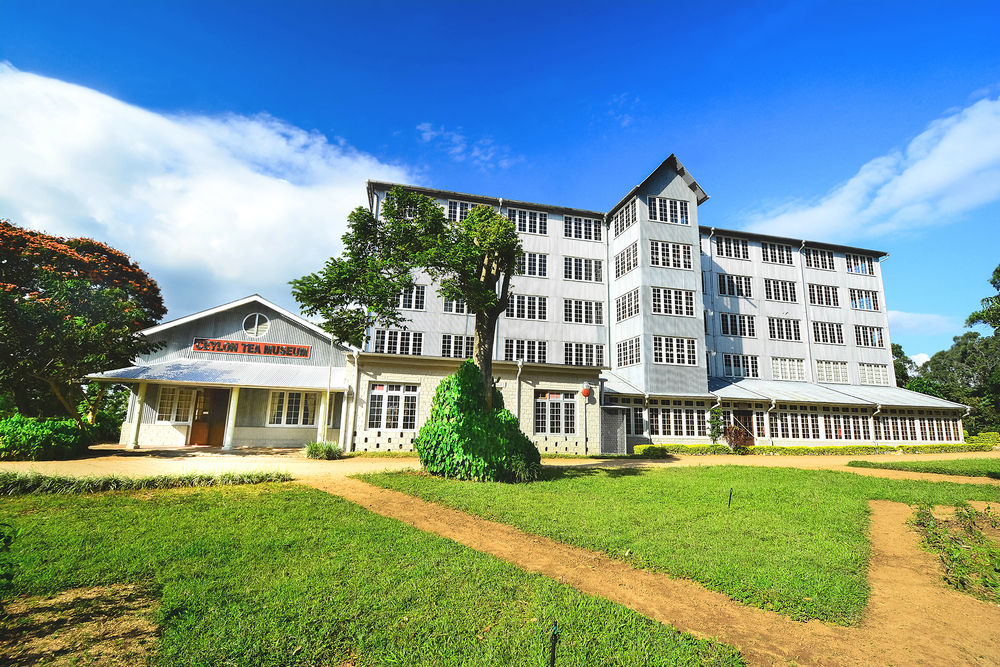
Opening hours: Tuesday to Sunday, 8:30 AM to 4:30 PM (closed Mondays)
- Entry fee: LKR 500 (approx. USD 1.50) for adults
- Pro-tip: A cup of freshly brewed Ceylon tea at the rooftop cafe at the end of your visit is not optional.
Kandy National Museum
Located in a former royal palace adjacent to the Temple of the Tooth, the museum houses a compact yet well-curated collection of Kandyan-era royal regalia, ancient weaponry, ivory carvings, and religious artifacts. The exhibits contextualise the Kandyan Kingdom, making the rest of your visit to the city considerably richer.

- Opening hours: Monday to Sunday, 9:00 AM to 5:00 PM (closed Fridays)
- Entry fee: LKR 200 (approx. USD 0.65)
Hidden Gems
Udawatta Kele Sanctuary
Most visitors to Kandy walk past the sign for this forest reserve without a second glance, which is exactly the right outcome for the people inside it. Udawatta Kele is a 257-acre forest reserve on the hill immediately behind the Temple of the Tooth, and it is remarkably wild for something just a ten-minute walk from a UNESCO World Heritage site. The reserve contains three Buddhist hermitages tucked into the forest, a small reservoir, and a genuinely impressive population of endemic birds, including the Sri Lankan hanging parrot and the Layard’s parakeet. The canopy provides near-total shade, and on weekday mornings, you can walk for an hour without encountering another tourist.

Access: The entrance is on Udawattekele Road, behind the Queen’s Hotel. Entry fee is LKR 100 for locals, LKR 200 for foreigners.
Gadaladeniya, Lankathilaka, and Embekka Temple Circuit
Roughly 15 kilometres west of Kandy, three medieval temples sit within a few kilometres of each other in the surrounding countryside, reachable by tuk-tuk in a half-day excursion. They are rarely included on standard tourist itineraries and are visited mostly by Buddhist pilgrims and the occasional architectural historian.

Gadaladeniya Temple (14th century) is a Dravidian-influenced stone temple with a beautifully proportioned main shrine. Lankathilaka Vihara sits atop a massive rock outcrop and dates to 1344 CE, its outer walls covered in ancient Sinhala script. Embekka Devalaya is the most remarkable of the three, famous for its wooden carved pillars that feature some of the finest medieval woodcarving in Sri Lanka: wrestlers, dancers, swans, eagles, and double-headed eagles in interlocking compositions.
The full circuit by tuk-tuk should cost around LKR 2,000-2,500.
Hela Bojun Hala
This government-initiated food court above the municipal parking lot near the Kandy City Centre Mall is not listed in most travel guides, which is unfortunate, because it is one of the best places in the city to eat authentic Sri Lankan food. Each stall is run by a local woman serving a handful of dishes, and no two stalls serve the same thing.

You can assemble a meal of hoppers, jackfruit curry, milk roti, string hoppers, and devilled cashews for well under a dollar. It is packed with schoolchildren in the afternoons and families on weekends. It is very much not a tourist attraction, which makes it exactly the right place to spend a lunch hour.
Bahirawakanda and the Kandy Viewpoint Walk
Most people take a tuk-tuk to the Bahiravokanda Buddha and back. Instead, consider walking the extended ridge path that connects the Buddha statue with the Kandy Viewpoint further south, a 45-minute walk along a forested ridgeline with multiple spots to look out over the city.

The path is easy to follow, and the elevation gives you a perspective on Kandy’s remarkable geography. In the early morning, before the city haze develops, you can see the Knuckles Range stretching to the northeast.
Cuisine and Dining
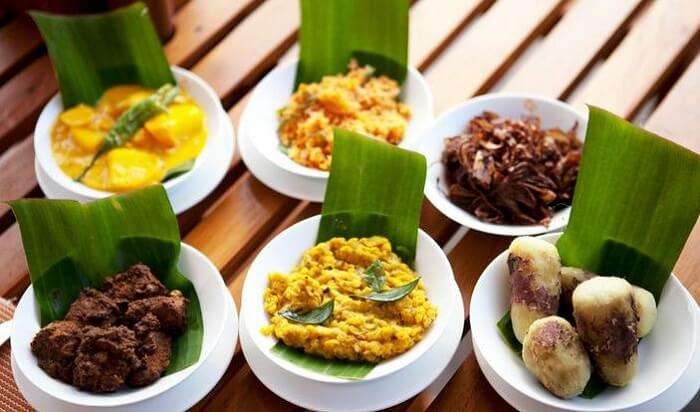
Kandyan food is highland Sri Lankan cooking, which means it is more restrained in the use of coconut milk than coastal cuisine, heavier on earthy spices, and deeply comfortable. The staple is rice and curry, a term that conceals an extraordinary variety. A proper rice and curry in Kandy arrives on a tray or banana leaf as a mound of red rice surrounded by anywhere between four and ten small dishes: a fish or meat curry, a dhal, a mallum (shredded greens), a pol sambol (scraped coconut with chili and lime), a papadum, and whatever the cook decided to add that morning.

Must-Try Dishes
- Kottu roti: Shredded roti stir-fried with vegetables, egg, and your choice of meat or fish on a flat iron griddle. The rhythmic clanging of the kottu blades is one of the defining sounds of a Sri Lankan evening.
- Hoppers (appa): Bowl-shaped fermented rice flour pancakes, eaten plain, with an egg cracked into the bowl, or with a smear of coconut sambol. String hoppers (idiyappam) are the pressed-noodle variation.
- Fish ambul thiyal: Sour fish curry made with goraka (a dried tamarind-like fruit) that gives it a sharp, dark, intensely flavoured sauce. A highland specialty worth hunting down.
- Watalappan: A Sri Lankan dessert made from jaggery, coconut milk, eggs, and spices. Dense, sweet, and perfumed with cardamom, it is the best way to end a meal.
- Kalu dodol: A dark, chewy sweet made from kithul palm treacle, rice flour, and coconut milk. Buy it at the Kandy Central Market, where it is sold in logs wrapped in a banana leaf.

Budget (Under LKR 500 / USD 1.50 per person)
Balaji Dosai (03 DS Senanayake Veediya) is a 100% vegetarian South Indian institution in Kandy. The masala dosa, thin and crisp, served with coconut chutney and vibrant sambar, is the move. It is always busy, always cheap, and always good. Three locations in the city; the original on DS Senanayake Veediya is best.
Mandiya (inside the Kandy City Centre mall) is the kind of place you would never find without a local pointing you there: four tables, a constantly rotating menu of home-style rice and curry dishes, and an owner, Rajan, who cooks everything from scratch. The fish ambul thiyal, when it appears, is extraordinary.
Kandy Muslim Hotel (70 Sri Dalada Veediya) is a legendary local spot for beef curry and paratha. Ignore the name, focus on the food.
Mid-Range (LKR 1,500 to 4,000 / USD 5 to 13 per person)
The Empire Cafe (Queens Hotel Building, DS Senanayake Veediya) occupies a beautifully restored colonial building directly adjacent to the Temple of the Tooth. The decor is vintage Sri Lanka, the menu mixes Sri Lankan and Western dishes competently, and the coconut roti with lunu miris is exactly what you want after a morning at the temple.
Devon Restaurant (11 Sri Dalada Veediya) has been feeding Kandy since 1960. A two-storey local institution serving Sri Lankan, Chinese, and a few European dishes, it becomes genuinely hectic at lunchtime as office workers pile in. The rice box and the butter cake from the attached bakery are the classics.
Slightly Chilled Lounge Bar (Kandy Lake area) offers rooftop seating with views towards the lake, a relaxed atmosphere, and a menu of solid chicken curry, devilled prawns, and vegetable dishes. Ideal for a lazy dinner.
Fine Dining (LKR 6,000 and above / USD 20+)
Theva Cuisine (Theva Residency, Heeralugolla) sits in the hills above Kandy. It offers one of the most dramatic dining views in Sri Lanka: a panorama of forest-covered ridges and a valley that seems to stretch to the edge of the world. The kitchen fuses Sri Lankan and international flavors, executed with precision and plated with care. Reservations are strongly recommended.

Helga’s Folly (32 Frederick E de Silva Mawatha) is less a restaurant than an event. The building, a 1930s-era villa painted red and crammed with antiques, murals, taxidermy, chandeliers, and an accumulation of objects that defies classification, was the creation of the late and legendarily eccentric Helga de Silva Blow Perera. Dinner here features Sri Lankan and European dishes, served in a dining room that looks like the inside of a brilliant, benevolent mind. Budget around USD 30-40 per person for a full meal.
Market Recommendation
The Kandy Central Market (off Dalada Veediya, daily 6:00 AM to 7:00 PM) is one of the most rewarding food experiences in the city. Navigate the stalls for fresh spices sold by weight (cinnamon, cardamom, cloves, black pepper, all of exceptional quality), tropical fruits you have likely never seen before, and an overwhelming variety of dried fish, fresh vegetables, and street snacks. The market is bustling between 7:00 and 9:00 AM as local vendors arrive.
Accommodation
Stay Near Kandy Lake for Easy Access to the Temple
The central lakeside area puts you within walking distance of the Temple of the Tooth, the National Museum, the Cultural Centre, and the Central Market. It is the most convenient base for sightseeing and has the widest range of cafes and restaurants.
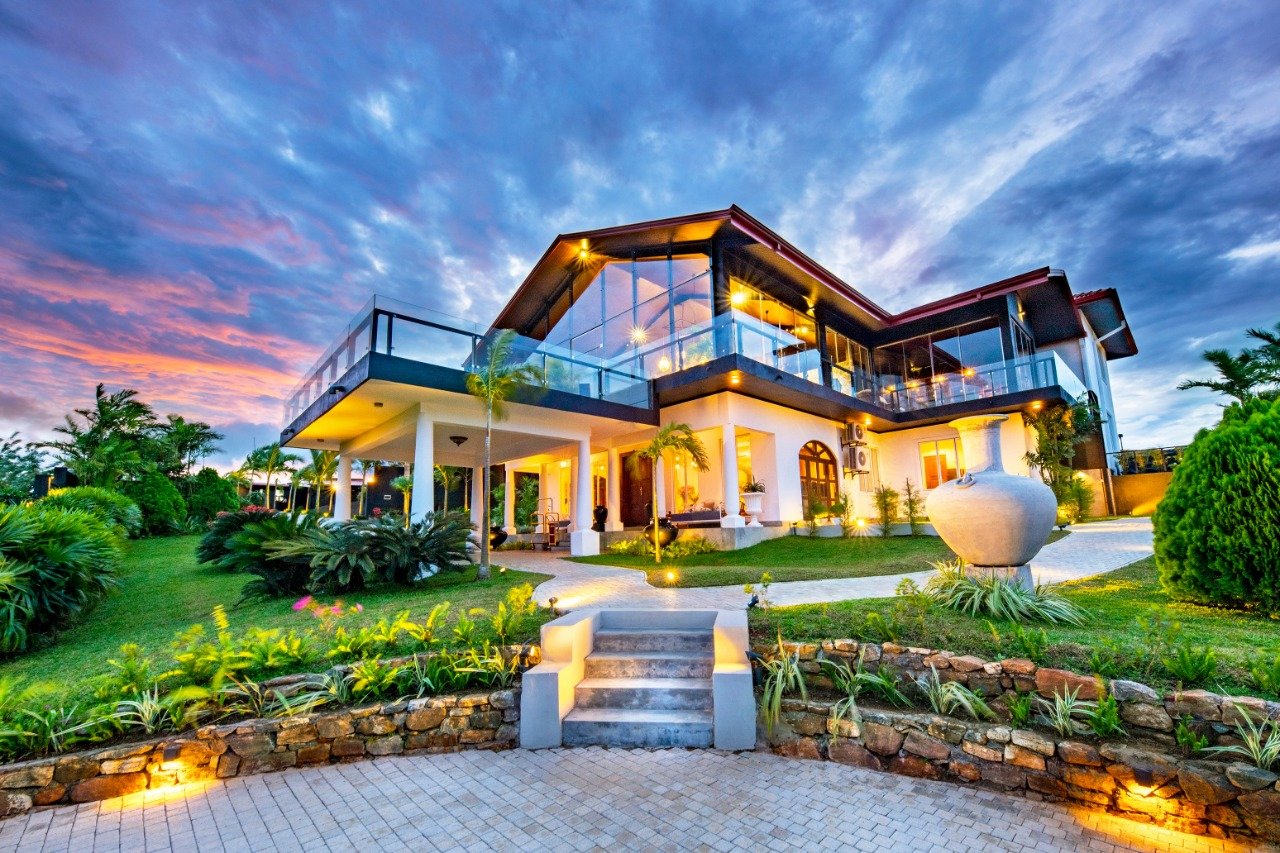
The hillside residential areas above the city (Rajapihilla Mawatha, Ampitiya Road) offer guesthouses with exceptional views over the lake and surrounding hills. The trade-off is a 15-20-minute walk or tuk-tuk ride into the city centre.
Budget (Under USD 20 per night)
36 Bed and Breakfast (Rajapihilla Mawatha area) is consistently one of the most recommended budget stays in Kandy. Three rooms in a beautiful historic building on the hill above Kandy Lake, with extraordinary views, hot water, air conditioning, and an excellent breakfast of Sri Lankan hoppers. Books out quickly; reserve in advance.
Jaye’s Homestay (a 10- to 15-minute walk from the center) is a family-run operation where cleanliness, hospitality, and home-cooked Sri Lankan food are standard. The walk from town keeps prices low and gives you a neighbourhood perspective on the city that lakeside hotels cannot offer.
Mid-Range (USD 40 to 100 per night)
The Radh (central Kandy) offers elegance at an accessible price point. Well-appointed rooms, a competent kitchen, and a location near the Temple of the Tooth make it an easy recommendation for travellers who want comfort without paying for a luxury address.
Hotel Casamara (lakeside, Kandy) is a four-star option directly on the lake, with a rooftop bar offering one of the city’s better sunset views. Rooms are modern, staff are helpful, and the pool is a genuine bonus in the warmer months.
Mahaweli Reach Hotel (35 PBA Weerakooon Mawatha) is beautifully positioned along the Mahaweli River, a short drive from the city centre. It has an Ayurvedic spa, a large pool, and well-furnished rooms with private balconies. A solid choice for travellers who want resort amenities with easy access to the city.
Luxury (USD 150 and above per night)
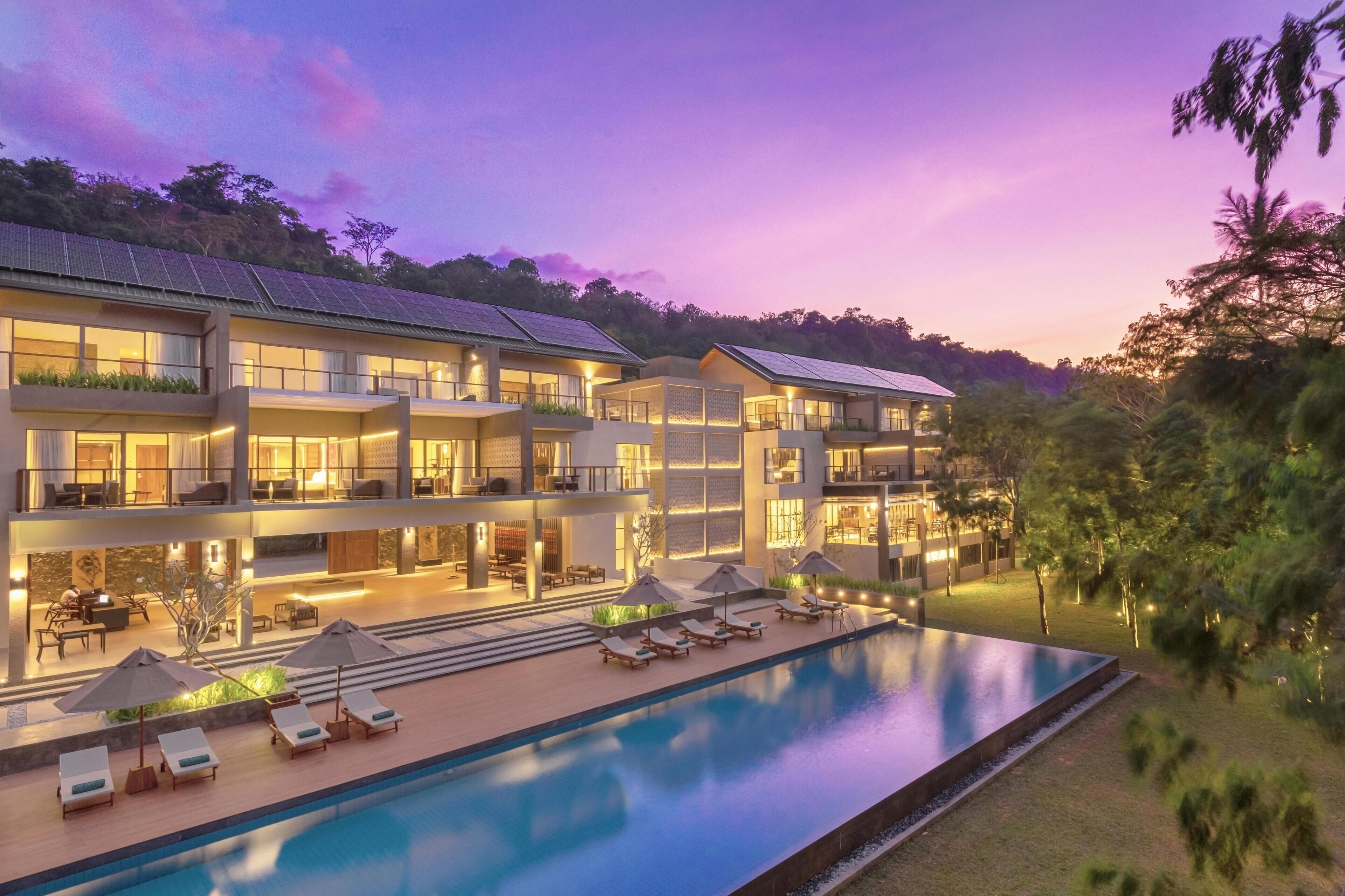
Kandy House (Amunugama Walauwa) is Kandy’s first true boutique luxury property, set in an 1804 walauwa (aristocratic manor house) on six acres of private gardens. The eight rooms are named after Sri Lankan butterflies, each one individually decorated in traditional materials and contemporary minimalism. The food is haute Sri Lankan cuisine sourced from the kitchen gardens. There is an infinity pool overlooking paddy fields. It is not cheap. It is absolutely worth it.
Helga’s Folly (32 Frederick E de Silva Mawatha) functions simultaneously as a hotel and art installation. Eleven rooms filled with murals, antiques, vintage photography, and the accumulated curiosities of a remarkable life. Jazz evenings on the terrace. The sort of place you tell stories about for years.
W15 Hanthana Estate is a nine-bedroom plantation-style bungalow in the hills outside the city, styled with contemporary luxury overlaid on colonial-era bones. The pool is exceptional, the views are commanding, and the service achieves that rare balance of attentiveness and discretion.
Transportation
Getting to Kandy
By Train: The most enjoyable way to reach Kandy is by train from Colombo Fort Station. The journey takes approximately two and a half to three hours, depending on the service, and the tracks climb through rubber plantations and then forest-draped hillsides as you gain altitude. Second- and third-class seats are available without reservation; first-class observation saloons should be booked in advance through the Sri Lanka Railways website or at the station. The Intercity Express services are the fastest and most reliable.

By Bus: Kandy is connected to Colombo by frequent express and luxury bus services departing from the Bastian Mawatha bus stand in Colombo. The journey takes around 2.5 hours, depending on traffic. CTB (Ceylon Transport Board) buses are the cheapest; private luxury coaches offer air conditioning and reserved seating for a modest premium.
By Car or Taxi: The A1 highway connects Colombo to Kandy in approximately two and a half to three hours. The road becomes steep and winding as it climbs into the hills. Ride-share apps (PickMe is the dominant platform in Sri Lanka) are widely used and considerably cheaper than flag-down taxis.
Getting Around Kandy
On foot: The core of the city, from the Temple of the Tooth to the Central Market to the Bahiravokanda hill, is walkable. Most of what you want to see in central Kandy is within a 20-minute walk of the lake.
Tuk-tuk: Tuk-tuks are the default short-distance transport. Negotiate the fare before you get in. A journey within central Kandy should cost LKR 150 to 300; a trip to the Botanical Gardens or the outer temples runs LKR 400 to 800.

PickMe app: Download this ride-hailing app before you arrive. It provides metered fares, driver details, and significantly reduces the negotiation overhead of hailing tuk-tuks on the street. It works consistently in Kandy.
Buses: Local buses connect Kandy to Peradeniya, Kegalle (for Pinnawala Elephant Orphanage), and surrounding villages. Cheap, frequent, and very crowded at peak hours.
Train to the hill country: The train from Kandy Station to Ella via Hatton is one of the most scenic train journeys in Asia. The route climbs through tea plantations and forest, with the tracks suspended over waterfalls and valley views. Book a second-class seat with a reservation (or the first-class observation car) in advance. Tickets are available at Kandy Station and online.
Events and Festivals
Esala Perahera (July to August)
The Esala Perahera is the event against which every other Sri Lankan festival is measured. Held annually over ten nights in late July and early August, it is one of the oldest continuously celebrated cultural events on earth, with a documented history stretching back to the 3rd century BCE.

The festival honours the Sacred Tooth Relic and unfolds in two phases. The Kumbal Perahera runs for the first five nights with a growing ceremony; the Randoli Perahera escalates over the final five nights to the grand finale. The last night, known as the final Randoli Perahera, features the full procession: over a hundred magnificently adorned elephants, including the royal Maligawa Tusker carrying a replica of the relic’s golden casket, thousands of traditional Kandyan dancers, whip-crackers clearing the royal path, fire-breathers, and elaborately costumed musicians. The streets are lined with hundreds of thousands of spectators.
Practical notes: In 2025, the festival ran from July 30 to August 9. Dates for 2026 will follow the same lunar calendar alignment. Book accommodation three to four months in advance. Free viewing is available along the procession route; reserved gallery seats at venues such as the Queens Hotel cost between USD 80 and USD 110 per night.
Sinhala and Tamil New Year (April 13 to 14)
The Sri Lankan New Year is one of the most significant cultural events in the calendar, celebrated across the island with traditional games, foods, and rituals. Kandy joins the national celebration with particular enthusiasm. The weeks before the holiday see the Central Market and Kandy streets fill with seasonal sweets, traditional crafts, and preparations. The holiday itself, however, generates heavy traffic throughout Sri Lanka, so plan travel in the days before or after rather than on the holiday itself.
Vesak Poya (May Full Moon)
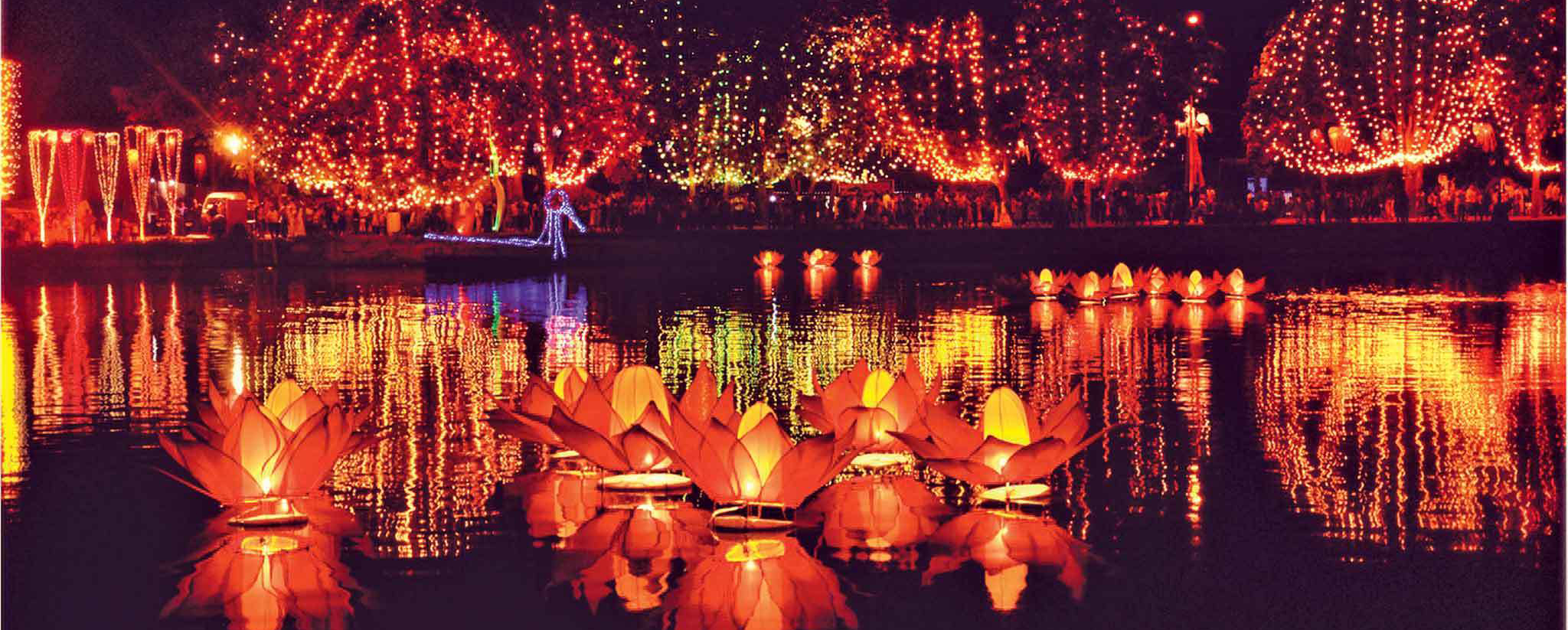
Vesak commemorates the Buddha’s birth, enlightenment, and passing, and is the holiest day in the Theravada Buddhist calendar. Kandy’s celebration centres on the Temple of the Tooth, which is illuminated and decorated, with all-night puja ceremonies and pilgrims arriving from across the island. The lakeside and city streets are lit with paper lanterns. It is an extraordinarily atmospheric night to be in the city.
Shopping
Kandy produces and sells some of Sri Lanka’s finest traditional crafts, and the proximity of gem mines in the surrounding region makes it one of the best places on the island to buy sapphires, rubies, and cat’s eye stones.
Best Streets and Areas
Dalada Veediya (Temple Street) runs along the northern edge of Kandy Lake toward the Temple of the Tooth and is lined with shops selling everything from batik fabric and lacework to spices and ceremonial crafts. The quality varies significantly; take your time and browse.
Colombo Street and the Central Market area are the city’s commercial heart, with fixed-price shops, tailors, fabric sellers, and stalls selling dried goods, spices, and household items. Less curated than Dalada Veediya, more fun.
The Kandy City Centre Mall (on Dalada Veediya) has several reputable craft and gem shops if you want air-conditioned browsing with more consistent quality control.
What to Buy
- Batik fabric and clothing: Kandy is a centre for Sri Lankan batik production. Look for hand-drawn batik (the finest quality, with visible wax-resist lines and deliberate imperfections) rather than screen-printed imitations.
- Kandyan lacquerwork: Turned wooden objects lacquered in geometric patterns using traditional resin techniques. Small bowls, hair combs, and decorative boxes are the most portable options.
- Ceylon sapphires and gemstones: Sri Lanka is one of the world’s most significant gem-producing countries, and the mines around Ratnapura (south of Kandy) yield blue sapphires, yellow sapphires, cat’s eye chrysoberyl, and alexandrite. Buy only from reputable dealers with gem certificates; the National Gem and Jewellery Authority of Sri Lanka can verify authenticity.
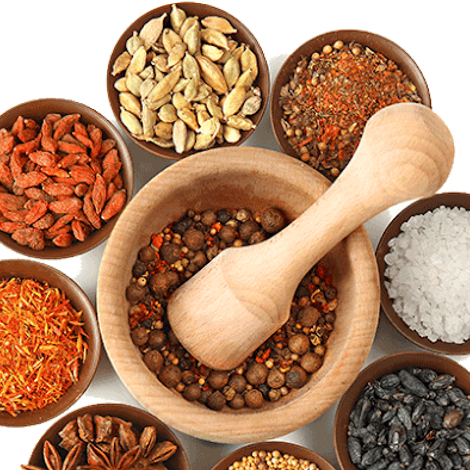
- Spices: Buy cinnamon sticks, green cardamom, black pepper, dried goraka, and ground turmeric from the Central Market in small quantities. Sri Lankan cinnamon (true cinnamon, Cinnamomum verum) is sold throughout the country, but the quality in the Kandy market is excellent.
- Ceylon tea: Buy loose-leaf tea directly from one of the shops near the Tea Museum or from the museum itself. Look for Single Estate or Handmade labels for the best quality.
Practical Information
Visa
Most nationalities require an Electronic Travel Authorization (ETA) to enter Sri Lanka. The ETA is applied for online through the official Sri Lanka immigration website and is typically issued within 24 hours. A 30-day tourist visa costs approximately USD 35 for most nationalities. Citizens of India and certain other SAARC nations may have specific arrangements; check before travel.
Currency
The Sri Lankan Rupee (LKR) is the local currency. As of 2025, the exchange rate fluctuates around LKR 300 and LKR 320 per USD 1. Carry cash in LKR for most day-to-day transactions; many small restaurants, tuk-tuks, and market stalls do not accept cards. ATMs are widely available in the Kandy city centre. Inform your bank before departure to avoid international transaction blocks.
Language
Sinhala is the primary language of Kandy and the surrounding region. Tamil is also an official language. English is widely understood in the tourism and hospitality sectors and among educated urban Sri Lankans. Basic Sinhala phrases are appreciated: “Ayubowan” (formal greeting, wishing long life), “Isthuti” (thank you), “Kohomada?” (How are you?)
Safety
Kandy is a safe city by any international standard. Petty theft is the most common concern; keep phones and wallets secure in crowded market areas. Walking at night around the lake and main streets is generally comfortable, though solo travellers (particularly women) should exercise standard precautions in quieter areas after dark. Traffic is the most consistent hazard; exercise particular care crossing roads, as pedestrian priority is not consistently observed.
Health
Carry a basic supply of over-the-counter medication for stomach complaints, as dietary changes sometimes disrupt the first few days. Drink bottled or filtered water throughout your stay. Mosquito repellent is advisable, particularly for visits to forest reserves and gardens.
Etiquette
At temples and religious sites: Remove shoes before entering any temple or shrine, without exception. Dress modestly (covered shoulders and knees) at all religious sites. Do not turn your back on a Buddha statue for photographs. Do not touch the statues. Photography is permitted in most areas of the Temple of the Tooth complex except inside the inner sanctum during puja.
Puja etiquette: If you attend a puja ceremony, observe quietly. White or light-colored clothing is appreciated as a gesture of respect, though it is not strictly required for visitors.
Physical contact: Sri Lankan culture is relatively conservative regarding public physical affection. Couples should avoid conspicuous displays of affection in public areas.
Tipping: Tipping is not obligatory in Sri Lanka but is appreciated in tourist-facing contexts. In budget restaurants, rounding up is generous. In mid-range restaurants, a 10% tip is appropriate. Guides and drivers for day trips typically receive LKR 500 to 1,000, depending on the quality and length of service. Hotel staff at high-end properties respond to small tips for specific services.
Negotiating: Prices in markets and for tuk-tuks are generally negotiable. Do so respectfully and without aggression. Agree on the price before you get into any vehicle or take any service.
Photography of people: Always ask permission before photographing individuals, particularly at religious sites and markets. Most people are happy to be photographed if you ask with courtesy.
Packing List
Universal Essentials
- Lightweight, breathable clothing in neutral or light colours
- One set of modest clothing (covered shoulders and knees) for temple visits; a cotton scarf or sarong serves multiple purposes
- Comfortable walking shoes you can slip on and off easily (for frequent temple visits)
- A small daypack for market and temple visits
- Reusable water bottle
- Sunscreen (SPF 50 minimum; the highland sun is deceptively strong)
- Insect repellent (DEET-based for forest areas)
- LKR cash in small denominations
For the December to March Dry Season
- Light rain jacket (afternoon showers are possible even in the dry season)
- Sunglasses
- Light cotton trousers and shirts

For the May to October Wetter Months
- A compact, packable waterproof jacket
- Quick-dry clothing
- Waterproof sandals or shoes (the temple complex and market streets flood briefly after heavy rain)
- A dry bag for electronics
For the Esala Perahera Period
- Comfortable standing shoes (you may be on your feet for three to four hours along the procession route)
- A light jacket for late-night cool
- Patience and a reserved seat booking, if you have one
Itineraries
2-Day Itinerary: The Essential Kandy
Day 1: The Sacred City
Start your morning at the Temple of the Tooth for the 9:30 AM puja ceremony, arriving by 9:00 AM to queue and enter. Spend an hour at a minimum inside the complex, visiting the Alut Maligawa (new palace) museum wing and the International Buddhist Museum in the adjacent building. By midday, walk north to the Kandy National Museum for a 45-minute overview of the Kandyan Kingdom’s material culture.
Lunch at Balaji Dosai (vegetarian) or the Kandy Muslim Hotel for beef curry and paratha, depending on your preference.
Afternoon: walk the perimeter of Kandy Lake, a 2.1-kilometer circuit that takes 30 to 40 minutes at a comfortable pace. The south side of the lake has views back to the temple; the north side passes through a more local neighbourhood. From the lake, take a tuk-tuk up to the Bahiravokanda Buddha Statue for the late afternoon view over the city. Aim to be there by 5:00 PM for the pre-sunset hour.
Evening: return to the temple for the 6:30 PM puja ceremony, the most atmospheric of the three daily sessions. Dinner at The Empire Cafe or Devon Restaurant, both within easy walking distance of the temple.
Day 2: Gardens, Hills, and a Train
Early morning: walk up to Udawatta Kele forest reserve through the path behind the Queens Hotel. The 7:00 to 8:30 AM window is ideal for birdwatching and the most peaceful walking. Return for breakfast at your guesthouse or a street-side cafe near the market.

Mid-morning: tuk-tuk to the Peradeniya Royal Botanical Gardens (20 minutes from the centre). Allow a minimum of two hours. The royal palm avenue, the giant fig tree, the orchid house, and the riverside bamboo grove are the highlights.
Afternoon: browse the Kandy Central Market on your return, buying spices and street snacks. Visit the Ceylon Tea Museum if time permits (it closes at 4:30 PM, so aim to arrive by 3:00 PM).
Evening: dinner at Slightly Chilled Lounge Bar overlooking the lake, then an early night if you are catching the scenic train to Ella the following morning.
4-Day Itinerary: Kandy and the Highland Circuit
Days 1 and 2: Follow the 2-day itinerary above.
Day 3: The Outer Temple Circuit and Pinnawala
Start early: hire a tuk-tuk for the day (negotiate a fixed price of around LKR 3,000-4,000 for the full circuit). Head west on the A1 toward Embekka Devalaya (45 minutes from Kandy), spending 45 minutes examining the carved wooden pillars. Then Lankathilaka Vihara (20 minutes further), where the climb to the hilltop temple is rewarded with views across a patchwork of paddy fields and forest. Finally, Gadaladeniya Temple, the most intact of the three, for a quiet half hour in the main shrine.
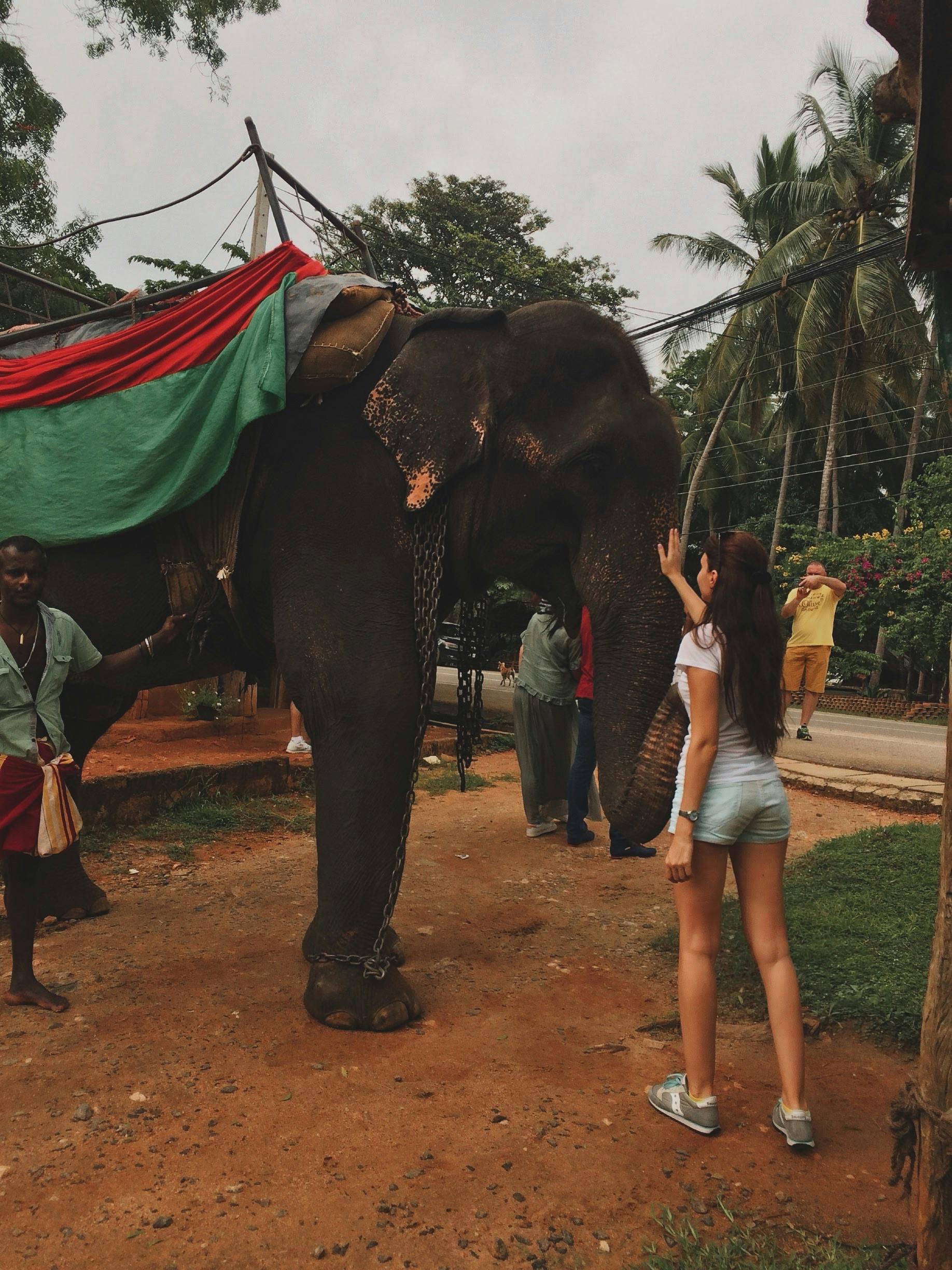
After the temple circuit, ask your driver to take you north toward Kegalle and the Pinnawala Elephant Orphanage (45 minutes). The river bath takes place twice daily, around 10:00 AM and 2:00 PM. The afternoon bath is slightly less crowded. Spend 90 minutes at Pinnawala before heading back to Kandy.
Day 4: Day Trip to Sigiriya and Dambulla
The rock fortress of Sigiriya and the Dambulla Cave Temple are located northeast of Kandy, each approximately 70-80 kilometers away. The journey is most efficiently done by hiring a car and driver for the day (budget LKR 8,000 to 12,000 for the full round trip).
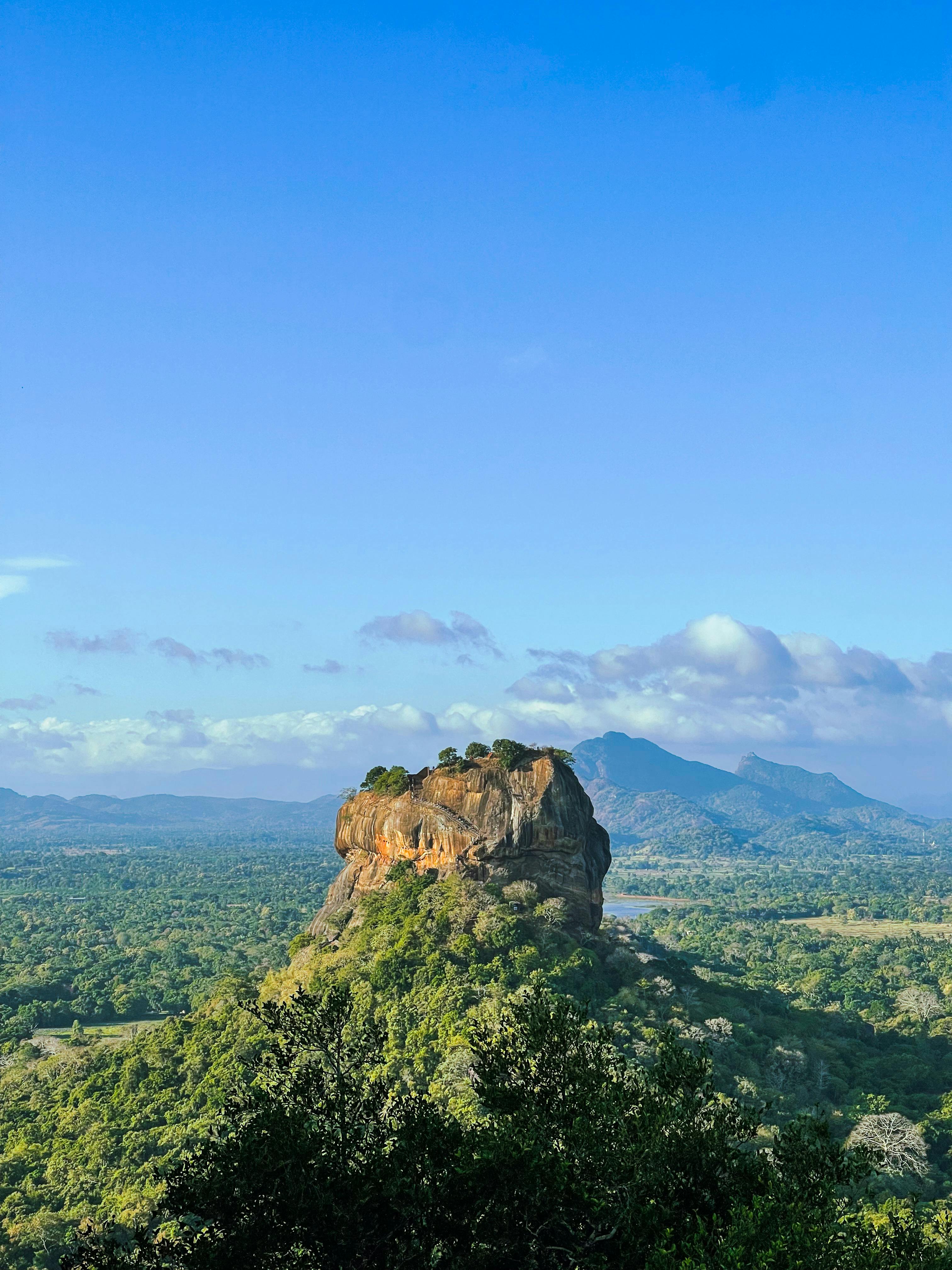
Leave Kandy by 7:00 AM to reach Sigiriya before the mid-morning heat. Sigiriya is a fifth-century CE rock fortress rising 200 meters above the central plains, with a palace complex at the summit, famous frescoes of the Apsara maidens painted into a rock cavity halfway up, and the Lion’s Gate, where the final staircase once emerged from the jaws of a carved lion. Entry fee: USD 35 for non-SAARC adults. Allow 2.5 to 3 hours, including the climb and descent.
From Sigiriya, 20 minutes by road brings you to the Dambulla Cave Temple, a UNESCO World Heritage Site comprising five cave shrines containing over 150 Buddha statues and 2,100 square metres of ancient murals. Entry fee: LKR 1,500 for foreign adults. Spend 90 minutes here.
Return to Kandy by early evening. Dinner at Theva Cuisine as a day-end reward.
7-Day Itinerary: Kandy, the Highlands, and the Tea Country
Days 1 to 4: Follow the 4-day itinerary above.
Day 5: Kandy to Nuwara Eliya via the Tea Country
Take the mid-morning train from Kandy Station toward Nanu Oya (the station for Nuwara Eliya), departing around 9:00 AM. The journey takes approximately three hours through an extraordinary landscape of tea estates, waterfalls, and mountain ridges. At Nanu Oya, take a taxi 9 kilometres to Nuwara Eliya (20 minutes, approximately LKR 600).
Nuwara Eliya sits at 1,868 metres and has a distinctly odd personality, a hill station built by the British to resemble the English countryside that has since been absorbed into Sri Lanka’s own charm. Spend the afternoon walking through a tea estate near town, visiting one of the working factories to see the rolling and drying process, and drinking a cup of high-grown Ceylon tea at the source.
Overnight in Nuwara Eliya (base here for Day 6).
Day 6: Horton Plains and World’s End
Take a taxi to Horton Plains National Park (about 32 kilometres from Nuwara Eliya, LKR 2,500 to 3,000 by car). The park sits at 2,100 metres, a rolling plateau of montane grassland and cloud forest. The 9-kilometre circular trekking route takes three to four hours and culminates at World’s End, a sheer escarpment dropping 880 metres to the southern lowlands. On clear mornings (arrive by 8:00 AM before the mist develops), the view encompasses half of Sri Lanka. Entry fee: USD 25 for foreign adults.
Return to Nuwara Eliya for lunch, then take the afternoon train or taxi to Ella (approximately 1.5 to 2 hours). Overnight in Ella.

Day 7: Ella and the Journey Back
Spend the morning at the Nine Arch Bridge, one of the most photographed pieces of colonial-era engineering in Asia, best viewed from above as the morning train passes through around 9:00 AM. Walk the surrounding tea estates. Take a late morning train or bus back toward Colombo via Kandy, or continue south toward the coast.

Travel information is accurate as of early 2026. Entry fees, transport schedules, and opening hours are subject to change; verify current details before your visit. Currency exchange rates fluctuate; LKR prices are given as guidance only.