


There is a quiet kind of magic in recognizing a place you thought you had left behind. A street corner. A bridge. A café window glowing at dusk. Sometimes all it takes is a glimpse at a screen for memories to surface. Virtual travel has become a gentle way for people to rediscover cities they once visited, reawakening emotions tied to specific moments in their lives.
Unlike planning a new trip, virtual travel into familiar places carries emotional weight. It is not about ticking off attractions. It is about revisiting a version of yourself. The student you once were. The traveler you became on a solo trip. The couple wandering hand in hand through unfamiliar streets. Virtual drives and walking tours allow these memories to resurface naturally, without effort or expectation.
Why Places Hold Our Memories So Strongly
Human memory is deeply connected to place. Neuroscience shows that memories are often stored alongside spatial and sensory information. Sounds, sights, and movement become emotional anchors. When you remember a trip, you do not only remember events. You remember how the street sounded, how the air felt, and how the city moved around you.
This is why revisiting a place, even digitally, can feel emotional. The brain recognizes patterns it once encoded. A familiar road layout. A particular style of building. A street sound you forgot you missed. These cues activate memory networks that bring emotions along.
Virtual travel taps directly into this mechanism. When visuals and sounds align closely enough with your past experience, the brain fills in the rest.
How Virtual Drives Trigger Nostalgia
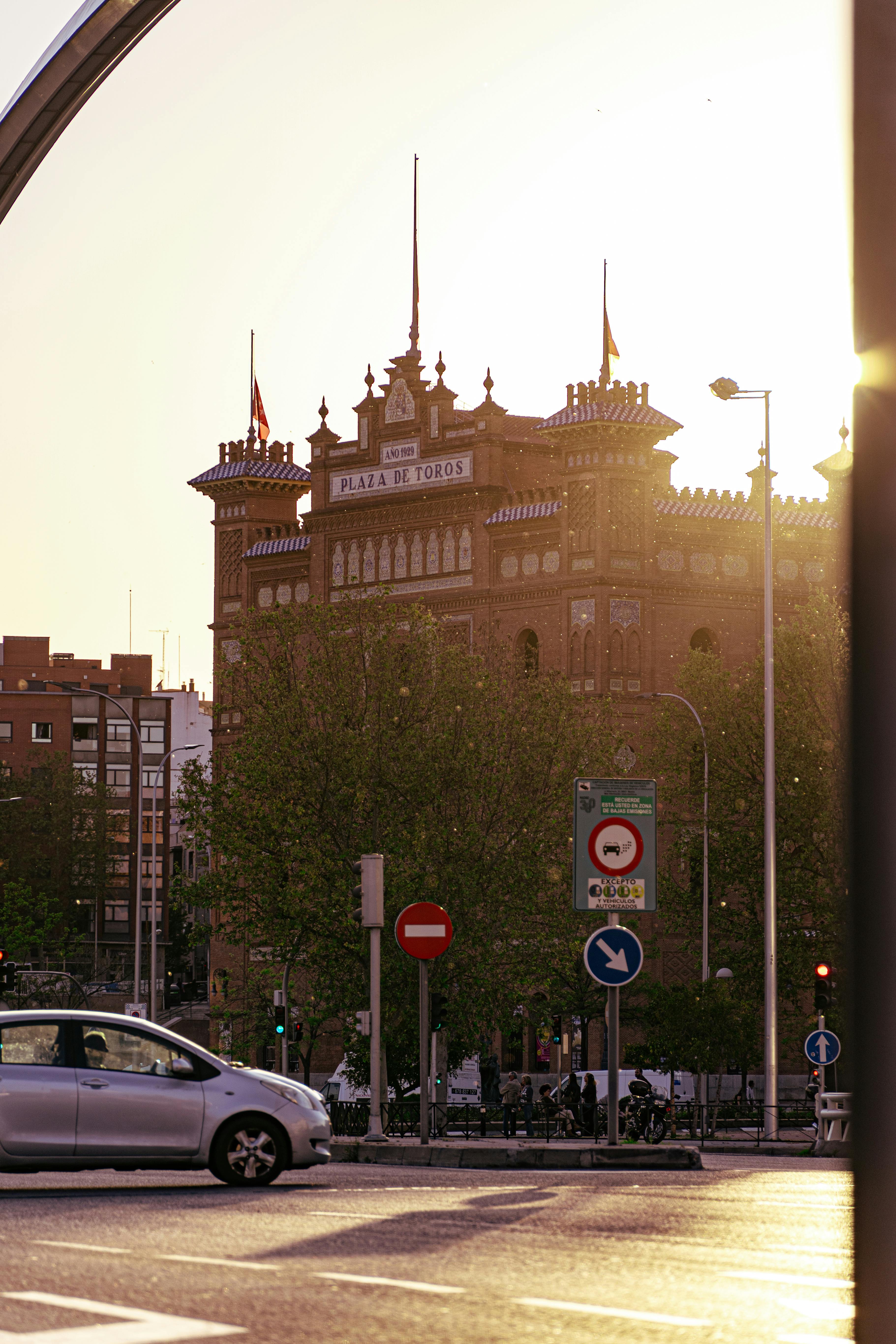
Nostalgia is not just remembering. It is remembering with feeling. Virtual drives are especially effective at triggering nostalgia because they recreate motion and perspective. You are not looking at a still photo. You are moving through space again.
As the road unfolds, memories surface in sequence. You remember walking that stretch. Waiting at that crossing. Looking out of a bus window at that exact view. The gentle forward motion mirrors how memories often unfold naturally, one after another.
Many people find that these memories arrive unexpectedly. You start watching casually and suddenly feel warmth, longing, or even quiet joy. Virtual travel creates space for these moments to appear without forcing them.
[Image Placeholder: A car driving through a familiar European street at dusk. Suggested keywords: nostalgic city drive, revisiting Europe virtually, emotional travel experience]
Revisiting Cities That Marked a Chapter of Life
Certain cities stay with us because they represent a turning point. A first international trip. A semester abroad. A honeymoon. A difficult but transformative year. Virtual travel allows people to return to these places safely and gently.
Someone who studied in London may revisit quiet residential streets near their old flat. A traveler who backpacked through Southeast Asia may rewatch market streets in Bangkok or Hanoi. A former expat may explore the city they once called home.
These journeys often reconnect people to emotions they had forgotten. Confidence. Freedom. Curiosity. Even vulnerability. Virtual travel becomes a form of emotional archaeology, uncovering layers of experience stored in memory.
Sound as the Strongest Memory Trigger

Visuals bring recognition, but sound brings emotion. Hearing traffic patterns you once lived with. Snippets of language you used daily. A local radio song you forgot existed. Sound reaches memory faster than sight.
Virtual travel videos that preserve ambient audio are especially powerful. The clink of cups outside a café. The hum of scooters. The rhythm of footsteps. These sounds recreate emotional context.
For many people, hearing the local language again brings an immediate emotional response. It is not about understanding every word. It is about familiarity. Sound tells the brain that this place once mattered.
Virtual Travel as Gentle Emotional Processing
Revisiting old places can be healing. It allows reflection without pressure. You are not physically there, so there is distance. But you are close enough to feel.
Some people use virtual travel to reconnect with positive memories when they feel low. Others use it to process unfinished emotional chapters. Watching a city you once lived in can help you see how far you have come.
Virtual travel gives you control. You can pause, change streets, or stop whenever emotions feel too strong. This makes it a safe space for emotional exploration.
When Familiar Places Feel Different Than Before
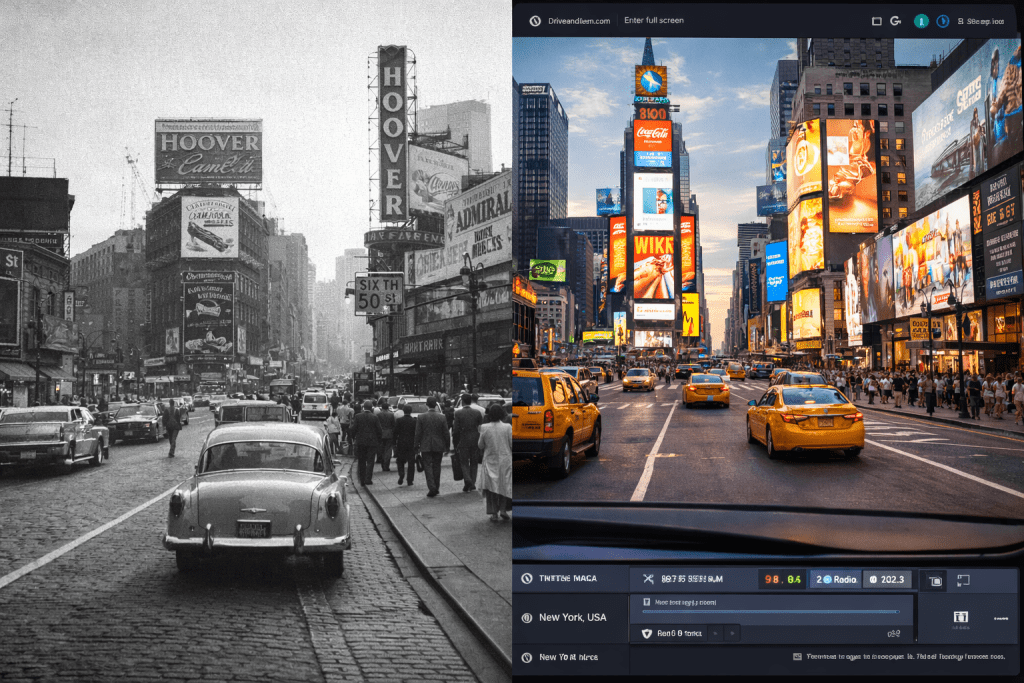
One surprising aspect of virtual nostalgia is noticing change. Streets look slightly different. Shops are gone. Buildings have changed. This can bring mixed emotions.
But it also offers perspective. You realize that places evolve, just as you have. Virtual travel allows you to hold both versions at once. The city as it was and the city as it is now.
This layered experience often brings acceptance and closure. You can appreciate what the place gave you without needing it to stay frozen in time.
[Image Placeholder: A split view of an old photo and a current virtual street view. Suggested keywords: then and now travel, changing cities, memory reflection]
Drivenlisten.com and Emotional Time Travel
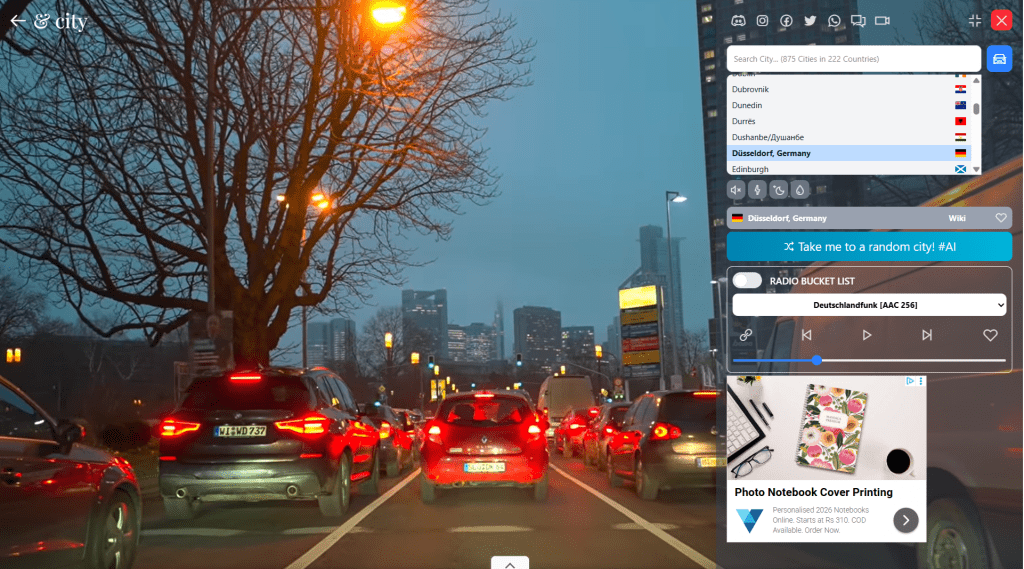
Drive&Listen.com is especially meaningful for rediscovering old memories. The platform puts you in the passenger seat as you drive through cities around the world. What makes it powerful for nostalgia is the inclusion of local radio and ambient sound.
You can revisit cities you once lived in or traveled through and listen to the same style of radio you remember. The movement of the car mirrors everyday life rather than tourism. It feels like returning, not visiting.
For many people, Drivenlisten.com becomes a way to reconnect emotionally with chapters of their life. A morning commute replayed years later. An evening drive through familiar streets. These moments feel personal and grounding.
Using Virtual Travel to Preserve Personal History
Memories fade when they are not revisited. Virtual travel gives people a way to keep personal history alive. Revisiting places reinforces memory pathways and preserves emotional detail.
This is especially valuable for people who can no longer travel easily. Older adults. Busy parents. Those living far from places that shaped them. Virtual journeys allow memory preservation without physical strain.
Some people even pair virtual travel with journaling. They watch a familiar drive and write down memories as they surface. This turns virtual travel into a meaningful reflective practice.
Why Nostalgic Virtual Travel Feels Comforting
Nostalgia is not sadness. Research suggests it often increases feelings of meaning, continuity, and belonging. Revisiting old places reminds you that your life has depth and story.
Virtual travel offers nostalgia without disruption. You do not have to reopen old chapters fully. You can visit briefly, feel, and return to the present, grounded rather than overwhelmed.
This balance is what makes virtual travel such a gentle emotional tool.
Letting the Past Visit You Kindly
Rediscovering old memories through virtual travel is not about longing to go back. It is about acknowledging where you have been. It is about honoring experiences that shaped you.
Cities hold pieces of who we were. Virtual journeys allow those pieces to resurface quietly, without demand. A street passes by. A memory flickers. A feeling settles.
Sometimes, that is enough.
Virtual travel reminds us that while we move forward, the past can still walk beside us, softly, when we are ready to see it again.