

 Start Driving in Jeju Island
Jeju Island, a province of South Korea, blends its stunning natural landscapes with a unique cultural heritage, offering a mix of volcanic landscapes, diverse neighborhoods, and a tranquil atmosphere. Situated in the Korea Strait, Jeju Island provides a captivating mix of scenic sea views and cultural diversity. The Seongsan Ilchulbong (Sunrise Peak), a prominent landmark, features stunning volcanic landscapes and natural significance. The Manjanggul Lava Tube features stunning natural landscapes and geological significance. The Hallasan National Park features stunning natural landscapes and hiking trails. Jeju Island’s culinary scene features a delightful mix of Jeju and Korean cuisine, with restaurants serving black pork, seafood, and diverse regional specialties. The island’s markets, such as the Dongmun Traditional Market, offer a variety of local produce, artisanal goods, and souvenirs. The coast and surrounding areas provide opportunities for scenic walks, cultural exploration, and outdoor recreation. Jeju Island’s efficient transportation network, including buses and local roads, facilitates travel within the island and to surrounding areas. The island experiences a humid subtropical climate, with warm temperatures year-round. Jeju Island’s cultural attractions, such as the various natural wonders and the annual festivals, highlight the island’s natural beauty and cultural contributions. The island’s tranquil cultural scene includes festivals, traditional performances, and local events, reflecting the region’s diverse traditions. Jeju Island’s blend of natural beauty and cultural richness creates a unique and appealing destination. The local markets and community events foster a serene atmosphere, making Jeju Island a peaceful and culturally rich destination for visitors and residents. Jeju Island is a vital center for tourism, environmental preservation, and culture in South Korea, contributing significantly to the country’s national development and economic growth.
Jeju Island Travel Guide: Volcanoes, Divers, Black Pork, and the Korea That Most Tourists Never See
Picture this: it’s 5:30 in the morning, and you’re standing on the rim of a 180,000-year-old volcanic crater, watching the sun haul itself out of the sea below you. A warm wind carries the smell of salt and damp grass. Far beneath your feet, a haenyeo grandmother slides beneath the surface of the water without a tank, without a wetsuit, without any technology invented after the 16th century, and surfaces twenty seconds later with a fistful of sea urchins and a sound like a slow, high whistle. That is Jeju. Not a resort brochure. Not a theme park. A place that earns every superlative thrown at it.
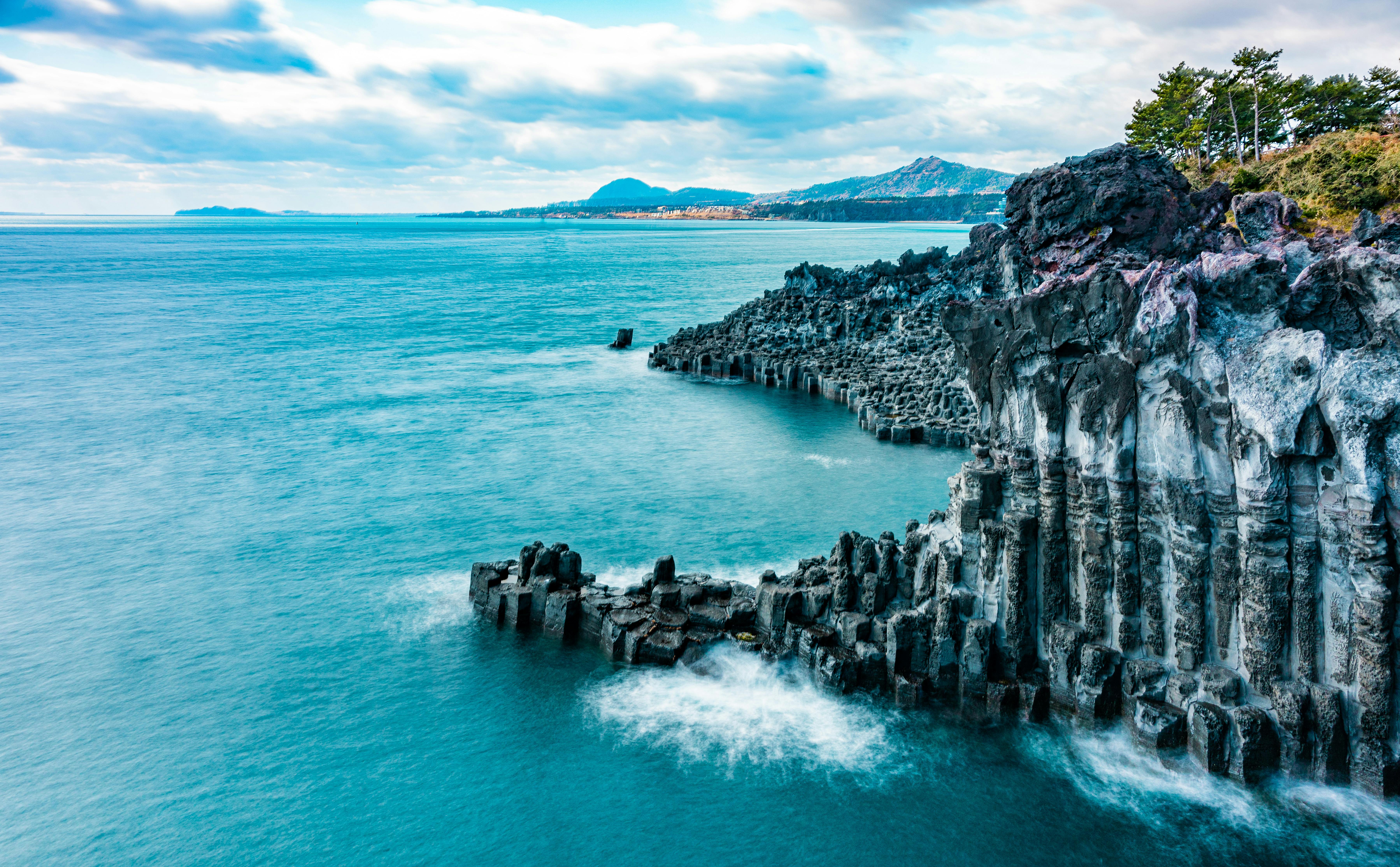
Jeju Island sits about 85 kilometers off the southern tip of the Korean Peninsula, and it carries the geological fingerprints of its violent volcanic past in every direction. The island was born of fire, and that origin shows in its black lava-rock coastlines, its towering central volcano, its honeycomb cliffs, and a cave system so vast that it was carved onto the UNESCO World Heritage list. But Jeju is not just a geology lesson. For centuries, it was the autonomous Kingdom of Tamna, a place so geographically isolated that it evolved its own dialect, its own food traditions, and its own social structure, one in which women divers became the economic backbone of entire coastal communities. That streak of independent identity is still alive. The food is different from mainland Korea. The landscape is different. Even the pace is different.
What results is an island that rewards slow travel. Rent a car, drive the coastal road as the sun goes down, pull over at a haenyeo house restaurant for abalone porridge, find a hillside cafe with an orange grove out the window, and wonder why you ever thought you needed a beach resort.
A Brief History and the DNA of the Island
Jeju’s first kingdom, Tamna, predates its absorption into the Korean mainland by roughly a thousand years. Its founders, according to local mythology, were three demigods who emerged from holes in the earth, three women who arrived by sea bearing seeds and animals, and the island civilization that grew from that union. That creation story tells you something about Jeju: it is a place that has always been defined by the relationship between land, sea, and the women who bridge them.

The haenyeo, or sea women, were designated as UNESCO Intangible Cultural Heritage in 2016, but they have been diving these waters for centuries. At their peak in the mid-20th century, there were roughly 30,000 of them. Today, that number is closer to 3,500, and most are over 60. Watching them work is not a tourist spectacle. It is a quiet encounter with something genuinely ancient, running out of time.
Beyond its cultural depth, Jeju has a triple UNESCO designation: the island’s volcanic features are a World Natural Heritage Site, Hallasan National Park is a Biosphere Reserve, and Manjanggul Lava Tube is a Global Geopark. Almost nowhere else in the world can claim three UNESCO World Heritage designations.
Best Months to Visit Jeju Island
Jeju’s climate is subtropical, which means it is genuinely warm in summer and mild rather than brutal in winter. But timing matters.
April to June (Spring, highly recommended), Canola flowers paint the island yellow from late February through April. Cherry blossoms follow. Temperatures sit between 12 and 20 degrees Celsius, trails are dry, and the peak summer crowd has not yet swamped the island. This is the best time of year for hiking Hallasan.
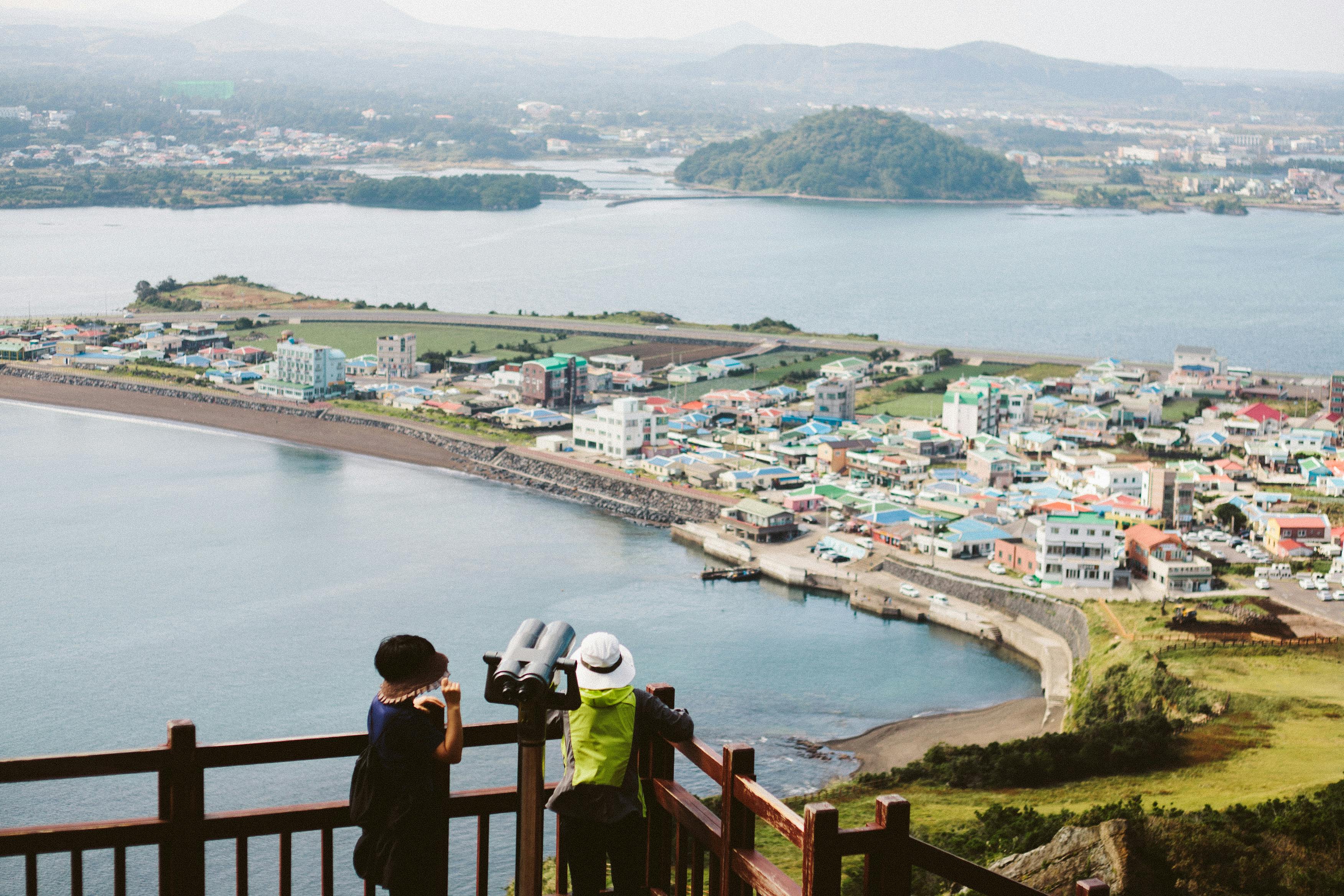
September to November (Autumn, equally recommended) The summer humidity clears, temperatures drop to a comfortable 14 to 20 degrees, and the hillsides turn amber and red. Tangerine harvest season begins in October, so fresh hallabong are available at every market stall. This is festival season, and the light for photography is exceptional.
July to August (Summer, best for beaches) Hamdeok and Hyeopjae beaches are at their most vivid, and the waterfalls are running hard after monsoon rains. The trade-off is real: this is the busiest and most expensive period, humidity climbs significantly, and typhoon season runs from late July through early September. Check forecasts carefully.
December to February (Winter, the quiet season): Accommodation rates drop by 30 to 50 percent, and most major sites are crowd-free. The coast stays mild (around 5 to 8 degrees Celsius), and Hallasan’s summit wears a reliable cap of snow, making the mountain look genuinely dramatic. Not a beach trip, but a contemplative one.
Top Attractions in Jeju Island
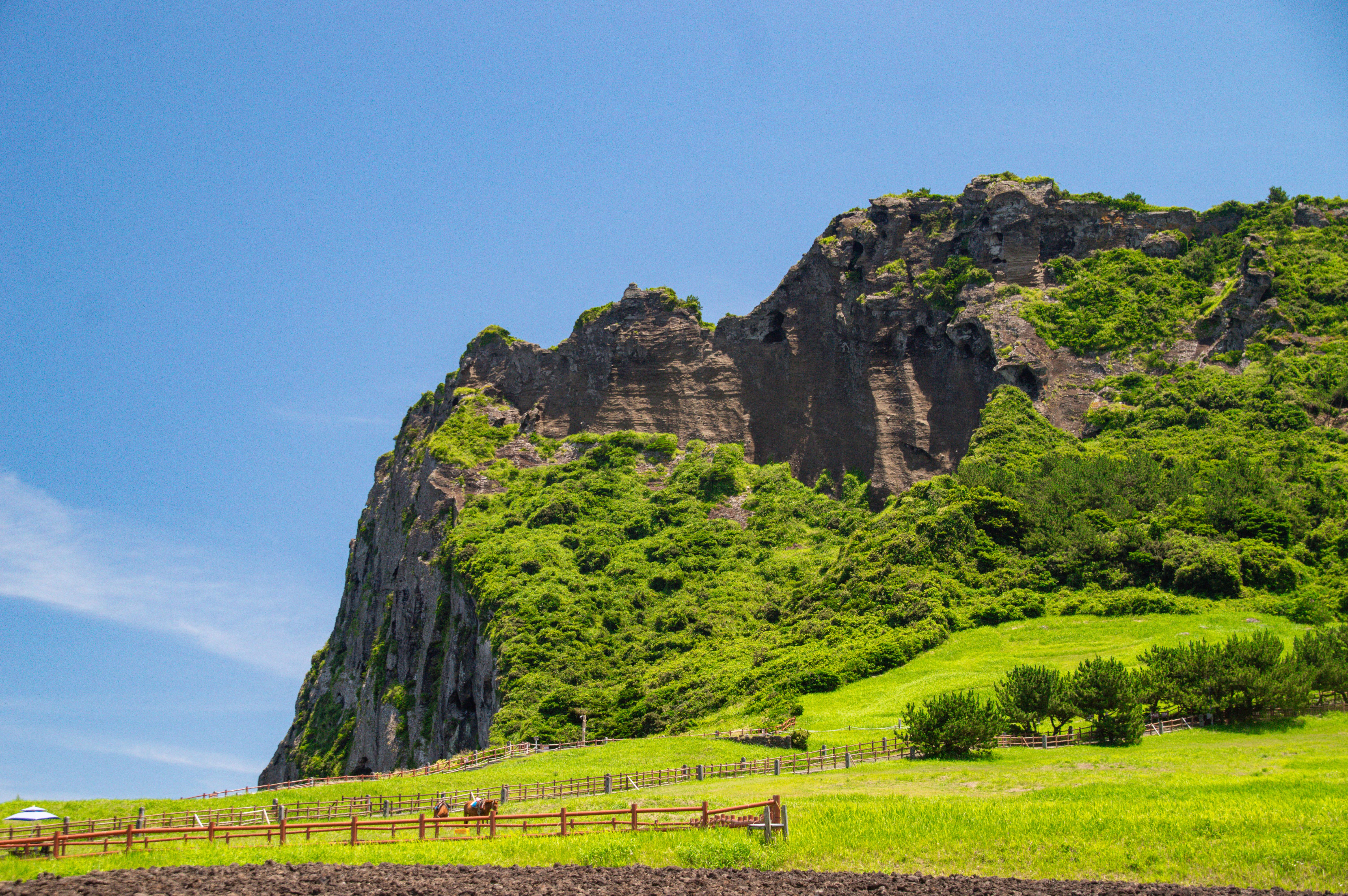
Seongsan Ilchulbong (Sunrise Peak)
Seongsan Ilchulbong is a tuff cone volcano that erupted from the sea floor roughly 5,000 years ago and is now fused to the eastern tip of the island. The walk up takes about 20 to 30 minutes along a well-maintained staircase trail, rewarding you with a 600-meter-wide crater at the top and sweeping views over the surrounding coastline. At the base of the peak, haenyeo give daily diving demonstrations in the rocky cove, typically around 2 pm.
- Opening hours: Daily 07:00 to 20:00 (last entry 19:00)
- Entry fee: KRW 5,000 for adults (approximately USD 3.70 as of 2025)
- Pro-tip: Arrive 45 minutes before official sunrise for the full spectacle and to beat the tour buses. The trail is dark early in the morning, so bring a phone torch. The haenyeo demonstration cove is separately signposted and free to watch.
Hallasan National Park
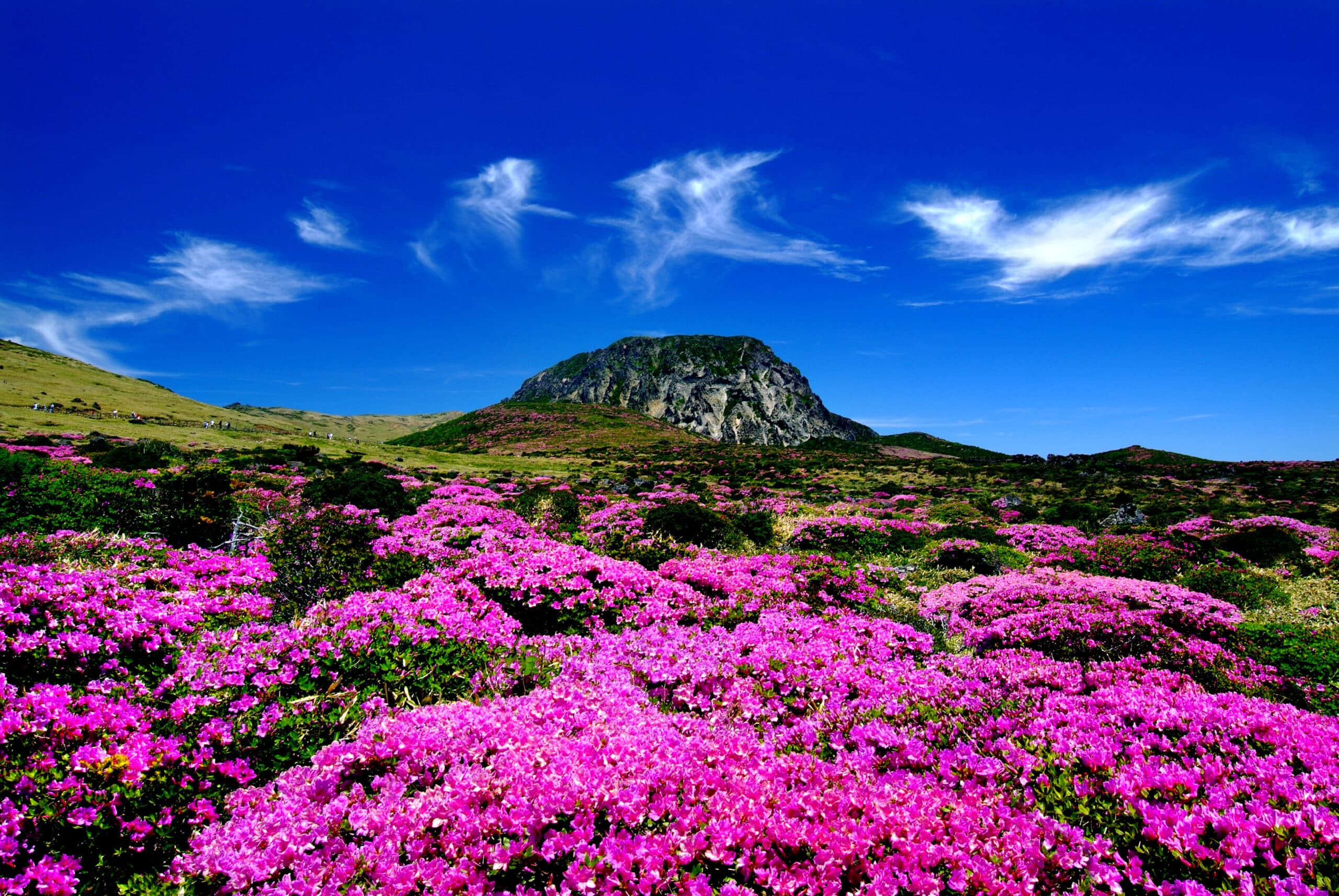
Hallasan, at 1,950 meters, is the highest peak in South Korea and the island’s dominant geographic presence. It anchors everything: weather, ecology, and the visual horizon from almost every point on the island. The park is free to enter and offers five main trails of varying difficulty. The two summit trails, Seongpanak (9.6 km one way, allow 5 to 6 hours round trip) and Gwaneumsa (8.7 km, steeper, allow 6 to 7 hours), end at Baengnokdam, a volcanic crater lake that sits in a bowl of wind and silence.
- Opening hours: Trails open from sunrise; summit trails must be started by 12:00 to comply with descent cutoff rules
- Entry fee: Free
- Pro-tip: Trail cutoff times are strictly enforced. Check the national park website before you go because cutoff times shift seasonally. Carry more water than you think you need. The summit is frequently cloud-covered by early afternoon, so an early start is not optional.
Manjanggul Lava Tube
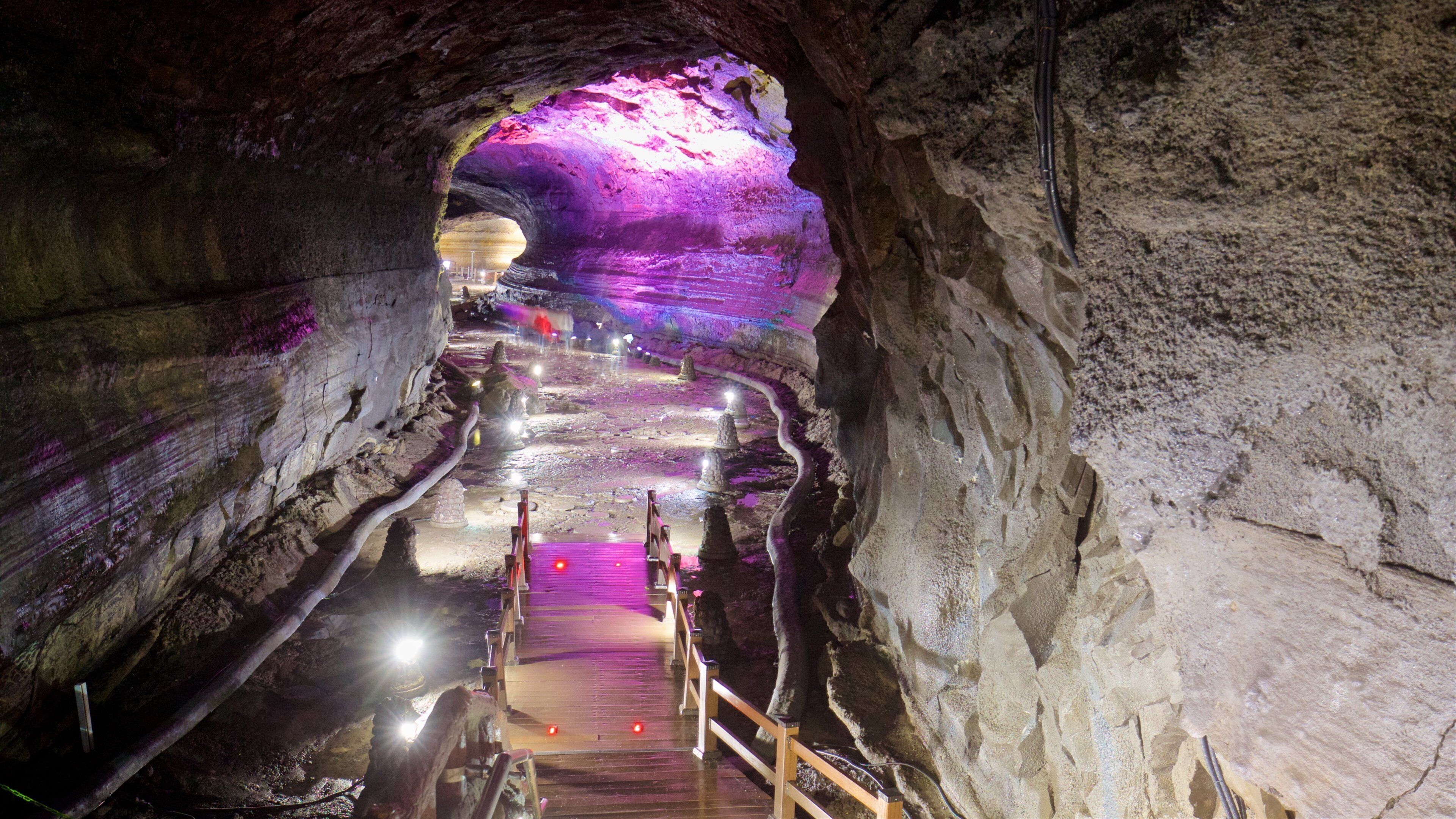
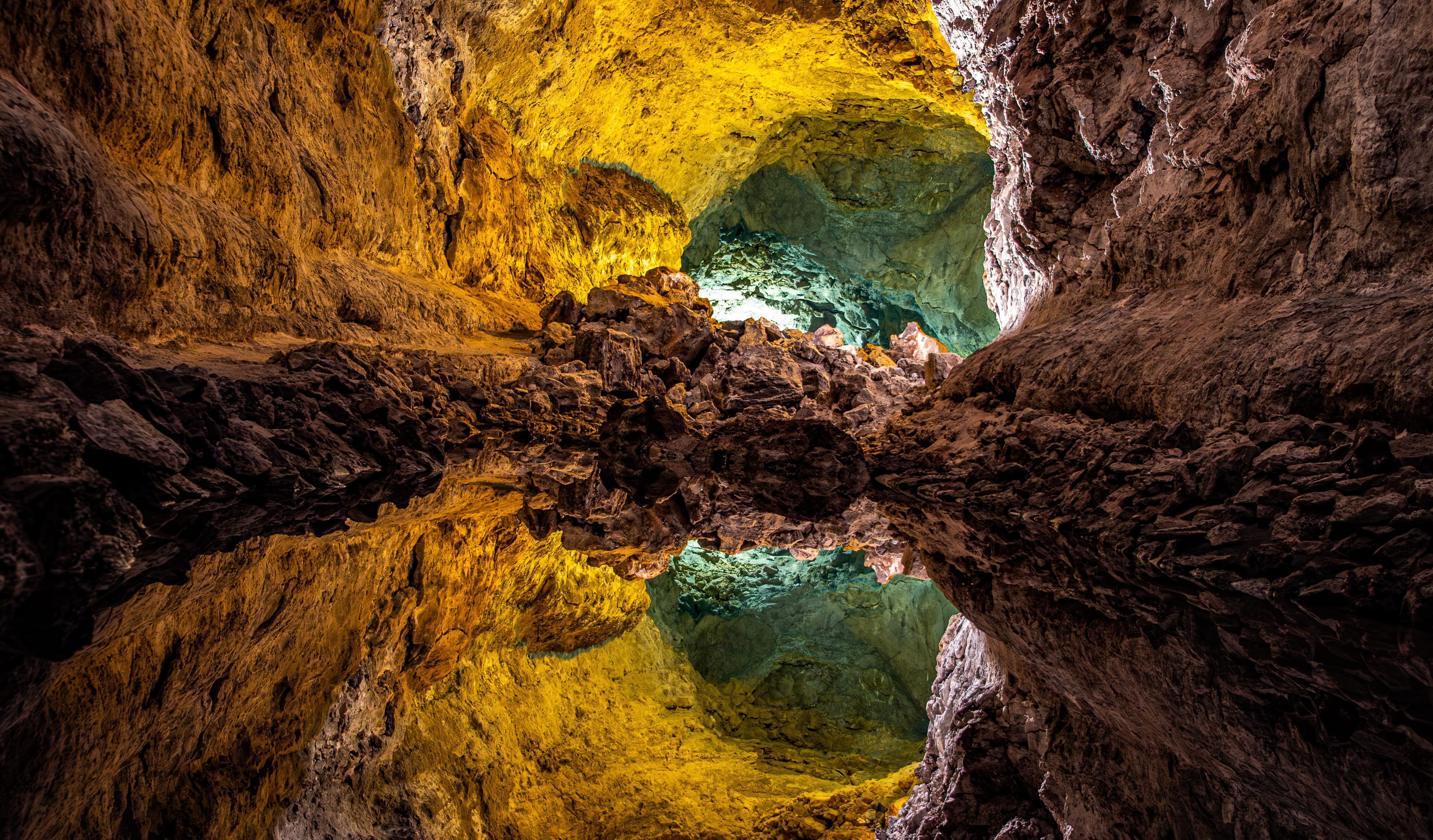
One of the longest lava tubes in the world, Manjanggul stretches for 13.4 kilometers beneath the island’s northern surface. Only about 1 kilometer of it is open to the public, but that kilometer is extraordinary: cathedral-sized chambers, lava stalactites, a 7.6-meter lava column that is the largest of its kind in the world, and a temperature that stays around 11 degrees Celsius year-round regardless of the season outside.
- Opening hours: Tuesday to Sunday 09:00 to 18:00 (closed Mondays)
- Entry fee: KRW 4,000 for adults (approximately USD 3)
- Pro-tip: Bring a light jacket even in August. The cave floor is uneven lava rock and gets slippery near the end of the open section. Arrive at opening time to beat the tour groups that arrive mid-morning.
Jusangjeolli Cliff (Jungmun Daepo Columnar Joints)
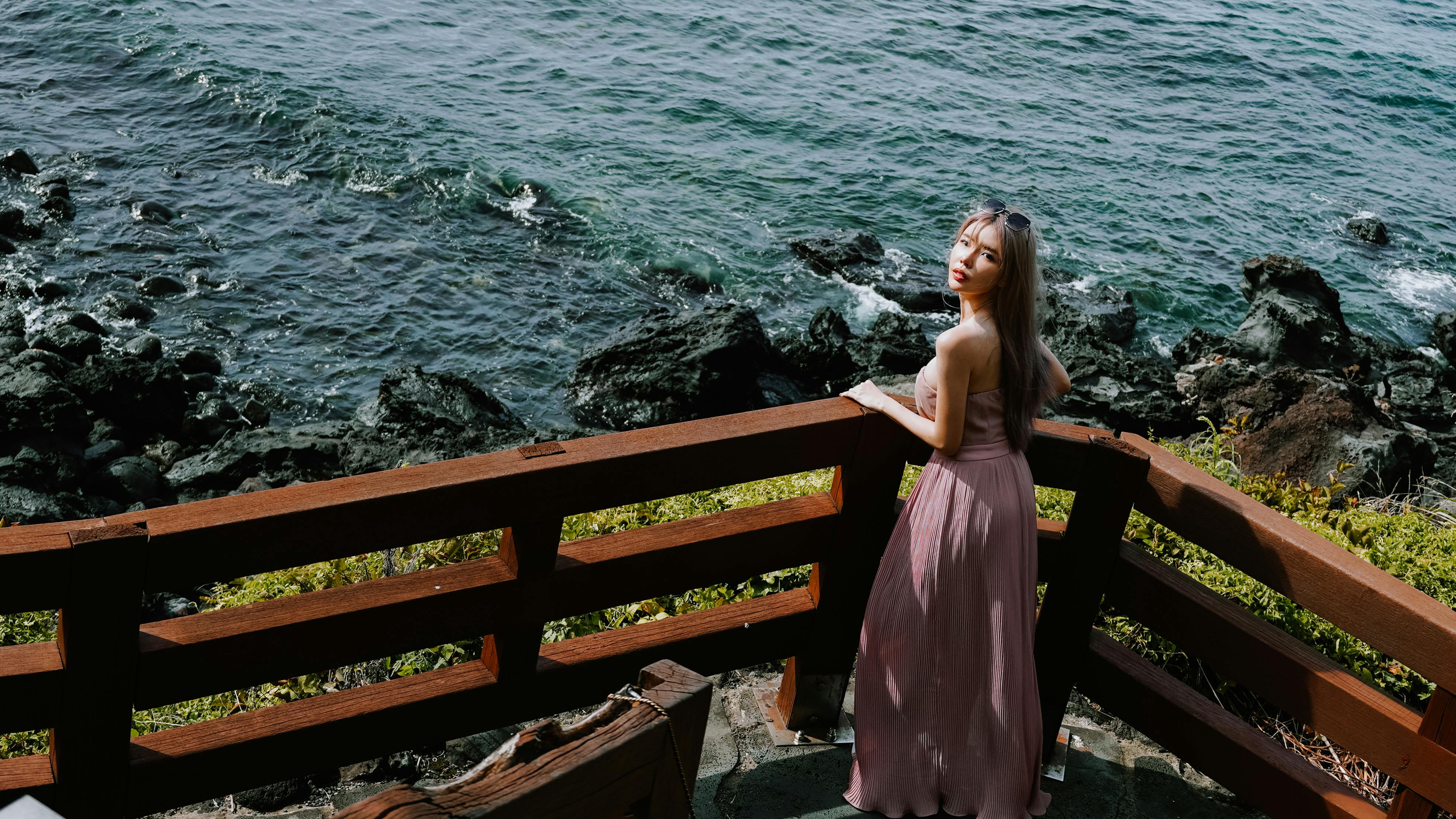
The south coast of Jeju holds one of its most arresting sights: a wall of hexagonal basalt columns stacked like bundled pencils from cliff top to shoreline, formed when lava from Hallasan cooled suddenly in the sea. The similarity to Giant’s Causeway in Northern Ireland is not coincidental; both are products of the same geological process. The viewing platform here looks straight down into intensely blue water, and jet boats occasionally arc through the channel below, which adds scale to the scene.
- Opening hours: Daily 09:00 to 18:00
- Entry fee: KRW 2,000 for adults
- Pro-tip: The site is genuinely compact and takes 20 to 30 minutes to explore fully, so build it into a broader south coast drive rather than making it a dedicated half-day trip.
Jeongbang Waterfall
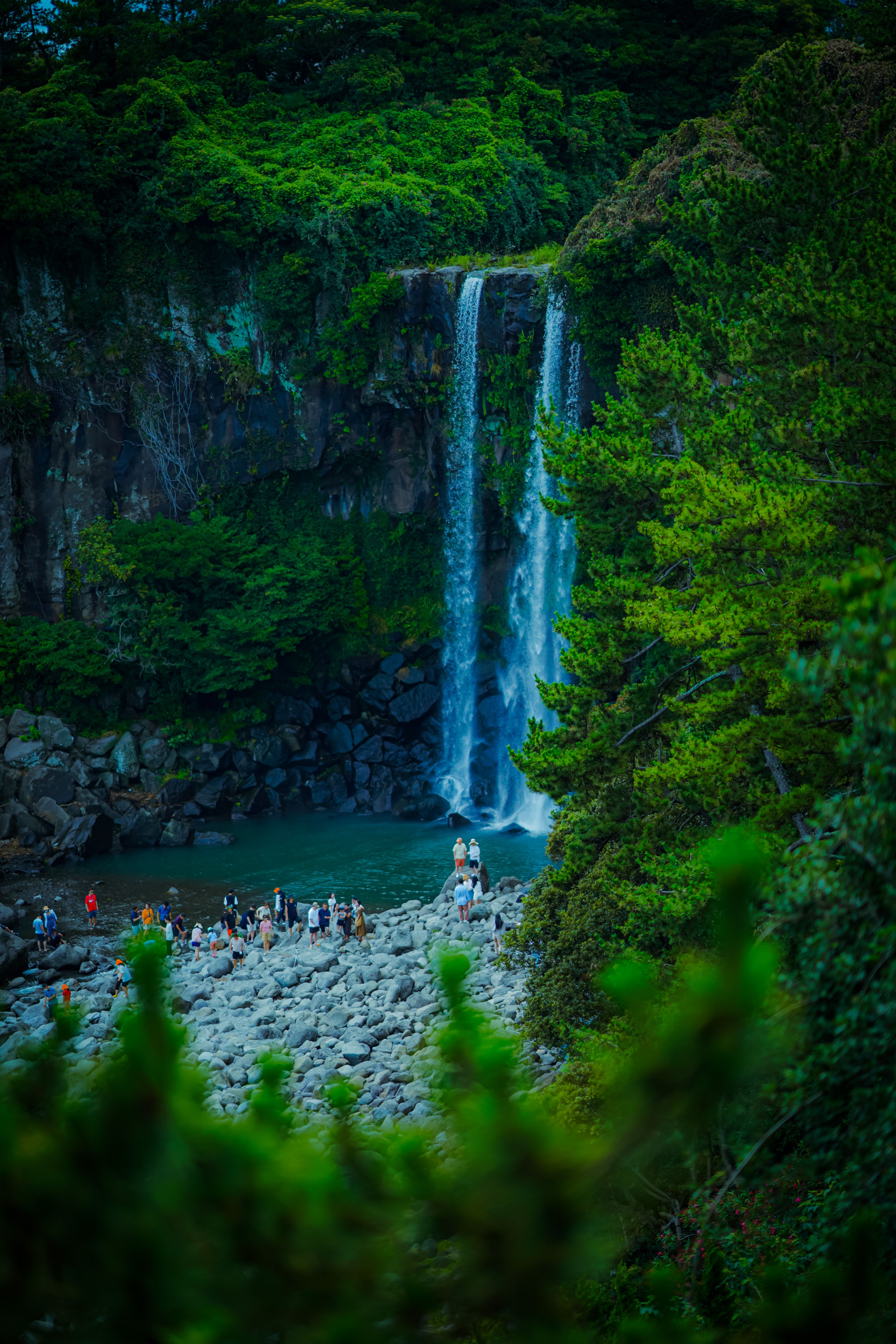
The only waterfall in Asia that falls directly into the ocean. Jeongbang drops 23 meters off a sea cliff near Seogwipo, and the mist from the impact coats the surrounding rocks in a permanent slick of green. It is a short walk from the road, and the viewing platform puts you close enough to feel the spray.
- Opening hours: Daily 09:00 to 17:40
- Entry fee: KRW 2,000 for adults
- Pro-tip: Visit first thing in the morning before tour groups arrive. The light is better before noon.
Jeju Folk Village Museum (Seongeup Folk Village)
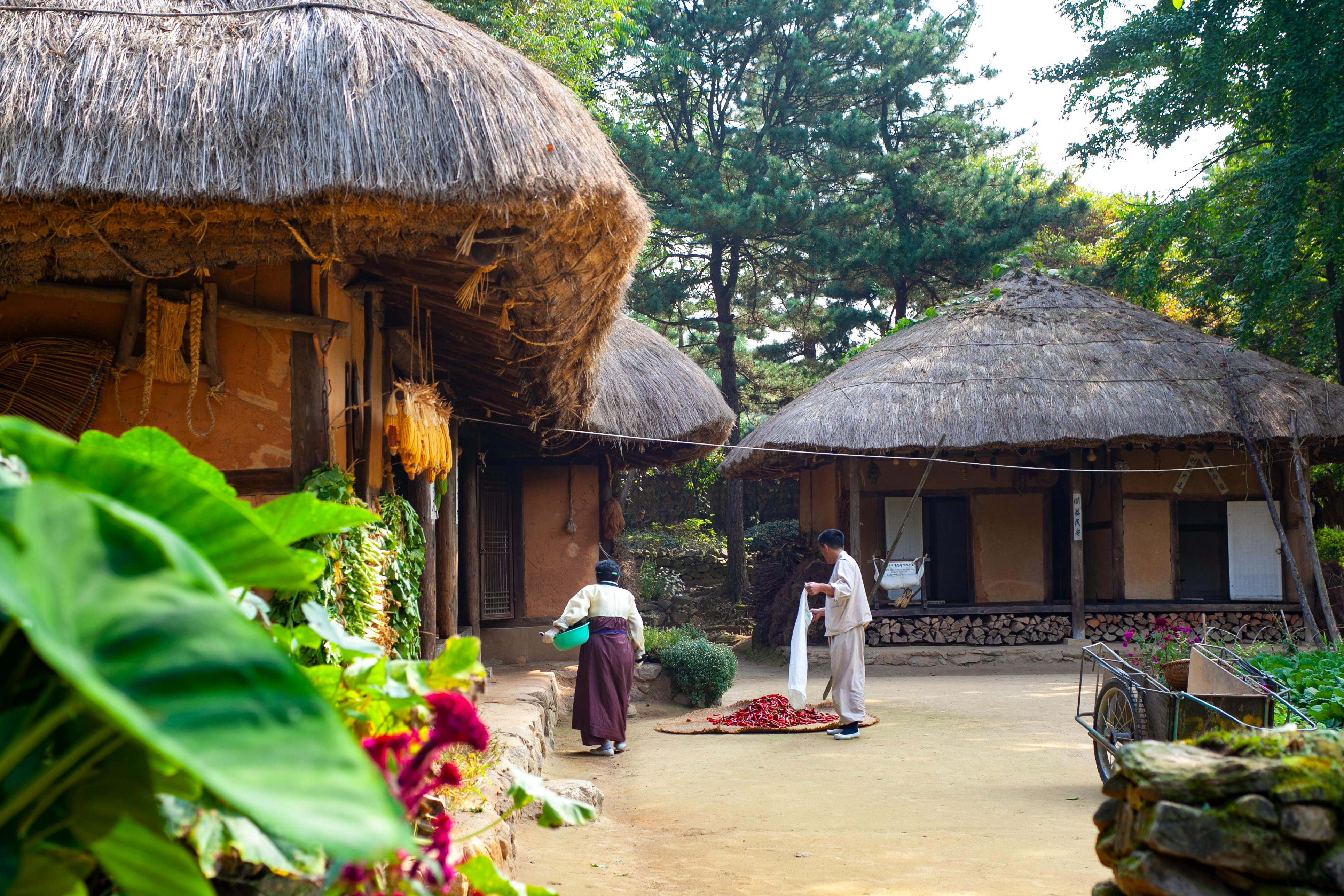
Seongeup Folk Village is a living heritage site, not a reconstruction. Actual families live in the thatched stone houses here, and the village has been continuously inhabited for centuries. Walking through it feels fundamentally different from any museum experience because the vegetable gardens are real, the stone walls are genuinely old, and the grandmothers sitting outside their front doors are actual residents, not performers.
- Opening hours: Daily 09:00 to 18:00
- Entry fee: Free (individual; some guided tours charge a fee)
- Pro-tip: Hire a local guide from the village entrance for around KRW 5,000 to KRW 8,000. Without one, context is almost absent.
Hidden Gems: Off the Tourist Trail
Pyeongdae-ri and the Sea Urchin Noodles
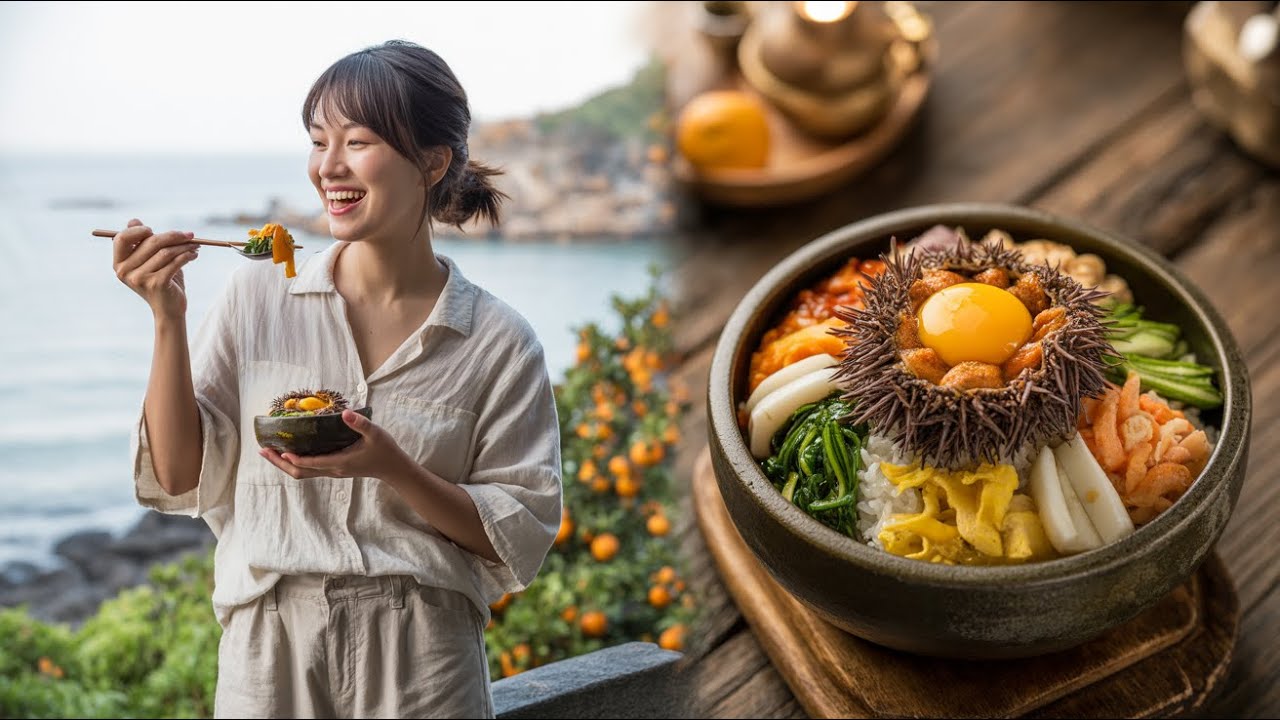
The small coastal village of Pyeongdae-ri in northeastern Jeju is known to relatively few foreign travelers. Still, it offers something genuinely unusual: sea urchin noodles (uni guksu) served at places like Pyeongdae Seonggye Guksu, an orange-roofed restaurant whose walls are covered in photographs of female divers. The haenyeo who supply the uni live in the surrounding village. The dish is the color of deep ocean water and tastes like concentrated sea air. You can often spot haenyeo working offshore in the early morning from the rocks nearby.
Olle Trail Route 7 (Oedolgae to Seogwipo)

Of the 27 Olle Trails encircling the island, Route 7 is the one that feels most like walking through a film set. It passes the dramatic Oedolgae Rock, a 20-meter basalt sea stack surrounded by crashing water, then winds through tangerine orchards, fishing villages, and Chilsimni Park before reaching Seogwipo. The 15-kilometer trail takes 4 to 5 hours at a relaxed pace. The walk is waymarked with blue and orange ribbons tied to poles and trees, making navigation almost impossible to get wrong.
Sangumburi Crater
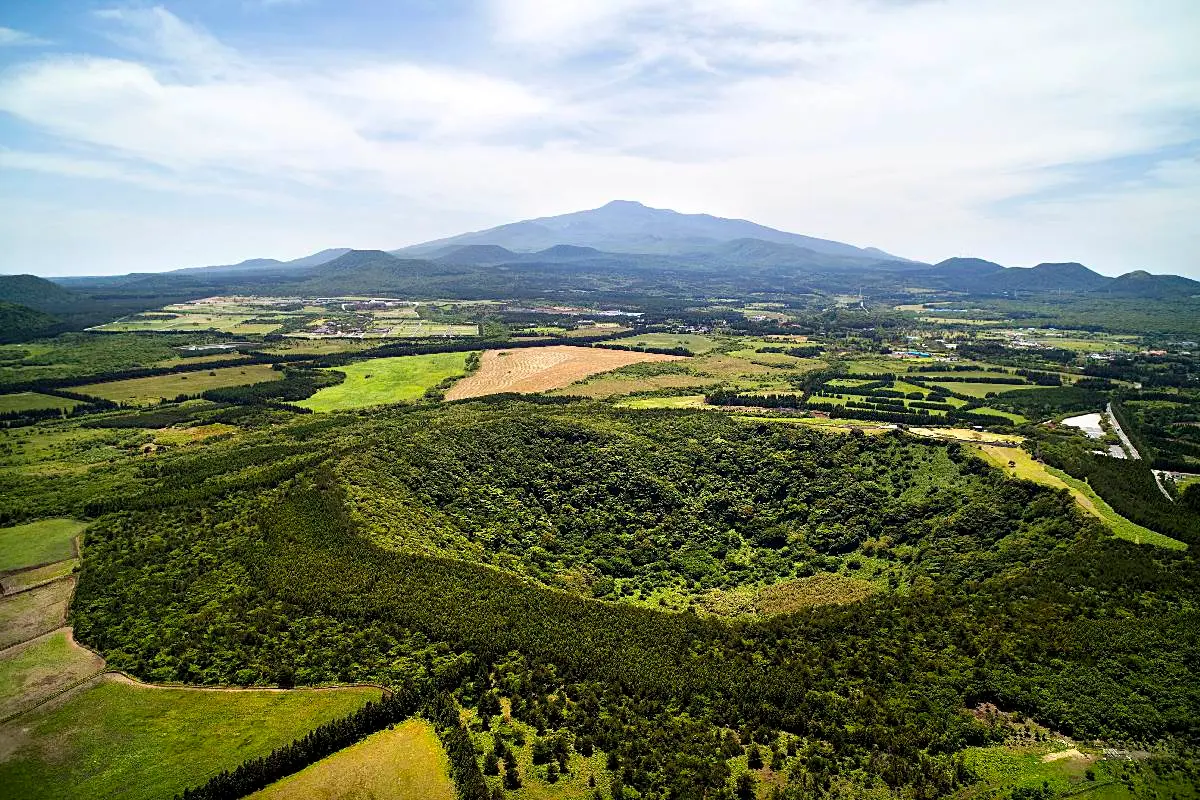
While Seongsan Ilchulbong handles most of the crater tourism on Jeju, Sangumburi in the island’s interior remains genuinely quiet by comparison. This perfectly circular oreum (volcanic parasitic cone) is 2.1 kilometers in circumference and houses over 420 plant species in its bowl, including subtropical, temperate, and alpine varieties coexisting at the same altitude. Walk the crater rim in the early morning when mist sits in the bowl below, and the surrounding grassland is completely still.
- Entry fee: KRW 6,000 for adults
- Opening hours: Daily 09:00 to 18:00
Hamdeok Beach at Dawn
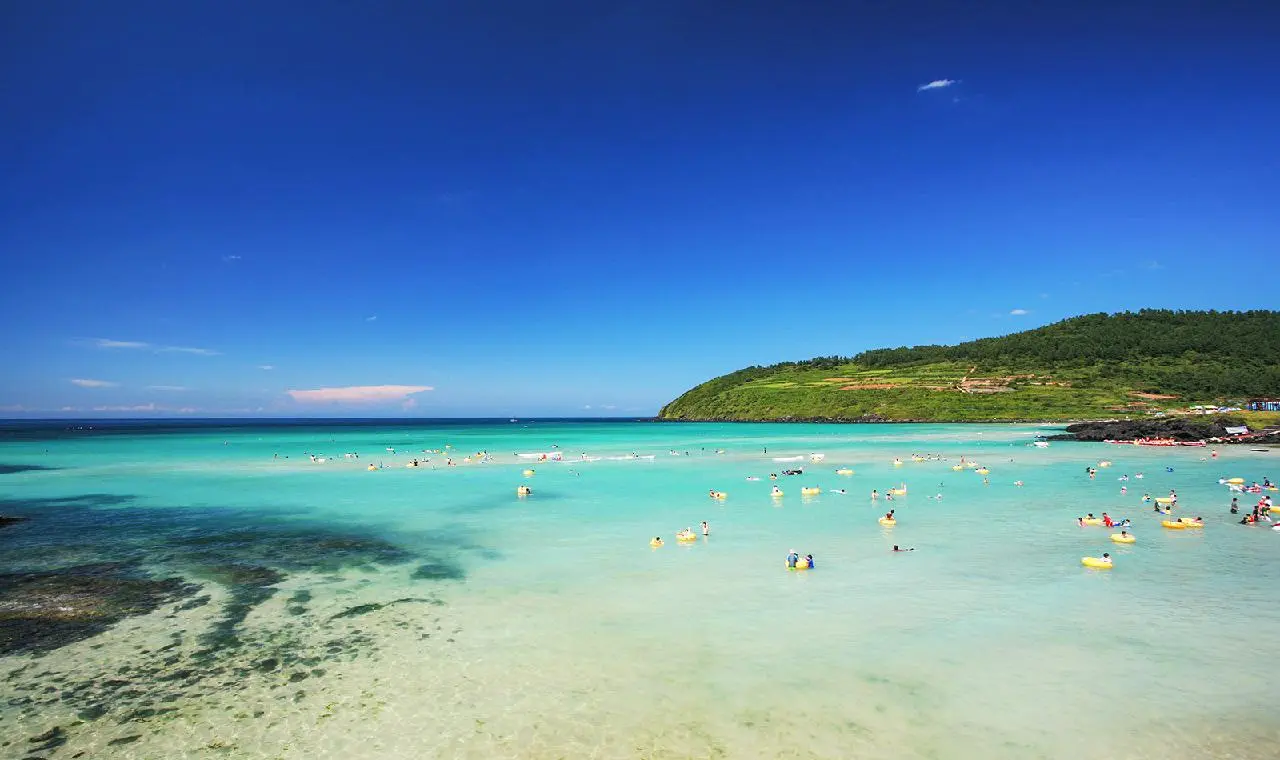
Hamdeok Beach is popular, but most visitors arrive mid-morning. The beach at 6 am belongs to local swimmers, elderly people doing tai chi on the sand, and occasional haenyeo preparing for a morning dive at the rocky edges of the bay. The water at Hamdeok is unusually transparent even by Jeju standards and takes on a turquoise color in low morning light that the midday sun, ironically, cannot replicate.
Cuisine and Dining in Jeju
Jeju cuisine is built around three things: the sea, the pig, and the citrus. The haenyeo tradition means that fresh abalone, sea urchin, octopus, and conch are available in virtually every market and coastal restaurant on the island. The Jeju black pig, a distinct native breed, produces pork with a fat-to-muscle ratio and flavor that is noticeably different from what you find on the mainland. And the hallabong, a seedless citrus hybrid that looks like an orange with a bump at the top, grows on almost every hillside and finds its way into everything from fresh juice to soft-serve ice cream to face cream.

Must-Try Dishes
- Heukdwaeji gui (Black pork BBQ): Thick slices of Jeju’s native black pig, grilled over charcoal at the table, seasoned with coarse salt, and wrapped in perilla leaves with garlic, kimchi, and a smear of doenjang. The fat caramelizes at the edges, and the meat stays chewy in the center. It is the meal most firmly associated with the island.
- Jeonbok juk (Abalone porridge): Pale green rice porridge enriched with sesame oil and loaded with fresh abalone, this is Jeju’s great comfort dish. It tastes restrained at first, then slowly reveals layers of ocean depth that build with every spoonful.
- Gogi guksu (Pork noodle soup): Thin wheat noodles in a clear, milky pork broth topped with sliced boiled pork. Jeju’s take on this dish is simpler and lighter than Korean noodles elsewhere, which makes it more addictive.

- Galchi jorim (Braised hairtail fish): Ribbons of the long, silvery hairtail fish braised in gochujang broth with radish and spring onions. The flesh is rich, and the broth builds a slow heat that is better with each bite.
- Hallabong desserts: Fresh hallabong juice, hallabong soft-serve, hallabong makgeolli (rice wine). Try all three.
- Haemultang (Spicy seafood hotpot): A full pot of whatever the haenyeo brought in that morning, cooked live in front of you in a chili and soybean broth. Order this at a coastal haenyeo house for the full theatrical effect.
Budget Dining (Under KRW 15,000 per person)
Jamae Guksu (Sisters Noodles) in Jeju City is the most beloved gogi guksu spot on the island. The broth is clean and deep, the pork topping generous, and the portions honest. Expect a queue at lunch and a bill that will make you wish you lived closer.
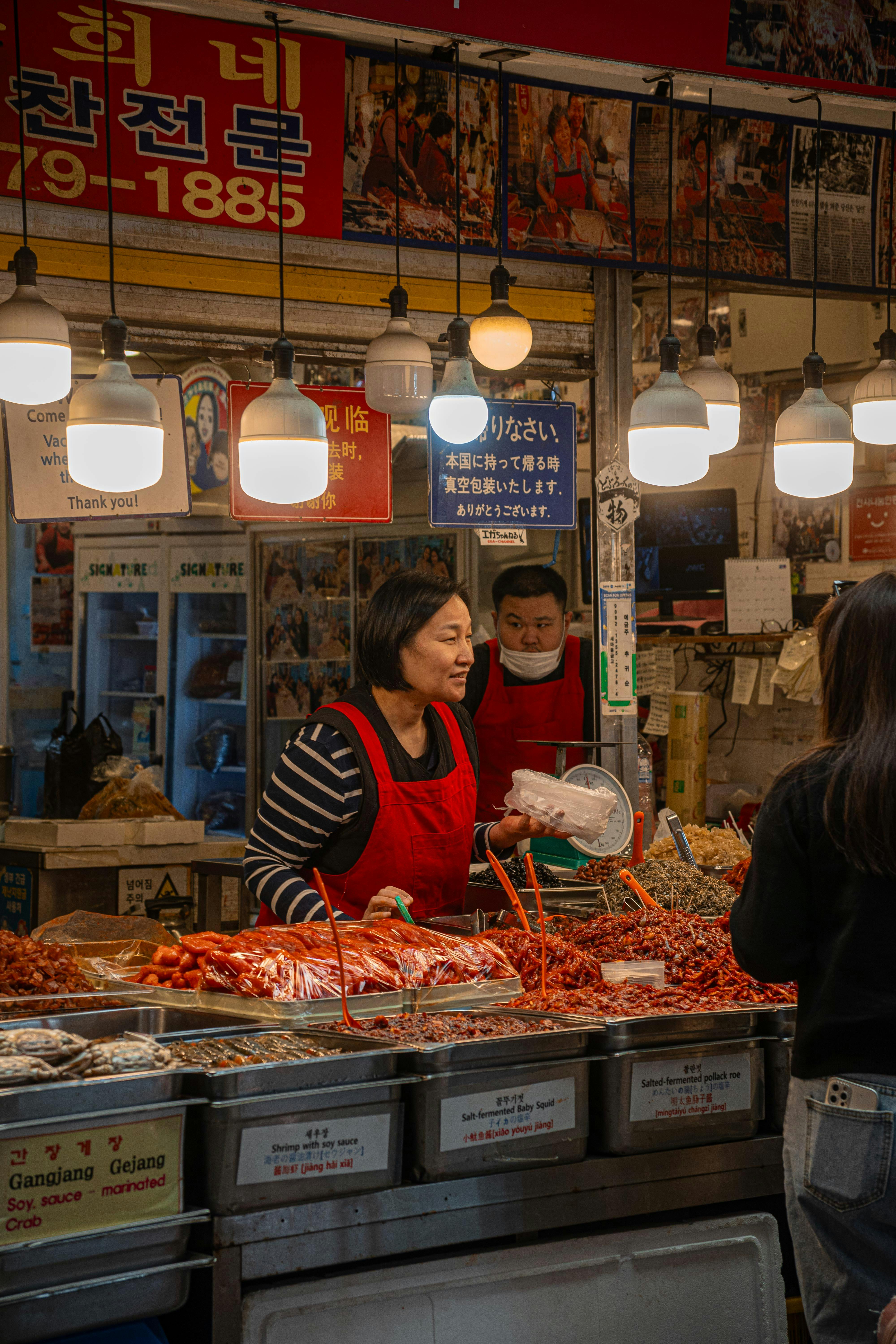
Dongmun Traditional Market in central Jeju City covers several city blocks and houses the island’s best concentration of budget eateries. Grab a plate of mixed sashimi cut at the counter, a portion of haemul pajeon (seafood pancake), and a cup of fresh hallabong juice.
Mid-Range Dining (KRW 15,000 to 40,000 per person)
Heugdonga in Jeju City focuses specifically on genuine Jeju black pork grilled over charcoal rather than gas, which makes a tangible difference to the crust. The restaurant is popular with Korean visitors who know the difference, which is the most reliable recommendation of all.
Samseonghyeol Haemultang (20 Seondeong-ro 5-gil, Yeon-dong, Jeju City) serves live seafood dropped directly into the hotpot. Open daily 10:00 to 22:00 with an afternoon break from 14:45 to 16:00. Budget around KRW 25,000 to 35,000 per person for a full spread.
Myeongjin Jeonbok (1282 Haemajihaean-ro, Gujwa-eup) is the most famous abalone restaurant on the island and sits on the northeastern coastal road with sea views through every window. They serve exactly four dishes: abalone porridge, abalone stone-pot rice, grilled abalone, and raw abalone. Abalone porridge runs around KRW 12,000; grilled abalone is closer to KRW 30,000. Open Wednesday to Monday 09:30 to 21:30, closed Tuesdays.

Fine Dining
Haenyeo Kitchen has two locations on Jeju and is the island’s most immersive dining experience, weaving the stories of specific named haenyeo divers into a multi-course menu centered on seafood harvested by its partners. The food is exceptional, and the storytelling is genuinely moving. Book well in advance as seats are limited and the restaurant has international recognition.
The Shilla Jeju hotel’s in-house restaurant serves elevated Jeju produce in a setting overlooking Jungmun Beach and represents the island’s growing fine-dining credibility. Expect to pay KRW 80,000-150,000 per person.
Market Recommendations
- Dongmun Traditional Market (Jeju City): The best all-purpose market on the island. Mornings are liveliest.
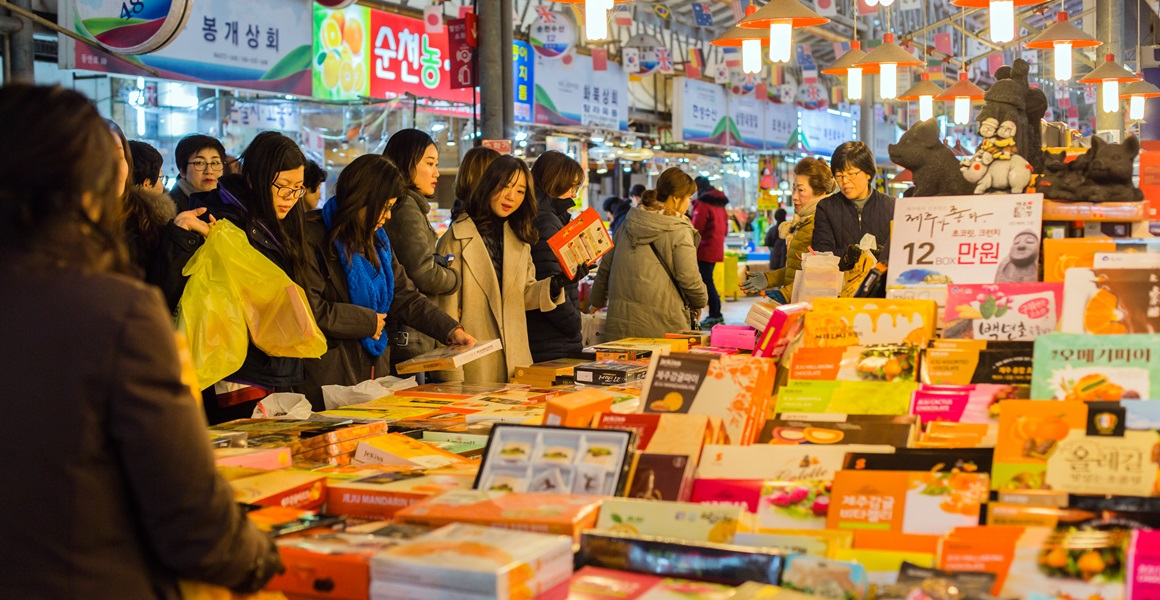
- Seogwipo Maeil Olle Market (Seogwipo): A more relaxed, artisan-leaning market that runs daily near the Seogwipo waterfront. Evening visits work particularly well.
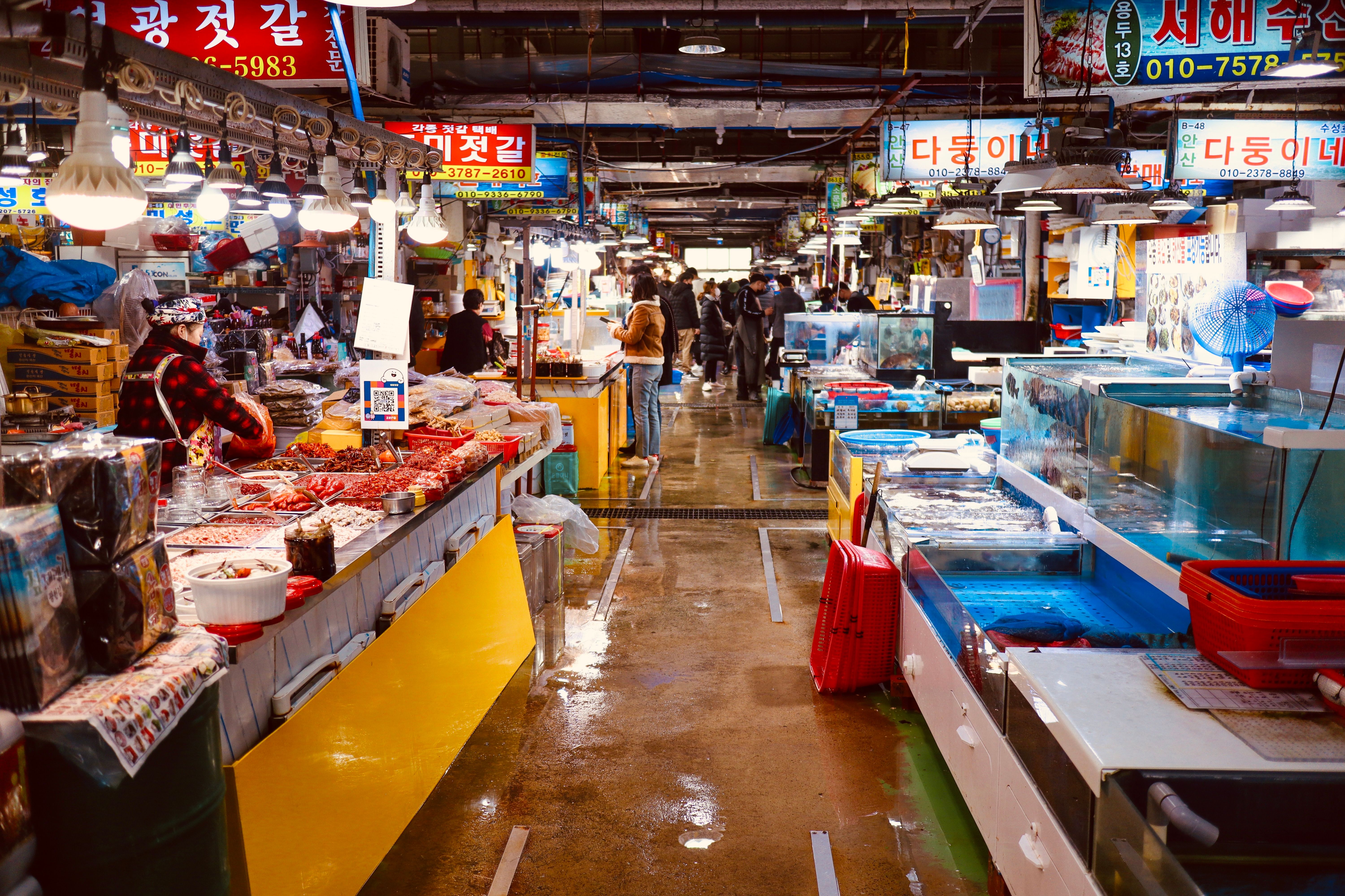
- Osegae Market (also called the Five-Day Market): A rotating traditional market that opens every five days at different locations across the island. Check the current schedule locally. It is genuinely a market for residents first, which is exactly why it is worth finding.
Accommodation
Jeju City in the north and Seogwipo in the south are the two main bases. Jeju City has an airport, better transport links, and the widest variety of restaurants. Seogwipo has better access to the south coast’s major natural attractions and a noticeably calmer atmosphere. The Jungmun Tourist Complex, between the two cities on the southern coast, is home to the island’s luxury resorts.
Budget (Hostels and Guesthouses, KRW 20,000 to 50,000 per night)
Stay in: Jeju City center or Aewol for good bus links and easy access to the airport.
Halla Guest House in Jeju City offers clean dormitory beds from around KRW 27,000 and is consistently recommended by budget travelers for its sociable common spaces and helpful staff. For a step up in privacy, countless small family-run guesthouses in the Yeon-dong neighborhood (near the airport) offer private rooms from around KRW 40,000. Couchsurfing is active on Jeju, with over 1,000 hosts listed at any given time.
Mid-Range (Boutique Hotels, KRW 70,000 to 180,000 per night)
Stay in: Aewol or Seogwipo for the best mid-range value and scenery.
Aewol-eup on the northwestern coast has become Jeju’s boutique accommodation heartland, with a growing cluster of design-forward guesthouses and small hotels set amid citrus groves and lava rock walls. Several offer ocean views and a Korean-style breakfast. Seogwipo’s quieter back streets hide small guesthouses with easy walking access to both Cheonjiyeon Waterfall and the Maeil Olle Market.
Luxury (KRW 280,000 and up per night)
Stay in: Jungmun Tourist Complex, south coast
Grand Hyatt Jeju dominates the Jungmun complex with direct beach access, multiple pools, and rooms from around KRW 420,000 per night. The Shilla Jeju and Lotte Hotel Jeju occupy the same southern resort zone and compete directly on service and views. For something smaller and architecturally distinctive, several boutique luxury villas have opened in the Seongsan area in recent years, offering private pools with views directly onto Sunrise Peak.
Getting to Jeju and Getting Around
Getting There
By Air: Jeju International Airport (CJU) in Jeju City is the primary entry point. Domestic flights from Seoul (Gimpo or Gimhae) take about one hour and depart every 30 minutes during peak hours on the busiest route in the world by flight frequency. Korean Air and Jeju Air both operate this route heavily. International connections are available from Tokyo, Osaka, Shanghai, Hong Kong, and several Southeast Asian cities. Budget around KRW 60,000 to 150,000 for a domestic one-way fare booked in advance.
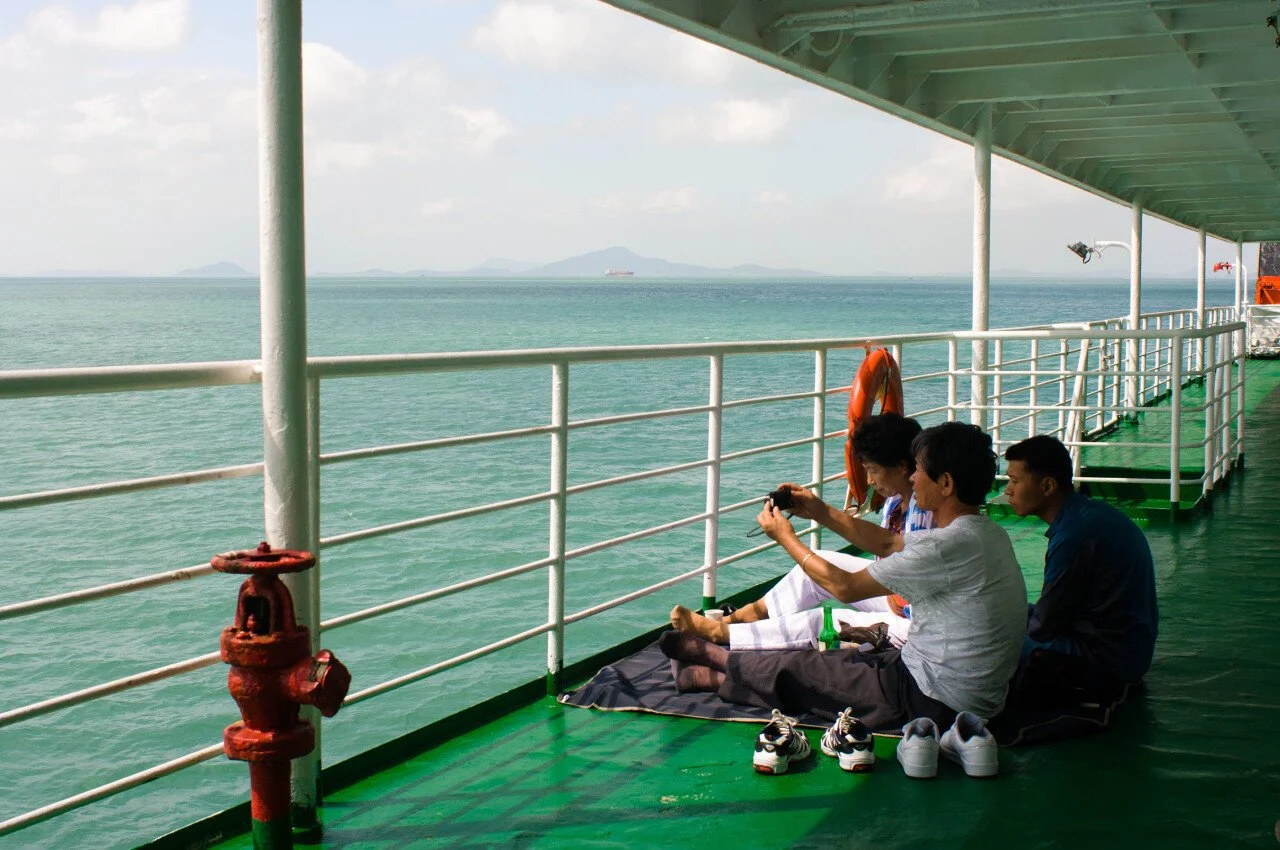
By Ferry: Overnight ferries run from Mokpo, Wando, and Busan on the mainland to Jeju Port. The crossing from Mokpo takes approximately 4.5 hours on the faster ferry. This option is far slower than flying but considerably cheaper, and the ferry carries vehicles, which is useful if you want to bring your own car.
Getting Around
Rental Car (Strongly recommended): Jeju’s attractions are spread across an island 73 kilometers wide, and public transport, while functional, involves long waits and complex transfers between major sites. A rental car gives you the freedom that Jeju genuinely rewards. Compact car rentals start at around KRW 65,000 per day. An international driving license is required for foreign visitors in addition to their home-country license. Rental operators cluster around the airport exit.
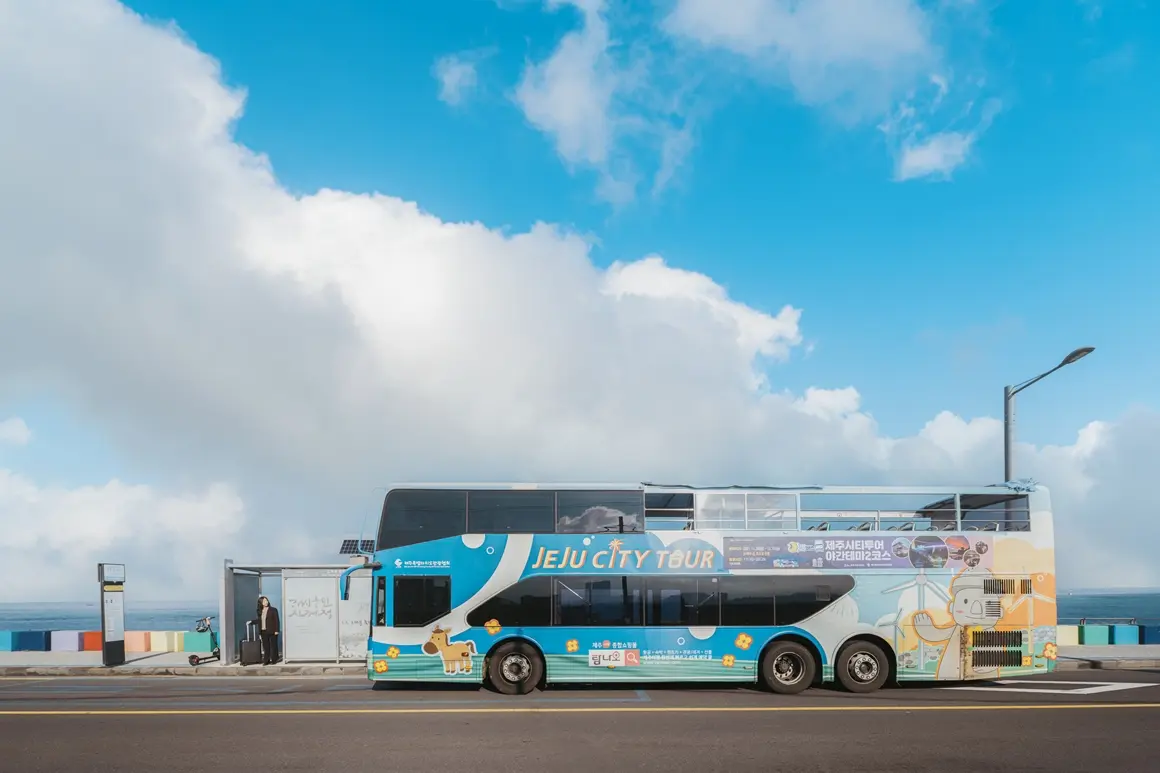
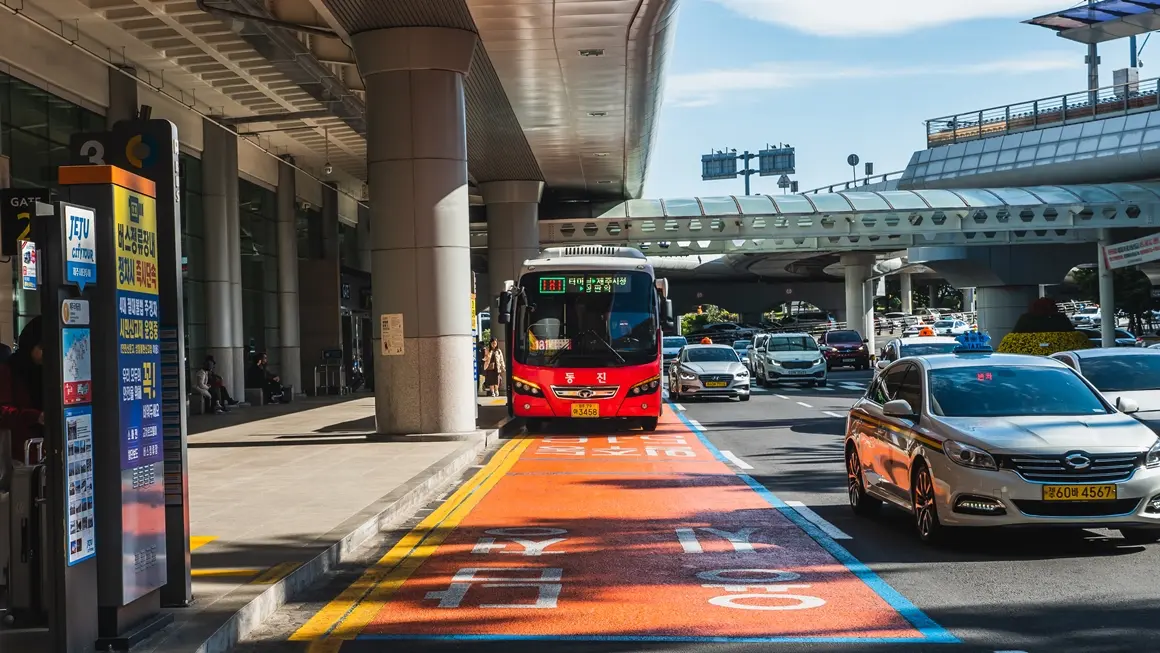
Public Bus: The island’s blue, red, and green bus network covers most major tourist sites. Blue buses run frequently and stop at every stop. Red buses run faster but less often. The T-money card (the same transit card used in Seoul) is the most efficient payment method and allows two free transfers within 40 minutes. Bus 600 runs from the airport to Seogwipo via the Jungmun resort area for around KRW 5,500-6,000 and takes about 80 minutes. Tourist Shuttle Buses 810 and 820 hit major inland attractions and cost KRW 3,000 for a full-day pass.
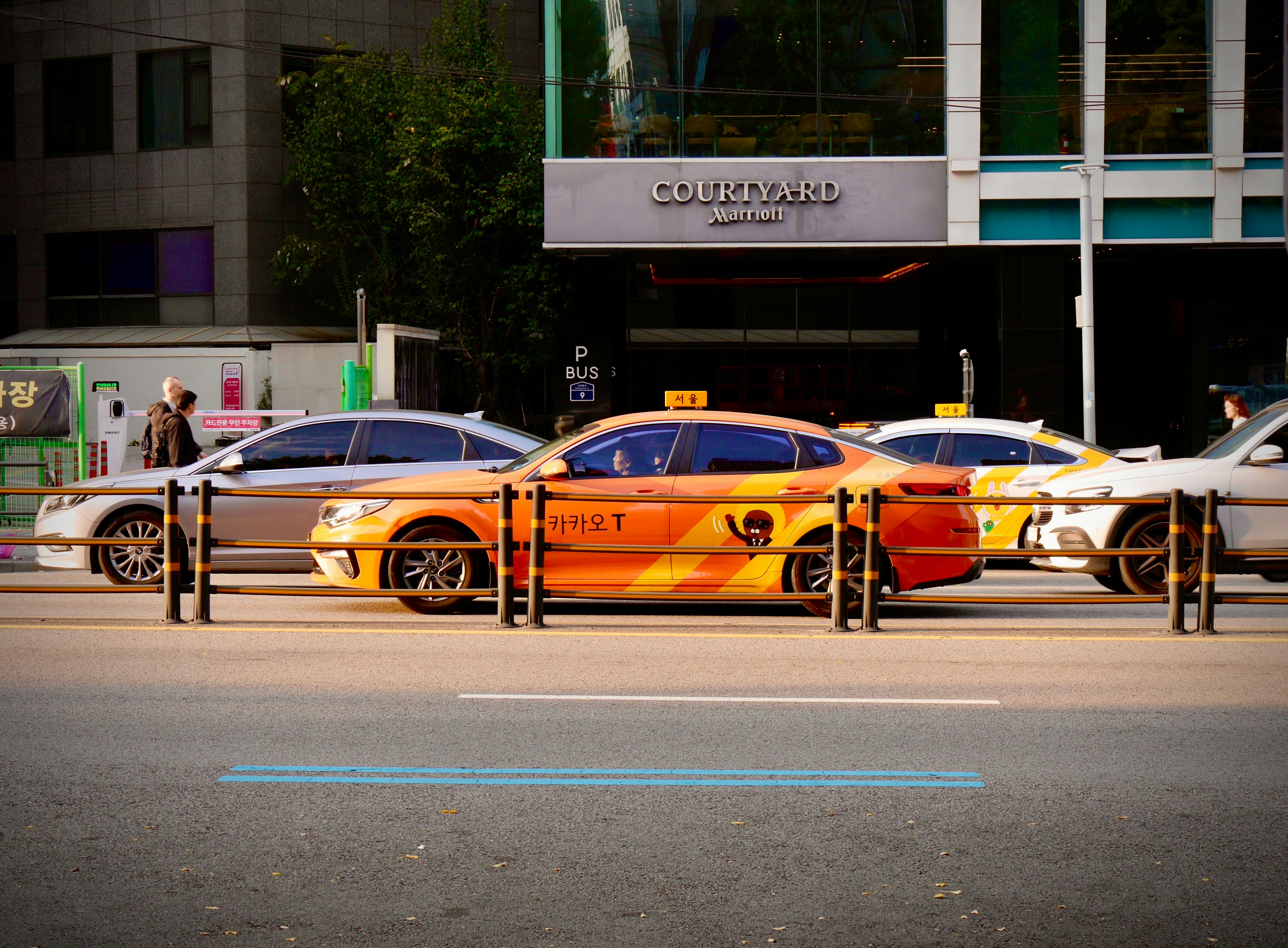
Taxi: Plentiful in Jeju City and Seogwipo but sparse in rural areas. Generally affordable for short hops. Kakao Taxi (the Korean equivalent of Uber) works on the island and accepts credit cards.
Bicycle and E-Bike: The coastal Olle Trails are walkable, but several sections are popular with cyclists. E-bike rentals are available in Jeju City and at a few coastal villages. The flat northern coastal road around Aewol to Hallim is particularly well-suited for a leisurely bike ride.

Events and Festivals
Jeongwol Daeboreum Fire Festival (February)
Held at Saebyeol Oreum in Aewol-eup on the night of the first full moon of the lunar calendar year, this festival involves the ritual burning of the entire hillside. Thousands of spectators write their wishes on bundles of straw, and when darkness falls and the moon rises, the mountain is set alight in a controlled burn that illuminates the whole sky. A fireworks display follows. It is one of the most viscerally spectacular events in Korea and attracts visitors from across the country. Dates shift with the lunar calendar, so check the Visit Jeju website annually.
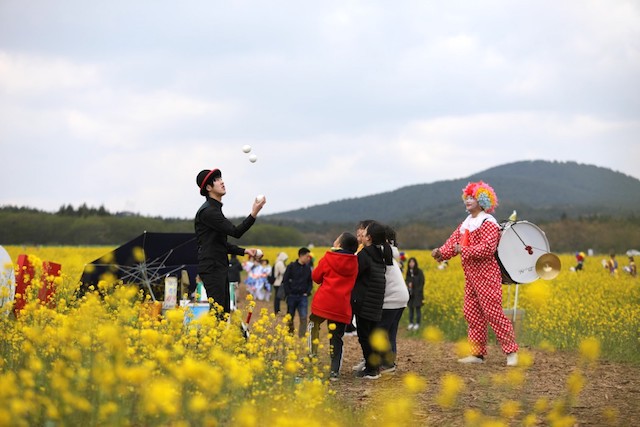
Jeju Canola Flower Festival (Late March to April)
The Noksan-ro canola flower road becomes the most photographed stretch of asphalt in Korea during its peak bloom, when both sides of the road disappear under banks of yellow flowers with cherry blossom trees rising above them. During the festival period, the road is closed to vehicles, transforming it into a 2-kilometer pedestrian walkway. Additional festival events at Jeju Horse Park include cooking contests and cultural performances, with no entry fee for the road itself.
Jeju Olle Walking Festival (Early November)
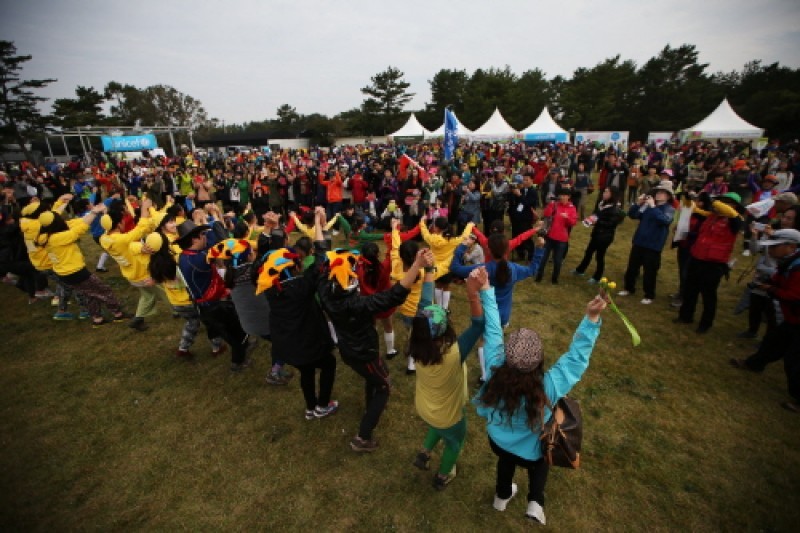
Organized annually by the Jeju Olle Foundation, this three-day festival highlights three specific Olle Trail routes, brings in folk musicians and local food vendors at staging points along each route, and draws around 10,000 participants from Korea and abroad. Pre-registration costs KRW 30,000 and includes a souvenir and program booklet. Free participation is also available. The 2025 edition was held from November 6 to 8, so expect the 2026 event in the same window.
Shopping in Jeju
What to Buy
- Hallabong and citrus products: Fresh hallabong in season (winter and early spring), or year-round as jam, tea, chocolate, and dried peel.
- Dried galchi (hairtail fish): Sold in vacuum packs at Dongmun Market and most food shops, one of the more transportable genuine local food souvenirs.
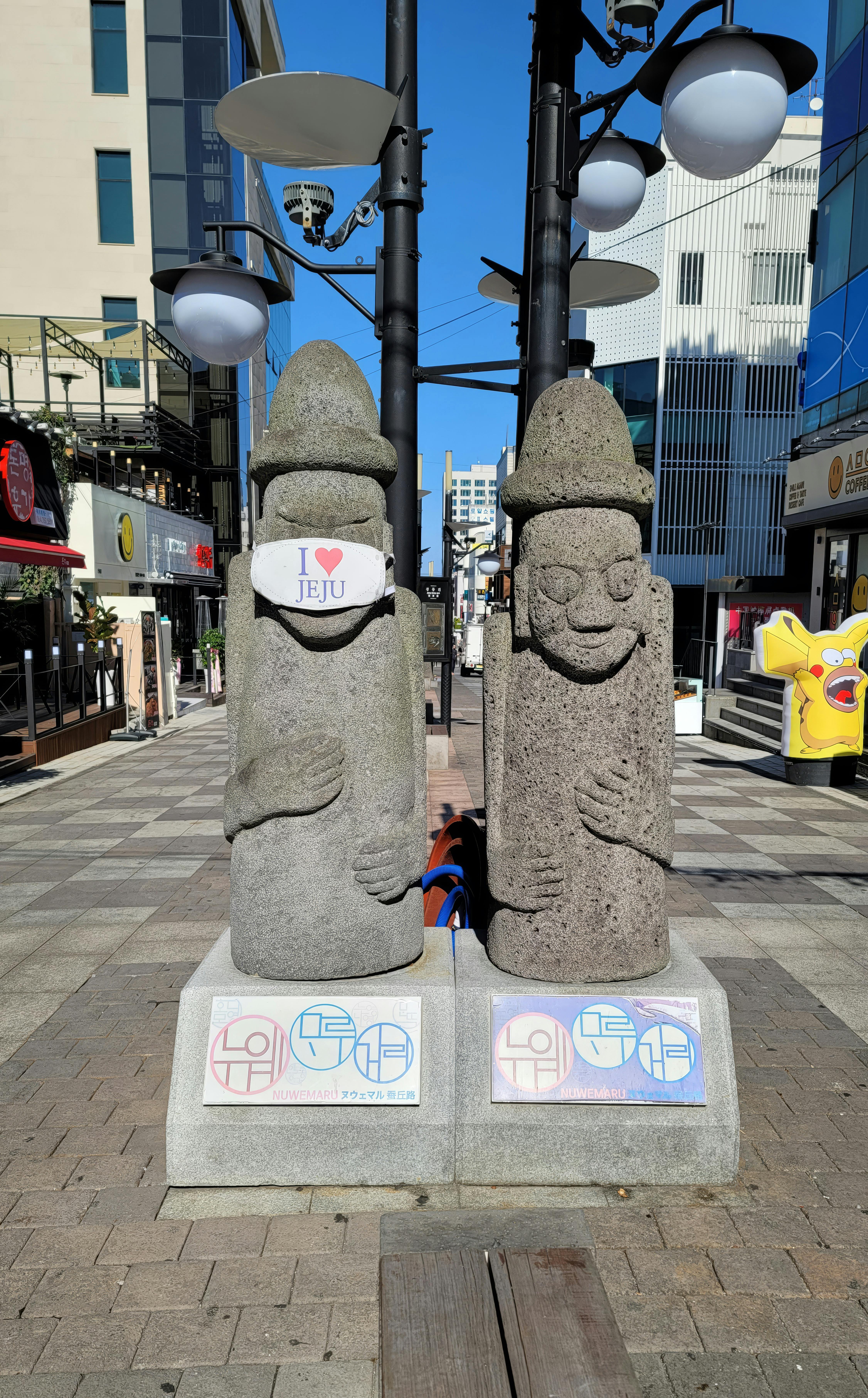
- Dol hareubang ceramics: The squat, wide-eyed basalt grandfather statues that dot the island’s roadsides are a cultural icon of Jeju. Ceramic and stone replicas range from airport-trinket quality to genuinely beautiful hand-carved pieces. The Jeju Folk Art Cooperative near Seongeup Village has higher-quality options.
- Jeju green tea products: The O’sulloc Tea Museum in Hallim oversees some of the southernmost tea fields in Korea and sells its own tea blends, which are notably good and well-packaged for travel.
- Black pork products: Vacuum-packed, dried, and seasoned black pork is available at the airport and in all major markets.
- Jeju horse figurines: Jeju has a long tradition of horse breeding that dates to the Mongol occupation period. Small horse figurines in stone or ceramic are understated yet locally meaningful souvenirs.

Where to Shop
Dongmun Traditional Market remains the best one-stop shopping and eating destination for food souvenirs. Jeju Airport Duty-Free and Departure Hall shops are convenient for last-minute purchases of hallabong and well-packaged snacks. For craft and art, the small galleries around Aewol Gwakji Beach have built a genuine creative community in recent years, and several sell original prints, ceramics, and handmade goods by island-based artists.
Practical Information
Visa and Entry
Most nationalities can enter Jeju Island visa-free for up to 30 days on direct international arrival, even if their passport requires a visa for mainland South Korea. Travelers from countries with full visa exemptions for South Korea (including most Western nations) can stay up to 90 days. US citizens are currently visa-free for up to 90 days. If you plan to enter Jeju and then continue to the mainland, confirm mainland visa requirements separately. Verify the current K-ETA status for your nationality before travel, as requirements have shifted in recent years.
Currency
The South Korean Won (KRW) is the sole currency. Credit cards are accepted almost universally in shops, restaurants, and hotels. Cash remains useful at traditional markets, small haenyeo house restaurants, and rural areas. There are ATMs at the airport and convenience stores (CU, GS25, 7-Eleven) across the island that accept foreign cards. The exchange rate at airport ATMs is generally competitive.
Language
Korean is the dominant language, with a distinct Jeju dialect that even mainland Koreans sometimes struggle to understand. English is functional at major tourist attractions, large hotels, and the airport. Translation apps (Naver Papago, Google Translate with Korean) are essential for restaurant menus and bus schedules in smaller towns. The T-money system and most transport apps work reasonably well in English.

Safety
Jeju is consistently ranked among the safest destinations in Asia. Violent crime is extremely rare. The main practical risks are natural: coastal currents are strong at unsignposted swimming spots, the typhoon season (late July to early September) requires monitoring weather forecasts, and Hallasan trail conditions can deteriorate rapidly in fog or rain. Stick to marked swimming areas and registered trails.
Health and Connectivity
No vaccinations are required for Jeju. The island has two well-equipped hospitals: Jeju National University Hospital (Jeju City) and Seogwipo Medical Center (Seogwipo). Both have emergency departments. A local SIM card or eSIM with unlimited data is available at the airport from telecom vendors (KT, SKT, LG U+) and works throughout the island, including on most hiking trails.
Electricity
220V, Type C and F sockets (European-style two-pin). Travelers from North America and Japan need a voltage converter and a plug adapter.
Etiquette and Local Customs
Remove your shoes before entering any traditional or private space, including many guesthouses and older-style restaurants. If a restaurant has low tables and floor seating, shoes come off at the entrance.
Two-handed giving and receiving: When handing money, a gift, or a business card to someone older or in a position of authority, use both hands or support your right forearm with your left hand. This is a fundamental courtesy.
Pouring drinks: In Korean dining culture, you do not pour your own drink. Pour for others at the table and wait for someone to pour for you. Refusing a drink entirely can read as rude in social settings; it is more graceful to accept, touch it to your lips, and set it down.
Tipping: Tipping is not part of Korean culture and is not expected anywhere on the island. Service charges are rarely added to bills. A tip at a restaurant will generally cause confusion rather than gratitude.
Haenyeo etiquette: When watching haenyeo at work or during demonstrations, maintain distance and keep noise to a minimum. Do not approach them in the water. Photography of performers at the Seongsan demonstration site is generally acceptable, but photographing working haenyeo in village contexts should be done with discretion, ideally with a small nod of acknowledgment.
Quiet hours and residential neighborhoods: Jeju City’s residential neighborhoods, particularly those away from the nightlife areas of Yeon-dong and Nohyeong-dong, quiet down early. Keep volume low after 10 pm when walking through housing areas.
Packing List
Spring (March to May)
- Light layers: mornings are cool (8 to 14 degrees), and afternoons warm up significantly
- Waterproof outer layer (spring rain is frequent and unpredictable)
- Comfortable hiking boots or trail shoes
- Sunscreen (UV index climbs quickly in April)
- T-money card (buy at the airport on arrival)
Summer (June to August)
- Lightweight, moisture-wicking clothing
- Compact umbrella (the monsoon makes waterproof jackets impractical)
- High-SPF sunscreen and a wide-brimmed hat
- Insect repellent for forest and oreum hikes
- Reef-safe sunscreen if you plan to swim

Autumn (September to November)
- Medium layers: cool evenings, warm afternoons
- Hiking boots (Hallasan trails are at their best)
- Camera (the light is exceptional)
- Advance restaurant bookings for peak October weekends
Winter (December to February)
- Warm layers but not heavy-duty cold-weather gear (coast stays above 5 degrees)
- Waterproof boots for Hallasan’s snowy upper trails
- Portable phone charger (cold reduces battery life noticeably)
Itineraries
2-Day Jeju Itinerary
Day 1: The East Coast and Sunrise Peak
Start early. Drive or take Bus 701 east to Seongsan Ilchulbong and hike up the crater trail as the morning light opens across the sea below. At the base, walk to the haenyeo demonstration cove. From Seongsan, head a few minutes south to Gwangchigi Beach for a brief stop: the view of Sunrise Peak from the beach sand is a better photograph than anything from the peak itself. Continue west to Manjanggul Lava Tube, which requires a brief detour north. Allow one hour inside. Drive south to Seogwipo for the evening: walk to Jeongbang Waterfall before it closes, then dinner at Heugdonga in the city center for charcoal-grilled black pork.
Day 2: The South Coast and Hallasan Foothills
Morning drive west along the south coast road to Jusangjeolli Cliff, which takes about 30 minutes to absorb fully. Continue west to the Jungmun Tourist Complex for a coffee or lunch break at one of the resort cafes above the beach. From Jungmun, drive north into the Hallasan foothills and stop at Seongeup Folk Village if arriving in the afternoon (the village is at its most atmospheric in late afternoon when residents are outside). Return to Jeju City via the inland road for a final evening meal: Jamae Guksu for gogi guksu, then a walk through Dongmun Traditional Market for hallabong ice cream.

4-Day Jeju Itinerary
Day 1: Jeju City and the North Coast
Land at Jeju Airport and collect your rental car. Drive west to Aewol-eup, Jeju’s most photogenic coastal village, and walk the flat seafront promenade past the black rock tide pools. Continue west to Hyeopjae Beach for the clearest water on the north coast, then north to the small fishing village of Hallim for fresh haemultang at Hyeopjae Haenyeoui Jip. Evening back in Jeju City: explore Dongmun Traditional Market for street food and pick up snacks for the rest of the trip.
Day 2: Hallasan
Early start for the Seongpanak Trail. Plan for a full hiking day: 9.6 km to the crater lake and back. Bring lunch, more water than seems necessary, and a mid-layer. The summit is frequently above clouds, and the crater lake, when visible, is extraordinary. Post-hike dinner in Jeju City at Heugdonga for black pork to reward your legs.
Day 3: East Coast and Seongsan
Drive east to Pyeongdae-ri for sea urchin noodles at Pyeongdae Seonggye Guksu at lunch. Then to Seongsan Ilchulbong in the afternoon, aiming for the early evening light rather than the sunrise crowd (the views are equally impressive with fewer people). Walk to the haenyeo cove. Stay overnight in Seongsan or drive back to Seogwipo for accommodation.
Day 4: South Coast and Seogwipo
Morning: Cheonjiyeon Waterfall in Seogwipo (different from Jeongbang, this one falls through a forested gorge), then the Seogwipo Maeil Olle Market for a browsing lunch. Afternoon: drive west along the south coast to Jusangjeolli Cliff and the nearby Yakcheonsa Temple, one of the largest Buddhist temples in Asia, whose four-story main hall rises from a hillside above rice terraces. Evening: return to Jeju City or head to the airport for departure.

7-Day Jeju Itinerary
Day 1: Arrival, Jeju City Orientation
Arrive, collect rental car, check in. Evening walk through Dongmun Traditional Market. Dinner at Samseonghyeol Haemultang for live seafood hotpot. Early night: you have a full week ahead of you.
Day 2: Hallasan Summit
Full day on the Seongpanak Trail. This earns an early bedtime.
Day 3: Manjanggul and the North Coast
Morning at Manjanggul Lava Tube, when it opens at 09:00. Drive west along the north coast to Aewol Gwakji Beach for a browse through the art galleries. Afternoon at Hyeopjae Beach or, if the tide is right, walk out toward Biyangdo Islet across the tidal flats. Evening back in Jeju City.
Day 4: Udo Island Day Trip
Take the 15-minute ferry from Seongsan Port to Udo Island, a satellite island so small you can cycle around its coast in a few hours. Rent a bike at the ferry terminal. The island has its own beaches, an active haenyeo community, and a specific local specialty: ice cream made with the island’s peanuts. Return to Seongsan for the haenyeo demonstration (2 pm) and then drive south for an overnight in Seogwipo.
Day 5: South Coast Deep Dive
Jeongbang Waterfall at opening time. Drive west to Jusangjeolli Cliff, then Yakcheonsa Temple. Lunch at the Jungmun Market in the resort complex is the best value in the area. Afternoon: check into your Jungmun or Seogwipo if staying in the south tonight. Evening walk along Seogwipo’s harbourfront.
Day 6: Olle Trail Section and Sangumburi
Morning: Drive to Sangumburi Crater (interior Jeju) for a circuit of the rim when the light is still low. Afternoon: Pick up Olle Trail Route 7 at the Oedolgae Rock near Seogwipo and walk south along the coast for two to three hours before returning to your car. The dramatic sea stack viewed from the coastal path in afternoon light is the kind of image that makes a trip feel defined. Evening in Seogwipo: dinner at Myeongjin Jeonbok if you can arrange to be in the northeast, or at a local abalone restaurant in Seogwipo itself.
Day 7: Seongeup, Camellia, and Farewell
Seongeup Folk Village in the morning, best explored slowly over 90 minutes with a local guide. If visiting between November and January, the Hueree Natural Life Park camellia gardens are one of the island’s most underrated afternoon stops. Drive back north to Jeju City. Final meal: a bowl of gogi guksu at Jamae Guksu and a bag of dried hallabong from Dongmun Market for the flight home.
All entry fees referenced are as of 2026. Currency conversions are approximate at current exchange rates. Verify opening hours before visiting, as seasonal adjustments are common, particularly on Hallasan trails.