

 Start Driving in Los Angeles, California
Los Angeles, la ciudad de los angeles, es una metropolis vibrante y diversa situada en la costa oeste de Estados Unidos. Conocida por ser la capital mundial del entretenimiento, Los Angeles ofrece una mezcla unica de glamour, cultura y belleza natural. Hollywood, con su iconico Paseo de la Fama y sus estudios de cine, es el corazon de la ciudad, un lugar donde se respira la magia del cine. El Observatorio Griffith, situado en la cima de una colina, ofrece vistas panoramicas de la ciudad y del famoso letrero de Hollywood. El Getty Center, un complejo arquitectonico impresionante, alberga una valiosa coleccion de arte europeo. Las playas de Los Angeles, como Santa Monica y Venice Beach, son destinos populares para relajarse, tomar el sol y practicar deportes acuaticos. El muelle de Santa Monica, con su parque de atracciones y su ambiente festivo, es un lugar emblematico de la ciudad. Los Angeles tambien es un paraiso para los amantes de la gastronomia, con una amplia oferta de restaurantes que van desde los puestos de comida callejera hasta los restaurantes de alta cocina. La ciudad es famosa por su diversidad cultural, que se refleja en sus barrios etnicos, como Chinatown, Koreatown y Little Tokyo. El sistema de transporte publico de Los Angeles, que incluye autobuses y el metro, facilita el desplazamiento por la ciudad y sus alrededores. El clima mediterraneo de Los Angeles, con veranos calidos e inviernos suaves, lo convierte en un destino atractivo durante todo el ano. La moneda es el dolar estadounidense (USD), y el ingles es el idioma principal. Los mejores momentos para visitarla son durante la primavera y el otono, cuando el clima es templado y agradable.
Los Angeles: The City That Refuses to Be Defined
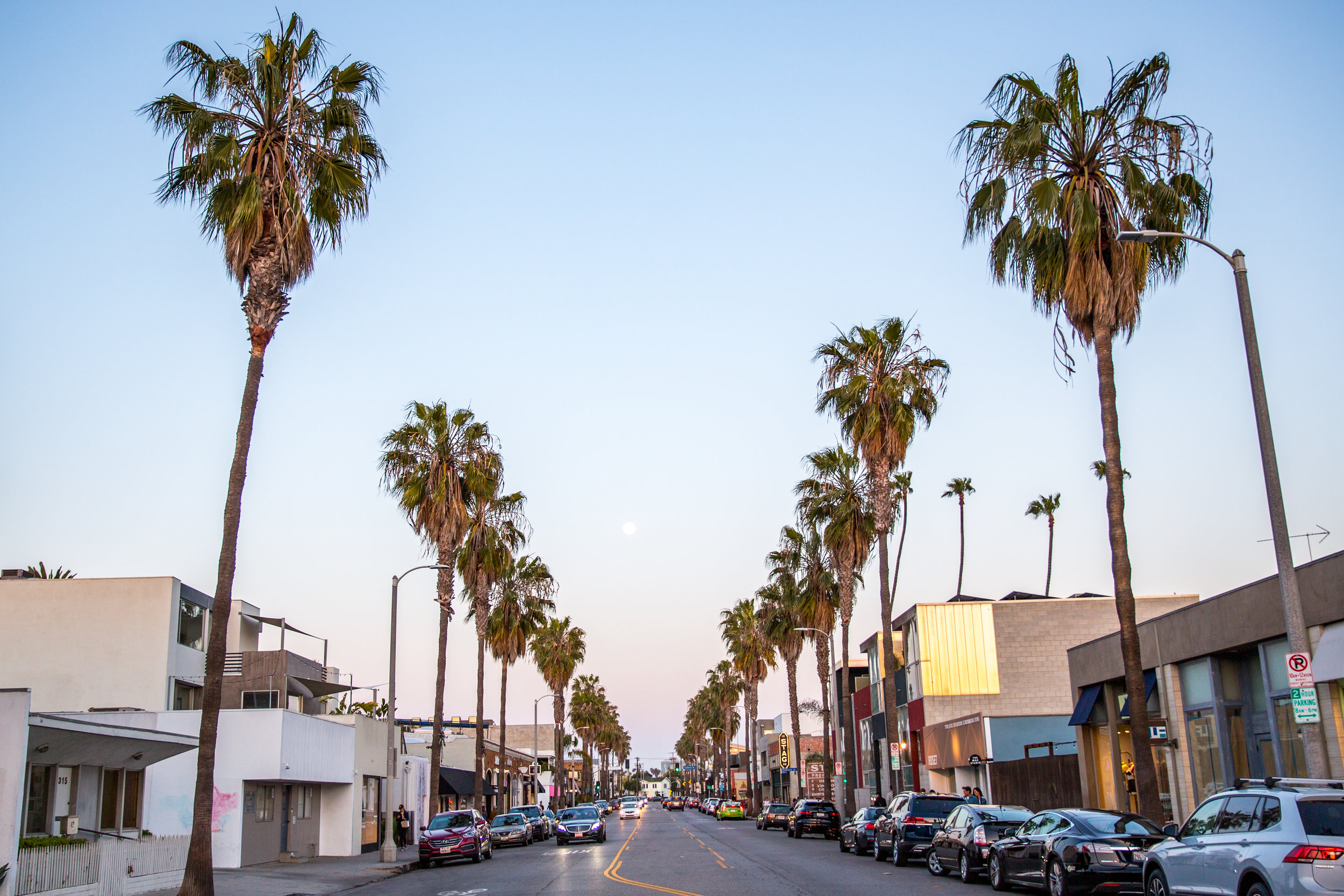
Here’s the truth about Los Angeles that no one puts in the brochure: the real city isn’t on Hollywood Boulevard. It’s not on Rodeo Drive, and it’s not at the Santa Monica Pier. The real Los Angeles is the Korean grandmother running a pojangmacha in Koreatown at midnight, the aerospace engineer who surfs before work at El Porto, the muralist turning a blank wall in Boyle Heights into something that stops you mid-stride. It’s 88 different cities stitched together into one sprawling, sun-baked, perpetually gridlocked metropolis that somehow works — sometimes brilliantly.
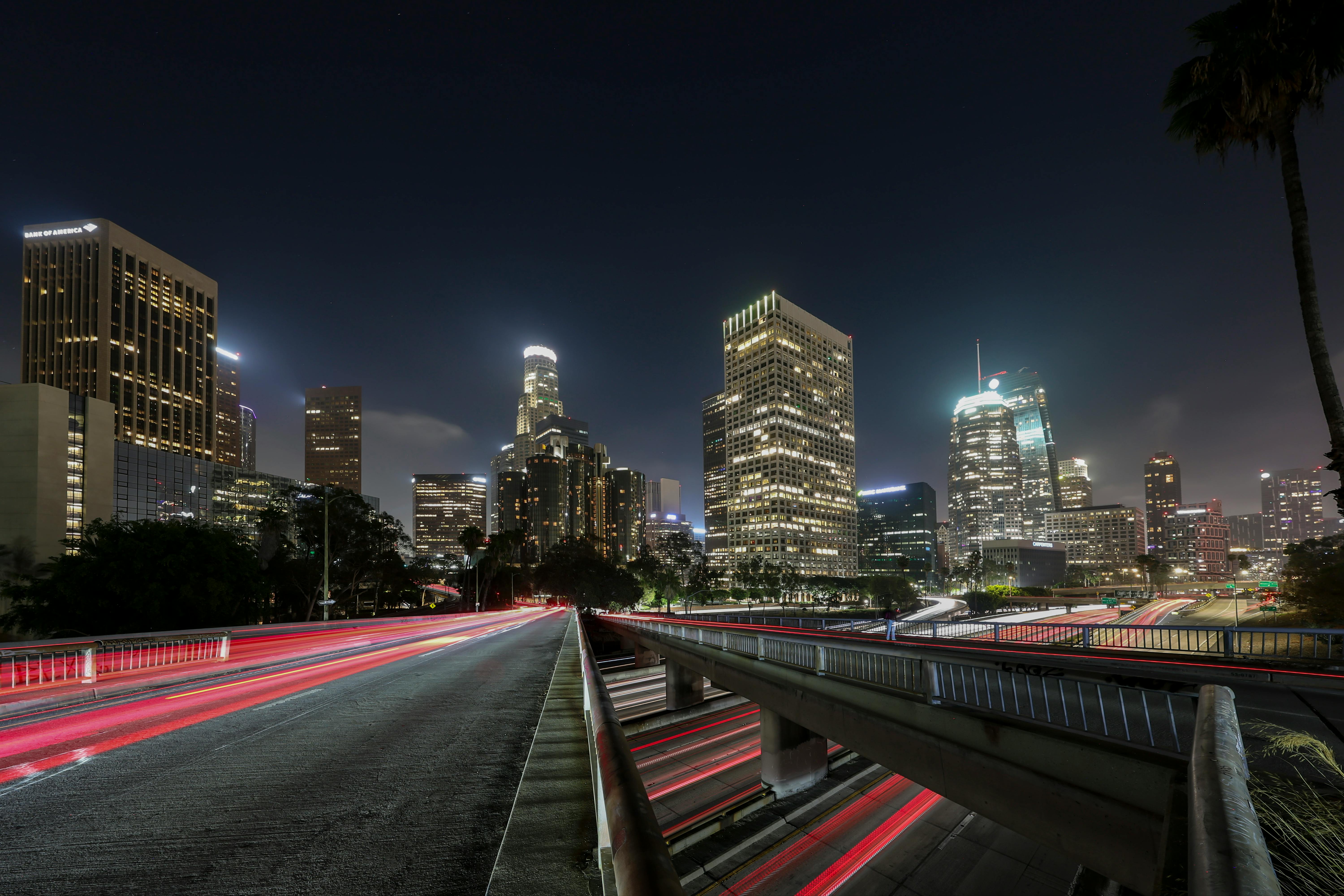
Los Angeles was a ranching outpost until the railroad arrived in 1876. Then oil came. Then the movie industry, fleeing Thomas Edison’s patent enforcers on the East Coast, discovered that Southern California offered year-round sunshine for outdoor filming. By the 1920s, Hollywood had colonized the global imagination. By the 1960s, the city’s freeways and aerospace industry had made it a symbol of the American future. Today, LA is the creative capital of the planet: the world’s largest entertainment economy, a culinary powerhouse, a tech hub, and the most ethnically diverse major city in the United States.
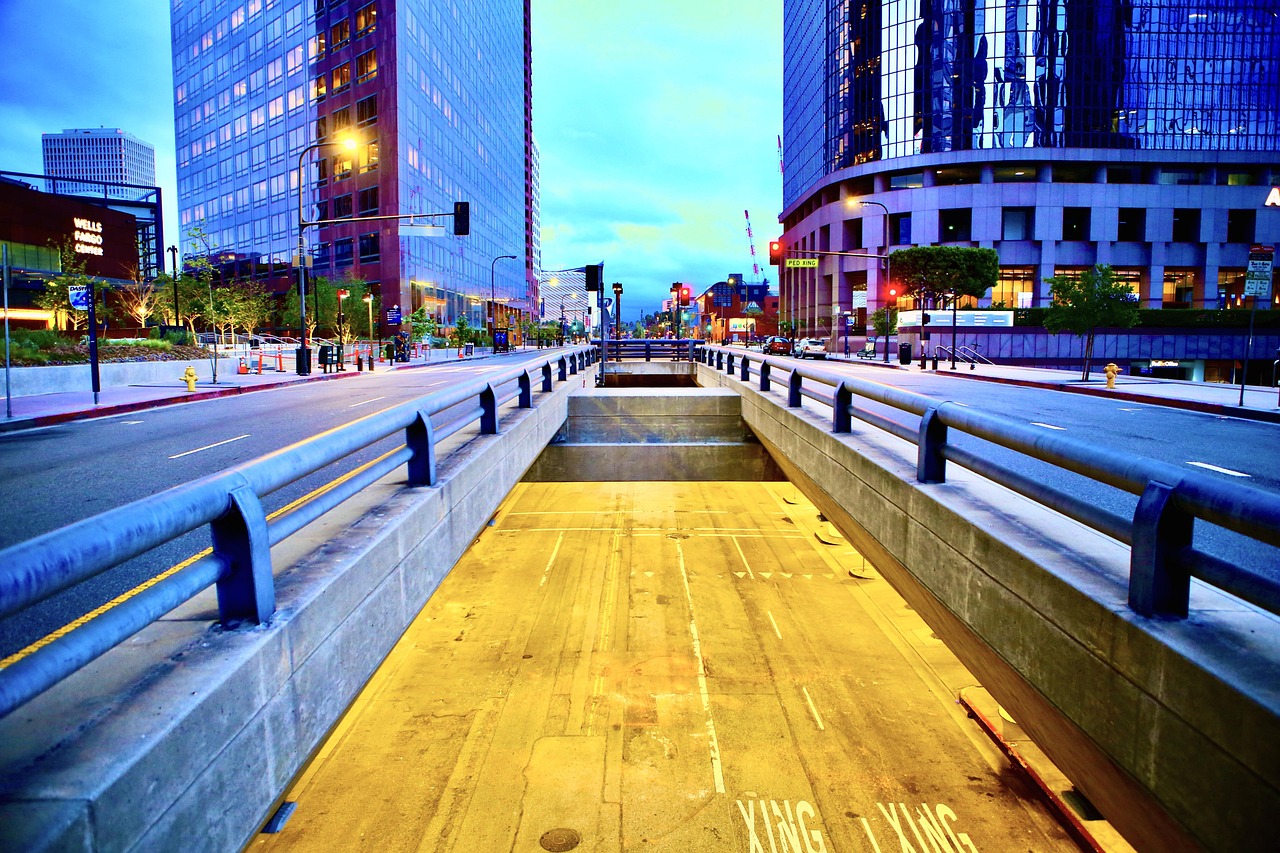
What it asks of you, in return, is a willingness to abandon the checklist mentality. You cannot “do” LA in three days. But you can fall for a corner of it — a neighborhood, a taco stand, a canyon trail at golden hour — and that’s usually enough to bring you back.
Population: ~4 million (city proper); ~13 million (metro area) Languages: English, Spanish, Korean, Mandarin, Armenian, Tagalog (and roughly 200 others) Time Zone: Pacific Standard Time (PST) / Pacific Daylight Time (PDT) Currency: US Dollar (USD)
Best Months to Visit
March–May (Spring): The Sweet Spot ⭐ Recommended
After the brief rainy season ends, Los Angeles transforms. Temperatures hover between 65–78°F (18–26°C), the hills are still green from winter rains, and the coastal wildflowers are in bloom. Crowds are manageable before summer peaks. The LA Marathon (March), Coachella (April), and the LA Times Festival of Books (late April) make spring culturally rich. Hotel rates are lower than in the summer.
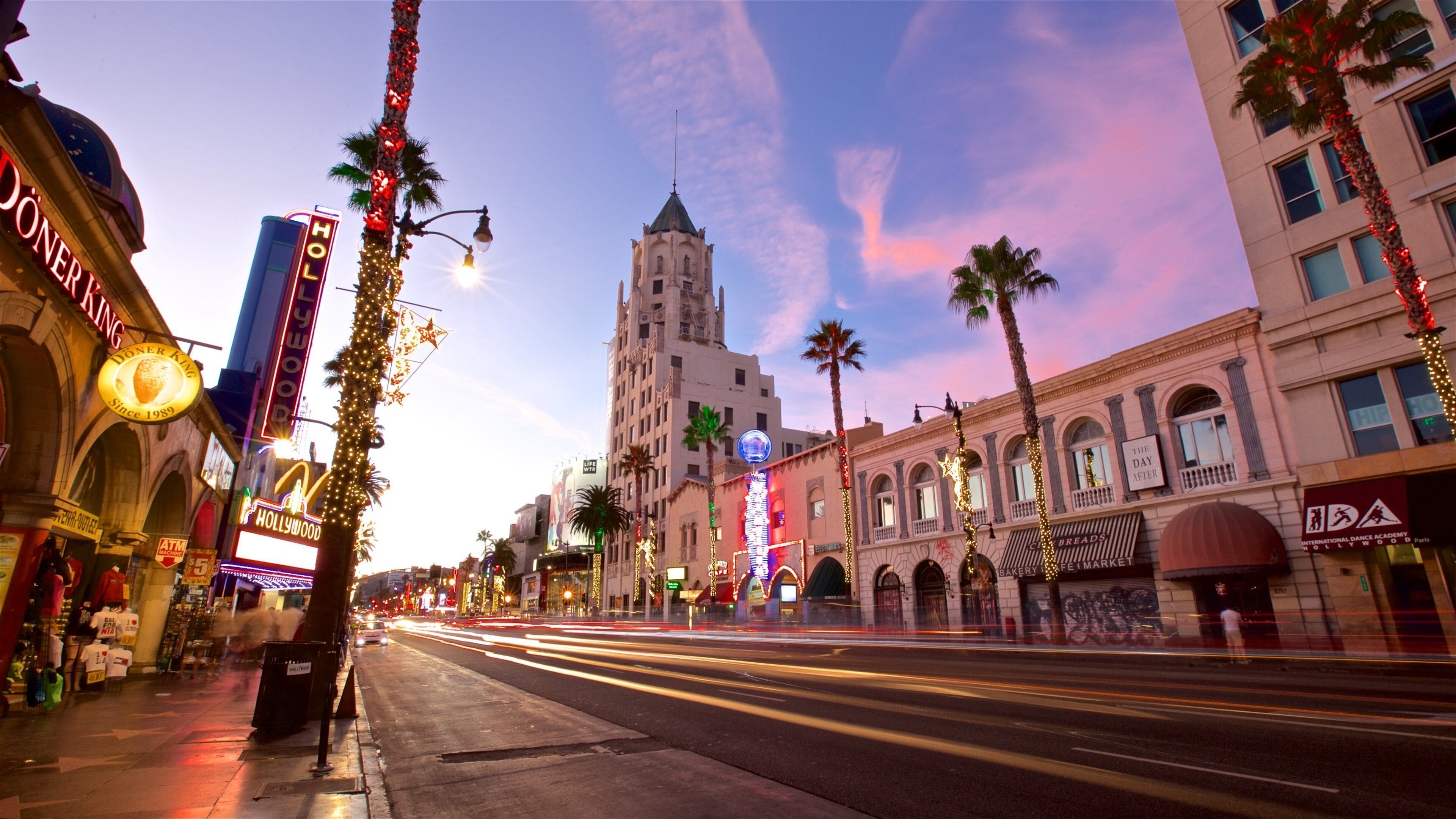
September–November (Fall): Warm and Golden
“June Gloom” is over, locals are back from vacation, and the weather is often the best of the year — warm, clear, and dry. The beaches are less crowded but still swimmable. Temperatures range from 70–85°F (21–29°C). October and November see the infamous Santa Ana winds, which raise fire risk but also produce the crystal-clear blue-sky days that make LA look cinematic. This is arguably the most beautiful time to be here.

June–August (Summer): Peak Season
Warm and busy. Morning marine layer (“June Gloom”) burns off by late morning along the coast. Inland neighborhoods like the San Fernando Valley can hit 95°F+ (35°C). Crowds swell at beaches and major attractions. Book hotels and restaurant reservations months in advance. 2026 note: The FIFA World Cup runs from July to August with matches at SoFi Stadium — the city will be at peak energy and peak prices.
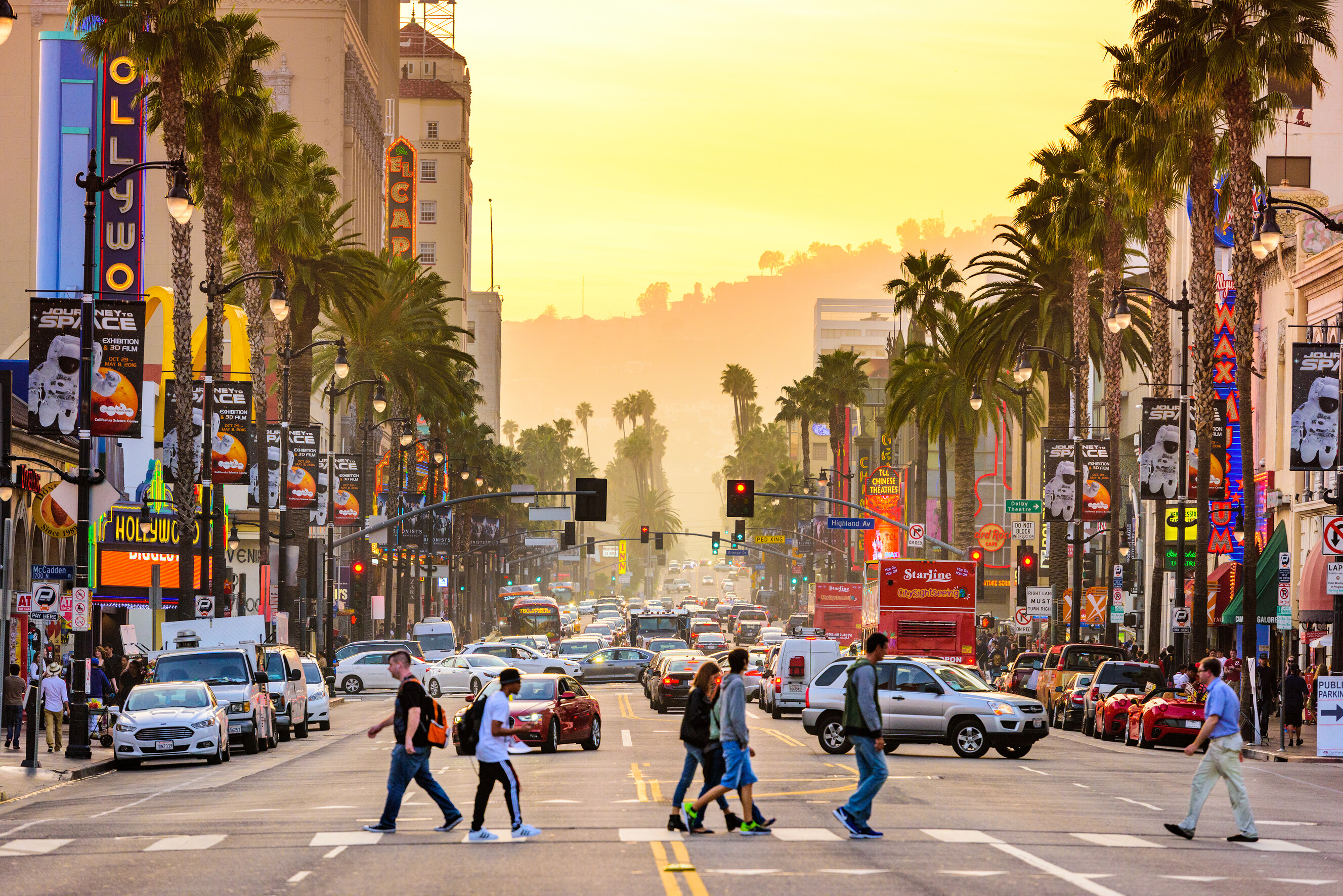
December–February (Winter): The Underrated Option
Temperatures rarely drop below 50°F (10°C) at night. Occasional rainy days are possible, but many winter days are clear and spectacular. Awards season (Golden Globes, Oscars) brings Hollywood royalty out in force. Crowds at attractions are thinner. The Rose Parade (January 1) and NBA All-Star Weekend (February 2026) are major draws.
Top Attractions
Griffith Observatory
Address: 2800 E Observatory Rd, Los Feliz Hours: Tuesday–Friday 12 PM–10 PM; Saturday–Sunday 10 AM–10 PM; Closed Mondays Entry Fee: Free general admission. Planetarium shows $7–$10; guided tours $25–$50. Getting There: Drive and pay for parking (paid near the top; free further down on the hillside), or take the DASH Observatory bus from Los Feliz.

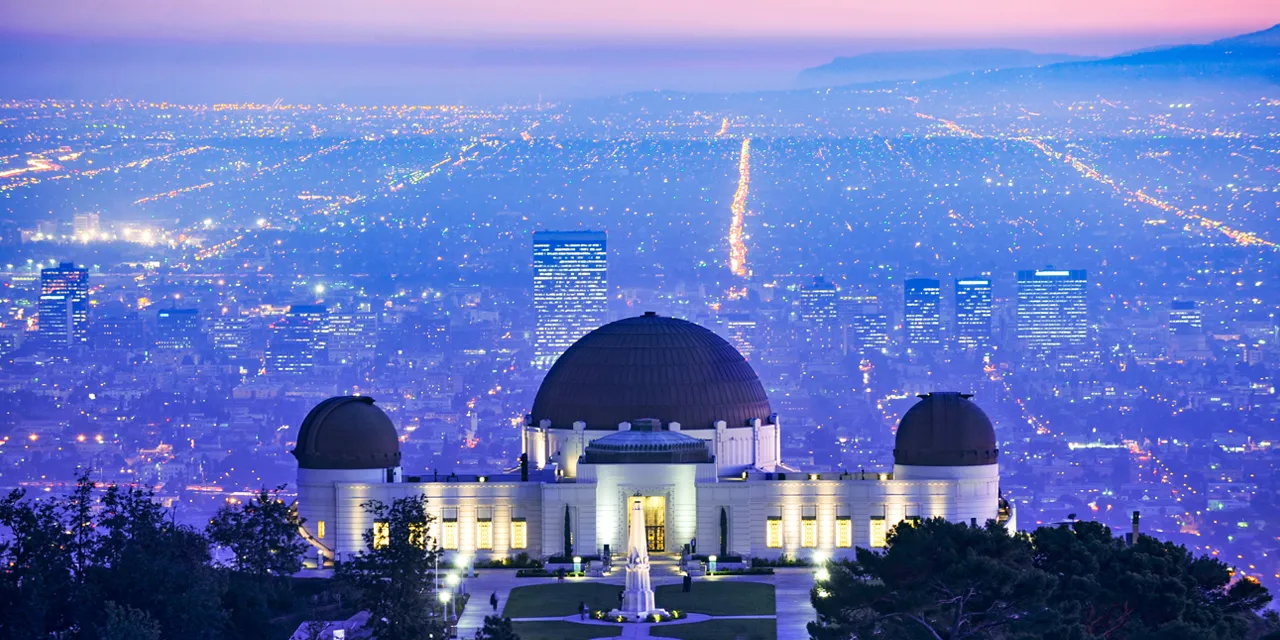
Perched on the southern slope of Mount Hollywood, Griffith Observatory delivers one of the great urban panoramas on earth: the LA Basin spread out below you, the Pacific glittering in the distance on clear days, and the Hollywood Sign close enough to frame perfectly for a photo. At night, the telescopes open to the public — free of charge — and docents guide visitors through whatever’s in the sky.
Pro Tip: Arrive 45 minutes before sunset on a weekday. You’ll catch golden hour over the city, the transition to the city lights, and miss the worst of the weekend crowds. The planetarium’s Samuel Oschin Autry Space Exploration Exhibit is worth the show ticket.
The Getty Center
Address: 1200 Getty Center Dr, Brentwood Hours: Tuesday–Friday & Sunday 10 AM–5:30 PM; Saturday 10 AM–9 PM; Closed Mondays Entry Fee: FREE. Parking: $20 (arrive by Big Blue Bus from Santa Monica for free). Reservations: Timed-entry reservation required on weekends; book 1–2 weeks in advance at getty.edu.

The argument can be made that the Getty Center is the finest free cultural attraction in the United States. The collection — European paintings from the Middle Ages to the 20th century, including exceptional Impressionist works by Van Gogh, Monet, and Renoir — is world-class. But the real magic is the setting: Richard Meier’s travertine campus commands a ridgeline above the 405 freeway, offering sweeping views of the city and the Pacific. Robert Irwin’s Central Garden, a constantly evolving horticultural artwork, is worth a visit on its own.
Pro Tip: Visit on a Saturday evening — it’s open until 9 PM and considerably less crowded than weekend afternoons. The sunset from the terrace, with the LA Basin lighting up below, is unforgettable.
Warner Bros. Studio Tour
Address: 3400 W Riverside Dr, Burbank Hours: Daily 9 AM–3 PM (tours depart every 30 minutes) Entry Fee: Approx. $70–$80/adult; $60/child; The Deluxe Tour runs higher. Reservations: Book in advance at wbstudiotour.com. Popular dates sell out weeks ahead.

Unlike Universal Studios (a theme park that happens to have a studio tacked on), Warner Bros. is an active working studio. Your tram rolls past the actual backlot where Friends, The Big Bang Theory, and dozens of features were filmed. The DC Universe exhibit, the Friends Central Perk set, and the prop archive are highlights.
Pro Tip: The Classic Tour runs about 3 hours. Avoid Friday afternoons when production activity is at its lowest; weekday mornings are best for spotting active filming.
Natural History Museum of Los Angeles County
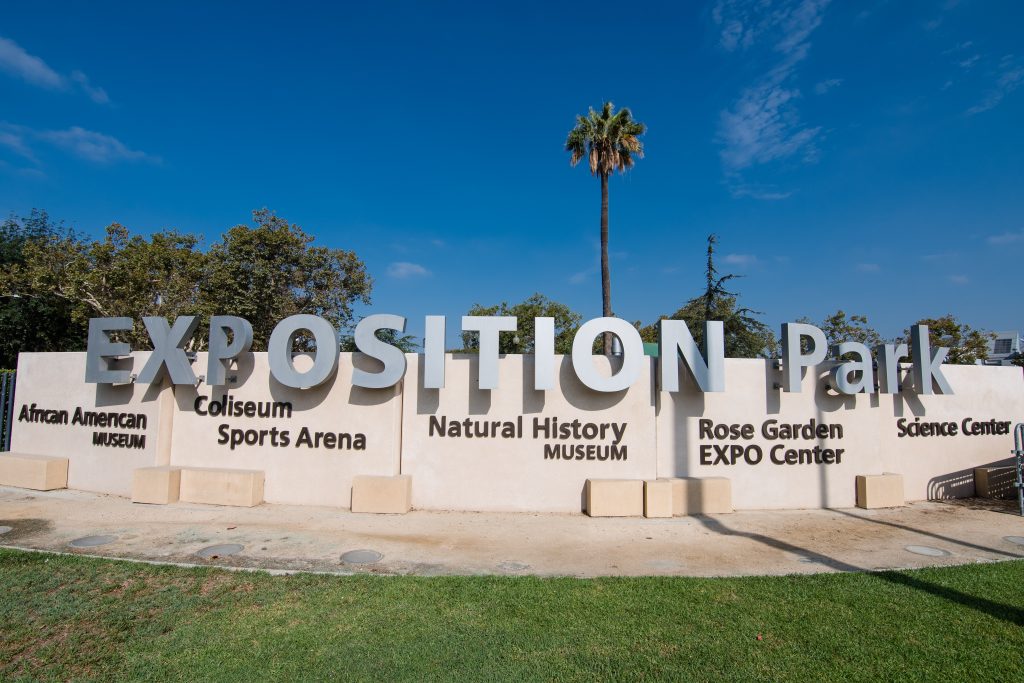
Address: 900 W Exposition Blvd, Exposition Park Hours: Daily 9 AM–5 PM Entry Fee: $15/adult, $7/child. Free for LA County residents on weekday afternoons, 3–5 PM. Free on the first Tuesday of each month.

One of the world’s top 10 natural history museums, the NHM holds over 35 million specimens and artifacts. The dinosaur hall is outstanding, and the Gem & Mineral Hall — with its walk-through vault of gems — is a genuine spectacle. It shares Exposition Park with the California Science Center, where the Space Shuttle Endeavor is displayed vertically in full launch configuration — the only shuttle in the world shown this way. Budget at least half a day for both.
Pro Tip: The Exposition Park Rose Garden (7 acres, 15,000+ rose plants surrounding the museums) is free, beautiful in spring, and makes a great picnic spot.
The Broad Museum (DTLA)
Address: 221 S Grand Ave, Downtown LA Hours: Tuesday–Wednesday 11 AM–5 PM; Thursday–Friday 11 AM–8 PM; Saturday 10 AM–8 PM; Sunday 10 AM–6 PM; Closed Mondays Entry Fee: Free general admission (timed-entry tickets required, book 2–4 weeks ahead) Kusama Infinity Mirrors: Separate $30 ticket; sells out months in advance — check the website regularly for released slots.

The Broad houses over 2,000 contemporary artworks from the collection of philanthropists Eli and Edythe Broad, including works by Jeff Koons, Jean-Michel Basquiat, Cindy Sherman, and a major collection by Kara Walker. The building itself — designed by Diller Scofidio + Renfro — is a striking piece of architecture, with a “veil and vault” concept that allows natural light to filter through the honeycomb facade.
Pro Tip: Walk-up availability exists Tuesday–Thursday mornings; arrive at 10:30 AM. General entry books out months in advance on weekends.
LACMA (Los Angeles County Museum of Art)
Address: 5905 Wilshire Blvd, Mid-Wilshire Hours: Monday, Tuesday, Thursday 11 AM–6 PM; Friday 11 AM–8 PM; Saturday–Sunday 10 AM–7 PM; Closed Wednesdays Entry Fee: $25/adult; $21/seniors; Free for LA County residents Urban Light installation: Free, 24/7, outdoors
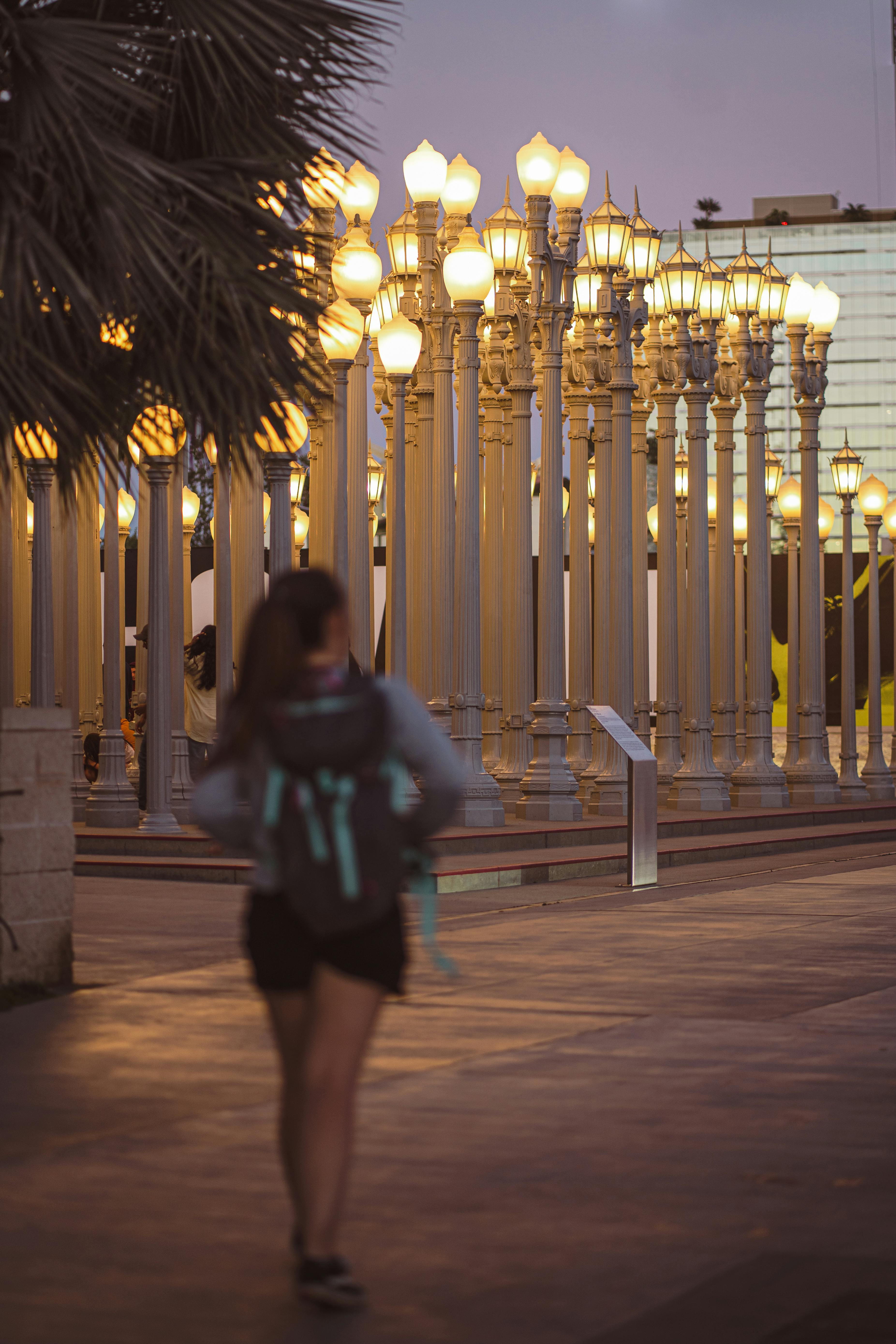
LACMA is the largest encyclopedic art museum in the American West, with a collection spanning 6,000 years across multiple buildings. The Impressionist and Modern Art collections are superb, and the recently opened 2026 exhibition “Fútbol is Life” (tied to the World Cup) runs through July 12.
Pro Tip: Chris Burden’s Urban Light — 202 restored cast-iron street lamps arranged in rows outside the museum — is best photographed at blue hour, approximately 20 minutes after sunset.
Santa Monica Pier & Beach
Address: 200 Santa Monica Pier, Santa Monica. Hours: Pier: Open 24/7. Pacific Park amusement rides: Seasonal hours, roughly 11 AM–11 PM weekends. Entry Fee: Pier is free. Pacific Park rides are individually priced; an unlimited wristband is ~$35.
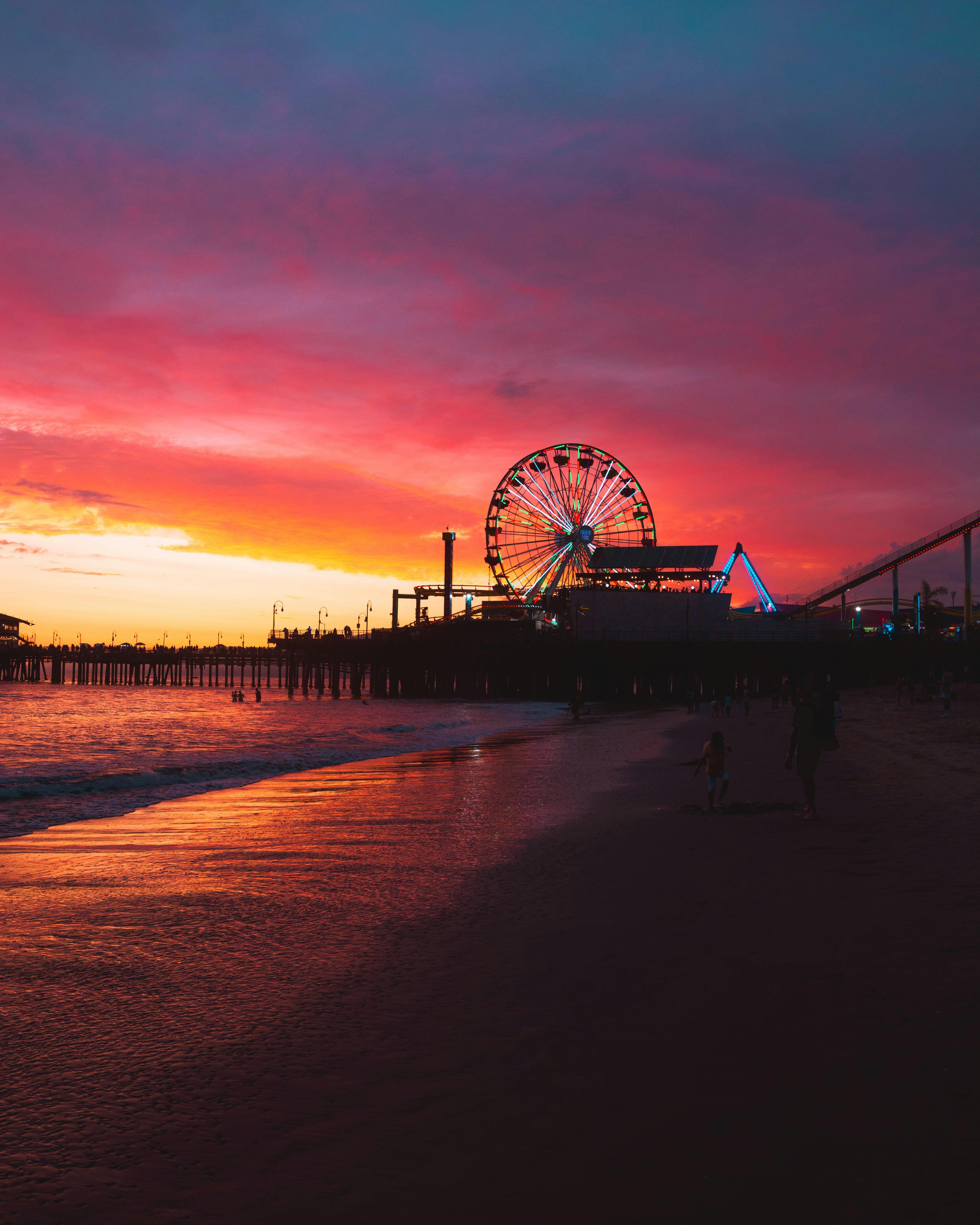
The Santa Monica Pier has been here since 1909, and it’s earned its place on every LA visit — not because it’s the most interesting thing in the city (it isn’t), but because standing at the end of Route 66 with the Pacific in front of you has a particular, hard-to-explain weight. The Third Street Promenade is just a three-block walk north, and the beach bike path connects Santa Monica to Venice and Marina del Rey.
Pro Tip: Rent a bike from any of the Breeze Bike Share stations and cycle the full 22-mile coastal path from Malibu to Palos Verdes. Even the 3-mile stretch from Santa Monica to Venice is worth it.
2026 NEW OPENING: Lucas Museum of Narrative Art
Address: Exposition Park (adjacent to NHM) Opening: 2026 — check lucasmuseum.org for official opening dates and tickets.
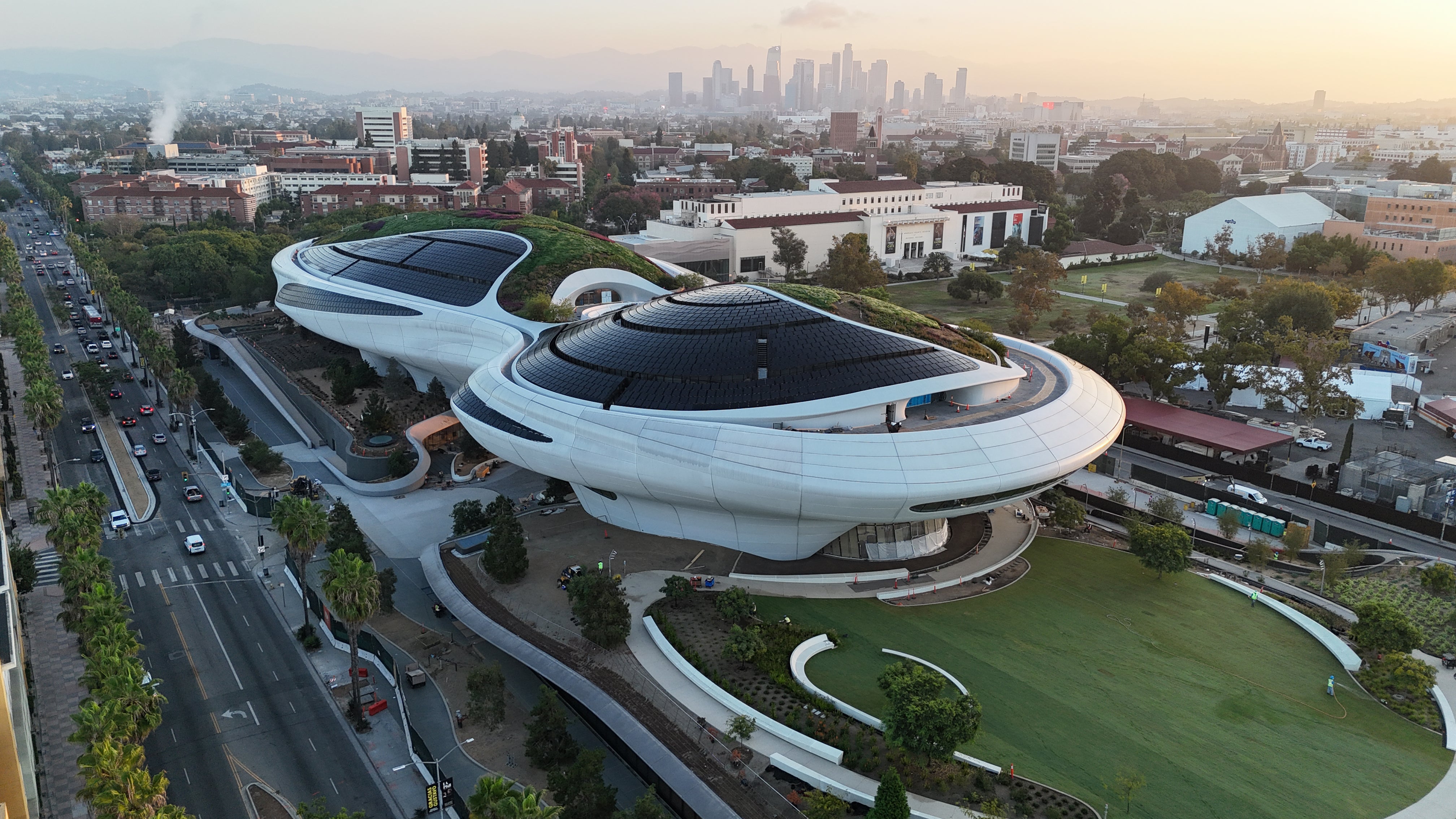
George Lucas’s personal art collection, focused on narrative and visual storytelling, opens this year in a dramatic, undulating building adjacent to the California Science Center. The collection spans illustration, cinema, and commercial art, including original Star Wars artwork and production materials. This will be one of the most talked-about museum openings in LA in a generation.
Hidden Gems
1. The Watts Towers
Address: 1727 E 107th St, Watts Hours: Thursday–Saturday 10 AM–3 PM; Sunday 12 PM–3 PM

Simon Rodia, an Italian immigrant tile worker with no formal training, spent 33 years (1921–1954) building this astonishing assemblage of hand-built steel towers inlaid with seashells, pottery shards, and broken glass — the tallest reaching 99 feet. It’s one of the great works of outsider art in the world, and most first-time visitors are genuinely stunned that they’d never heard of it. The surrounding neighborhood is Watts, not the safest area, so go on a guided tour during daylight hours.
Insider Context: The annual Watts Towers Day of the Drum Festival (September) fills the surrounding park with jazz, gospel, and R&B performances that honor the neighborhood’s extraordinary musical legacy.
2. The Last Bookstore (DTLA)
Address: 453 S Spring St, Downtown LA Hours: Monday–Saturday 10 AM–10 PM; Sunday 10 AM–9 PM
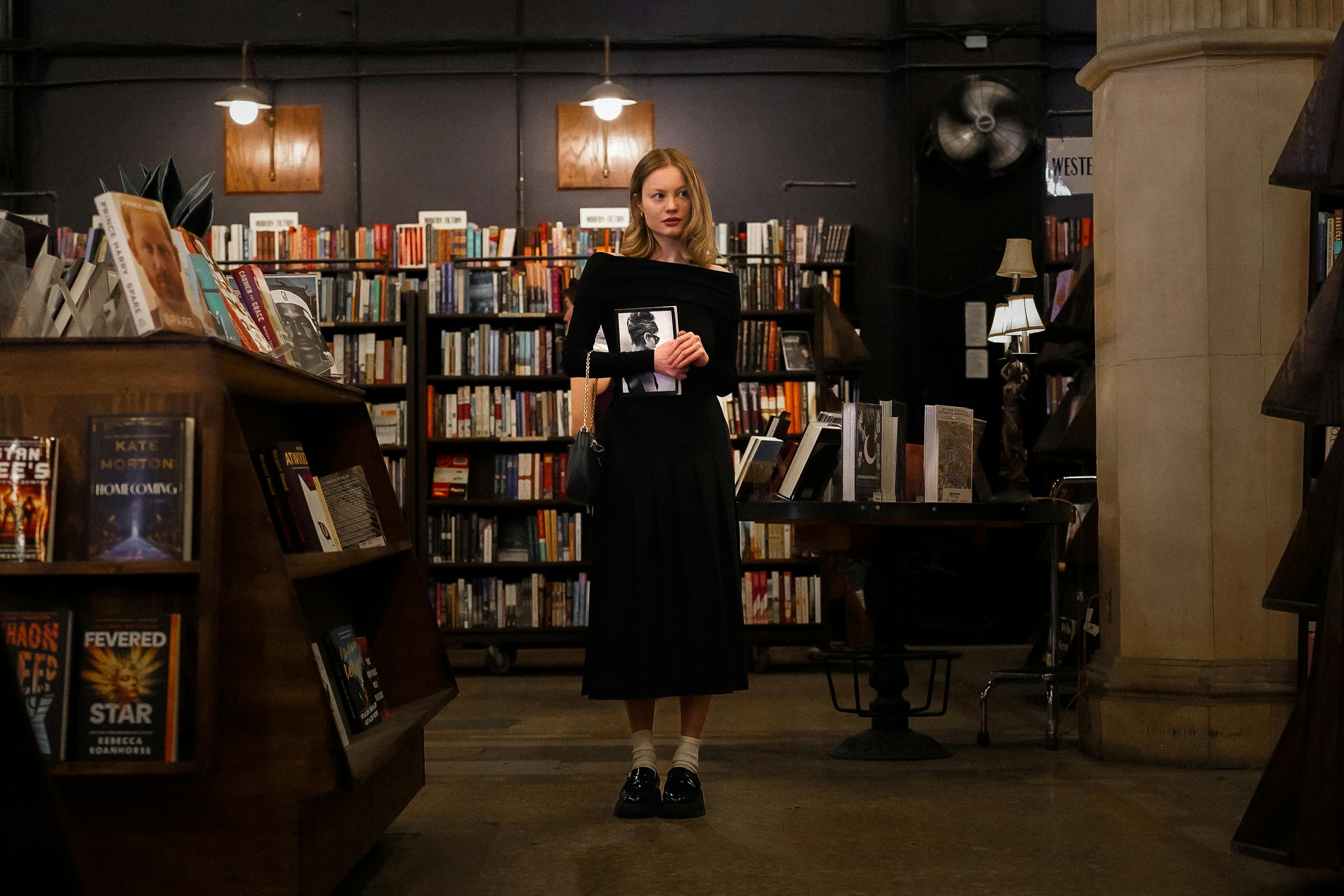
Housed in a former bank vault, The Last Bookstore is the largest independent new and used bookstore in California — and one of the great bookstores in the country. The upper floor, the “Labyrinth,” uses books themselves as architectural material, with spirals, arched tunnels, and walls built from spines. You’re not there to buy books (though you will). You’re there to understand what happens when someone builds a space that treats books as sacred objects.

Insider Context: The Spring Street area around it has quietly become one of DTLA’s best blocks for galleries and coffee. Pop into Maru Coffee next door.
3. Abbot Kinney Boulevard (Venice), First Friday
Address: Abbot Kinney Blvd, Venice When: Every first Friday of the month, 5 PM–11 PM
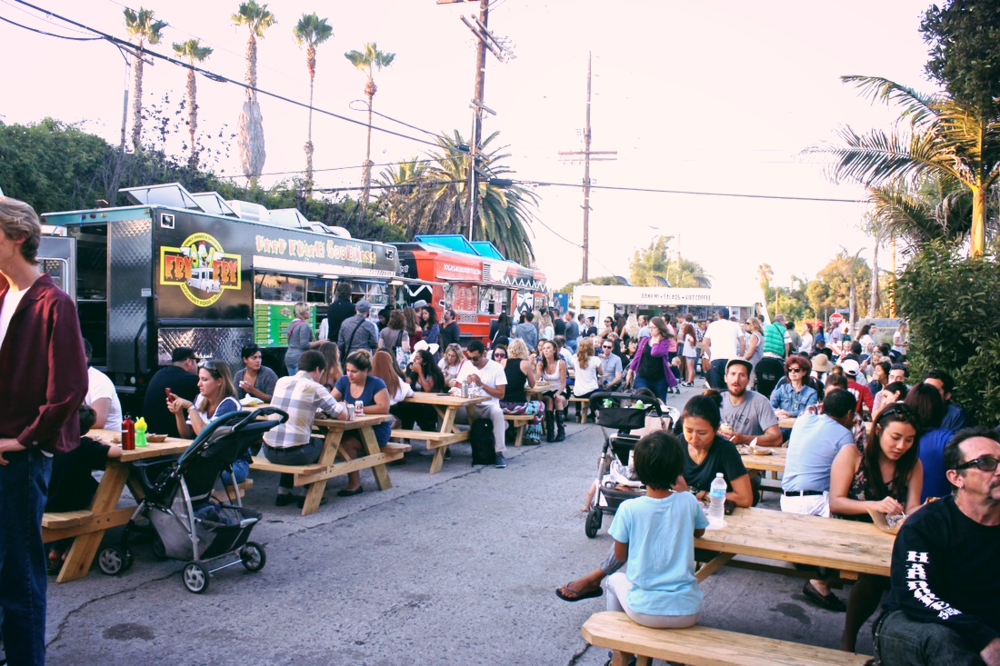
Year-round, Abbot Kinney is one of LA’s best streets for boutiques, restaurants, and independent coffee. But on the first Friday of each month, the street closes to cars and transforms into an outdoor festival with food trucks, live music, and the full parade of Venice weirdness that makes this neighborhood unlike anywhere else. The permanent restaurants along the strip — Gjelina, Gjusta, Salt & Straw — are worth a visit any day.
Insider Context: Most tourists know the Venice Beach Boardwalk but skip Abbot Kinney entirely. The boardwalk is chaotic; Abbot Kinney is where Venetians actually live and eat.
4. Lummis Home & Garden (El Alisal)
Address: 200 E Ave 43, Lincoln Heights Hours: Friday–Sunday 12 PM–4 PM; Free admission

Charles Fletcher Lummis was a 19th-century journalist who walked from Cincinnati to Los Angeles in 143 days, became the city editor of the Los Angeles Times, and then built himself a medieval stone house by hand from boulders he hauled from the nearby Arroyo Seco. El Alisal is a bizarre, beautiful one-of-a-kind structure that tells the story of LA’s romantic self-mythologizing better than any museum. The garden includes one of the city’s oldest sycamore trees, planted in the 1890s.
Insider Context: This is where historians and architecture obsessives come. You’ll likely have the place to yourself.
Cuisine & Dining
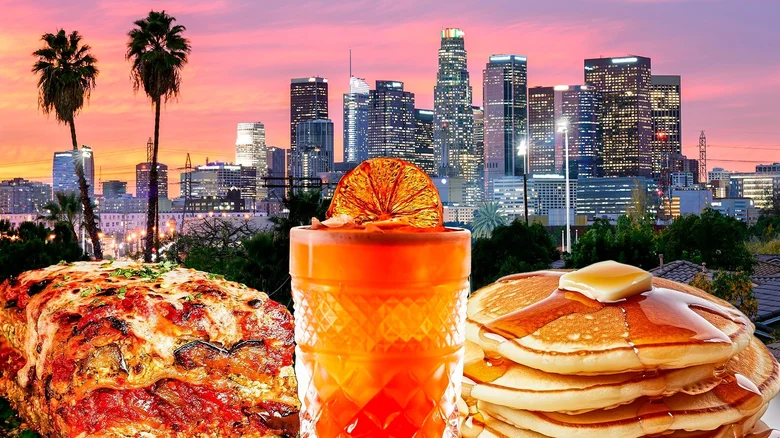
Los Angeles is, right now, one of the top five restaurant cities in the world. The reasons are structural: year-round access to California’s extraordinary agricultural abundance, a massive immigrant population that has built deeply authentic food cultures across every imaginable cuisine, and sufficient cultural capital to attract the world’s best chefs. Eating here is not a background activity.
Must-Try Dishes and Foods
- Birria tacos — Slow-braised beef (or goat) packed into corn tortillas, with a rich consommé for dipping. The best versions are at Teddy’s Red Tacos in Hollywood or Burritos La Palma in South Gate.
- Korean barbecue — Koreatown’s KBBQ scene is the best outside Seoul. Park’s BBQ on Vermont is the gold standard.
- The “fancy taco” — LA invented the upscale taco. Broken Spanish and Sonoratown represent the best of different ends of the spectrum.
- Persian food — The Tehrangeles community (the largest Iranian diaspora outside Iran) has made Westwood Boulevard a Persian food corridor unlike anywhere else in America. Attari Sandwich Shop for breakfast; Shiraz for dinner.
- Bánh mì and Vietnamese — Little Saigon in Chinatown and the San Gabriel Valley have Vietnamese and Chinese food that rivals what you’d find in Vietnam and mainland China.
- The Eggslut sandwich — Grand Central Market’s most-Instagrammed item. A coddled egg set in potato purée, soft-boiled, served in a brioche bun with chive crème fraîche. Worth the line.
- Smash burgers — Burgerlords in Chinatown; Goldburger in Glendale. The LA smash burger scene is thriving.
Budget Dining (Under $20/person)
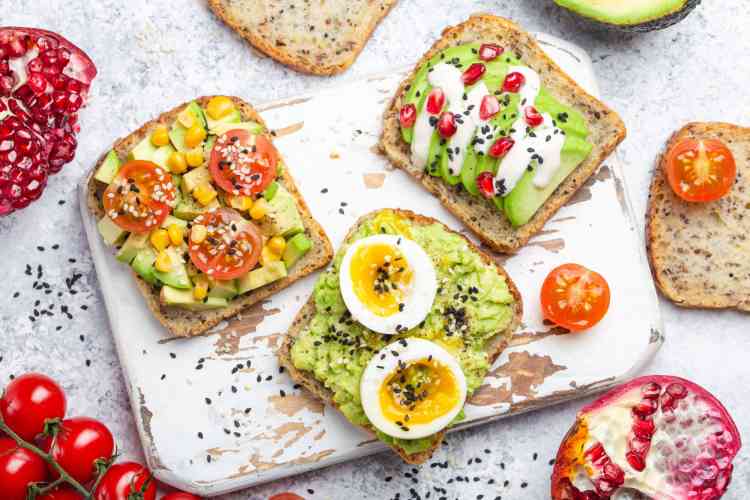
Grand Central Market (317 S Broadway, DTLA) — Open 8 AM–10 PM daily. Been feeding Angelenos since 1917. Eggslut for breakfast ($10–16), Ramen Hood for lunch ($14–18), Sticky Rice for Thai ($12–15). Go hungry; share dishes from multiple stalls.
Mae Malai (Strip mall, Mid-City) — A zero-frills Thai restaurant where the dry tom yum noodles are considered among the best Thai food in Los Angeles. Cash-only. Lines out the door on weekends.
Guerrilla Tacos (Multiple locations, food truck, and brick-and-mortar) — Chef Wes Avila trained under Alain Ducasse in Paris. His tacos apply that technique to the taqueria format. The sweet potato taco with almond chile salsa is a signature.
Ramen Tatsunoya (Hollywood) — A Japanese ramen chain (Fukuoka-style tonkotsu) that regularly draws hour-long queues. The extra-rich broth is the real thing.
Mid-Range Dining ($25–$80/person)
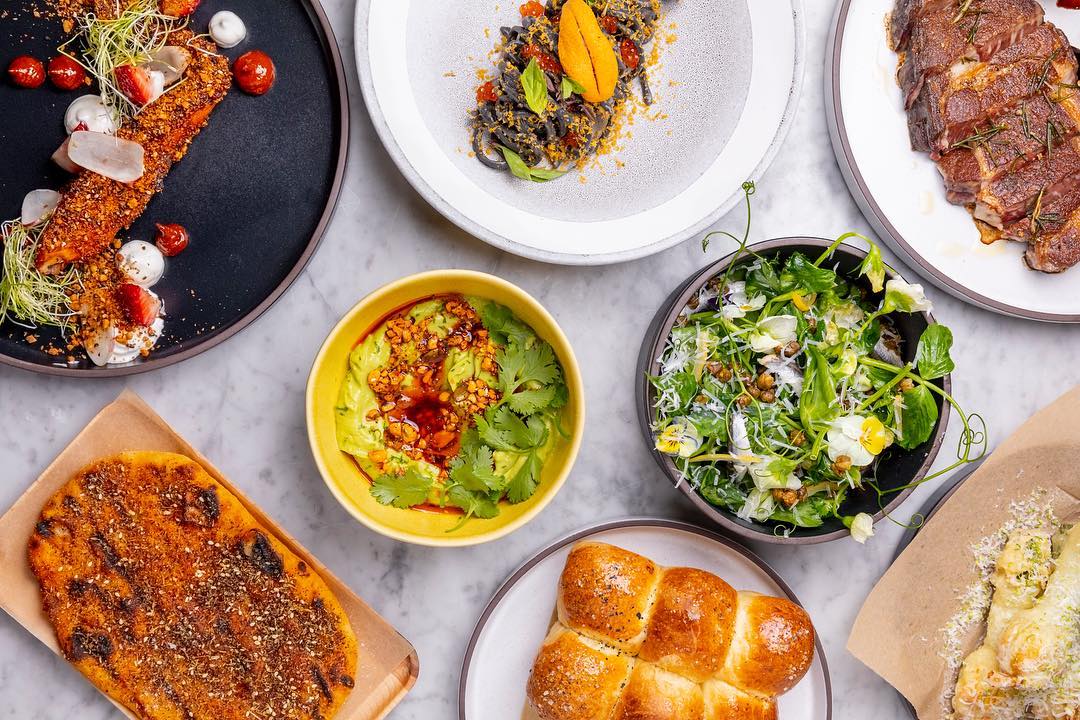
Bestia (2121 E 7th Pl, Arts District) — Chef Ori Menashe’s Italian-inflected menu in a converted warehouse. The house-made charcuterie and pasta are the moves. Book 6–8 weeks ahead; reservations release on a rolling 60-day window at midnight.
https://dynamic-media-cdn.tripadvisor.com/media/photo-o/2a/c0/75/18/caption.jpg
n/soto (Washington Blvd, Culver City) — The more accessible sibling of n/naka, from Michelin-starred chefs Niki Nakayama and Carole Iida-Nakayama. Japanese classics reimagined with technical precision and warmth. The chawanmushi is exceptional.
République (624 S La Brea Ave, Mid-Wilshire) — A former Charlie Chaplin studio space repurposed into one of LA’s finest all-day bistros. Walter and Margarita Manzke have built something that works as well for a weekday breakfast as a Friday night dinner. The Saturday morning pastry selection is a religious experience.
Anajak Thai (Van Nuys) — Opened by chef Justin Pichetrungsi, who took over his father’s neighborhood Thai restaurant and turned it into one of the most talked-about tables in the city. Natural wine. Unexpected Thai-ish cooking. Perpetually booked.
Fine Dining ($100+/person)
Providence (5955 Melrose Ave, Hollywood) — In 2025, chef Michael Cimarusti became one of the few American chefs to earn a third Michelin star. The tasting menu (~$375) is built around the finest West Coast seafood: Santa Barbara spot prawns, Washington steelhead trout, and golden eye snapper from Japan. The rooftop garden and beehives supply herbs and honey. This is a serious, special occasion restaurant.
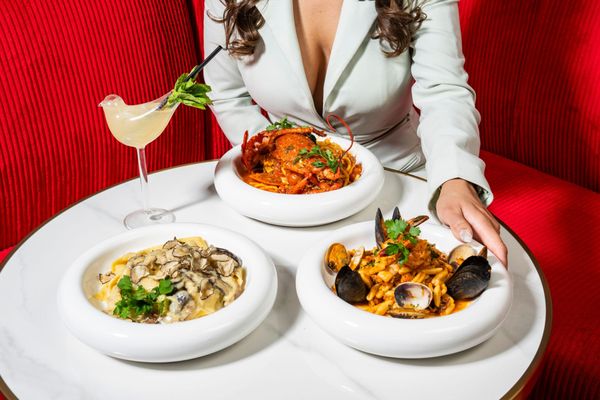
n/naka (3455 Overland Ave, Palms) — The Michelin two-star kaiseki experience from Niki Nakayama. Getting a reservation is genuinely lottery-like — check the website repeatedly. Worth every effort.
Lucia on Fairfax (Fairfax Ave, West Hollywood) — Caribbean-inspired fine dining in a 118-seat room with soaring ceilings and a palm-tree-shaped bar. The coconut fried chicken, plantains, and okra martini are remarkable. One of the most exciting new restaurants in the country.
88 Club (Beverly Hills) — Chef Mei Lin’s return to fine dining, combining Michigan nostalgia with Hong Kong banquet culture. The jade-lacquered walls, the caviar-topped sesame prawn toasts, and the mung bean jelly noodles are all extraordinary.
Market Recommendations
The Original Farmers Market (6333 W 3rd St, Mid-Wilshire) — Operating since 1934 near The Grove. Not a “farmers market” in the modern sense — more of a permanent outdoor food court with a handful of produce vendors. Great for a casual lunch; try Bob’s Coffee & Doughnuts for the city’s best old-fashioned doughnut.
Smorgasburg LA (Saturdays, 10 AM–4 PM, Row DTLA) — LA’s outdoor food market draws 40+ local food vendors every Saturday. It’s the place to find emerging food concepts before they become restaurants.
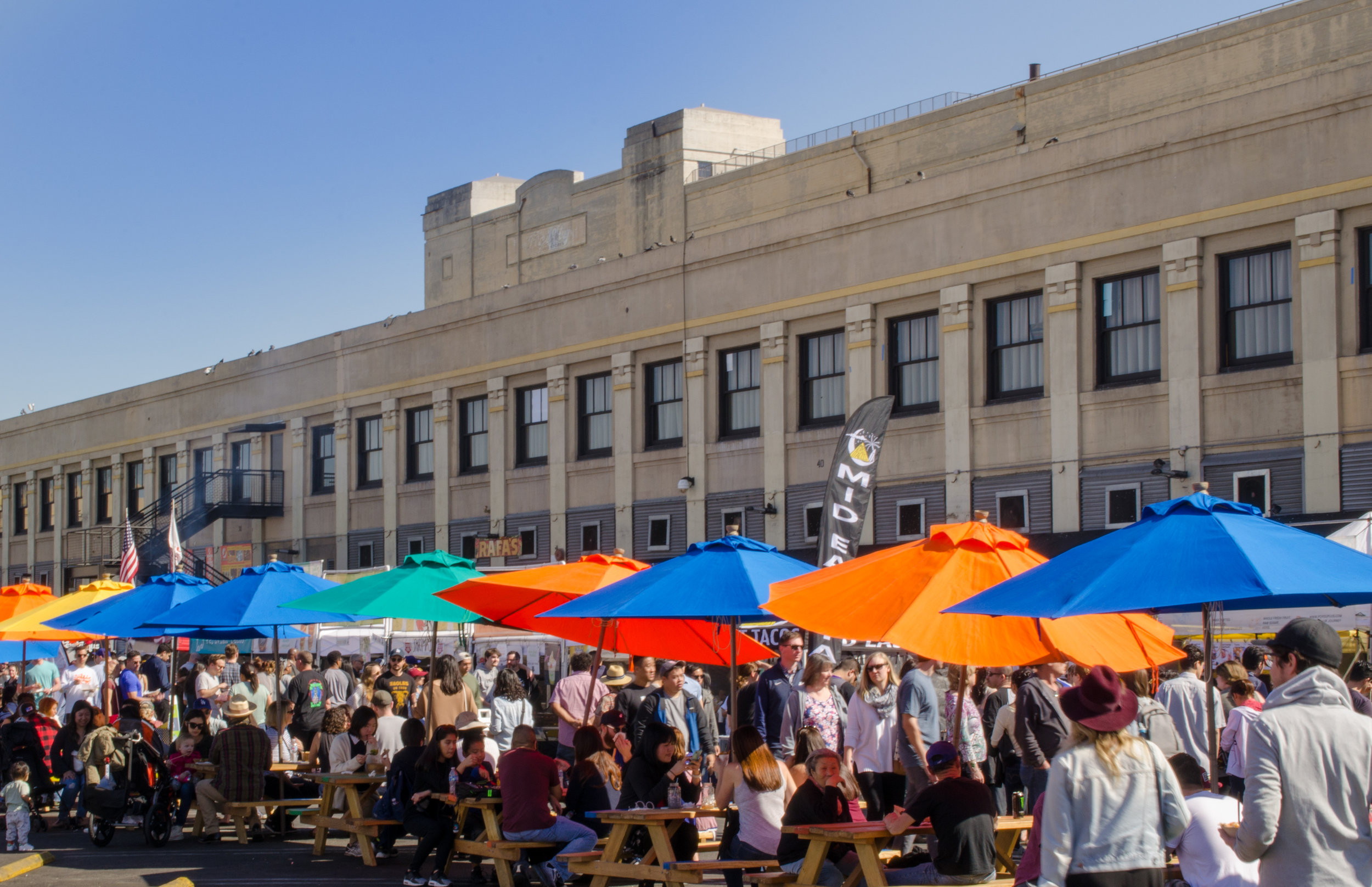
Grand Central Market (see above) — The gold standard for all-day market eating.
Accommodation
Budget (Under $100/night)
Freehand Los Angeles (416 W 8th St, DTLA) — The best budget accommodation in the city, full stop. Designed by Roman & Williams, it offers both dorm beds and private rooms, a rooftop pool, a great bar (Broken Shaker), and an Arts District location. Private rooms start at $80–100; dorm beds at $40. Best for: solo travelers, digital nomads, creative types.
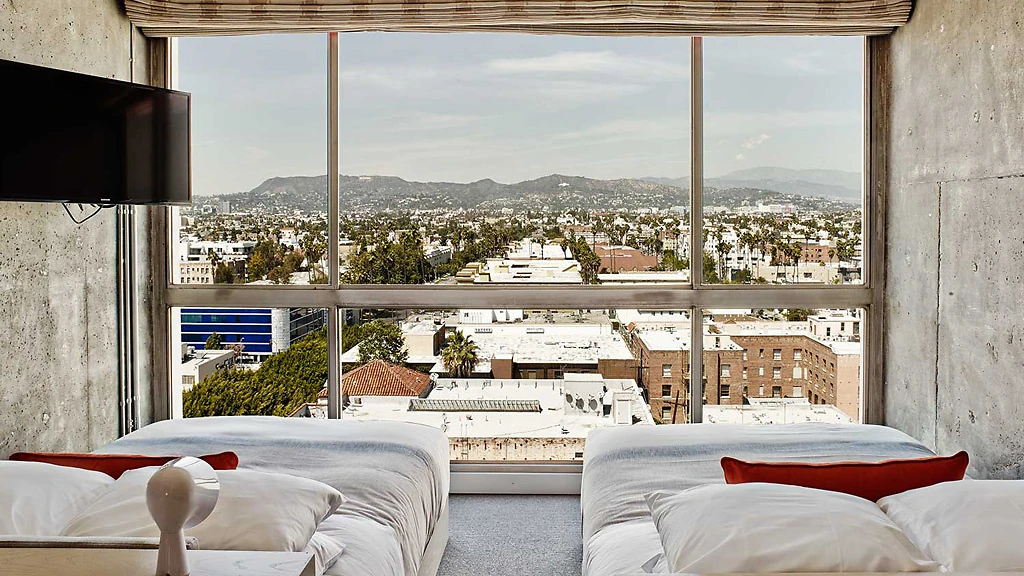
HI Los Angeles Santa Monica Hostel (1436 2nd St, Santa Monica) — Two blocks from the beach, walking distance to the pier and Third Street Promenade. Private and dorm rooms available. It consistently ranks among the best-reviewed hostels in California. Best for: beach-focused travelers on a budget.
PodShare DTLA (Little Tokyo/Arts District area) — Community-driven, designed for digital nomads. Shared pods with built-in workspaces, strong Wi-Fi, and access to a network of other LA PodShare locations. Best for: solo travelers, remote workers.
Mid-Range ($100–$300/night)
The LINE Hotel (3515 Wilshire Blvd, Koreatown) — A design-forward mid-century building with floor-to-ceiling windows, a great on-site Korean-American restaurant (POT), and a rooftop pool. Koreatown is central to everything and massively underrated as a base. Stay here for nightlife, Korean food, and central access to DTLA and Hollywood.
Hotel Covell (4626 Hollywood Blvd, Los Feliz) — Nine rooms above the beloved wine bar Bar Covell. Each room is individually curated with record players, reading nooks, Smeg fridges stocked with local goods, and clawfoot tubs. This is the most personal boutique stay in the city. Stay here for: a romantic escape, wine lovers, and those who prioritize character over amenities.

The Hoxton, DTLA (1060 S Broadway, Arts District) — The London boutique chain’s LA outpost in the Arts District, with an excellent lobby restaurant and a social atmosphere. Walking distance to Grand Central Market, The Broad, and Disney Hall. Stay here for: first-time visitors who want DTLA access without sacrificing design.
Palihotel Hollywood (6161 Franklin Ave, Hollywood) — Vintage-coded interiors, a heated outdoor pool, and walkable access to the Walk of Fame and Griffith Observatory. Strong value for the Hollywood corridor. Stay here for sightseeing-focused itineraries, first-timers.
Luxury ($300+/night)
Hotel Bel-Air (701 Stone Canyon Rd, Bel-Air) — Dating to the 1940s, this is old Hollywood glamour at its purest: 60 acres of private gardens, a hidden grotto, swans on a lake, and 103 rooms where no two are alike. Grace Kelly had a suite named after her. Marilyn Monroe’s last photoshoot was here. Stay here for honeymoons, milestone anniversaries, when money is genuinely no object.
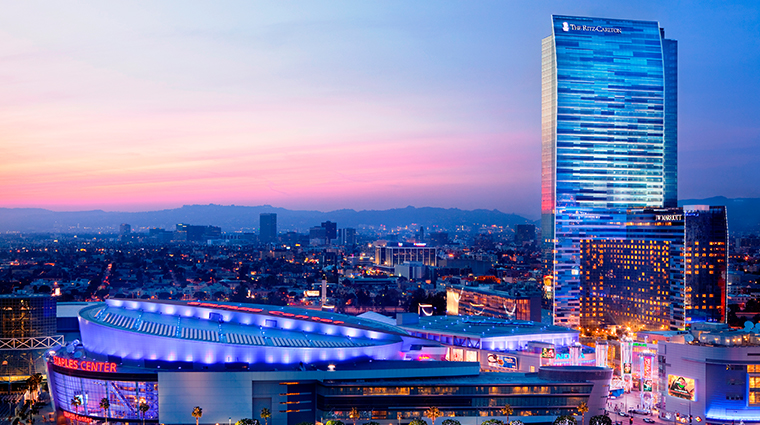
Andaz West Hollywood (8401 Sunset Blvd, West Hollywood) — Hyatt’s upscale lifestyle brand on the Sunset Strip, with a rooftop pool, spacious modern rooms, and on-site dining. Walking distance to the Troubadour, Chateau Marmont, and the best of WeHo’s restaurant scene. Stay here for: music lovers, nightlife, Sunset Strip access.
Waldorf Astoria Beverly Hills (9850 Wilshire Blvd, Beverly Hills) — The newest and most modern of Beverly Hills’ luxury hotels, with a rooftop restaurant and pool that delivers the quintessential Beverly Hills experience. Stay here for: the Beverly Hills fantasy, Rodeo Drive access, and special occasions.
Casamigos Note: For World Cup 2026 (July–August), book luxury accommodation 6–9 months in advance. Demand will be historic.
Transportation
Getting to Los Angeles
By Air: Los Angeles International Airport (LAX) is the primary gateway. It’s one of the busiest airports in the world and can be chaotic — budget an extra 30–45 minutes for the internal shuttles between terminals. From LAX, your options are:
- FlyAway Bus to Union Station (DTLA): $9.75, runs every 30 minutes. Best value for travelers heading downtown.
- Rideshare (Uber/Lyft): Approximately $35–60 to Hollywood/DTLA; $60–90 to Santa Monica, depending on traffic and time of day.
- Metro C Line (Green Line): Connects to the Metro Rail system via Crenshaw Station ($1.75). Takes longer but is very cheap.
Closer Airports: Burbank (BUR) is far more convenient for Hollywood and the Valley. Long Beach (LGB) serves the South Bay. Ontario (ONT) serves the Inland Empire.

Getting Around Los Angeles
The honest answer: You will likely need a car for some portion of your visit. The city is 503 square miles and built around the automobile. That said, a car-free visit is more feasible than it used to be.
Metro Rail & Bus — The TAP card (tap.ca.gov) is your access to the Metro system. Single ride: $1.75. Day pass: $7. Key lines:
- B Line (Red): Hollywood to DTLA (Union Station)
- D Line (Purple): Koreatown, Wilshire Corridor to DTLA
- E Line (Expo): DTLA to Culver City to Santa Monica
- A Line (Blue): DTLA to Long Beach
Bike Share (Metro Bike Share): Stations throughout DTLA, Koreatown, and South LA. The coastal bike path (Santa Monica to Venice) is car-free and stunning. Day pass ~$5.
Rideshare (Uber/Lyft): The practical choice for most visitors, especially at night and for cross-city trips. Budget $20–40 for most cross-neighborhood rides.
Driving: If you rent a car, use Waze (not Google Maps) — Angelenos swear by it for real-time traffic routing. Avoid peak rush hours (7–9 AM and 4–7 PM weekdays). Parking is available in most places, but can be expensive downtown ($15–35/day in garages). Many restaurants offer validated parking.
Events & Festivals
Rose Parade (January 1)
Every New Year’s Day since 1890, Colorado Boulevard in Pasadena fills with elaborate floral floats, marching bands, and equestrian units along a 5.5-mile route. The floats are entirely covered in flowers and natural materials — no artificial decorations allowed — which means they smell as extraordinary as they look. <br> How to experience it: Reserved grandstand seats sell out early; the free sidewalk spots along the route fill by 6 AM. The day before (January 31), floats are on display in the staging area for a close-up view. The Rose Bowl Game follows in the afternoon.

Academy Awards (March, Oscars Week)
The Oscars ceremony itself is an industry event held at the Dolby Theatre in Hollywood. Getting tickets requires industry connections. But being in LA during Oscars week is its own experience: the city buzzes with screenings, parties, and the full pageant of Hollywood self-regard along Hollywood Boulevard. The Film Independent Spirit Awards, held in a tent on Santa Monica Beach the day before the Oscars, are ticketed and more accessible — and often more interesting.

LA Times Festival of Books (Late April, USC Campus)
The largest book festival in the United States, drawing 150,000+ visitors over two days. Author panels, book signings, publisher exhibitions, and conversations across fiction, nonfiction, food, culture, and film. Free admission; individual events are ticketed. The USC campus provides a genuinely beautiful setting for wandering between stages.
Shopping
Melrose Avenue (West Hollywood to Fairfax)
The stretch from Fairfax to La Cienega is where LA’s vintage, streetwear, and independent boutique culture lives. Decades (vintage designer), Wasteland (high-quality second-hand), and the vintage stores clustered around Fairfax and Melrose are the real draw. The streetwear stores on the Fairfax block (Supreme, Undefeated, Kith) draw collectors from around the world.

The Grove & Original Farmers Market (3rd & Fairfax)
The Grove is LA’s most successful outdoor mall — a stylishly designed promenade with the major brands alongside independent restaurants. The real reason to come is the adjacent Original Farmers Market (since 1934), where you can shop for local produce, hot sauces, specialty foods, and crafts that don’t exist at the chain retailers next door.

Abbot Kinney Boulevard (Venice)
Boutiques, independent bookstores, home goods, and design shops in a walkable beach-adjacent setting. Heist for luxury consignment. Tumbleweed & Dandelion for Californian home goods. Salt & Straw for the best ice cream on the West Coast.
Rodeo Drive (Beverly Hills)
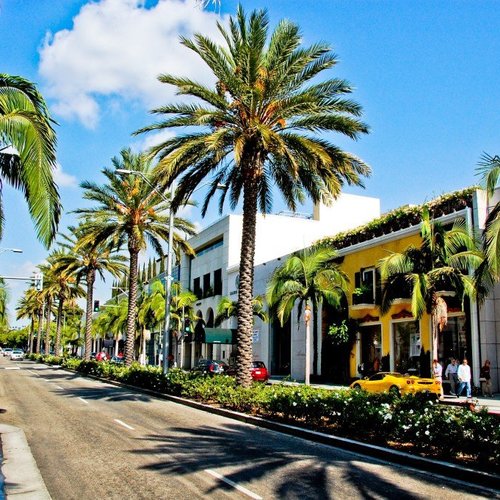
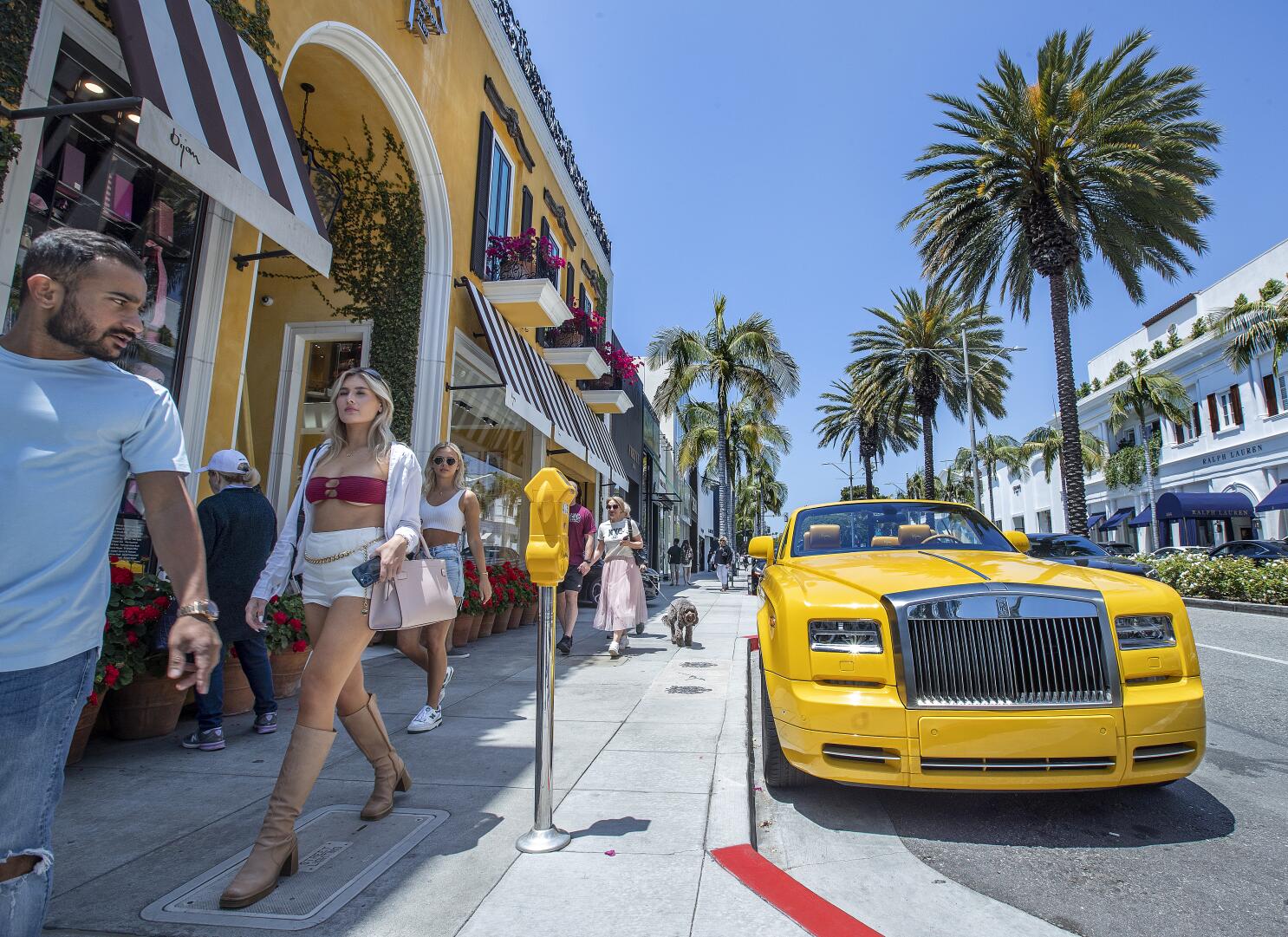
You know it from the movies. The reality is three blocks of Chanel, Gucci, Louis Vuitton, and Bulgari with impeccable window displays and the faint aroma of anxiety and Amex Black cards. Worth a walk even if you’re not buying; Beverly Hills itself is a pleasant neighborhood with excellent restaurants on Canon Drive.
Best Souvenirs
- A bottle of Rancho La Puerta hot sauce or local California olive oil from the Farmers Market
- Vintage movie posters from Larry Edmonds Bookshop (Hollywood Boulevard)
- A taqueria t-shirt from Guisados or Guerrilla Tacos — legitimately beloved local institutions
- Ceramics from Heath Ceramics in Culver City — the Sausalito-based California ceramics brand that defined mid-century California design
- Local art print from Subliminal Projects (Fairfax) — Shepard Fairey’s gallery and store
Practical Info
Visa
US visa requirements vary by country. Citizens of Visa Waiver Program countries (including the UK, EU nations, Japan, South Korea, and Australia) can enter the U.S. for up to 90 days with ESTA approval (apply at esta.cbp.dhs.gov; fee: $21). Check current requirements at travel.state.gov.
Currency
US Dollar (USD). ATMs are everywhere. Credit cards are accepted almost universally; contactless payments (Apple Pay, Google Pay) are widely accepted. Tip: Use ATMs inside banks rather than standalone ATMs to avoid high fees.
Language
English is the primary language. Spanish is a functional second language across most of the city. In neighborhoods like Koreatown, Chinatown, Little Tokyo, and Tehrangeles (Westwood), many business operators speak local languages.
Safety
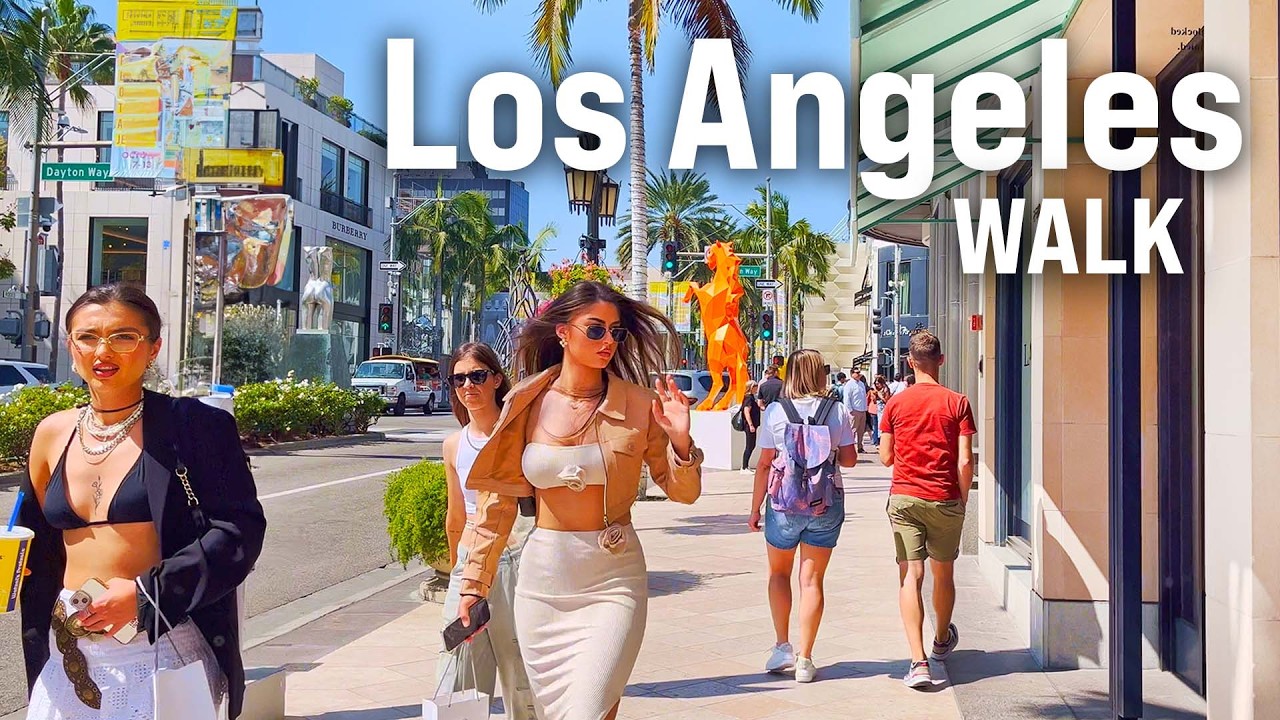
Los Angeles has uneven safety by neighborhood. Areas that are generally safe for tourists: Santa Monica, West Hollywood, Beverly Hills, Brentwood, Silver Lake, Los Feliz, Arts District, and the Hollywood core. Areas that require greater awareness at night: parts of Downtown LA (particularly Skid Row, a humanitarian crisis zone), parts of Inglewood. Standard urban travel precautions apply: be aware of your surroundings, don’t leave valuables in cars (car break-ins are a genuine problem — leave nothing visible in your parked car), and use rideshare at night in unfamiliar areas.
Emergency Services
Police/Fire/Medical: 911. Non-emergency LAPD line: (877) 275-5273.
Etiquette
Tipping culture: LA operates on a robust tipping culture. Standard tips:
- Restaurants (sit-down): 18–22% on the pre-tax total; 25% is generous and appreciated
- Coffee shops/counter service: 10–15% is common (the tablet will suggest more — you can tap “no tip” without shame)
- Rideshare: 15–20% for good service
- Hotel housekeeping: $3–5/night, left on the pillow or with a note
Driving etiquette: Angelenos take their traffic seriously. Merge late but cleanly. Don’t block intersections during a red light (the “box” law is enforced). Turn signals are considered optional by locals but appreciated by the universe.
Beach etiquette: Dogs are allowed on some beaches (Venice and Malibu state beaches have dog-friendly sections) but banned from most Santa Monica and Malibu stretches. Don’t park in private lots near the beach unless posted. The strand path (for bikes and boards) runs parallel to the beach — walking on it will earn you a bell and, if you’re slow about it, a colorful response.
Hollywood politeness: The costumed characters on Hollywood Boulevard (Spider-Man, Jack Sparrow, etc.) expect tips if you photograph with them ($1–5). This is their livelihood, and they’re upfront about it.
Restaurant reservations: In LA’s current dining culture, reservations are essential for any notable restaurant. Resy and Tock are the primary platforms. Plan 4–6 weeks ahead for popular mid-range spots; 6–8 weeks for top-tier restaurants; and for n/naka, Providence, or Kato, check obsessively.
Packing List
Year-Round Essentials
- Sunscreen, SPF 50+ — The UV index is high year-round. Non-negotiable.
- Comfortable walking shoes — Neighborhoods like Silver Lake, Abbot Kinney, and DTLA require serious walking.
- Light layers — Coastal evenings cool significantly even in summer. A light jacket or cardigan is always needed.
- Reusable water bottle — Tap water in LA is safe to drink. Staying hydrated in a dry climate is important.
Spring/Fall Additions
- Light raincoat or packable umbrella (spring rainy season through March)
- Sunglasses and a sun hat for outdoor sightseeing
Summer Additions
- Breathable, lightweight clothing for inland areas (heat in the Valley can be intense)
- Swimwear for beaches and hotel pools
- After-swim layer (beach evenings with marine layer can be 60°F/15°C in June)
Winter Additions
- A proper jacket — temps drop to the low 50s°F (~10°C) at night, especially inland
- A rain layer for the brief winter rainy season
Itineraries
2-Day Los Angeles: The Greatest Hits
Logistical Note: Base yourself in Hollywood or West Hollywood for maximum efficiency.
Day 1: Hollywood, Griffith, and the Westside
7:30 AM — Breakfast at Sqirl (Silver Lake) or grab pastries from a Hollywood-adjacent bakery. Eat light; it’s a big day.
9:00 AM — Griffith Observatory. Arrive when it opens to avoid the midday crush. Walk the trails to get close to the Hollywood Sign — the 3.4-mile round trip from the Hollyridge Trail takes about 1.5 hours and brings you within 50 feet of the sign. Alternatively, drive up to the Griffith Observatory and admire it from the hillside.
11:30 AM — Drive or rideshare west to The Getty Center. Book parking or take the Big Blue Bus from Santa Monica. Spend 2–3 hours with the collection and Central Garden.
2:30 PM — Head down to Santa Monica. Walk the Pier, grab lunch at the Promenade, and rent a bike for the coastal path to Venice.
5:00 PM — Abbot Kinney Boulevard for shopping and the early evening crowd.
7:30 PM — Dinner at Gjelina (Abbot Kinney) or Gjusta for a more casual grab-and-go.
Evening — Drive back along Sunset Boulevard to West Hollywood. Stop at the Chateau Marmont bar for a nightcap if your budget allows.
Day 2: Downtown LA and Cultural Core
8:30 AM — Grand Central Market for breakfast (Eggslut or Ramen Hood, depending on your mood).
10:00 AM — Walk to The Broad Museum (reserve tickets in advance). Spend 1.5–2 hours.
12:00 PM — Walk to Disney Concert Hall (free self-guided tours of the exterior and public spaces). The Frank Gehry building is worth 30 minutes of your time.

1:00 PM — Lunch in the Arts District. Head to Bestia if you have a reservation, or try the casual spots around ROW DTLA.
3:00 PM — LACMA (photograph Urban Light in daylight, then return at blue hour). Walk through the Impressionist galleries.
5:30 PM — Return to Urban Light for sunset-blue-hour photography.
7:00 PM — Dinner on Melrose Avenue or at République for a special meal.
4-Day Los Angeles: Depth and Neighborhoods
Days 1–2: Follow the 2-day itinerary above.
Day 3: Hollywood History + Koreatown + DTLA Night
9:00 AM — Warner Bros. Studio Tour in Burbank (3 hours). Book in advance.
1:00 PM — Lunch in the San Fernando Valley near Burbank, or drive south to Koreatown.
3:00 PM — Koreatown exploration. Walk around Wilshire and Vermont. Visit the Korean Cultural Center (free). Browse the Koreatown Galleria food hall.
6:00 PM — Korean BBQ dinner at Park’s BBQ or Quarters Korean BBQ. Order the prime short rib (kalbi) and a bottle of soju.

9:00 PM — Koreatown karaoke at a noraeban (private room karaoke). This is a genuine rite of passage. Book a room; order beer and bar snacks; sing badly and without shame.
Day 4: Exposition Park + Eastside
9:00 AM — Natural History Museum (Exposition Park). Two hours minimum.
11:30 AM — Walk to the California Science Center to see the Space Shuttle Endeavor displayed vertically. Stop at the Rose Garden.
1:30 PM — Drive east to the Arts District. Walk the street art murals around 6th Street and Santa Fe Avenue. Browse the Hauser & Wirth gallery (free).
3:30 PM — Head to Little Tokyo. Walk the Japanese Village Plaza, visit the Japanese American National Museum ($10 entry).
5:30 PM — The Last Bookstore on Spring Street for an hour of exploration.
7:30 PM — Dinner at Sonoratown (some of the city’s best flour tortilla tacos) or at Broken Spanish for chef Ray Garcia’s elevated Mexican cooking.
7-Day Los Angeles: The Full Picture
Days 1–4: Follow the 4-day itinerary.
Day 5: Malibu & Pacific Coast Highway
8:00 AM — Drive north on PCH from Santa Monica. Stop at Will Rogers State Beach (locals’ favorite, rarely crowded).
10:00 AM — Continue to Malibu. Spend the morning at El Matador State Beach — three sea caves and sea stacks that feel unlike anywhere else in California. Arrive early; the parking lot is tiny (25 spaces, $8/day).

12:30 PM — Lunch at Malibu Farm at the Malibu Pier (mid-range, California coastal cuisine).
2:30 PM — Visit the Getty Villa (Pacific Palisades, just south of Malibu). Greek and Roman antiquities in a recreated Roman country villa. Free admission; parking is $25 or arrive by Big Blue Bus. Book timed-entry tickets in advance.
5:30 PM — Drive back on PCH at sunset. There is nothing better.
Day 6: Pasadena & Northeast LA
9:00 AM — Drive to Pasadena (30–45 minutes from Hollywood). Walk Colorado Boulevard. Visit the Norton Simon Museum (exceptional Impressionist and South Asian art collection, $20 entry) or the Huntington Library, Art Museum & Botanical Gardens ($35 entry, book in advance).

1:00 PM — Lunch in Old Town Pasadena. The strip along Colorado has multiple good options; try Pie ‘n Burger (since 1963) for an unpretentious classic.
3:00 PM — Drive back through Highland Park (Figueroa Street), LA’s most interesting emerging neighborhood. Stop at Gold Line Coffee, browse the record stores, and the vintage shops.
5:30 PM — Eagle Rock for dinner. Tacos 1986 for some of the city’s most acclaimed birria, or Larkin’s if you want something more polished.
Day 7: Beverly Hills, Museum Mile, and a Great Dinner
9:30 AM — Rodeo Drive walk and coffee in Beverly Hills. Window shop; the architecture is genuinely interesting, even if the prices are not for you.
11:00 AM — LACMA (more time with the collection than Day 1 allowed).
1:30 PM — Lunch on La Brea Avenue — the strip between 3rd and Beverly has excellent options.
3:00 PM — Melrose Avenue vintage shopping from Fairfax to La Cienega.
5:00 PM — Original Farmers Market for local shopping, last-minute souvenirs, and a pre-dinner snack.
7:30 PM — Special dinner. This is your last night — book somewhere that represents the best of LA to you. Providence for the full Michelin experience. Bestia for the convivial Arts District scene. N/Soto for Japanese precision. Or, honestly, a great taco truck, because LA earns its taco trucks.
Final Note: The LA Mindset
Los Angeles will disappoint you if you come looking for the postcard. The Hollywood Walk of Fame is underwhelming. The traffic is real. The sprawl is disorienting. The gap between spectacular wealth and visible poverty is jarring.
But if you come curious, willing to drive 20 minutes off the tourist path for a bowl of noodles someone’s grandmother has been making for 40 years, or to watch the city light up from a hillside trail at sunset, Los Angeles will give you more than almost any city on the planet.
The trick is knowing that the city isn’t a backdrop. It’s the subject.
Last updated: April 2026. Entry fees, hours, and restaurant details change frequently — always verify directly with the venue before visiting.
Also explore Lisbon and Lauterbrunnen