

 Start Driving in Lauterbrunnen
Lauterbrunnen, un pintoresco pueblo situado en los Alpes suizos, es un destino turistico de ensueno conocido por sus impresionantes cascadas, sus paisajes de montana y su encanto alpino. Situado en un valle rodeado de imponentes acantilados, Lauterbrunnen ofrece vistas espectaculares de los picos nevados y los verdes prados alpinos. La cascada de Staubbach, una de las mas altas de Suiza, y las cascadas de Trummelbach, un conjunto de diez cascadas glaciares, son atracciones naturales impresionantes. El pueblo es un punto de partida ideal para realizar senderismo, esqui y otras actividades al aire libre. La region de Jungfrau, con sus famosos picos como el Jungfraujoch, el Monch y el Eiger, ofrece oportunidades ilimitadas para los amantes de la montana. Lauterbrunnen conserva su encanto tradicional suizo, con casas de madera, tiendas de artesania y restaurantes acogedores. El pueblo es un lugar tranquilo y relajante, ideal para desconectar de la rutina y disfrutar de la naturaleza. El sistema de transporte publico de Lauterbrunnen, que incluye trenes y autobuses, facilita el desplazamiento por el valle y sus alrededores. El clima alpino de Lauterbrunnen, con veranos frescos e inviernos nevados, lo convierte en un destino atractivo durante todo el ano. La moneda es el franco suizo (CHF), y el aleman es el idioma principal. Los mejores momentos para visitarlo son durante los meses de verano, para realizar senderismo y actividades al aire libre, y durante los meses de invierno, para practicar esqui y deportes de invierno.
Lauterbrunnen: Where the Earth Opens Up
The definitive insider’s guide to Switzerland’s most dramatic valley: 72 waterfalls, car-free mountain villages, and the sky-scraping “Top of Europe.”
Stand at the edge of the valley and watch seven separate waterfalls fall simultaneously off the same cliff. You will understand, immediately, why J.R.R. Tolkien visited and later admitted the landscape haunted him for decades.
The name says it all: Lauter Brunnen means “loud springs” in Swiss German, and when you’re standing in this U-shaped glacial valley with water crashing off 300-meter walls of limestone on three sides, the acoustics feel almost confrontational. This is not a place that whispers. It roars.
Lauterbrunnen sits in the canton of Bern, carved by a retreating glacier into one of the most dramatically sheer valleys in the Alps. The village itself has a single main street, a church, a train station, and enough cowbells to score a film. But it punches absurdly above its weight as the gateway to some of the most celebrated mountain terrain in Europe: the Jungfraujoch at 3,454 meters, the car-free clifftop villages of Mürren and Wengen, and the James Bond mountain of Schilthorn.
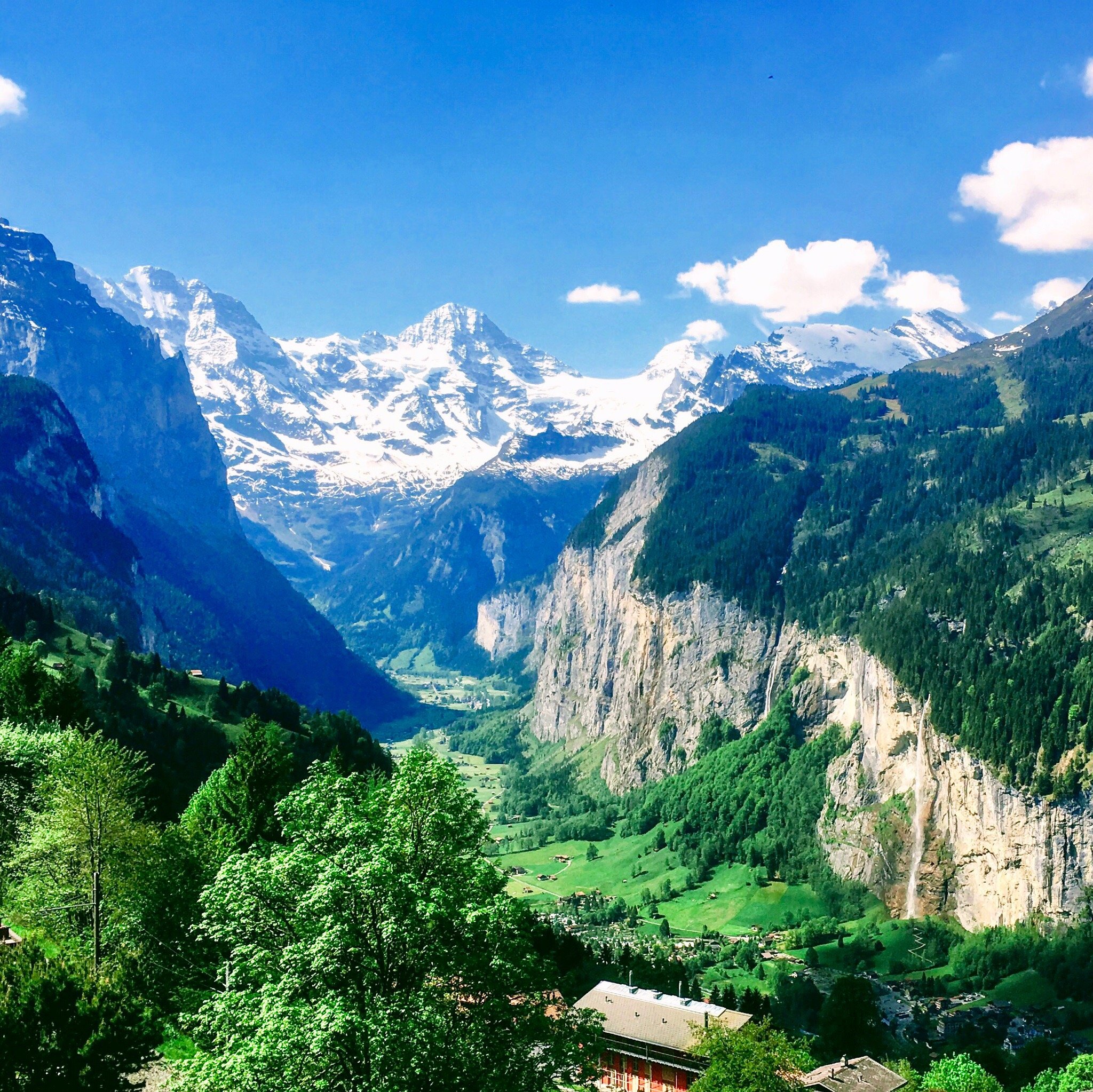
The valley’s DNA is elemental. This is a place where the light changes every ten minutes, where morning fog fills the gorge like milk in a bowl, and where afternoon sun turns the waterfalls into silver threads against dark granite. It draws hikers, BASE jumpers (Lauterbrunnen is widely considered the BASE jumping capital of the world), photographers, ski mountaineers, and a growing contingent of people who simply sit on their hotel balcony and stare.
Understanding Lauterbrunnen means understanding its layered geography: the valley floor (the village and the road to Stechelberg), the first bench above (Wengen on the sunny east, Mürren on the wilder west), and the high peaks above both. Planning your days around these three tiers is the difference between a good trip and an extraordinary one.
Best Months to Visit
Lauterbrunnen operates in two distinct personalities: the lush, thundering summer and the powder-quiet winter. Both have genuine arguments. Here’s how the calendar breaks down:
June – August — ★★★★★ Peak Season
Waterfalls are at full volume from snowmelt. All trails, cable cars, and attractions are open. Wildflowers cover every meadow. Warm enough for shirtsleeves in the valley, brisk above 2,000m. The downside: Camping Jungfrau fills up, and sunrise spots get busy. Book accommodation at least two to three months ahead.
Late September – October — ★★★★★ The Sweet Spot
The crowds thin dramatically while the valley turns amber and rust. The Alpabzug (cattle descent) celebrations in September are one of Switzerland’s most photogenic traditions — decorated cows with flower crowns descending from the high meadows. Waterfalls are still strong, and the mountain light is extraordinary in the slanted autumn sun.

May — ★★★★ Shoulder Season
Snow still dusts higher trails. Waterfalls are swelling with spring snowmelt, often noisier than in July. Fewer crowds, lower prices. Some cable cars may still be in maintenance. Excellent for photographers who want empty paths and dramatic skies.
December – March — ★★★ Ski Season
Wengen and Mürren offer good intermediate skiing; Schilthorn has runs above 2,900m. The valley floor is moody and dark — cliffs block sunlight from November to February. Best for skiers who’ll spend most daylight hours above treeline rather than in the village.
November, April — ★★ Not Recommended
Many restaurants and mountain huts close. Unpredictable snow at altitude. Jungfraujoch is open year-round, but other infrastructure operates on reduced hours. Only visit if your plans are extremely flexible.
Weather note: The valley is notably cooler than the surrounding areas due to its depth; you can be 10°C lower than Interlaken on a sunny day. Always carry a layer. Afternoon thunderstorms are common from June through August.
Top Attractions
1. Staubbach Falls

Hours: Always accessible | Entry: Free
At 297 meters, Staubbach is one of the tallest free-falling waterfalls in Europe — a single white rope unraveling from the cliff face above the village. From the main street, it looks almost too tall to be real. What many visitors miss: there’s a path behind the falls, carved into the limestone, where the spray hits your face, and the valley floor appears beneath you like a diorama. Follow the signed trail from the church; the walk up takes about 15 minutes.
✦ Pro Tip: Come before 9 am or after 5 pm for the falls lit by angled golden light and without a tourist in frame. In summer, the spray creates a persistent rainbow from the main viewing terrace below.
2. Trümmelbach Falls
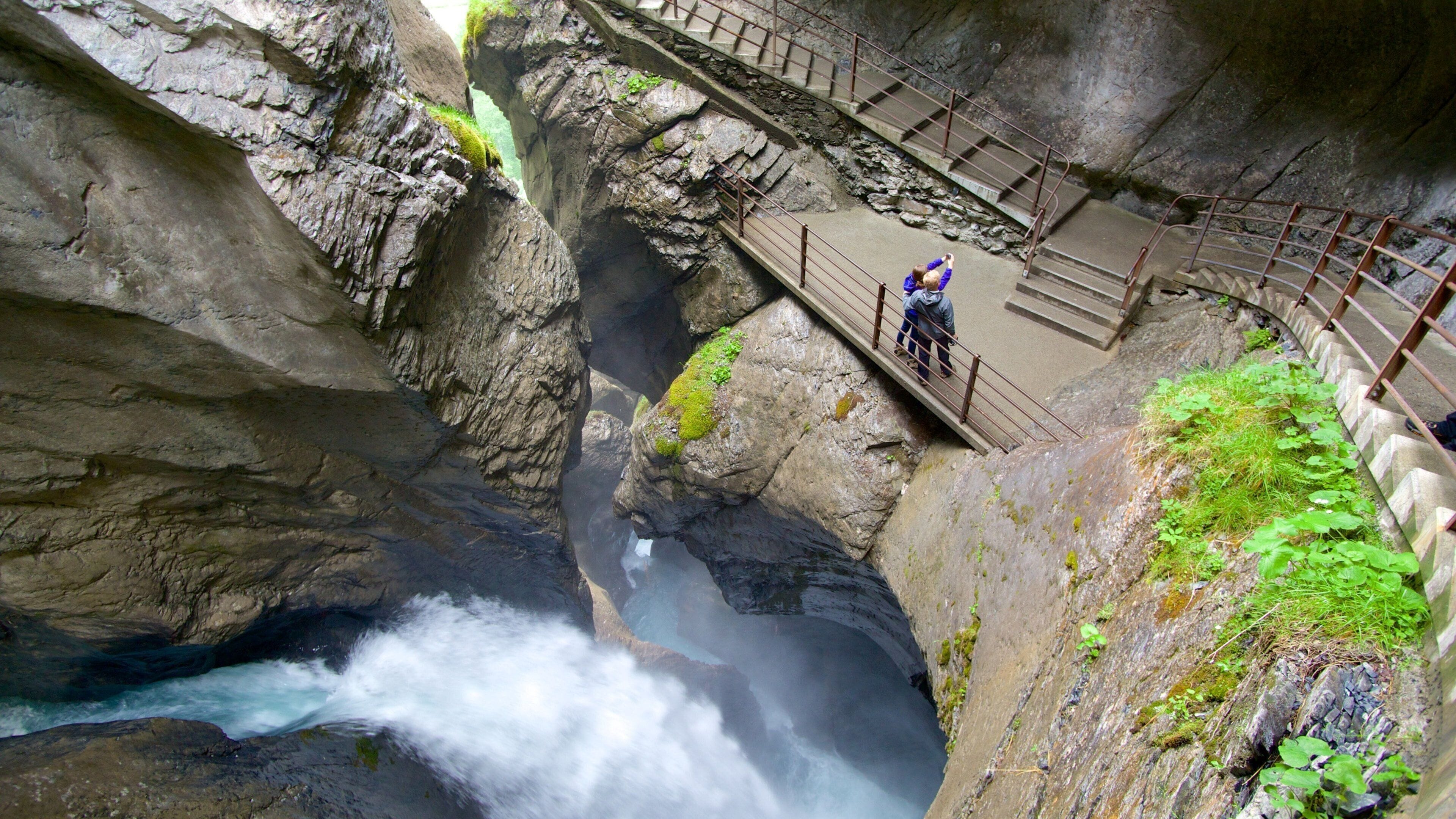
Hours: Apr–Nov, 9 am–5 pm (Jul–Aug until 6 pm) | Entry: CHF 15 adults / CHF 6 children (under 4 not permitted)
Ten glacial waterfalls fed by snowmelt from the Eiger, Mönch, and Jungfrau thunder through a spiraling canyon inside a mountain. You access them via a tunnel lift built in 1913, then descend through wet, dimly lit gorges where the sound is physically overwhelming. In high summer, up to 20,000 liters of water pass through this labyrinth every second. It is unlike anything else in Switzerland.
✦ Pro Tip: Not covered by the Swiss Travel Pass. Buy tickets online to avoid queues. Start from the top and descend — the upper chambers have the most dramatic light and the largest cascades. Budget 75–90 minutes, and wear shoes with grip as the paths are genuinely slippery.
3. Jungfraujoch — Top of Europe

Hours: Year-round, trains from ~8 am | Entry: CHF 137.60–CHF 223.20 from Lauterbrunnen (Swiss Travel Pass: ~25% off)
At 3,454 meters, Jungfraujoch is Europe’s highest railway station, and the panorama it delivers, the Great Aletsch Glacier unrolling for 23 kilometers below you, the Eiger’s north face close enough to make you nervous, is genuinely spectacular. The Ice Palace (a carved labyrinth inside the glacier), the Sphinx Observatory, and the viewing terrace are all waiting at the summit. Altitude sickness is possible; take the journey slowly and avoid sprinting up the stairs.
✦ Pro Tip: Book the earliest possible train (the “Good Morning Ticket” is cheaper and attracts smaller crowds). Sit on the right side of the train departing Lauterbrunnen for the best Alpine panorama. Bring sunglasses, the glacial glare is intense even on overcast days. Clouds descend by noon on most summer days.
4. Schilthorn & Piz Gloria
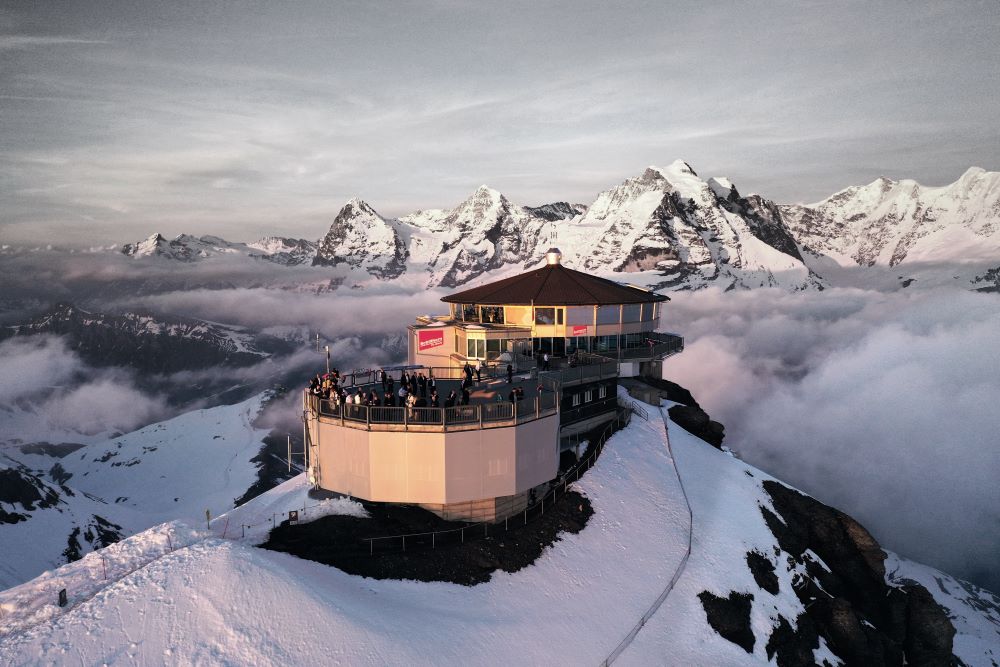
Hours: Year-round (cable car runs daily) | Entry: ~CHF 100–115 return from Mürren
At 2,970 metres, the Schilthorn’s revolving restaurant Piz Gloria — used as a filming location for On Her Majesty’s Secret Service — offers a 360-degree view of over 200 Alpine peaks. The full rotation takes about 45 minutes. Before the summit, stop at Birg Station for the Thrill Walk: a glass-bottomed catwalk that juts out over the cliff face 2,677 metres above sea level.
✦ Pro Tip: Book the Schilthorn Brunch (served until 2 pm, CHF 37/person) for the best-value meal with the most spectacular view in the region. Arrive by 10 am — clouds build fast on the summit, and by early afternoon, the panorama is frequently obscured.
5. Männlichen & the Panorama Walk

Hours: May–Oct, cable car from Wengen | Entry: CHF 45–60 return from Wengen
Männlichen sits at 2,230 meters on the ridge between the Lauterbrunnen and Grindelwald valleys. The panoramic walk from Männlichen to Kleine Scheidegg (about 90 minutes, almost entirely flat) offers uninterrupted views of the Eiger’s fearsome north face the entire way. The cable car from Wengen also offers a “Royal Ride” option where you ride on top of the gondola in the open air for CHF 5 extra — unforgettable for the brave.
✦ Pro Tip: Do this walk in the early morning. The Eiger’s north face glows in extraordinary colors at sunrise, and you’ll have the ridge essentially to yourself.
6. Mürren Village
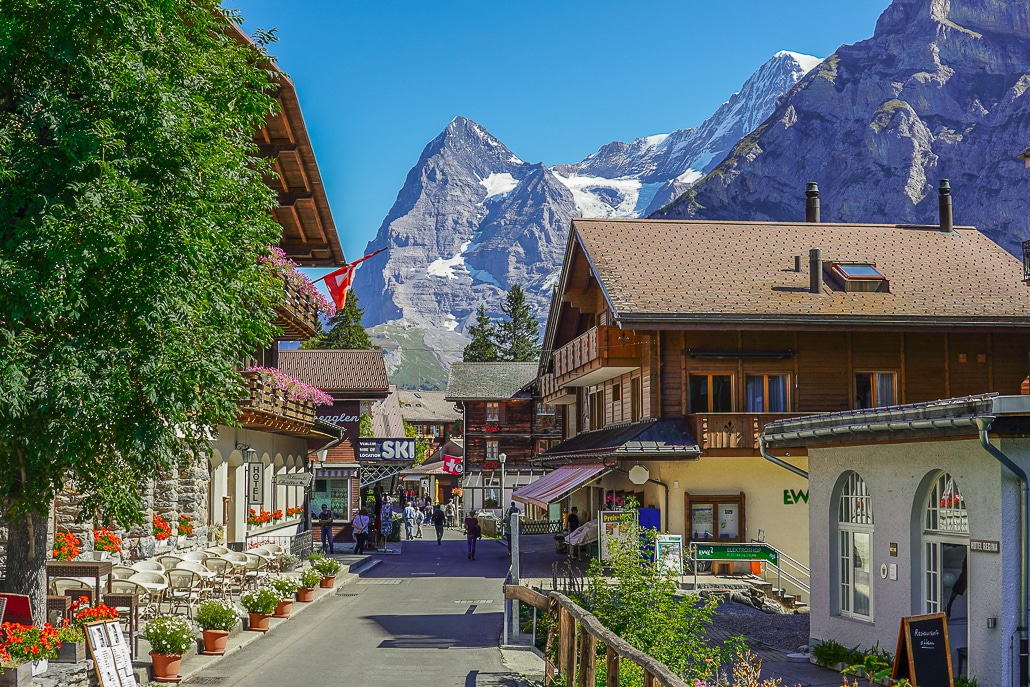
Hours: Always open | Entry: Free; cable car ~CHF 12 from Grütschalp, or via Stechelberg
Perched at 1,650 meters on the western cliff above the valley, Mürren is car-free, and it feels like the 20th century largely passed it by. The main street is barely wide enough for a wheelbarrow. The Eiger, Mönch, and Jungfrau fill your entire field of vision to the east. From Mürren, the funicular to Allmendhubel adds a further 300 meters of elevation and opens up the famous Flower Trail, a gentle loop through alpine meadow where Edelweiss grows wild.
Hidden Gems
1. Gimmelwald
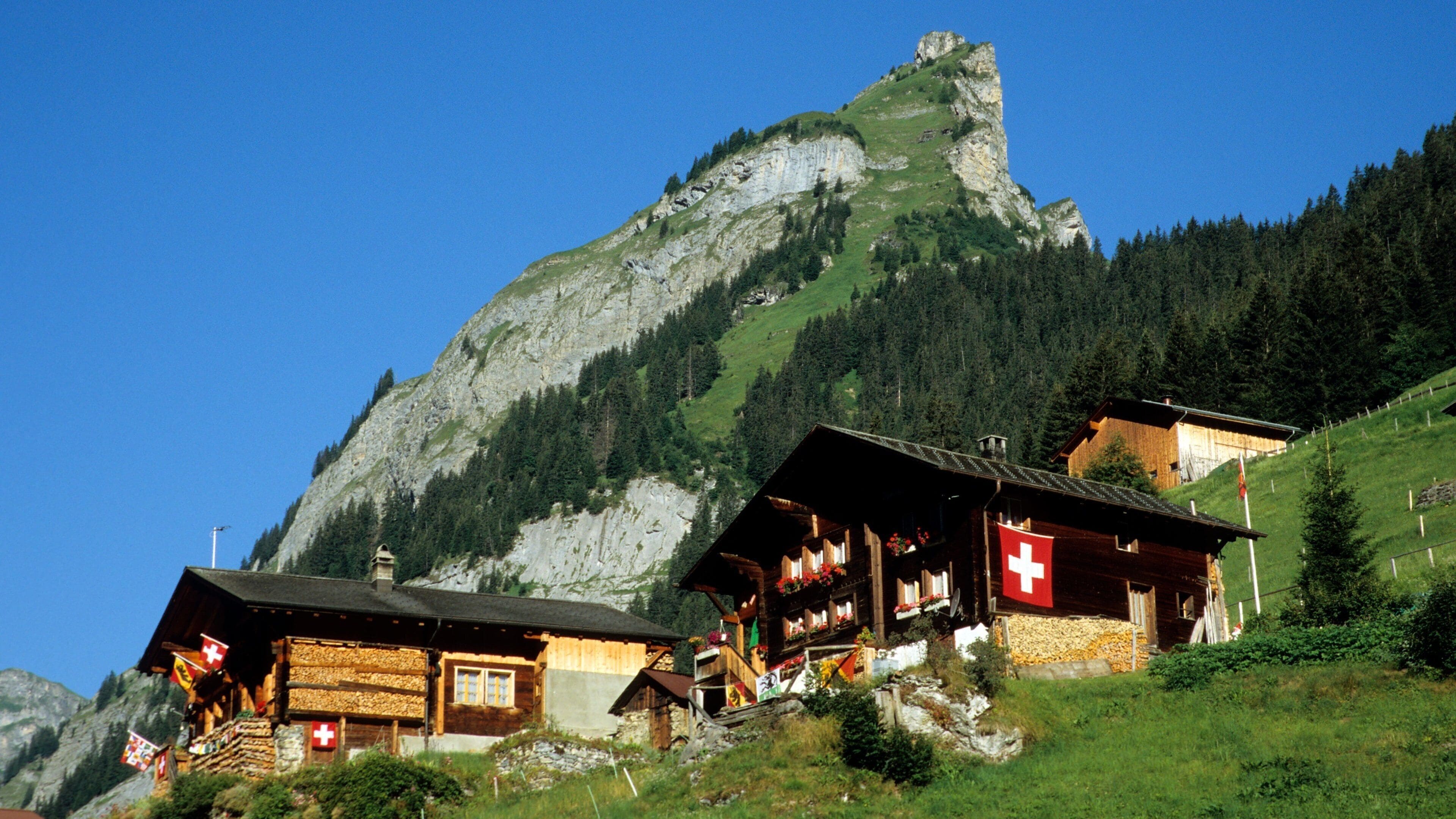
A cable car stop above the valley floor — most visitors ride straight through to Mürren without disembarking. Gimmelwald is the smaller, quieter, more genuinely Alpine of the two villages. A handful of farmhouses, a barn, a guesthouse, and a legendary hostel (Mountain Hostel, in a farmhouse built in 1563) constitute the entire settlement. Rick Steves once called it “the Switzerland I thought didn’t exist anymore.” He was right. Get off the cable car here.
✦ Pro Tip: Mountain Hostel’s terrace is one of the most beautiful spots in the valley to have a beer. You don’t need to be a guest to drink there.
2. The Valley Walk: Lauterbrunnen to Stechelberg

Most tourists take the bus between the village and Stechelberg (the cable car base for Gimmelwald and Mürren). Almost nobody walks the 5km valley floor trail that runs alongside the river. It passes through meadows, under three separate waterfall walls, and past the base of Mürrenbachfall, at 417 meters, the longest waterfall in Switzerland. The walk is flat, takes about 90 minutes, and is one of the most underrated hikes in the Jungfrau Region.
3. Bobbin Lace Making in the Old Schoolhouse
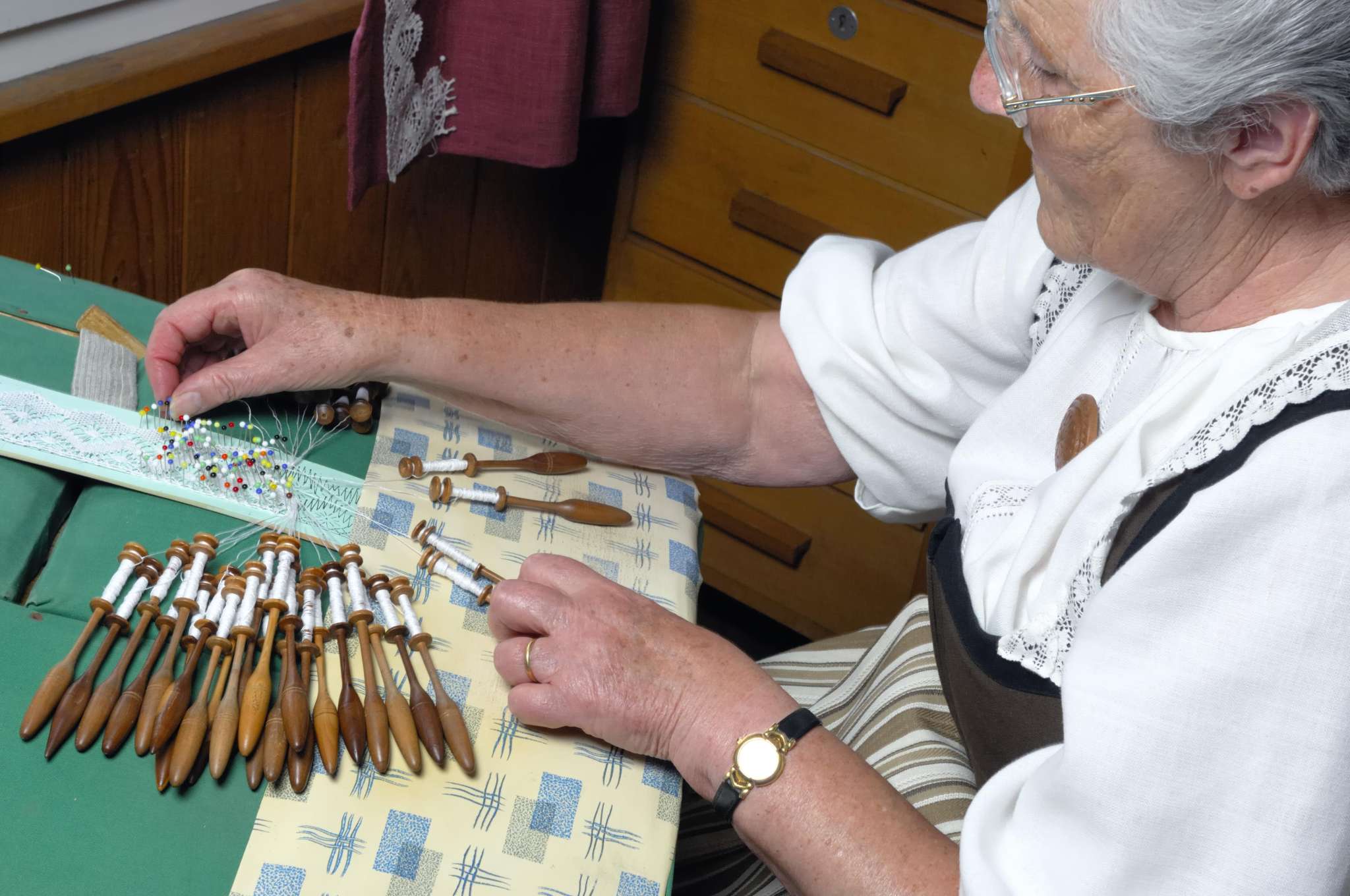
Every Friday afternoon, local craftswomen gather in Lauterbrunnen’s old schoolhouse to practice bobbin lace. This intricate tradition came to the valley centuries ago as a way for low-income families to earn supplemental income. Visitors can watch and even take beginner lessons. It’s an entirely untheatrical, genuinely local experience that most guidebooks ignore entirely.
4. Wengen at Dusk

Everyone goes to Wengen as a transit point for Kleine Scheidegg or Jungfraujoch. Almost no one stays until the sun sets. Wengen is car-free and faces directly south-west, which means on clear evenings the Jungfrau massif catches the alpenglow in a deep pink-to-crimson flush that sweeps across the snow from right to left over about 40 minutes. Find a table on the terrace at Restaurant Allmend or simply stand at the edge of the village and watch.
Cuisine & Dining
Lauterbrunnen is small, and its dining scene is honest rather than aspirational. The further up the mountain you go, the more consistently Swiss the menus become and the better the views get. The valley floor offers convenience; the villages above offer character.
Must-try dishes: Swiss cheese fondue, raclette (melted cheese scraped over potatoes and pickles), Rösti (crispy potato pancake), Zürcher Geschnetzeltes (veal in cream sauce), Apfelstrudel, and, in autumn, venison from the regional game menu.
Budget
Horner Pub — Lauterbrunnen’s only pub, right in the village center near the church. A BASE jumper hangout with good burgers, hot dogs, and Swiss standards all priced under CHF 20. Open daily until 12:30 am also your best option for a late-night meal. Friendly, loud, and entirely unpretentious.
Base Café — Just off the main street near the train station. Good for a quick coffee, soup, or cheese fondue if you haven’t had one yet. Fondue runs about CHF 22.
Bäckerei Von Allmen — The valley’s bakery. Fresh bread, pastries, and coffee to go. Perfect for a pre-hike breakfast. Grab a fresh Gipfel (croissant) and a coffee, and eat it on the church steps.
Mid-Range
Restaurant Oberland — The most consistently praised restaurant in the village, with a classic Swiss chalet interior, a decent outdoor terrace, and a menu anchored by fondue, raclette, and seasonal specials. Reservations are strongly recommended for dinner, especially in summer, as it fills fast.
Restaurant Steinbock — Near the train station with a lovely summer garden terrace shaded by trees. The menu is more international than Oberland’s good pizzas (CHF 18–25) alongside Swiss standards, and it’s one of the more relaxed places to linger over a meal.
Restaurant Weidstuebli — A short walk from the center, set inside a campground, don’t let that put you off. The Swiss cuisine is carefully prepared, the staff is warm and attentive, and in autumn, the game menu (venison, wild boar) is superb—one of the most charming dining experiences in the valley. Book ahead.
Fine Dining & Views
Piz Gloria (Schilthorn) — The revolving restaurant 2,970m above sea level. Book the Schilthorn Brunch (until 2 pm, CHF 37) for a buffet with mimosas while 200 Alpine peaks rotate past your window. It’s one of the most remarkable settings for a meal in Europe.
Café Liv (Mürren) — Light bites, excellent coffee, pastries, and a terrace looking directly at the Eiger. A perfect mid-morning stop after the cable car up. Consistently praised for its atmosphere.
Restaurant Hotel Eiger (Mürren) — The smartest dining option in Mürren, with classic preparations of Swiss mountain cuisine and arguably the best view of any sit-down restaurant in the valley. Reservations are essential in high season.
Market Tips
There is a Coop supermarket in Lauterbrunnen on the main street. This is your best bet for self-catering on a budget. Pick up local cheeses, charcuterie, and fresh bread, and have a picnic beneath Staubbach Falls. The Coop also stocks Swiss chocolate, local wines, and bottled water, far cheaper than anywhere else in the valley.
Accommodation
Stay in Lauterbrunnen village if you want easy access to trains and buses, good dining options, and the valley atmosphere. Stay in Mürren or Wengen if you’re primarily hiking or skiing and want to wake up with the peaks in your window. Stay in Gimmelwald if you want something that feels genuinely wild.
Budget
Valley Hostel (Lauterbrunnen) — CHF 35–50/night for dorms. Central location near the train station, clean facilities, social atmosphere—the go-to for backpackers.
Mountain Hostel Gimmelwald — CHF 40–60/night for dorms — A former 1563 farmhouse, a cable car ride above the valley. The most atmospheric budget bed in the region. Dorm and private rooms, complimentary breakfast, a terrace with views that will make you cancel the rest of your Switzerland itinerary.
Camping Jungfrau — CHF 20–40/night for camping, CHF 80+ for cabins. The enormous holiday park at the south end of the valley near the Trümmelbach turnoff: pitches, glamping cabins, and a fantastic location directly under the waterfall walls.
Mid-Range / Boutique
Hotel Staubbach (Lauterbrunnen) — CHF 120–180/night — Family-run, directly facing Staubbach Falls. Some rooms have a balcony with the waterfall so close you can hear it from bed. Conveniently located near the train station and village.
Hotel Silberhorn (Lauterbrunnen) — CHF 140–200/night — Reliable mid-range choice with excellent valley views, a good restaurant, and a very central location. Rooms are comfortable and well-maintained.
Hotel Alpenruh (Mürren) — CHF 160–240/night — The most scenic mid-range option in the region. Perched on the cliff edge in Mürren with direct views of the Eiger, Mönch, and Jungfrau. The terrace restaurant is excellent for breakfast with mountain views.
Luxury
Palace Hotel Wengen — CHF 350–600+/night — The grande dame of the valley, in a Belle Époque building with sweeping views over the south-facing Wengen bench. Full spa, fine dining, and impeccable service. The kind of hotel that arrives slowly into focus through morning fog and looks exactly as a Swiss mountain hotel should.
Hotel Eiger (Mürren) — CHF 280–450/night — Car-free village, directly facing the Eiger’s north face, with a superb restaurant and one of the best terrace views in all of Switzerland.
Transportation
Getting to Lauterbrunnen
By train from Zurich: Approximately 2.5 hours. Zurich HB → Bern → Interlaken Ost → Lauterbrunnen (last leg is a narrow-gauge railway through increasingly dramatic scenery).
By train from Bern: Approximately 1.5 hours direct.
By car: Drive to Lauterbrunnen and leave your car in the multi-storey car park beside the train station (CHF 15–18/day). Wengen and Mürren are only accessible by train or cable car. Parking is expensive, and spaces are limited; the train is strongly preferred.
Nearest airports: Zurich (ZRH, 2.5hr by train), Bern-Belp (BRN, ~1hr by train/bus), Geneva (GVA, ~3hr by train).
Getting Around
Swiss Travel Pass: The single most important purchase for your trip. Covers the vast majority of trains, buses, boats, and many cable cars throughout Switzerland, including the Lauterbrunnen–Wengen and Grütschalp–Mürren trains. It gives a 25% discount on Jungfraujoch. Available as 3, 4, 6, 8, or 15-day passes.
Jungfrau Travel Pass: A regional version covering unlimited travel within the Jungfrau Region for 3 or 6 days. Excellent value if you’re staying exclusively in the valley.
Within the valley, the PostBus runs between Lauterbrunnen village and Stechelberg. Trains run from Lauterbrunnen to Wengen (sunny eastern bench). Cable cars connect to Mürren and Gimmelwald from Stechelberg (via the Sefinenfurgge gondola system) or to Grütschalp.
Walking: The valley floor between Lauterbrunnen and Stechelberg is an excellent, easy 5km walk with no altitude gain. Between the higher-up villages, the trails are well-marked but involve significant elevation changes.
Events & Festivals
Lauberhorn Ski Races (January)

Held each January above Wengen, the Lauberhorn downhill is one of the most prestigious races on the World Cup ski circuit and the longest downhill course in the world at over 4km. The atmosphere in Wengen during race week is extraordinary — the village fills with Swiss supporters, cowbells ring constantly, and every hotel for miles is booked months in advance. A genuinely unmissable spectacle if you’re in the region in winter.
Alpabzug / Cattle Descent (September)
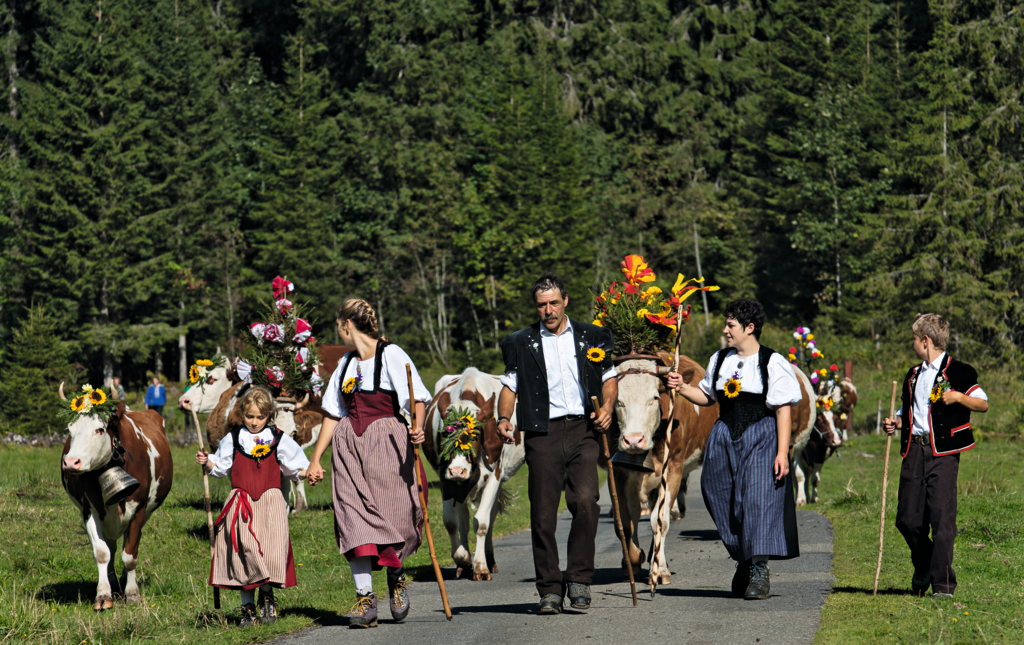
Each September, farmers bring their herds down from the high alpine meadows where they’ve grazed all summer. The cattle are decorated with enormous floral headdresses, crowns of Edelweiss, and painted horns — the lead cow wearing the largest crown of all. The procession descends through the valley, accompanied by cowbells, an alphorn, and farmers in traditional costume. In Lauterbrunnen, this typically happens in the third week of September. It’s one of the most authentically Swiss spectacles you can witness and has changed little over the centuries.
Jungfrau Marathon (September)
One of the world’s most demanding and visually spectacular marathon courses. Runners start in Interlaken and finish at Kleine Scheidegg (2,061m), climbing 1,829m over 42km, much of it through the Lauterbrunnen Valley. The race draws elite athletes and dedicated amateurs from across the world. Even if you’re not running, the atmosphere in the valley on race day is electric.
Shopping
Lauterbrunnen village is small, and its shops are few, but what’s there is authentic. The further you get from the tourist track, the more interesting the options become.
What to Buy
- Bobbin lace: Made by hand in the old schoolhouse every Friday. Jewelry, scarves, and decorations. Genuinely local, genuinely skilled.
- Swiss cowbells: The real ones — handcrafted by local blacksmiths, with leather straps hand-stitched. Avoid the painted souvenir versions from the tourist shops near Interlaken. Ask at the tourist office to find a genuine craftsman.
- Swiss chocolate: Skip the airport and the Interlaken souvenir shops. The Coop in Lauterbrunnen stocks Cailler, Lindt, and Léonéidas at local prices.
- Edelweiss products: Dried flowers, soaps, and preserves from the alpine flower. Available at the Lauterbrunnen Coop and the tourist shops.
- Regional honey and cheese: Several farms in the valley sell directly. Ask the tourist office for current producers. The alpine cheeses — made from summer milk from cows grazing above 1,800m — taste nothing like what you find in a supermarket.
Where to Shop
The main street in Lauterbrunnen has a handful of souvenir shops and a Coop. For more interesting artisan work, head to Mürren, where the small village shops tend toward quality over volume.
Practical Information
Visa & Entry
Switzerland is not part of the EU but is in the Schengen Area. Most Western passport holders (EU, US, UK, Australia, Canada) can enter visa-free for up to 90 days. Check your specific country’s requirements at the Swiss State Secretariat for Migration website.
Currency
Swiss Franc (CHF). Switzerland does not use the Euro, though some tourist businesses accept it at a poor exchange rate. ATMs are widespread and accept international cards. Credit cards are accepted almost everywhere. Budget CHF 150–250/day for mid-range comfort (accommodation, meals, and one major excursion per day).
Language
The local language is Swiss German (Bernese dialect). Standard German is understood everywhere. English is spoken widely in tourist areas — you will have no difficulty. A few words of German are warmly received: Merci vilämol (“thank you very much”), Grüetzi (“hello”), Uf Widerluege (“goodbye”).
Safety
Switzerland is consistently ranked among the safest countries in the world. Standard urban precautions apply in Interlaken (pickpockets around the train station). On mountain trails, check weather forecasts before setting out, wear appropriate footwear, and tell someone your planned route if venturing off-piste. Mountain rescue is excellent but expensive. Ensure your travel insurance covers helicopter evacuation.
Internet & SIM
Most hotels and restaurants offer free Wi-Fi. Swiss data SIMs are available at Zurich and Bern airports and at major train stations. EU roaming works here only for some operators — check before you travel.
Tourist Office
Lauterbrunnen Tourism is located at Stutzli 460, 3822 Lauterbrunnen. Open daily in peak season. Staff speak English and can advise on trail conditions, weather, and what’s currently operating.
Etiquette
Tipping
Switzerland does not have a strong tipping culture. Prices include service charges by law. Rounding up the bill or leaving 5–10% for excellent service is appreciated but never expected. Do not feel obligated.
Mountain Paths
When meeting other hikers on a narrow trail, the uphill walker has the right of way; step aside and let them pass. Greet people you pass with a Grüetzi (hello). Leaving trails, picking flowers (Edelweiss is protected), and disturbing livestock are all antisocial and, in some cases, illegal.
Quietness
Swiss communities value quiet, particularly on Sunday. Avoid loud music, shouting, or disruptive behavior in villages. Many guesthouses have a quiet time after 10 pm.
Photography
Photographing people — particularly farmers and local craftspeople — without permission is considered rude. Ask first with a smile. Most people are happy to be photographed if you approach respectfully.
Rubbish
Switzerland takes its environment extremely seriously. Pack out everything you pack in. Littering on trails or in the valley is not tolerated and draws sharp looks from locals.
Packing List
Summer (June – September)
- Waterproof jacket — mandatory even in July; afternoon thunderstorms are common
- Layered mid-layer (fleece or down gilet) for above 2,000m
- Sturdy hiking boots with ankle support and good grip (essential for Trümmelbach)
- Sandals or light shoes for the village
- Sunscreen SPF 50+ and lip balm — UV intensity at altitude is significantly higher than at sea level
- Polarised sunglasses — essential at Jungfraujoch; the glacial glare is fierce
- Reusable water bottle — Swiss tap water is among the cleanest in the world
- Small daypack (20–25L) for hikes
- Trekking poles if you plan significant descents
- Cash in CHF (small denominations for cable cars, buses, and tip jars)
Winter (December – March)
- Ski or snowboard gear (rentable in Wengen and Mürren if needed)
- Thermal base layers
- Insulated waterproof jacket and trousers
- Warm hat, gloves, and neck gaiter
- Ski goggles
- Hand warmers
- All the summer items above
Itineraries
2-Day Itinerary: The Greatest Hits
Day 1: The Valley & Its Waterfalls
Morning: Arrive in Lauterbrunnen. Drop bags at your accommodation and walk directly to Staubbach Falls — including the path behind the falls. Allow 45 minutes. Return to the village for breakfast at Bäckerei Von Allmen.
Mid-morning: Take the bus south to Stechelberg (10 min) and enter Trümmelbach Falls. Allow 90 minutes. Buy tickets at the door or online in advance.
Lunch: Return to Lauterbrunnen. Eat at Restaurant Oberland or the Horner Pub.
Afternoon: Walk the Valley Trail south from the village toward Stechelberg, passing the base of Mürrenbachfall. Return by bus. Alternatively, take the train up to Wengen for the late afternoon and wander the car-free village.
Evening: Dinner at Restaurant Weidstuebli (book ahead). Return to the valley floor.
Day 2: The High Mountains
Early morning: Take the earliest possible train toward Jungfraujoch. From Lauterbrunnen, connect at Kleine Scheidegg. Arrive at the summit before the clouds build. Visit the Ice Palace, Sphinx Observatory, and viewing terrace.
Midday: Descend back to Kleine Scheidegg and take the Panorama Walk to Männlichen (90 min, flat, extraordinary Eiger views). Cable car from Männlichen down to Wengen.
Afternoon: Lunch in Wengen. Return to Lauterbrunnen by train in the late afternoon.
Evening: Free. Pick up local cheese and chocolate from Coop for a self-catered final dinner with valley views.
4-Day Itinerary: The Full Valley
Day 1: Arrival & Valley Floor
As Day 1 in the 2-day itinerary above. Staubbach, Trümmelbach, and the valley walk. Dine at Restaurant Weidstuebli.
Day 2: Mürren & Schilthorn
Morning: Take the cable car from Stechelberg up through Gimmelwald (get off and walk around for 20 minutes) and continue to Mürren.
Mid-morning: Coffee at Café Liv in Mürren, then take the cable car up to Schilthorn/Piz Gloria. Have the Schilthorn Brunch (until 2 pm). Visit the Thrill Walk at Birg on the way back down.
Afternoon: Return to Mürren and walk the village. Take the funicular to Allmendhubel for the Flower Trail (easy, 1.5hr loop). Return to Mürren.
Evening: Dinner at Hotel Eiger restaurant in Mürren. Stay overnight in Mürren if your budget allows — waking up here with the peaks already in your window is worth it.
Day 3: Jungfraujoch & Wengen
As Day 2 in the 2-day itinerary. Jungfraujoch in the morning, Panorama Walk and Männlichen at midday, Wengen in the afternoon. Eat dinner in Wengen.
Day 4: Free Day / Activities
Option A — Hikers: Walk the Grütschalp to Mürren trail (cable car to Grütschalp, then a 4km walk along the cliff to Mürren with valley views the entire way). Return via the Mürren cable car.
Option B — Adventurers: Paragliding from Mürren with Airtime Paragliding (next to Hotel Staubbach). Tandem flights with views of the waterfall valley from above. Book in advance.
Option C — Relaxers: Explore Lauterbrunnen at a slow pace. Watch bobbin lace being made (Fridays). Picnic under the waterfalls. Browse the village shops.
7-Day Itinerary: The Definitive Experience
Days 1–2: As the 2-day itinerary
Valley floor, waterfalls, and Jungfraujoch. Establish your bearings and let the landscape settle into you.
Day 3: Mürren, Gimmelwald & Schilthorn
As Day 2 of the 4-day itinerary. Full day on the western clifftop. Stay overnight in Gimmelwald for the full atmospheric effect.
Day 4: Kleine Scheidegg & the Eiger
Morning: Take the cogwheel train from Lauterbrunnen to Kleine Scheidegg and walk the famous trail beneath the Eiger’s north face. The wall is so close and so vertical that it induces a particular kind of vertigo even from the path below. Stop at the Bahnhof Kleine Scheidegg restaurant for coffee with the best view of the Eiger in the region.
Afternoon: Descend via the Panorama Walk to Männlichen, cable car to Wengen. Explore Wengen and stay for the alpenglow at sunset.
Day 5: Grindelwald Day Trip
Morning: Train from Wengen to Kleine Scheidegg, then down the other side into Grindelwald — a larger, more accessible village with a different character. Visit Grindelwald First (gondola up to 2,168m) and walk the First Cliff Walk, a suspension bridge trail along the cliff edge with glacier views.
Afternoon: Grindelwald village. Browse the larger selection of shops and restaurants. Return to Lauterbrunnen via Kleine Scheidegg by early evening.
Day 6: Adventure Day
Morning: Paragliding tandem flight from Mürren, or via ferrata climbing with a guide (book through the tourist office). The via ferrata above Mürren is well-equipped and suitable for motivated beginners with a guide.
Afternoon: E-bike rental from Lauterbrunnen (available at the sports shops near the train station). Cycle the valley floor at leisure. Stop at the base of the waterfalls you didn’t linger at earlier in the week.
Evening: Final dinner at Restaurant Oberland or a fondue at Weidstuebli. Buy local cheese at Coop for the train home tomorrow.
Day 7: Departure
Early morning walk to Staubbach Falls one last time. Train from Lauterbrunnen. The mountains will stay with you longer than you expect.
This guide was researched and written for accuracy as of April 2026. Prices and operating hours are subject to change — always check the official Lauterbrunnen Tourism website (lauterbrunnen.swiss) and Jungfrau Region Tourism (jungfrauregion.swiss) before travel.