

 Start Driving in Las Vegas, Nevada
Las Vegas, la ciudad del pecado, es un destino turistico mundialmente famoso conocido por sus casinos, espectaculos de entretenimiento y vida nocturna vibrante. Situada en el desierto de Mojave, Las Vegas ofrece una experiencia unica que combina el lujo moderno con el encanto del desierto. El Strip de Las Vegas, una avenida de 6,8 kilometros de longitud, es el corazon de la ciudad, un lugar donde se concentran los hoteles y casinos mas emblematicos, como el Bellagio, el Caesars Palace y el Venetian. El Fremont Street Experience, una calle peatonal cubierta por una pantalla gigante, ofrece espectaculos de luces y sonido que atraen a multitudes cada noche. Mas alla de los casinos, Las Vegas alberga una variedad de museos y atracciones culturales, como el Museo del Neon, que exhibe letreros de neon historicos, y el Museo de la Mafia, que narra la historia del crimen organizado en Estados Unidos. El Gran Canon del Colorado, una maravilla natural situada a pocas horas de Las Vegas, es una excursion obligada para los amantes de la naturaleza. Las Vegas tambien es un paraiso para los amantes de la gastronomia, con una amplia oferta de restaurantes que van desde la alta cocina hasta los bufes informales. La ciudad es famosa por sus espectaculos de entretenimiento, que incluyen conciertos de artistas de renombre mundial, espectaculos de magia y producciones teatrales de Broadway. El sistema de transporte publico de Las Vegas, que incluye autobuses y taxis, facilita el desplazamiento por la ciudad y sus alrededores. El clima desertico de Las Vegas, con veranos calurosos e inviernos suaves, lo convierte en un destino atractivo durante todo el ano. La moneda es el dolar estadounidense (USD), y el ingles es el idioma principal. Los mejores momentos para visitarla son durante la primavera y el otono, cuando el clima es templado y agradable.
Las Vegas Travel Guide: The Only Playbook You’ll Ever Need
The city doesn’t just stay awake — it dares you to keep up.
The first time you land at Harry Reid International after dark and see Las Vegas spreading out beneath the descent path like a shattered chandelier on the desert floor, something shifts. This isn’t a city that eased into its identity over centuries. Las Vegas was purpose-built to be outrageous, and it has spent the last eight decades doubling down on that bet.
The bones of this place go back to 1905, when the Union Pacific Railroad platted a dusty Nevada railroad town. Gambling was legalized statewide in 1931, and the mob money that followed turned tumbleweeds into neon. By the 1950s, the Rat Pack was performing at the Sands, the nuclear tests at the Nevada Test Site were drawing tourists with lawn chairs, and Las Vegas had fully committed to its role as America’s pressure-release valve. Today, the DNA is the same — excess, reinvention, spectacle — but the canvas keeps expanding. The Sphere opened in 2023. Formula 1 races through the Strip at night. Raiders and Golden Knights fans fill stadiums that didn’t exist a decade ago.
What you’ll find here isn’t just casino floors and showgirls (though there’s plenty of both if you want it). It’s Michelin-starred restaurants tucked beside slot machines. It’s a world-class contemporary art scene hiding in old warehouses downtown. It’s a 550-foot observation wheel where you can drink an open bar cocktail while floating above the neon. Vegas takes everything seriously and nothing seriously, all at once. That tension — between the ludicrous and the genuinely extraordinary — is what keeps pulling people back.
Best Months to Visit Las Vegas
Vegas is a year-round destination, but the weather has a dramatic range that should inform your packing list and expectations.
October and November are the sweet spot. Daytime temperatures settle in the 60s–70s°F (17–25°C), the summer crowds have thinned, and the city puts on its two biggest annual spectacles: the Life is Beautiful festival and the Formula 1 Grand Prix. Hotel rates are high during race week specifically, so book months in advance for November.
March through May is the other prime window. Spring brings mild days (60–80°F / 16–27°C), blooming desert landscapes for day-trippers heading to Red Rock Canyon, and lower rates than fall. Spring break weeks (mid-March) spike prices; avoid if you can.
June through August is brutal. Temperatures regularly hit 110°F (43°C) or higher. The Strip is walkable only in the early morning or late evening — the casinos become climate-controlled refuges by necessity. If you go in summer, book a resort with an excellent pool setup and budget for plenty of indoor time. Rates drop significantly, which is the main appeal.
January and February bring cool, occasionally cold nights (40s°F / single digits Celsius) but sunny days and the city’s lowest hotel rates. Perfect for a value-focused trip if you’re not banking on pool time.
Top Attractions
The Las Vegas Strip (Las Vegas Boulevard South)
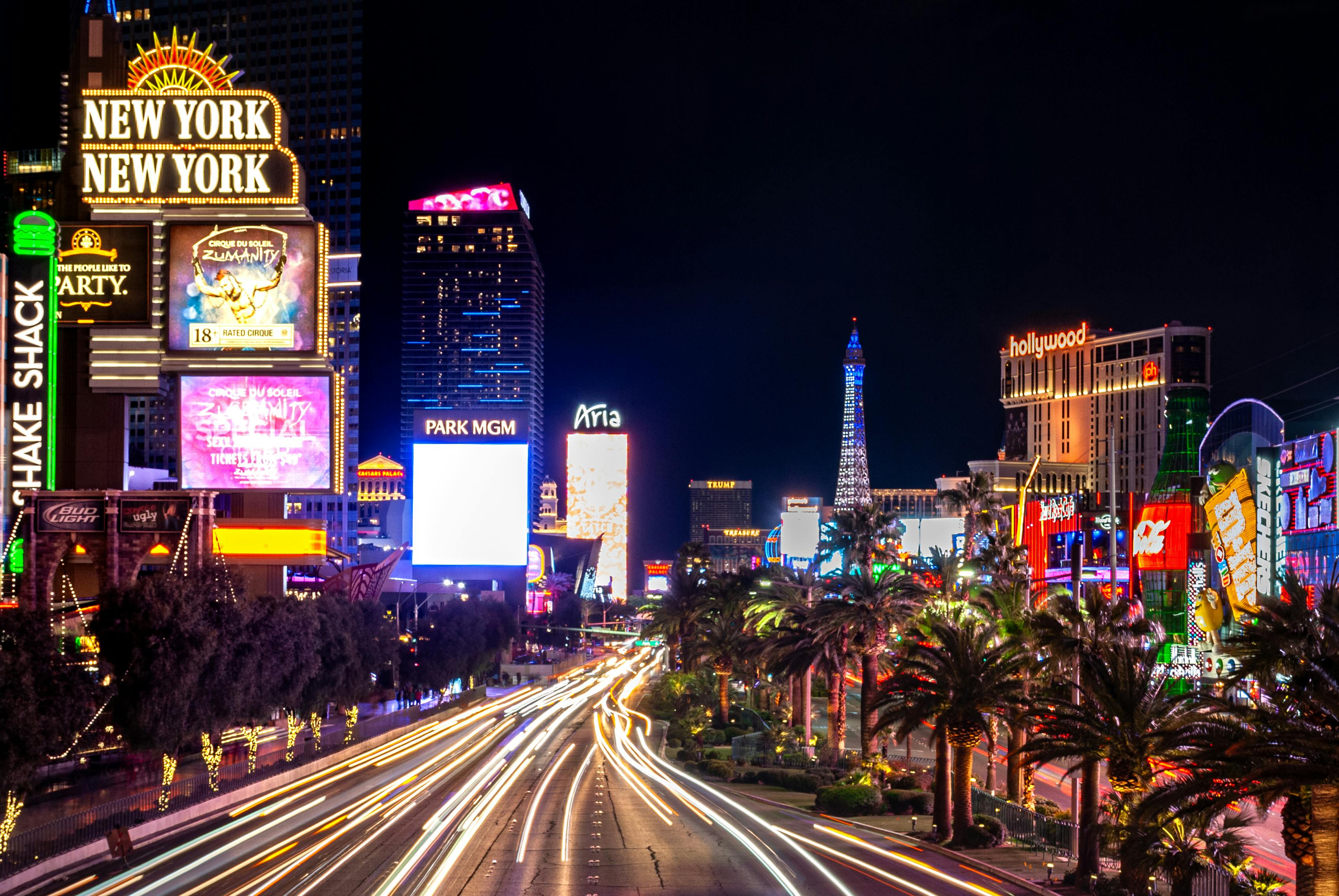
The Strip isn’t a single attraction — it’s a 4.2-mile stage that you walk, gawk at, and get lost in. Give yourself at least one full evening just to wander it without an agenda. The Bellagio fountains perform every 30 minutes in the afternoon and every 15 minutes after 8 p.m. (free). The Paris Las Vegas Eiffel Tower replica lights up at dusk. The Venetian’s Grand Canal is absurd and delightful. This is the show; everything else is inside it.
- Hours: The Strip itself is always open; individual properties vary
- Entry: Free to walk; attractions inside are ticketed separately
- Pro-tip: Walk the Strip from south to north during your first evening (Mandalay Bay to the Wynn) — it’s about 45 minutes of solid walking. Take Ubers between distant points rather than walking in summer heat.
The Sphere

The most genuinely new thing to happen to entertainment in years. At 366 feet tall and 516 feet wide, the MSG Sphere is the largest spherical structure on earth, and its 160,000-square-foot exterior LED screen makes it visible from practically anywhere in the valley. Inside, an immersive concert and film experience uses 4D haptics, wind, scent, and a 16K wraparound screen that erases the concept of “the edge of the frame.” The U2 residency that opened it has given way to other touring acts and immersive film experiences.
- Location: 255 Sands Ave (adjacent to The Venetian)
- Entry: Varies by event — immersive films from ~$49, concert tickets from $150+
- Pro-tip: Check the Sphere’s website for “Postcard from Earth,” the standalone film experience by Darren Aronofsky — it runs regularly and is the easiest way to experience the venue without booking around a specific concert tour.
The High Roller at The LINQ

Daytime tickets start at $28 for adults, while anytime (including after dark) tickets run $39. The “Happy Half Hour” upgrade — an open bar with a dedicated bartender for the full 30-minute ride — costs around $67–70 and is strictly 21+. Children under 3 ride free. At 550 feet, the High Roller rises higher than both the London Eye and the Singapore Flyer.
- Hours: Mon–Thu noon–midnight; Fri–Sun noon–2 a.m.
- Pro-tip: The nighttime ride is significantly better for photos and atmosphere. Book the Happy Half Hour with a small group and you’ll have your own private bar cabin — one of the more unexpectedly fun Vegas experiences at a reasonable price point.
The Neon Museum (Neon Boneyard)

Two blocks north of Fremont Street, the Neon Museum preserves and displays over 200 retired Las Vegas signs — the Young Electric Sign Company creations that built the visual language of the Strip. The Neon Boneyard is an outdoor graveyard of massive retired signs from the Hacienda, the Stardust, the Sahara. It’s melancholy and spectacular in equal measure.
- Hours: Guided tours daily; hours vary seasonally — check neonmuseum.org
- Entry: ~$20–28 for daytime; $30–38 for Brilliant! nocturnal experience (signs lit up at night — worth every penny)
- Pro-tip: Book the nocturnal Brilliant! experience in advance — it sells out regularly. The museum plans to relocate to a new home in the DTLV Arts District, so check current location details before visiting.
AREA15 & Meow Wolf’s Omega Mart

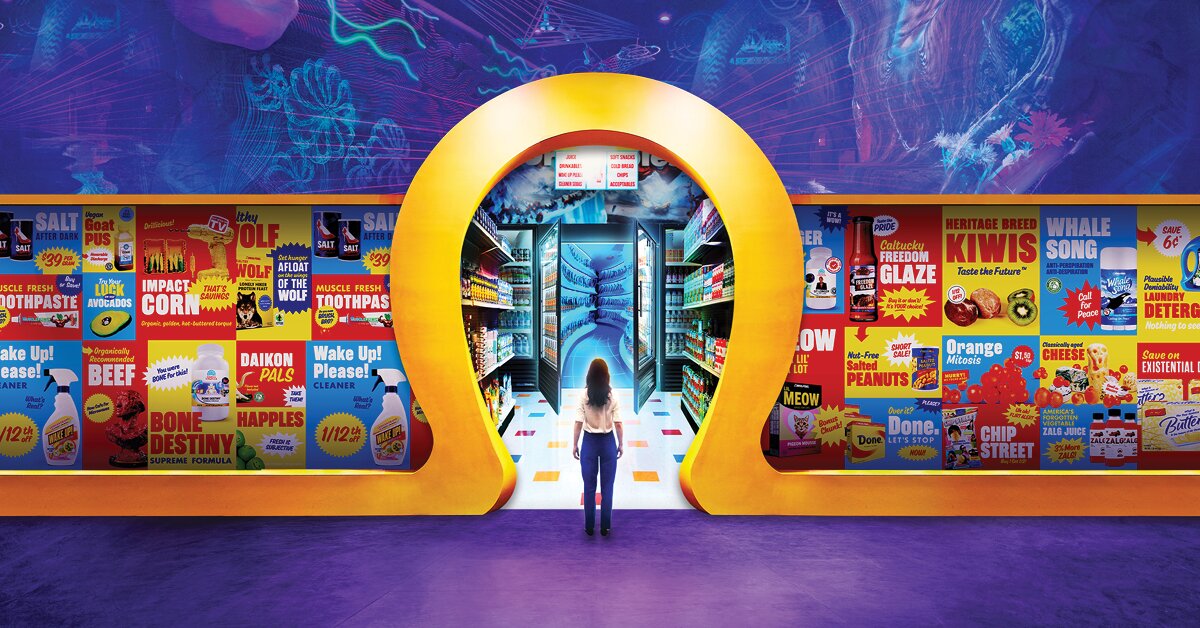
AREA15 is an immersive art and entertainment complex home to Omega Mart, a massive, otherworldly grocery store from renowned art collective Meow Wolf, where visitors step through “portals” into an alien world. It’s part immersive art installation, part puzzle, part fever dream — and genuinely unlike anything else in the city.
- Location: 3215 S. Rancho Dr. (about 10 minutes west of the Strip)
- Entry: Omega Mart admission from ~$49; bundle packages available
- Hours: Daily; check area15.com for current times
- Pro-tip: Allow 2–3 hours minimum. Don’t rush through it — the whole point is discovering hidden portals and narrative threads at your own pace.
Fremont Street Experience

The original Las Vegas — downtown, where Binion’s and the Golden Nugget still stand — anchors around the Fremont Street Experience: a 1,500-foot pedestrian mall covered by the Viva Vision LED canopy, which runs free light shows every hour after dark. It’s louder, denser, and grittier than the Strip, and for many visitors, it’s the better night out. The zip line runs above the crowd from dusk onward.
- Entry: Free for the canopy shows; zip line from $30–60
- Pro-tip: Come after 9 p.m. when the light shows hit their stride and the street performers are in full effect. The Golden Nugget’s pool — with a shark tank water slide — is worth a day pass if you want a break from the Strip’s mega-resorts.
The Punk Rock Museum

The Punk Rock Museum, which opened in 2023, offers in-person tours led by a revolving lineup of punk royalty guides. It’s stuffed with memorabilia from influential acts and is housed in an old building in the Arts District. Counterintuitively, it’s one of the most human-scaled, genuinely passionate experiences in a city full of manufactured spectacle.
- Entry: ~$30–40; check thepunkrockmuseum.com
- Pro-tip: Check the tour guide schedule — some days you’re walked through by an actual member of a significant punk band. That changes the experience entirely.
Hidden Gems
Other Mama (Off-Strip Seafood Institution)
Located about 20 minutes west of the Strip with a submarine, dorm-style vibe, Other Mama is where Las Vegas chefs go to eat. Chef Dan Krohmer’s grilled octopus, sushi, and daily specials under $25 represent some of the most technically accomplished cooking in the city. Locals treat it as a secret. Tourists almost never find it unless they know someone.
Address: 3655 S. Durango Dr.
The Arts District (18b)
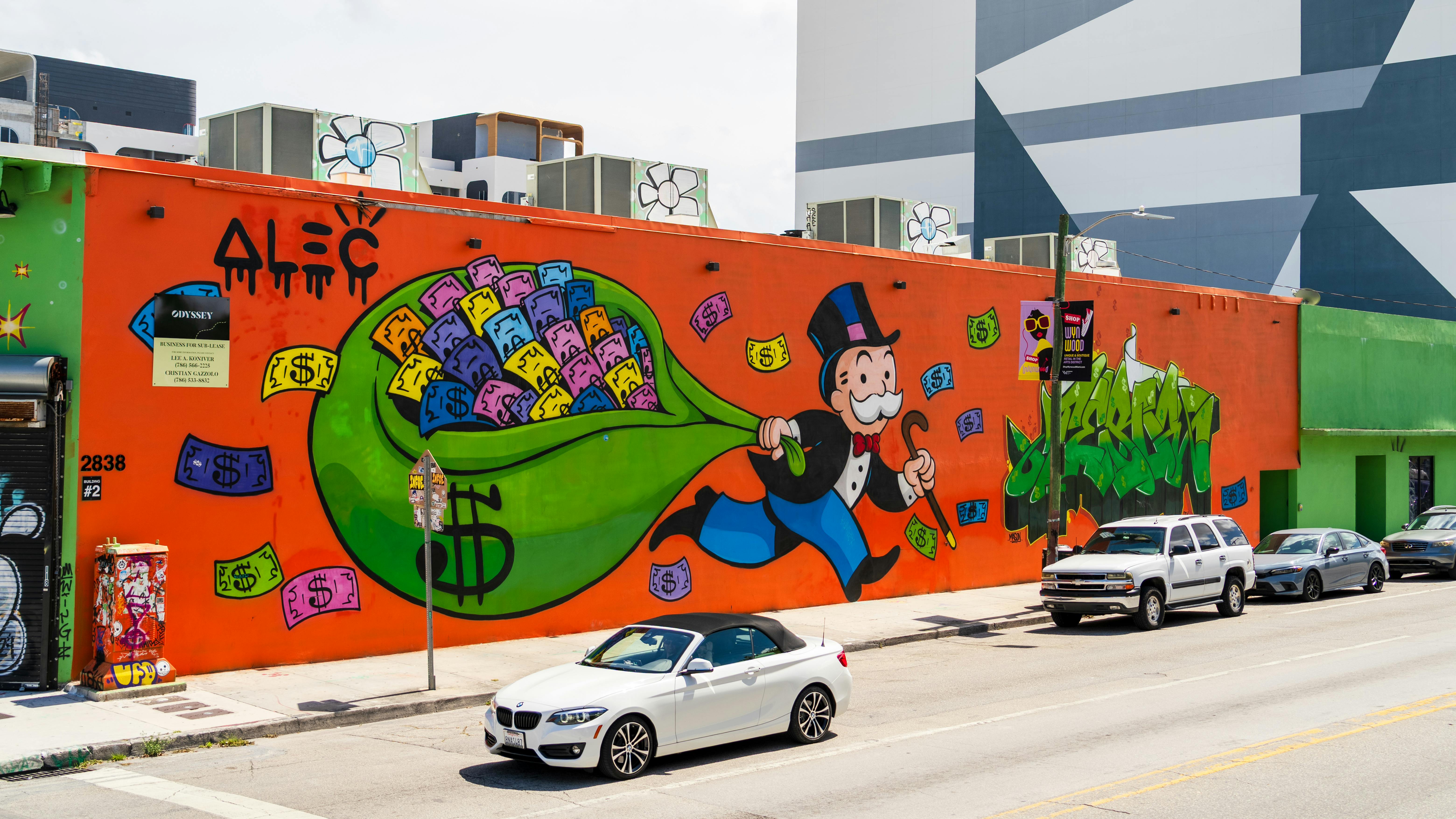
About a mile west of the Strip along Charleston Boulevard, Las Vegas’s Arts District clusters vintage shops, independent galleries, craft cocktail bars, and the Saturday-morning First Friday art walk into a few walkable blocks. Esther’s Kitchen serves wood-fired Italian in a converted garage. The Downtown Container Park is an open-air shopping and dining complex made from repurposed shipping containers. The Writer’s Block is an excellent independent bookstore in a city with very few. This is the Las Vegas that locals actually inhabit.
Secret Pizza at The Cosmopolitan
On the third floor of the Cosmopolitan — unmarked, reached via an elevator bank with no clear signage — there is a very good, unpretentious pizza restaurant that has operated quietly for years while everyone else hunts for celebrity chef tasting menus. It’s open late (until 3 a.m. on weekends), it’s cash-friendly, and a slice and a beer run about $10. Look for the hallway lined with vintage record album covers.
Spring Mountain Road (Chinatown)
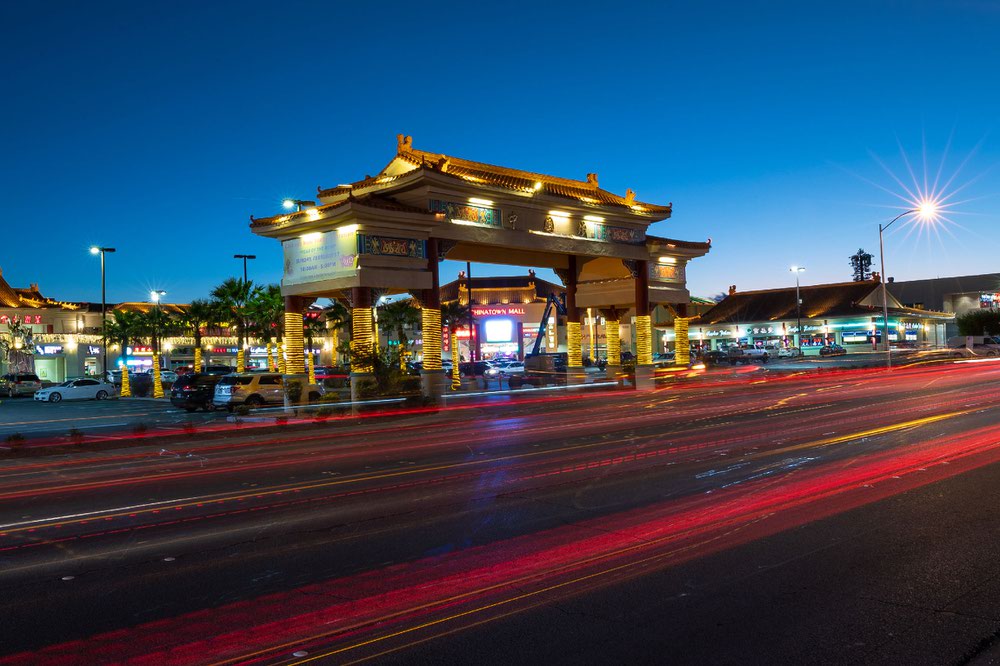
Within three miles west of the Strip, Spring Mountain Road offers over 150 restaurants serving Asian cuisine. Raku does Japanese grilled meats with a special tasting menu; Hobak Korean BBQ serves spicy pork ribs and beef belly; and Xiao Long Dumplings offers elevated Chinese comfort food with many entrées under $20. Locals come here for the city’s most authentic, affordable, and diverse Asian dining — and increasingly, for a growing cluster of excellent cocktail bars.
Cuisine & Dining
Vegas is a legitimate global dining capital. The following are not the only options — they’re a starting framework.
Must-Try Dishes & Experiences
- Prime rib at an old-school casino diner — this is a Vegas tradition. Ellis Island Casino’s “Steak Special” with baked potato and salad remains one of the city’s best cheap-eat bargains.
- Beef Wellington at Hell’s Kitchen (Gordon Ramsay’s LINQ restaurant) — expensive but theatrical.
- Cantonese Peking Duck at Wing Lei (The Wynn) — Michelin-starred; the duck is extraordinarily good.
- Late-night tacos at Tacos El Gordo on the Strip — carne asada, cabeza, and adobada until 4 a.m.
- Omakase sushi at any of the Chinatown spots — quality punches well above the price point.
Budget (Under $20/person)
- Tacos El Gordo — 3049 Las Vegas Blvd S; street-style tacos, perpetual line, worth every second of the wait
- Secret Pizza (The Cosmopolitan) — unmarked 3rd floor; late-night slices from $5
- Xiao Long Dumplings — Spring Mountain Road; hand-made dumplings, most dishes under $15
- Ellis Island Casino Café — 4250 Koval Ln; legendary $10 steak special, 24 hours
Mid-Range ($30–80/person)
- Esther’s Kitchen — 1130 S. Casino Center Blvd; wood-fired pasta and vegetables, Arts District, reservations recommended
- Other Mama — 3655 S. Durango Dr; seafood, raw bar, daily specials under $30
- Peppermill Restaurant & Fireside Lounge — 2985 Las Vegas Blvd S; old Vegas at its purest — vinyl booths, faux foliage, a gas-flame fireplace in the cocktail lounge, and steaks that don’t disappoint
- Herbs & Rye — 3713 W. Sahara Ave; craft cocktails and 50% off steaks during happy hour (Mon–Sat, 5–8 p.m. and midnight–3 a.m.)
Fine Dining ($100+/person)
- L’Atelier de Joël Robuchon (MGM Grand) — intimate counter dining with an open kitchen; signature dishes include Le Caviar Imperial and caramelized free-range quail
- Wing Lei (The Wynn) — Michelin-starred Cantonese; the Peking Duck service is formal and extraordinary
- SW Steakhouse (Wynn) — prime cuts and refined flavors with captivating views of the Lake of Dreams’ dazzling multimedia performance
- é by José Andrés (The Cosmopolitan) — a reservation-only, hidden-room tasting counter that functions like a secret speakeasy for food obsessives
Market Recommendations
The Downtown Container Park farmers market (First Friday monthly) is the most accessible for visitors. For groceries or a proper local experience, the Whole Foods on Maryland Parkway near UNLV has an impressive hot bar and is where the city’s culinary workers actually shop.
Accommodation
Budget (Under $80/night)
- Excalibur Hotel & Casino — South Strip; medieval kitsch, solid casino, functional rooms, and a genuinely central location. A classic budget-Vegas choice.
- Circus Circus — North Strip; aging but enormous, great for families with kids (Adventuredome is attached), and pricing often dips below $50 on weekdays.
- Stay downtown (Fremont Street area): The Golden Nugget offers budget-to-mid-range rooms in what is the nicest property downtown, and rates are consistently lower than comparable Strip options.
Mid-Range ($100–250/night)
- Paris Las Vegas — Center Strip; iconic Parisian flair with the Eiffel Tower replica right on site, excellent access to everything, and a distinctive visual identity that makes it more memorable than a generic tower.
- The LINQ Hotel — directly adjacent to the High Roller; rates are reasonable, location is mid-Strip, and Caesars Rewards membership can unlock complimentary High Roller tickets.
- W Las Vegas (at The Palazzo) — sleek, modern, and full of wow-factor with jaw-dropping Strip views; more boutique-hotel energy than typical Vegas mega-resort.
Luxury ($300+/night)
- Wynn Las Vegas / Encore — consistently ranked among the world’s finest hotels; exceptional dining, a genuinely beautiful golf course, and rooms that make it difficult to leave. Stay here if one splurge is on the budget.
- Bellagio — the Strip’s most iconic luxury property; the fountain-view rooms are worth the premium. The art gallery and conservatory are legitimately world-class.
- Four Seasons Hotel Las Vegas — a smoke-free haven with spacious rooms, top-notch service, and a dreamy pool and spa; occupies floors 35–39 of Mandalay Bay but operates independently, meaning no casino required for entrance.
- Fontainebleau Las Vegas — the recently opened 67-story mega-resort brings Miami mid-century glamour at grand scale across 25 acres, with 36 restaurants, bars and clubs including LIV Nightclub.
Area advice: Stay between the Bellagio and the Wynn for the most walkable Strip access to top dining and attractions. The south Strip (Mandalay Bay area) is quieter; the north Strip is more budget-friendly but requires more Uber use.
Transportation
Getting There
By Air: Harry Reid International Airport (LAS) sits about 3 miles from the south Strip. It’s one of the busiest airports in the country, with nonstop service from most major North American cities and many international hubs. Baggage claim deposits you practically at the taxi stand.
By Car: Las Vegas sits at the junction of I-15 (connecting to Los Angeles, about 4 hours, and Salt Lake City). Drive-in visitors from Southern California make up a significant share of visitors — weekend traffic on I-15 near the California border can be severe on Friday evenings and Sunday afternoons.
By Train (Coming Soon): Brightline West, a high-speed passenger rail line from Las Vegas to Rancho Cucamonga (connecting to LA Metro), is under construction and expected to open by the late 2020s.
Getting Around
Rideshare (Uber/Lyft): The default for most visitors moving between properties. Pickup zones are designated (not curbside at most casinos) — factor in a 5–10 minute walk from wherever you’re standing.
The Deuce & SDX (RTC Bus): The Deuce runs 24/7 along the Strip and downtown for $6 per 2-hour pass or $8 for a 24-hour pass. Slow during peak hours but economical for Strip-to-downtown runs. The SDX (Strip & Downtown Express) is faster and limited-stop.
Monorail: The Las Vegas Monorail runs along the east side of the Strip (behind the hotels) from the MGM Grand to the Sahara. Quick between those specific stops; less useful if you’re heading west-side or downtown. Day passes ~$16.
Walking: The Strip is walkable in good weather, but distances are deceptive — what looks like two blocks on a map is often a 15-minute walk through casino interiors. Budget time accordingly.
Rental Car: Largely unnecessary unless day-tripping to Red Rock Canyon, Valley of Fire, or the Grand Canyon.
Events & Festivals
Formula 1 Las Vegas Grand Prix — November
The 3.8-mile night race takes place on a temporary street circuit that includes parts of the Las Vegas Strip, drawing over 300,000 spectators. Entry-level tickets for practice sessions begin around $50, while three-day general admission packages climb to the mid-$400s. The race runs Thursday–Saturday in mid-to-late November, but the entire city operates as a Formula 1 festival for the full week, with fan zones, celebrity chef dinners, and headline concerts from global artists. Book accommodations 6–12 months in advance — hotel rates can quadruple during race week.
Life Is Beautiful — October
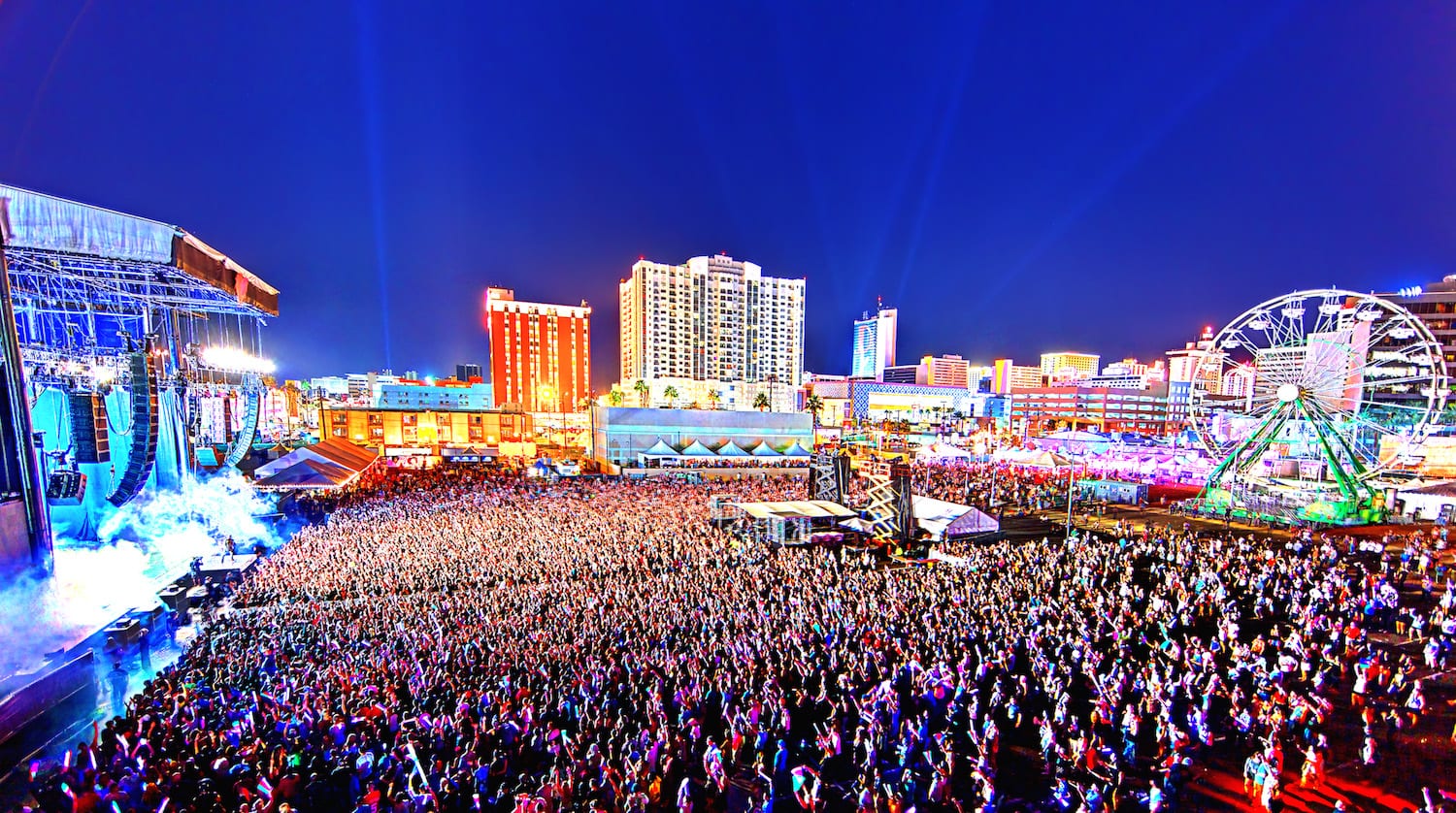
A three-day music, art, and food festival that takes over 18 blocks of downtown Las Vegas. Past headliners have included Foo Fighters, Billie Eilish, and Blink-182. The street art component is enormous — muralists create massive works throughout the Arts District that remain on the walls year-round. General admission runs $150–200/day; three-day passes sell out early. The festival has become the defining event of the downtown arts scene.
EDC (Electric Daisy Carnival) — May
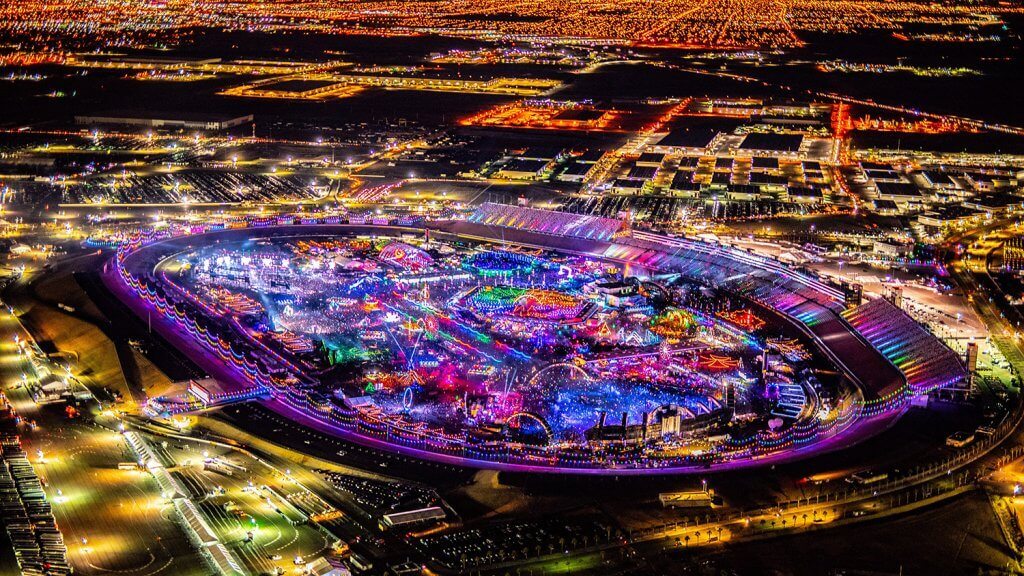
One of the largest electronic dance music festivals in the world, EDC brings 170,000+ attendees to Las Vegas Motor Speedway over three nights each May. Multiple stages, carnival rides, art installations, and a roster that covers every corner of the EDM world. Three-day passes typically run $350–500. If you’re not attending, the Strip’s club scene reaches maximum intensity during EDC weekend.
Shopping
Best Streets & Areas
The Strip itself offers shopping that ranges from the deeply practical to the genuinely extraordinary. The Forum Shops at Caesars Palace is an indoor mall designed to look like an ancient Roman street — with animatronic statues and a sky-painted ceiling that shifts from dawn to dusk. It anchors the mid-Strip luxury retail scene, with Versace, Gucci, and Louis Vuitton alongside mass-market options. The Crystals at CityCenter is the most architecturally dramatic mall in the city (designed by Daniel Libeskind), focusing on ultra-luxury: Prada, Hermès, Tom Ford.
Fashion Show Mall on the north Strip is Nevada’s largest shopping center with over 250 shops, 25 eateries, and weekly runway shows. It’s more accessible and less theatrical than the casino malls, making it the better choice for practical shopping.
Downtown/Arts District has the city’s best vintage and independent retail: the Funk House Las Vegas for mid-century furniture and collectibles, and a cluster of independent boutiques along Main Street.
Souvenirs Worth Buying
- Vintage casino chips — collectible, flat to pack, and genuinely historical. Look for discontinued casino brands at the Neon Museum gift shop or downtown pawn shops.
- Hand-rolled cigars from the tobacco shops on the Strip — Vegas has always had a strong cigar culture, and there are several shops where cigars are rolled on-site.
- Local hot sauce and foodie goods — the Las Vegas Farmers Market and the Container Park have small-batch Nevada producers.
- Neon Museum merchandise — the museum’s gift shop carries excellent prints, enamel pins, and design-forward goods built around the neon sign archive.
Avoid the generic souvenir shops hawking mass-produced “Vegas” gear — the quality is poor and there’s nothing local about it.
Practical Information
Visa & Entry
U.S. citizens need no visa. International visitors should check requirements at travel.state.gov. Canada and many EU/UK nationals can enter under ESTA or the Visa Waiver Program.
Currency
US Dollars. Cash is still king in many casino contexts (ATMs everywhere, though fees vary). Credit cards accepted universally at restaurants, hotels, and retail. Tap-to-pay works at most modern terminals.
Language
English. Las Vegas is a highly international city and basic Spanish is useful in the Arts District and Chinatown areas.
Safety
The Strip and downtown tourist zones are heavily patrolled and generally safe, though petty theft (phone snatching, pickpocketing in crowds) does occur. Avoid wandering far off Fremont Street on foot after midnight. The area immediately north of the Stratosphere, while improving, warrants more caution at night. Scams to watch for: street performers who grab your hand or put items on you, then demand payment.
Tipping Culture
Tipping is embedded in the Las Vegas economy more deeply than almost anywhere else in America. Cocktail waitresses who bring you free drinks on the casino floor are working for tips — $1–2 per drink is standard. Dealers: $5–10 chips pushed to them periodically if you’re winning (tip “for the dealer” on a winning hand). Restaurants: 18–22% is the baseline. Hotel housekeeping: $5/night. Valet: $3–5 on pickup.
Etiquette
Casino floors: Photography rules vary by property — most high-limit rooms prohibit it. Ask before pointing a camera at a dealer or table game. Dress codes are relaxed during the day; nightclubs and fine dining have stricter expectations (no shorts, no flip-flops at upscale venues after 9 p.m.).
Line etiquette: Vegas has professional line-waiters and legitimate VIP queuing systems at clubs and restaurants. Attempting to skip the line by claiming to know someone is both obvious and ineffective. For clubs, booking bottle service (expensive) or being added to the guest list via the club’s social media handles (free, if done early) are the legitimate paths.
The casino: Don’t slow down a table game because you’re unsure of the rules — sit at the lower-minimum tables and tell the dealer you’re learning. They’ll walk you through basic strategy on blackjack. Avoid touching your chips after bets are placed and keep phones off the table surface.
Drinking: You can carry open containers on the Strip in Las Vegas — one of the few American cities where this is legal. The free drinks while gambling are genuinely free, but they come slowly and the alcohol content in cocktails is variable. Pace accordingly.
Packing List
Year-Round Essentials
- Comfortable walking shoes — you will walk more than you expect, on hard surfaces, often late at night
- Earplugs — casino floors and hotel corridors can be surprisingly loud at 3 a.m.
- Portable charger — your phone will die mapping routes, booking Ubers, and photographing neon
- Cash in small bills — for tips, valet, and casino floor drinks
Spring/Fall
- Light layers — days can be warm while evenings drop into the 50s°F
- Sunglasses and SPF — desert sun is intense even at mild temperatures
- One dressy outfit — Vegas nightlife rewards dressing up
Summer
- High SPF sunscreen (minimum 50)
- A light long-sleeved layer for over-air-conditioned casino interiors
- Hydration pack or large water bottle — dehydration in desert heat is fast and real
- Breathable, moisture-wicking fabrics
Winter
- Warm jacket for evenings — temperatures can dip into the 40s°F / low single digits Celsius
- Layers that you can shed as you move between outdoor and over-heated indoor spaces
Itineraries
2-Day Itinerary: First Timer’s Vegas
Day 1 — The Strip, End to End
Morning: Arrive and check into your hotel. Walk to the Welcome to Fabulous Las Vegas sign (south of Mandalay Bay) first thing — less crowded before 10 a.m. Walk north through the Mandalay Bay, Luxor, and Excalibur properties.
Afternoon: Bellagio — walk through the lobby, see the Dale Chihuly glass ceiling sculpture in the lobby, and time your first visit to the Bellagio Fountains (every 30 min after noon, free). Have lunch at a mid-range Strip restaurant. Continue north through The Cosmopolitan (beautiful property; find the hidden bar “The Chandelier” on multiple floors). Grab Secret Pizza on the Cosmo’s 3rd floor if you’re hungry.
Late Afternoon: High Roller at The LINQ — book the Happy Half Hour upgrade for sunset or just after dark. The city looks best at dusk from 550 feet.
Evening: Dinner at Esther’s Kitchen (book ahead) or Peppermill (no reservation needed). Then walk the north Strip — The Venetian/Palazzo, Wynn, Encore — and see the Wynn’s Lake of Dreams after dinner.
Night: End at the Fremont Street Experience downtown (20-minute Uber) for the canopy light show after 9 p.m. Head back via rideshare.
Day 2 — Beyond the Strip
Morning: Neon Museum Boneyard — book the early tour before heat sets in. Breakfast at The Parlour in the Arts District nearby.
Afternoon: AREA15 and Meow Wolf’s Omega Mart — allow a full 2–3 hours. Lunch at the AREA15 bars before diving in.
Late Afternoon: Red Rock Canyon if you have a car — 30 minutes west, stunning geology, and a 13-mile scenic loop drive. Or spend this time casino-hopping and trying your hand at table games.
Evening: The Sphere — check what’s showing and book ahead. Or a major show: Cirque du Soleil (resident shows at multiple properties), a comedy residency, or a headline act.
Night: Bar hop on The Cosmopolitan’s various levels or hit the Dorsey cocktail bar at The Venetian.
4-Day Itinerary: Vegas in Depth
Days 1–2 follow the structure above.
Day 3 — Downtown Deep Dive & Local Scene
Morning: Arts District — coffee at a local café, browse the independent galleries along Main Street, visit the Writer’s Block bookstore.
Lunch: Esther’s Kitchen (book ahead) or tacos at a Chinatown spot on Spring Mountain Road.
Afternoon: Spring Mountain Road Chinatown — explore the restaurants, pop into a Korean grocery, have dessert at one of the boba shops. Walk the strip of restaurants you want to return to for dinner.
Evening: Dinner at Other Mama (no reservations taken — arrive by 6 p.m. or expect a wait). Then cocktails at Herbs & Rye for their late-night happy hour (midnight–3 a.m. with 50% off steaks).
Night: The Punk Rock Museum hosts regular events in the evenings — check their calendar.
Day 4 — Day Trip & Grand Finale
Morning: Leave early for Valley of Fire State Park (55 miles northeast) — red Aztec sandstone formations, ancient petroglyphs, and one of Nevada’s most dramatic landscapes. Bring water, snacks, and sunscreen.
Afternoon: Return to Vegas by 3 p.m. Rest at your hotel. Swim if your property has a pool.
Evening: Splurge on a fine dining experience you’ve wanted all trip — Wing Lei, L’Atelier de Joël Robuchon, or SW Steakhouse with a Lake of Dreams reservation.
Night: A major club or live music event — Omnia at Caesars, XS at Encore, or Drai’s at the Cromwell for a rooftop pool-club experience. Book a table for bottle service if going with a group; otherwise arrive before midnight and pay general admission.
7-Day Itinerary: The Full Las Vegas Experience
Days 1–4 follow the 4-day structure above.
Day 5 — Grand Canyon Day Trip
Rent a car or book a tour. Grand Canyon West Rim is 2.5 hours from the Strip and includes the Skywalk (glass bridge over the canyon; $45 per person for a photo package). Grand Canyon South Rim (National Park) is 4.5 hours and offers the more dramatic views — possible as a full-day drive but exhausting. Consider a helicopter tour for the best return on time investment (~$500–800 per person but genuinely unforgettable).
Day 6 — Immersive & Alternative Vegas
Morning: Seven Magic Mountains — 10 miles south of the Strip on I-15; Ugo Rondinone’s massive stacked boulder sculptures painted in dayglo colors, in the middle of desert nothing. Free and photogenic.
Afternoon: Atomic Golf or one of Vegas’s entertainment-golf venues if you want a social afternoon activity. Or The Adventuredome at Circus Circus for an indoor theme park session in air-conditioned comfort.
Evening: A different area of the city — book dinner at Durango Casino (the off-Strip locals casino with excellent dining, particularly Shang Artisan Noodle).
Night: Experience a Cirque du Soleil show you haven’t caught yet, or book a late-night comedy show at one of the many comedy clubs on the Strip.
Day 7 — The Slow Day
Vegas rewards slowing down. Use your final day to revisit what you loved.
Morning: Sleep in. Have a proper breakfast at Terrace Pointe Café at Wynn (garden setting, excellent brunch menu) or grab In-N-Out Burger at the LINQ Promenade because it’s a classic.
Afternoon: Pool time at your hotel if available. Revisit the Bellagio Gallery of Fine Art (rotating major exhibitions, ~$20 entry). Pick up souvenirs at the Neon Museum shop or the Container Park.
Evening: One last Strip walk at golden hour. The Bellagio fountains at sunset from across the street. Dinner wherever you didn’t make it on a previous night.
Night: Catch a late show or just walk the Strip one more time. The casino that looked impressive on night one looks different when you know the city — familiar, almost fond.
Safe travels. Drink water, tip generously, and don’t trust anyone who says they know how to beat roulette.